How Much Does Precision Irrigation Cost for a 10-Hectare Farm in Nigeria?
A 10-hectare farm is large enough for irrigation decisions to become a management and cost issue rather than simply a matter of turning on a pump. Applying water uniformly across the entire farm can waste water in some areas while leaving other areas under-irrigated, particularly where soil types, crop development, field elevation or water pressure vary.
This is where precision irrigation becomes useful. Instead of treating the entire farm as one irrigation unit, precision irrigation combines an efficient water-delivery system with information about soil moisture, weather, water flow and crop requirements. Depending on the system, it can also automate valves, pumps and irrigation schedules.
For a Nigerian farmer planning irrigation across 10 hectares, the important question is not simply, “How much does drip irrigation cost?” A precision irrigation budget may also include the water source, pump, power supply, filtration, mainlines, sub-mainlines, drip lines, valves, sensors, controllers, communications equipment, installation and ongoing maintenance.
There is no single national price for such a system. Current Nigerian market listings show substantial variation in drip-system prices, while recent Nigerian irrigation research also demonstrates that solar pumping costs vary according to system design and location. Consequently, a 10-hectare precision irrigation project should be budgeted from a site assessment rather than from a generic per-hectare price.
What Is Precision Irrigation?
Precision irrigation is the use of irrigation equipment, field measurements and data to apply water according to the actual requirements of different parts of a farm.
Traditional irrigation can operate on a fixed schedule. For example, a farmer may decide to irrigate a field for two hours every morning. That may be practical, but it does not necessarily account for rainfall, differences in soil moisture, crop growth stage or changes in weather.
Precision irrigation adds measurement and control.
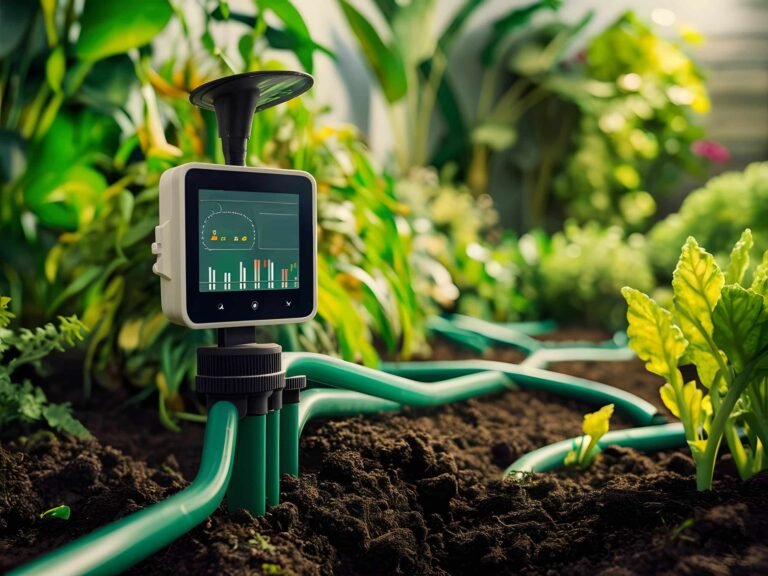
A farm may be divided into irrigation zones. Soil moisture sensors can monitor selected areas. Weather information can help estimate crop water demand. Flow meters can show how much water is being delivered. Automated valves can control individual zones, while a controller can coordinate the system.
The result is a move from simply applying water to a field toward managing water according to field conditions.
How Much Does Precision Irrigation Cost for 10 Hectares in Nigeria?
For a 10-hectare farm, there is no defensible single price that applies across Nigeria.
Current Nigerian supplier listings show professionally installed drip systems at roughly ₦600,000 to above ₦2 million per hectare, depending on system quality, field layout, water source and other conditions. At that range, the drip distribution component alone could therefore represent approximately ₦6 million to more than ₦20 million for 10 hectares.
Other current Nigerian listings show one-acre drip packages ranging from about ₦410,000 to ₦890,000, illustrating how much package contents and equipment quality can affect the price. Since 10 hectares is approximately 24.7 acres, simply multiplying retail kit prices by the area gives a rough indication of why a 10-hectare installation can quickly move into the tens of millions of naira.
However, these figures should not be interpreted as the final price of a complete precision irrigation project.
A complete system may also require water-source development, pumps, storage, filtration, pressure regulation, control valves, sensors, controllers, electrical or solar equipment, installation, engineering design and commissioning. These components can substantially increase the project cost.
A farmer should therefore treat ₦6 million to above ₦20 million as an indicative range for the drip distribution side of the project, not as a quotation for a complete precision irrigation system.
The final cost could be materially higher where the farm needs a new borehole, substantial pumping infrastructure, solar power, large storage capacity, complex automation or extensive civil works.
Why the Price Varies So Much
Two farmers can each own 10 hectares and still receive completely different irrigation quotations.
The first farmer may have a reliable borehole close to the field, an existing pump, a storage tank and relatively flat land. The irrigation contractor may only need to install filtration, distribution pipes, drip lines, valves and controls.
The second farmer may have no suitable water source. The project could require hydrological investigation, borehole drilling, a high-capacity pump, solar panels or a generator, storage tanks, long pipelines and additional pressure-management equipment before the actual irrigation network is installed.
The two farms have the same land area, but they do not have the same irrigation project.
Field shape matters too. A compact 10-hectare field can be easier and cheaper to pipe than fragmented plots separated by roads, drainage channels or other obstacles.
Crop spacing also affects the amount of drip line required. A closely planted vegetable crop can require substantially more lateral lines than a crop with wider row spacing.
Soil type, elevation differences, water quality and required operating pressure can also affect system design.
A Practical 10-Hectare Precision Irrigation Cost Breakdown
A useful way to budget the project is to separate the system into major cost groups rather than asking for one lump-sum figure.
| Cost component | What it covers | How it affects a 10-hectare project |
|---|---|---|
| Water source | Borehole, surface-water intake, well or existing supply | Can become a major cost if a new source is required |
| Pumping system | Pump, controls and associated fittings | Depends on water demand, source depth, distance and required pressure |
| Power supply | Grid, generator, solar or hybrid system | Depends on pump size and daily operating requirements |
| Storage | Tanks, reservoirs and supporting structures | Depends on water availability and irrigation scheduling |
| Filtration | Screen, disc or other filtration equipment | Important where water contains sediment or biological material |
| Mainlines and sub-mainlines | Pipes carrying water to irrigation zones | Cost depends on pipe diameter, distance and field layout |
| Drip lines or tapes | Water application equipment | Strongly affected by crop spacing and system design |
| Valves and pressure control | Zone control and pressure management | More zones generally mean more control equipment |
| Fertigation equipment | Injection of soluble fertiliser through irrigation | Optional but useful in many intensive production systems |
| Soil sensors | Soil moisture monitoring | Number and type depend on soil variability and irrigation zones |
| Weather monitoring | Rainfall and weather measurements | Supports more informed irrigation scheduling |
| Flow monitoring | Measures water movement | Helps verify system performance and identify problems |
| Controller and communications | Automation and remote monitoring | Cost varies significantly with sophistication |
| Installation | Labour, pipe laying, electrical work and commissioning | Depends on site conditions and system complexity |
| Training | Operator training and handover | Important for commercial systems |
| Maintenance | Filters, sensors, valves, drip components and repairs | Recurring cost that should be included in the farm budget |
The table shows why the price of drip tape alone tells a farmer very little about the cost of precision irrigation.
The Drip Irrigation Portion of the Budget
Drip irrigation is often the foundation of a precision irrigation system for high-value crops.
Current Nigerian market listings provide a useful picture of the range. One supplier currently lists one-acre packages at approximately ₦410,000, ₦580,000 and ₦890,000 depending on the supplier and package. Another Nigerian irrigation provider lists professionally installed drip systems at approximately ₦600,000 to above ₦2 million per hectare.
These prices are not directly interchangeable because the specifications and included components differ.
Some packages include only drip tapes, connectors and basic distribution equipment. Others include filters, fertigation equipment or installation.
For a 10-hectare farm, the farmer should therefore request a bill of quantities showing the exact length and specification of drip lines, mainlines, filters, valves, fittings and fertigation equipment.
A quotation that simply states “10-hectare drip system” without specifying the components makes it difficult to compare suppliers.
What About the Pump?
The pump is one of the most important components because it determines whether the irrigation network can receive the required water at the required pressure.
A 10-hectare farm should not select a pump simply because it is advertised as a “farm irrigation pump.”
The pump must be sized from the water requirement and hydraulic characteristics of the actual system.
Important factors include the water source, static and dynamic water level where groundwater is used, distance from the water source to the farm, elevation difference, required flow rate, required pressure and the number of irrigation zones operating at the same time.
For example, a pump suitable for a small one-hectare vegetable plot cannot simply be assumed to be suitable for a 10-hectare commercial farm.
Current Nigerian market listings show small solar pumps and smaller borehole pumps at prices ranging from hundreds of thousands of naira, but these are not automatically suitable for a 10-hectare system.
A proper irrigation design should calculate the required pump duty before equipment is purchased.
Solar, Generator or Grid Power?
Power choice can significantly affect the initial cost and running cost of a precision irrigation system.
Solar pumping is receiving increasing attention in Nigeria, particularly in areas where grid electricity is unreliable and diesel or petrol pumping creates high operating costs. A 2026 investment study covering farmers in Kebbi, Kano and Kaduna reported a fixed solar-based irrigation package of about ₦600,000 for a typical one-acre command area, while a mobile version was reported at about ₦1 million. These figures relate to specific smallholder solar irrigation configurations and should not be scaled directly into a 10-hectare commercial system.
A 10-hectare farm may require a substantially different pumping arrangement.
Solar systems can also involve panels, mounting structures, controllers, pumps, electrical protection, storage or other components depending on the design.
Generators can provide flexible pumping but expose the farm to fuel and maintenance costs. Grid electricity may be economical where it is reliable and available at the farm, but many rural farms cannot depend on it continuously.
The correct choice therefore depends on local power availability, water demand, pumping hours, fuel prices, solar conditions, capital availability and the required reliability of irrigation.
How Much Do Soil Moisture Sensors Add?
Soil moisture sensing is one of the components that turns a conventional irrigation network into a more data-driven system.
Basic electronic soil-moisture modules are available very cheaply in Nigeria, with current retail listings showing prices of only a few thousand naira per sensor module.
However, these inexpensive electronics should not be confused with a complete commercial agricultural monitoring system.
A farm-grade installation may require more robust sensors, protective enclosures, communications equipment, data logging, calibration, installation and technical support.
Sensor quality also matters.
For a 10-hectare farm, the question is not “How many sensors can I buy?” It is “How many representative measurement points are required to understand the soil and irrigation zones?”
If the entire farm has uniform soil and crop conditions, fewer monitoring points may be adequate. If the farm contains different soil types, slopes or irrigation zones, more sensors may be justified.
A precision agriculture specialist should determine sensor locations based on field variability rather than simply installing one sensor at the entrance of the farm.
Does a 10-Hectare Farm Need Full Automation?
Not necessarily.
There are different levels of irrigation technology.
A farmer could install drip irrigation and use manual valves. The system would still deliver water efficiently, but the farmer would make irrigation decisions manually.
The next level could add soil moisture sensors and a digital monitoring system. The farmer receives information and decides when to irrigate.
A more advanced system could automate valves and pumps based on predefined irrigation rules.
A high-end installation could combine soil moisture, weather data, flow monitoring, remote communication, automated valves, pump control and software.
Each step adds cost and complexity.
For many farms, the most sensible system is not the most automated one. It is the system that solves the farm’s most expensive irrigation problem without creating unnecessary technical complexity.
What Does Precision Irrigation Actually Improve?
Precision irrigation primarily improves the farmer’s ability to manage water.
Instead of applying the same irrigation duration to every zone, the farm can monitor conditions and manage zones according to their needs.
This can be particularly valuable in vegetable production, orchards, nurseries, greenhouses and other high-value systems where water stress can affect crop quality.
It can also help farm managers identify irrigation-system problems.
Suppose a zone is expected to receive a certain amount of water but the flow meter shows a major change. That could indicate a leaking pipe, blocked filter, damaged line or another problem requiring investigation.
Similarly, if one sensor remains unusually wet while surrounding zones become dry, the manager may need to investigate the irrigation distribution or sensor placement.
The value therefore extends beyond saving water. It includes better monitoring of the irrigation operation itself.
How Much Water Can Precision Irrigation Save?
There is no responsible universal percentage for a Nigerian 10-hectare farm.
Water savings depend on what the farmer was doing before precision irrigation was introduced.
A farmer already operating a well-designed drip system with careful irrigation scheduling may have less room for improvement than a farm using poorly managed surface irrigation.
Research on smart irrigation and IoT-based systems has reported widely varying water-saving results, which reinforces the need to evaluate performance under local conditions rather than assume a particular percentage.
The correct approach is to establish a baseline.
Measure how much water the farm currently applies, how often irrigation occurs, how evenly the system distributes water and how crops respond. After installation, compare the new system against that baseline.
This makes it possible to determine whether the investment is producing a measurable improvement.
What Crops Make Precision Irrigation More Economically Attractive?
Precision irrigation is generally easier to justify where the value of production is high enough to support the investment.
Commercial vegetable farms producing tomato, pepper, cucumber, onion and other high-value crops may have stronger reasons to invest in precise water management than a low-value crop with limited irrigation margins.
Greenhouse production is another important application because water management is more controlled and the crop value per unit area can be high.
Orchards and plantations may also benefit because irrigation can be managed according to crop development and root-zone conditions.
This does not mean that precision irrigation is unsuitable for maize, rice or other field crops. Rather, the financial case depends on crop value, irrigation requirement, water cost, energy cost, expected production benefits and the farmer’s existing infrastructure.
The Cost of Water Quality Should Not Be Ignored
Water quality is often overlooked when farmers prepare irrigation budgets.
Water containing excessive sediment can cause filtration problems. Certain water sources can also create issues with dissolved minerals or other properties that affect irrigation equipment and crop production.
A 10-hectare system with hundreds or thousands of metres of drip lines can become expensive to maintain if filtration and water treatment are poorly designed.
Before installation, the farmer should test the irrigation water and determine whether the selected equipment is compatible with its quality.
This is particularly important when using boreholes, surface water or other sources whose quality can change over time.
Installation and Field Design Matter as Much as Equipment
A high-quality drip tape cannot compensate for poor system design.
The irrigation network needs appropriate pipe diameters, pressure regulation, filtration and zoning.
The designer must also account for field elevation and hydraulic losses.
A farm with significant elevation differences may require pressure-compensating emitters or additional pressure-management equipment.
The field should therefore be surveyed before the system is designed.
The irrigation contractor should know where the water source is located, how far the water must travel, where elevation changes occur and how the field will be divided into irrigation zones.
This is why farmers should be cautious about purchasing a generic “10-hectare irrigation kit” before the farm has been properly assessed.
A Hypothetical 10-Hectare Tomato Farm Budget
Consider a hypothetical commercial tomato farm with 10 contiguous hectares.
Assume the farm already has a suitable water source and does not require major borehole development. The farmer wants drip irrigation, fertigation, soil-moisture monitoring and zone control.
The basic drip component could fall within the broad Nigerian market range of roughly ₦6 million to above ₦20 million based on currently published per-hectare market indications. The final amount would depend heavily on the crop spacing, equipment specification and installation arrangement.
The precision layer would then add sensors, controllers, valves, flow monitoring and associated communications or automation.
If the existing water source and pump are inadequate, the project would require additional capital for pumping and potentially power infrastructure.
This example is deliberately not presented as a fixed quotation. It demonstrates why a farm manager should separate the project into components before making an investment decision.
What If the Farm Needs a New Borehole?
The cost calculation changes substantially.
A new borehole involves more than the drilling itself. The final cost depends on groundwater conditions, drilling depth, casing requirements, pump selection, electrical installation, testing and other site-specific factors.
There is no reliable national price that can be inserted into every 10-hectare irrigation budget.
The farmer should obtain a site-specific borehole and pumping quotation and then integrate that figure into the irrigation design.
The same principle applies to surface-water abstraction. Intake structures, pipelines, pumping distance and water-quality requirements all affect the cost.
What Does Maintenance Cost?
Maintenance is a recurring cost rather than a one-time installation expense.
Filters need regular inspection and cleaning. Drip lines can become blocked. Valves can fail. Pumps require servicing. Sensors can become damaged or produce unreliable readings. Solar equipment, generators and electrical components also require maintenance.
The farm should keep spare fittings and essential replacement components available, particularly during the production season.
A system that cannot be repaired quickly can cause more damage than a simpler system that the farm team understands and can maintain.
Technical support should therefore be considered part of the purchase decision.
What Is the Total Cost of Ownership?
The purchase price is only the beginning.
For a 10-hectare precision irrigation project, the farm manager should consider:
| Cost category | Examples |
|---|---|
| Capital cost | Irrigation network, pump, sensors, controller and power system |
| Installation | Labour, transport, commissioning and testing |
| Energy | Electricity, diesel, petrol or solar-system operating requirements |
| Maintenance | Filters, pumps, valves, sensors and pipes |
| Replacement | Drip tape, connectors, valves, sensors and electrical components |
| Software | Subscription or platform fees where applicable |
| Labour | Irrigation monitoring and system management |
| Training | Initial and refresher training |
| Technical support | Repairs, troubleshooting and system servicing |
| Water infrastructure | Borehole, storage, intake and treatment where required |
A farmer comparing two quotations should therefore compare the total cost of ownership, not just the equipment price.
Is Precision Irrigation Worth the Investment on 10 Hectares?
The answer depends on the farm economics.
Precision irrigation can make more economic sense when water is scarce, irrigation is essential for production, energy costs are significant, labour costs are rising, crops are high-value, or poor irrigation management causes measurable losses.
It may be harder to justify an expensive automated system where water is readily available, the existing irrigation system is already well managed, crop value is low and the farmer can effectively monitor irrigation manually.
The investment should be evaluated against measurable farm outcomes.
For example, the farmer could compare current irrigation water use, pumping costs, labour requirements, crop performance and irrigation-related losses with the expected performance after installation.
A technology provider promising a particular payback period should not be accepted without examining the assumptions behind the calculation.
A Better Way to Calculate the Investment
Rather than asking a supplier, “How much is precision irrigation for 10 hectares?”, the farm manager should request a complete technical and commercial proposal.
The proposal should show the irrigation design, water requirement, pump duty, pipe sizes, irrigation zones, filtration system, drip-line specification, automation equipment, sensors, power requirements, installation cost, commissioning, training and maintenance requirements.
The farmer can then compare quotations on a like-for-like basis.
A cheaper quotation may simply contain fewer components or lower-grade materials.
A more expensive quotation is not automatically better either.
The useful comparison is whether both systems are designed to deliver the required flow and pressure, provide appropriate filtration, support the crop’s irrigation needs and remain maintainable under Nigerian operating conditions.
Questions to Ask an Irrigation Technology Provider
Before signing a contract, a 10-hectare farm manager should ask the provider to explain how the system was sized.
Ask what daily and peak water demand was used, what pump flow and pressure are required, how many irrigation zones will operate simultaneously and where the sensors will be installed.
The provider should also explain what happens when power fails, when internet connectivity is lost or when a sensor stops transmitting data.
Ask how often filters require cleaning, how the drip system should be flushed, which components are expected to require replacement and whether spare parts are available locally.
For digital systems, ask whether the farmer owns the irrigation data, whether the system can be operated manually and what happens if a software subscription ends.
These questions can prevent a technically impressive system from becoming difficult to operate on the farm.
Precision Irrigation Does Not Replace Good Agronomy
Sensors and automation are tools. They do not replace knowledge of the crop, soil and irrigation system.
A sensor reading must be interpreted in context.
The same soil-moisture reading may have different implications in sandy soil and clay soil. Crop roots also change as plants develop. Irrigation requirements differ between seedlings and mature crops.
The farm manager must therefore combine technology with agronomic knowledge.
This is one reason technology providers should work with irrigation engineers, agronomists or trained farm managers when designing commercial systems.
What Is a Sensible Approach for a Nigerian 10-Hectare Farm?
For many farms, the most practical approach is to build the system in stages.
Start by evaluating the water source, soil, crop, field layout and existing irrigation infrastructure.
Next, determine the hydraulic requirements and establish irrigation zones.
Install an appropriately designed water-delivery system with good filtration and pressure control.
Then introduce measurement, beginning with soil moisture and water-flow monitoring where these solve a clear management problem.
Automation can be added once the farm has reliable data and the management team understands how to interpret it.
This staged approach can reduce the risk of paying for sophisticated technology that the farm does not yet need.
Precision Irrigation Costs Should Be Budgeted as an Engineering Project
For a 10-hectare farm in Nigeria, a useful starting point is that current market indications put professionally installed drip irrigation broadly around ₦6 million to above ₦20 million for 10 hectares, before assuming that all water-source, pumping, power and precision-control requirements are included.
That range is intentionally broad because the underlying market prices vary significantly by system specification and site conditions.
Once sensors, automated controls, pump infrastructure, power supply, storage, engineering, installation and other site-specific requirements are added, the complete precision irrigation project can move considerably beyond the cost of the basic drip network.
The most reliable way to establish the actual investment is therefore a farm-specific design and bill of quantities.
For a commercial 10-hectare operation, the farmer should resist the temptation to choose a system solely because it has the lowest initial price. The better financial question is whether the system is technically appropriate, maintainable and capable of producing measurable improvements in water management and farm operations.
Precision irrigation is ultimately a management investment. Its value comes from applying the right amount of water, to the right area, at the right time, while giving the farm manager enough information to know whether the irrigation system is actually performing as designed.
Frequently Asked Questions
How much does a 10-hectare irrigation system cost in Nigeria?
Current Nigerian market indications for professionally installed drip irrigation are roughly ₦600,000 to above ₦2 million per hectare, giving an indicative ₦6 million to above ₦20 million for 10 hectares for the drip component. A complete precision irrigation project can cost more after pumping, water-source development, power, sensors, automation, installation and other requirements are included.
How much does precision irrigation cost per hectare in Nigeria?
There is no single national price. Current market listings for drip irrigation alone range from hundreds of thousands of naira to more than ₦2 million per hectare depending on equipment quality, crop spacing, field layout, installation and water infrastructure. Precision controls and monitoring add further costs.
Is drip irrigation the same as precision irrigation?
No. Drip irrigation describes how water is delivered to crops. Precision irrigation adds measurement, control and data-driven scheduling so irrigation can be managed according to field and crop conditions.
How many soil moisture sensors are needed for 10 hectares?
There is no universal number. Sensor requirements depend on soil variability, crop type, irrigation zones, field topography and the accuracy required. Sensors should be positioned to represent meaningful management zones rather than distributed uniformly without considering field conditions.
Can solar power run irrigation for a 10-hectare farm?
It can, but the solar system must be sized around the farm’s actual pumping requirement. Pump flow, pumping head, irrigation schedule, water source, solar resource and required operating hours all affect the design. A small solar pump intended for a one-acre or one-hectare application should not automatically be assumed to be suitable for 10 hectares.
Is precision irrigation worth it for a 10-hectare farm?
It can be economically useful where irrigation is important to production and the farm has significant water, labour, energy or crop-management challenges. The investment should be assessed against the farm’s actual costs and expected operational improvements rather than assuming a guaranteed return.
What is the most expensive part of a precision irrigation system?
It depends on the farm. The water source, pumping and power infrastructure can become major costs when they do not already exist. On other farms, the irrigation distribution network, extensive piping, automation or field-specific engineering may represent a large part of the investment.
What should I ask before buying a precision irrigation system?
Ask for a site survey, hydraulic design, bill of quantities and explanation of the pump, filtration, pipe sizes, irrigation zones, sensors, controllers and power requirements. Also ask about installation, maintenance, spare parts, training, warranty, manual operation and technical support.