How Farmers Can Use AI to Improve Fertilizer Application?
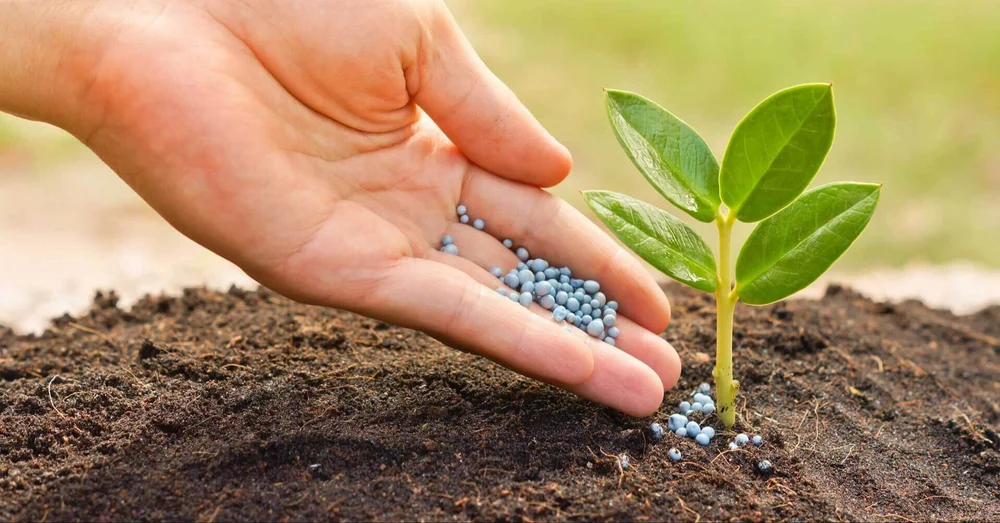
Applying fertilizer at the right rate is one of the most important input decisions a farmer makes. Applying too little can restrict crop growth and yield, while applying too much can increase production costs and leave nutrients unused by the crop. The difficulty is that a farm is rarely uniform. Soil fertility, moisture, crop growth, previous cropping history, organic matter, topography and nutrient demand can vary significantly from one part of a field to another.
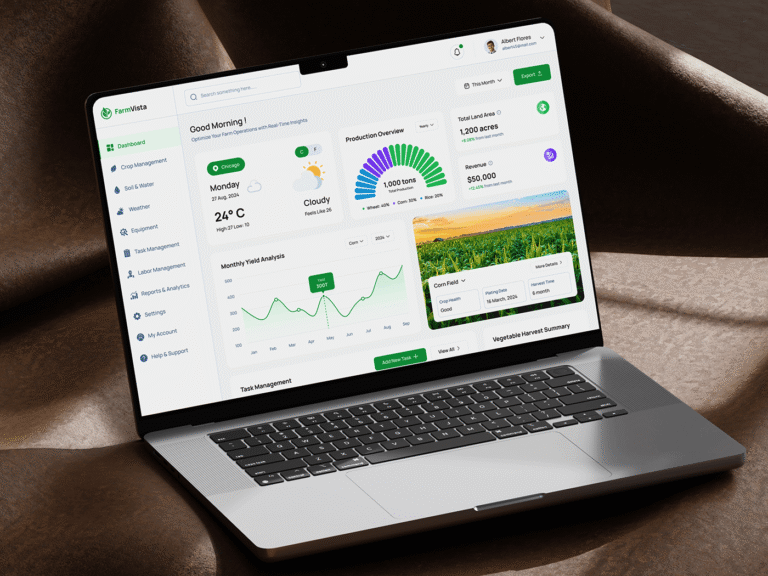
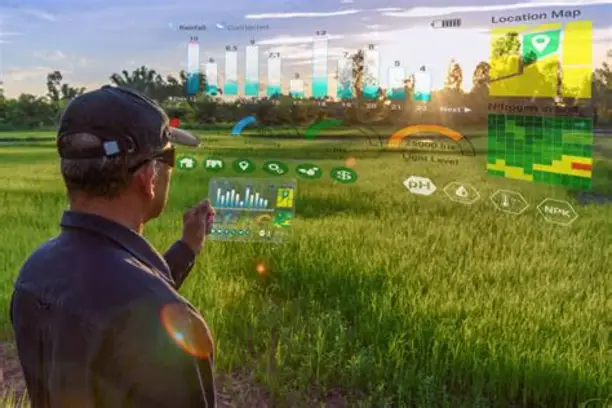
This is where artificial intelligence can become useful. AI can process information from soil tests, crop sensors, satellite imagery, drones, weather records, yield data and farm-management systems to identify patterns and support fertilizer decisions. Instead of treating an entire field as though every square metre has identical nutrient requirements, AI-assisted systems can help farmers identify where nutrient demand may be different and adjust management accordingly.
Research on machine learning and nutrient management shows that AI-based models can support nutrient-status estimation, fertilizer recommendations and site-specific management. However, the technology does not remove the need for agronomic knowledge, reliable field data or proper fertilizer management. Research also identifies data quality, technology costs, regional differences and the difficulty of integrating multiple data sources as important barriers to wider adoption.
For farmers, the important question is therefore not simply whether AI can recommend fertilizer. The more useful question is how AI can fit into an existing nutrient-management system and whether the resulting decisions are sufficiently reliable and economical for a particular farm.
Why Fertilizer Application Is Difficult to Optimize
Fertilizer management involves more than selecting a bag of fertilizer and deciding how many kilograms to apply. The crop needs particular nutrients at particular stages of growth, while the amount already available in the soil can vary considerably.
Nitrogen provides a good example. Crop nitrogen demand changes throughout the growing season, and nitrogen availability is influenced by soil properties, weather, rainfall, temperature, organic matter, previous crops, irrigation and other management practices. A uniform nitrogen rate can therefore result in areas receiving more nitrogen than the crop requires and other areas receiving less.
The same principle applies to phosphorus, potassium and other nutrients, although their behaviour in soil and their management requirements are different.
Traditional fertilizer decisions often rely on soil testing, previous farm experience, recommended rates, crop yield targets and observations from the field. These remain important. AI is most useful when it adds another layer of analysis rather than replacing established agronomic practices.
Precision nutrient management research increasingly focuses on combining soil and plant measurements with models that can account for spatial and temporal variation. Recent reviews describe AI and machine learning as tools for estimating nutrient status and supporting site-specific fertilizer decisions.
What AI Fertilizer Application Actually Means
AI fertilizer application refers to the use of artificial intelligence and machine learning systems to analyze agricultural data and support decisions about fertilizer type, rate, timing, placement or location.
The AI itself does not necessarily spread fertilizer. In many systems, its role is to analyze information and generate a recommendation or prescription map. The actual fertilizer may then be applied manually, with conventional machinery, or through a variable-rate application system.
A typical AI-assisted fertilizer-management system may combine several types of information.
| Data source | What it can tell the system | Possible fertilizer-management use |
|---|---|---|
| Soil tests | Nutrient concentrations, pH and other soil properties | Establish baseline nutrient status |
| Satellite imagery | Crop growth and vegetation patterns | Identify differences in crop condition |
| Drone imagery | High-resolution crop and field information | Detect within-field variation |
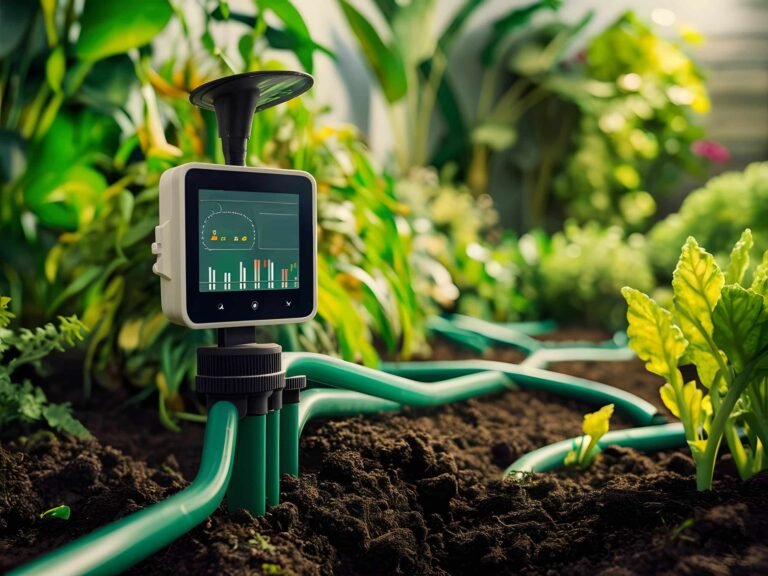
| Crop sensors | Plant or canopy characteristics | Estimate crop nutrient status |
| Weather data | Rainfall, temperature and other conditions | Improve timing and risk assessment |
| Yield records | Historical production variation | Identify persistent field differences |
| Farm records | Previous crops, fertilizer and management | Improve recommendations using field history |
| GPS/GNSS data | Exact field position | Support site-specific application |
| Machinery data | Application rates and field coverage | Monitor whether fertilizer was applied as intended |
The value comes from combining these information sources rather than relying on one data stream in isolation.
A machine-learning model, for example, can be trained to identify relationships between crop conditions, soil information, weather, management history and eventual crop response. The resulting model can then support decisions about where additional fertilizer may be justified and where applying more may have limited value.
How AI Can Help Farmers Decide Where Fertilizer Is Needed
One of the most practical applications of AI is identifying variation within a field.
Suppose a farmer has a 100-hectare field that appears reasonably uniform from the road. Soil tests and crop imagery may reveal that some areas consistently produce stronger crops than others. The causes could include differences in soil fertility, water availability, drainage, compaction, organic matter, previous nutrient applications or other factors.
AI can analyze historical and current data to identify patterns that may not be obvious through visual inspection alone.
The resulting recommendation may divide the field into management zones. One zone could receive a higher fertilizer rate, another a moderate rate and another a lower rate, provided the underlying data and agronomic interpretation justify those differences.
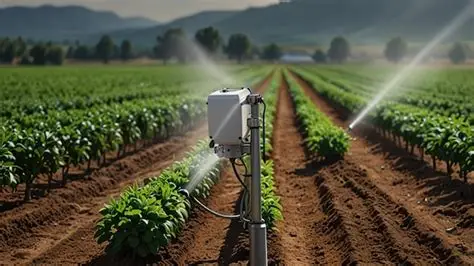
This approach is closely related to variable-rate fertilizer application. The AI helps determine what rate may be appropriate for different locations, while precision machinery uses positioning and application controls to deliver the prescribed rate.
Precision nitrogen research specifically describes the use of remote sensing, soil and crop monitoring, GNSS and variable-rate technologies to adjust nitrogen application according to spatial differences in crop and soil conditions.
AI Can Help With Nitrogen Management
Nitrogen is one of the most important areas for AI-assisted fertilizer management because nitrogen demand changes rapidly and nitrogen losses can occur through several pathways.
AI models can use information such as crop development, weather, soil characteristics, previous applications and sensor measurements to estimate crop nitrogen status or support an in-season nitrogen recommendation.
Research has already investigated machine-learning models for predicting crop nitrogen status and recommending side-dress nitrogen applications. One study on corn found that combining sensor information with soil, weather and management data was important for the modelling process.
This does not mean an AI system can simply look at a crop and automatically determine the exact fertilizer rate for every field.
The relationship between crop appearance and nitrogen availability can be affected by many other factors. Water stress, disease, pests, soil compaction and other nutrient deficiencies can also change crop appearance.
Therefore, an AI nitrogen recommendation should be treated as decision support unless it has been properly validated for the crop, environment and management system in which it is being used.
Using Satellite Imagery to Support AI Fertilizer Decisions
Satellite imagery can provide repeated information about crop conditions over large areas. AI can analyze these images to identify differences in vegetation, crop growth or stress.
For a large commercial farm, this can reduce the need to inspect every part of a field manually before making a management decision.
However, satellite imagery does not automatically tell a farmer why a particular area looks different.
A weak vegetation signal could be associated with nutrient deficiency, insufficient water, pest damage, disease, poor drainage, soil differences, planting problems or other causes.
This is why AI fertilizer systems should ideally combine imagery with other information. Soil tests, crop observations, weather information, field history and yield records can provide context that an image alone cannot provide.
Research into machine learning for precision agriculture has emphasized the value of combining remote sensing with other data sources because nutrient-status estimation and yield prediction are influenced by multiple interacting factors.
How Drones Can Improve AI-Based Fertilizer Decisions
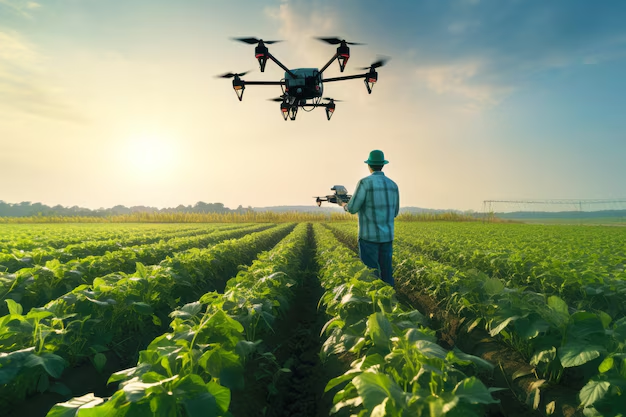
Drones can provide higher-resolution imagery than many satellite systems, making them useful for smaller areas or situations where detailed crop information is required.
A drone equipped with an appropriate camera or sensor can collect imagery over a field. Software can then process the imagery and, in some systems, AI can analyze the resulting data to identify crop variability.
For example, a commercial vegetable grower may use drone imagery to identify sections of a field where crop development is weaker. The farmer can then investigate those areas on the ground before deciding whether nutrient management is actually responsible.
Drones are therefore better viewed as a data-collection tool within a larger decision system.
A drone does not automatically produce a correct fertilizer recommendation. The usefulness of the information depends on image quality, sensor capability, flight conditions, crop growth stage, processing methods and the ability to interpret the results correctly.
Farmers also need to consider operator skills, battery management, maintenance, weather conditions, software requirements and applicable aviation rules.
For many farms, hiring a drone service may be more practical than purchasing and maintaining a drone.
AI and Soil Testing Should Work Together
AI should not be viewed as a replacement for soil testing.
Soil testing provides direct measurements of important soil properties and nutrient concentrations. AI can help interpret those measurements alongside other information and identify patterns across a farm.
For example, a farmer could combine soil-test results with historical yields, satellite imagery, crop type, weather information and previous fertilizer applications. An AI system could then help identify relationships between those variables and crop performance.
This approach is particularly important because a recommendation generated from poor-quality input data can still be wrong even if the machine-learning model itself is technically sophisticated.
Recent research on AI-assisted soil fertility assessment has identified soil-data availability, regional datasets and the cost of laboratory measurements among the practical challenges affecting fertilizer recommendation systems.
The most useful system is therefore not necessarily the one with the most complicated algorithm. It is the one that has reliable data and produces recommendations that make agronomic sense under local conditions.
AI Can Help Create Variable-Rate Fertilizer Maps
One of the clearest practical applications is the creation of fertilizer prescription maps.
A prescription map divides a field into locations or management zones and assigns an application rate to each area.
The process may look like this:
Farmer collects soil and crop information.
The information is combined with field boundaries and historical farm records.
AI or another decision-support model analyzes the data.
The system identifies patterns or estimates nutrient requirements.
An agronomist or farm manager reviews the recommendation.
A fertilizer prescription map is created.
The map is transferred to compatible application equipment.
The machinery applies different rates according to location.
The farmer records the application and later compares it with crop performance.
This creates a feedback loop. Future recommendations can become more useful as additional field data is collected, although this improvement is not automatic and depends on data quality and appropriate model development.
AI Can Improve Fertilizer Timing
Fertilizer rate is only one part of nutrient management. Timing also matters.
AI systems can incorporate crop growth stage, weather forecasts, soil conditions, historical field behaviour and other information to help determine when an application may be appropriate.
This can be particularly useful for nitrogen management, where crop demand changes during the growing season.
For example, an in-season recommendation system may use current crop information rather than relying entirely on a fertilizer rate established before planting.
However, timing recommendations should account for local agronomic practices and weather conditions. Heavy rainfall soon after certain fertilizer applications, for example, can alter nutrient availability and increase the risk of nutrient movement or loss.
The goal is not simply to apply fertilizer later or earlier. The objective is to better match nutrient availability with crop demand under actual field conditions.
AI Can Help Reduce Over-Application, But It Cannot Guarantee Savings
A major reason farmers consider AI fertilizer management is the possibility of improving nutrient-use efficiency.
If a field contains areas where additional fertilizer is unlikely to provide an economic response, reducing the rate in those areas may avoid unnecessary input use. Conversely, increasing fertilizer in an area with genuine nutrient limitation may help correct under-application.
However, AI does not automatically reduce fertilizer costs.
The economic result depends on several factors.
| Factor | Why it matters |
|---|---|
| Fertilizer price | Determines the financial value of reducing unnecessary application |
| Crop value | Determines how much additional production may justify extra fertilizer |
| Soil variability | Greater variation may create more opportunity for site-specific management |
| Yield response | Determines whether additional fertilizer produces an economic benefit |
| Technology cost | Data, software, equipment and services add to total costs |
| Farm size | Larger farms may have more area over which technology costs can be spread |
| Application equipment | Variable-rate machinery may require additional investment |
| Data quality | Poor data can lead to poor recommendations |
| Local agronomy | Nutrient behaviour varies by soil, climate and production system |
| Management skill | Recommendations still need interpretation and follow-up |
Research reviews emphasize that economic conditions, farm size, infrastructure and technology costs influence the adoption of precision nitrogen-management systems.
AI Fertilizer Management for Small Farms
AI fertilizer management is not automatically limited to large commercial farms, but the technology needs to match the farm’s scale and resources.
A smallholder farmer may not need a tractor-mounted variable-rate fertilizer spreader, drone fleet or complex farm-management platform.
A more practical approach could involve soil testing, a smartphone-based advisory tool, satellite information or a service provider that processes farm data on behalf of several farmers.
This is an important distinction between owning technology and using technology.
A farmer does not necessarily need to purchase every component of a precision agriculture system. A cooperative, agricultural service company, consultant or technology provider may be able to provide certain services.
For small farms, affordability, ease of use, local technical support and the relevance of recommendations to local crops and soils may matter more than having advanced equipment.
AI Fertilizer Management on Large Commercial Farms
Large farms have different opportunities because they may already collect substantial amounts of operational data.
A commercial farm may have GPS machinery records, soil-test maps, yield-monitor data, weather stations, satellite imagery, field boundaries, crop histories and fertilizer application records.
AI can help integrate these datasets and identify patterns across multiple fields and seasons.
Large-scale operations can also use variable-rate application equipment to turn digital fertilizer recommendations into actual field operations.
However, larger farms also face data-management challenges. Different machines and software platforms may use different formats, making integration difficult.
The cost of collecting, cleaning, storing and maintaining data should therefore be included when evaluating the technology.
What Equipment Is Needed?
There is no single equipment package required for AI fertilizer application.
A basic system may rely on existing farm records and soil tests. A more advanced system may include sensors, satellite imagery, drones, GPS-enabled machinery and variable-rate controllers.
| Technology level | Possible requirements | Typical use |
|---|---|---|
| Basic | Soil tests, smartphone, farm records | Improved fertilizer planning |
| Intermediate | Satellite imagery, digital field maps, weather data | Identify field variability |
| Advanced | Sensors, drones, detailed soil maps and AI analytics | More detailed site-specific management |
| Precision application | GNSS, prescription maps and variable-rate equipment | Apply different fertilizer rates by location |
| Integrated system | Multiple sensors, machinery data, yield data and farm software | Continuous data-driven nutrient management |
Farmers should avoid buying the most advanced system simply because it offers more features.
The appropriate system is the one that solves a genuine farm-management problem at a cost that makes sense for the operation.
Does AI Fertilizer Application Require Internet Access?
Internet requirements depend on the system.
Some platforms require internet connectivity to upload field information, access cloud-based AI models, download imagery or synchronize records. Others may allow certain processing or recommendations to take place locally on a device.
This distinction matters in areas where mobile connectivity is unreliable.
Farmers evaluating an AI fertilizer tool should ask whether the system can operate offline, what functions require internet access, how much data is transferred and what happens when connectivity is interrupted.
In parts of Nigeria and other African agricultural markets, this can be an important adoption consideration because connectivity and electricity availability can vary significantly between locations.
A technically capable platform may still be impractical if farmers cannot reliably access the data or services needed to operate it.
How Accurate Are AI Fertilizer Recommendations?
There is no single accuracy percentage that applies to all AI fertilizer systems.
Accuracy depends on the crop, soil, climate, geographic region, data quality, sensor technology, model design, fertilizer system and the way the model was validated.
A model trained using data from one region may not perform equally well in another region.
Similarly, a model developed for one crop should not automatically be assumed to work accurately for another crop.
This is one of the most important points farmers should understand before purchasing an AI-based fertilizer service.
A vendor may report excellent model performance under particular testing conditions, but farmers should ask whether those results came from independent field validation or controlled datasets.
Recent research continues to identify model accuracy, data integration and the need for better predictive models as challenges in precision nutrient management.
AI Does Not Replace Soil Experts or Agronomists
A fertilizer recommendation can look precise because it contains a specific number, but numerical precision does not necessarily mean agronomic certainty.
Suppose an AI system recommends a particular nitrogen rate for a weak-looking section of a field. Before increasing fertilizer, the farmer should determine whether the crop is actually nitrogen deficient.
Poor crop growth may instead result from waterlogging, drought, pests, disease, compaction, poor root development or another nutrient deficiency.
This is why field observation and professional agronomic interpretation remain important.
AI is most useful when it helps farmers ask better questions, identify areas that need investigation and process large amounts of information efficiently.
It should not be treated as an unquestionable fertilizer prescription.
AI Fertilizer Management and the 4R Nutrient Management Approach
AI can also support established nutrient-management principles such as applying the right nutrient, at the right rate, at the right time and in the right place.
The technology does not replace these principles. Instead, it can provide more detailed information for applying them.
For example, satellite imagery may identify differences in crop growth. Soil testing may provide nutrient information. Weather data may help with timing. GPS and variable-rate equipment may control placement and rate.
AI can help bring these information sources together.
This makes AI more valuable as part of an integrated nutrient-management system than as a standalone application.
Practical Example: Using AI on a Maize Farm
Consider a hypothetical 200-hectare maize farm with several years of yield and fertilizer records.
The farm manager notices that some sections consistently produce lower yields despite receiving the same fertilizer rate as the rest of the farm.
Instead of immediately increasing fertilizer across the entire field, the manager collects soil samples from different zones and reviews historical yield data. Satellite imagery is then used to examine crop performance throughout the growing season.
An AI-based analysis identifies recurring spatial patterns between soil characteristics, crop performance and previous management.
The farm agronomist reviews the findings and determines that some low-performing zones are associated with nutrient limitations, while others appear to have drainage or soil-structure problems.
The farm can then create a more targeted nutrient-management plan.
The important lesson is that AI did not simply tell the farmer to apply more fertilizer. It helped separate different causes of poor crop performance so that fertilizer was not used as a solution to problems that fertilizer could not solve.
Practical Example: AI for a Vegetable Farm
A hypothetical commercial vegetable grower may face a different problem.
Vegetables often have high input costs and may require careful nutrient management throughout the production cycle.
The farmer can combine soil tests, crop growth observations, weather information and field records in a digital system. AI can help identify areas where crop development differs from the expected pattern.
Instead of applying the same corrective fertilizer treatment across the whole farm, the grower can investigate the affected areas and determine whether nutrient management, irrigation, disease or another factor is responsible.
In this type of production system, the greatest value may come from faster identification of problems rather than simply reducing the total amount of fertilizer used.
What AI Fertilizer Systems Cannot Solve
AI cannot compensate for fundamentally poor farm management.
If soil samples are collected incorrectly, the model may receive unreliable information.
If field boundaries are inaccurate, recommendations may be assigned to the wrong areas.
If crop imagery is collected under unsuitable conditions, the resulting analysis may be misleading.
If the fertilizer spreader is poorly calibrated, a correct prescription map can still result in incorrect field application.
If the underlying agronomic assumptions are wrong, a technically sophisticated AI system can produce an unsuitable recommendation.
The entire workflow therefore matters.
Data collection, analysis, agronomic interpretation, machinery calibration, fertilizer application and follow-up evaluation all influence the final result.
Main Limitations of AI Fertilizer Application
AI-assisted fertilizer management has significant potential, but several limitations need to be considered before adoption.
The first is data availability. Machine-learning systems generally require sufficient relevant data to identify reliable relationships. Farms with limited historical records may have less information available for model development.
The second is local validation. A recommendation that performs well in one agricultural region may not perform equally well elsewhere.
The third is infrastructure. Advanced systems can require smartphones, internet connectivity, sensors, GPS equipment, software and reliable electricity.
The fourth is cost. The financial benefit of precision fertilizer management may be easier to justify on large farms or high-value crops, while a small farm may find a simpler soil-testing and advisory approach more economical.
The fifth is interpretation. Farmers still need to understand what the recommendation means and investigate unusual results.
The sixth is data integration. Modern nutrient-management systems may combine information from several sources, and bringing those datasets together can be technically difficult. Recent research continues to identify data integration and technology cost as major adoption barriers.
How Much Does AI Fertilizer Application Cost?
There is no universal price for AI fertilizer application because systems differ substantially.
A farmer using a basic digital advisory service may have very different costs from a commercial operation using soil mapping, drone imagery, satellite analytics, farm-management software and variable-rate machinery.
The total cost may include:
- Soil sampling and laboratory analysis
- Satellite or remote-sensing services
- Drone data collection
- Sensors
- Software subscriptions
- AI analytics
- GPS or GNSS equipment
- Variable-rate controllers
- Machinery upgrades
- Internet and mobile data
- Electricity
- Training
- Technical support
- Maintenance
- Data management
Farmers should calculate the total cost of ownership rather than looking only at the purchase price of the software or equipment.
The financial question is whether the technology can produce enough value through better fertilizer decisions, reduced waste, improved crop performance, reduced labour requirements or better management information to justify those costs.
There is no universal payback period because fertilizer prices, crop prices, field variability, farm size, technology performance and management practices differ.
When AI Fertilizer Technology May Not Be Worth It
AI may not be the first technology a farmer should adopt.
If a farm does not currently conduct basic soil testing, keeping proper fertilizer records and establishing a sound nutrient-management plan may provide more immediate value.
Similarly, if a small farm has relatively uniform fields and fertilizer costs are low compared with the cost of implementing a complex precision system, advanced AI may not provide enough additional value.
Technology should therefore follow the problem.
A farmer should first identify whether fertilizer management is actually a major constraint. The next step is to determine what information is missing and whether AI can provide useful information at an acceptable cost.
What Farmers Should Ask Before Buying an AI Fertilizer System
Farmers should ask technology providers detailed questions before committing to an AI-based nutrient-management service.
| Question | Why it matters |
|---|---|
| Which crops does the system support? | Models may be crop-specific |
| Where has the system been validated? | Local performance may differ |
| What data does it require? | Determines whether the farm has the necessary information |
| Does it work offline? | Important where connectivity is unreliable |
| How is accuracy measured? | Helps distinguish field validation from marketing claims |
| Does it recommend fertilizer or only estimate crop condition? | Clarifies the actual function |
| Can recommendations be reviewed by an agronomist? | Provides an additional level of decision support |
| Does it work with existing machinery? | Determines whether new equipment is necessary |
| Who owns the farm data? | Important for privacy and long-term use |
| What happens after the subscription ends? | Determines access to historical data |
| What training is provided? | Affects successful adoption |
| What technical support is available locally? | Important for troubleshooting |
| What is the total annual cost? | Helps evaluate economic feasibility |
Farmers should also ask whether the system has been tested under local soil, climate and crop conditions rather than relying solely on performance results from another country.
How to Start Using AI for Fertilizer Management
Farmers interested in the technology should begin with the fertilizer problem they are trying to solve.
Start by reviewing current fertilizer practices, soil-test results, crop yields, fertilizer costs and field records. Identify whether fertilizer application is uniform because the field is genuinely uniform or simply because the farm lacks information about field variability.
The next step is to establish a reliable baseline.
Soil testing, accurate field boundaries, historical yield records and properly recorded fertilizer applications can provide valuable information before an AI system is introduced.
After that, farmers can test the technology on a limited area rather than immediately applying it across the entire operation.
The results should be compared with the farm’s existing approach. Where possible, farmers should evaluate crop performance, fertilizer use, application accuracy, labour requirements and economic results.
If the system produces useful results consistently, the farmer can then consider expanding it.
AI and the Future of Fertilizer Application
Current research is moving toward systems that combine AI with remote sensing, sensors, robotics, variable-rate machinery and other precision agriculture technologies.
Recent research published in 2026 describes the development of intelligent nitrogen-management systems that integrate AI, remote sensing, UAVs, robotics and other technologies. The direction of research is increasingly toward predictive and prescriptive nitrogen management rather than simply measuring crop conditions.
Another emerging direction is the integration of multiple data sources. Instead of using only satellite imagery or soil data, future systems may combine soil information, crop imagery, weather, management history and real-time sensor measurements.
This could allow fertilizer recommendations to respond more dynamically to changing field conditions.
However, research progress should not be confused with universal commercial readiness. A technology can perform well in research while still requiring additional validation, infrastructure, cost reductions or local adaptation before it becomes practical for widespread farm use.
The Practical Role of AI in Fertilizer Management
AI is most useful when it helps farmers make better decisions from information that would otherwise be difficult to analyze.
It can identify patterns across large datasets, support nutrient-status estimation, help create management zones, contribute to variable-rate prescriptions and assist with in-season fertilizer decisions.
But the technology works best as part of a broader nutrient-management process.
Farmers still need good soil information, reliable crop observations, appropriate agronomic knowledge and properly calibrated equipment.
The most practical approach is therefore not to ask whether AI can replace traditional fertilizer management. The better question is whether AI can improve the quality, speed and precision of the decisions already being made on the farm.
For some farms, a simple combination of soil testing, good records and agronomic advice may be sufficient. For others, particularly farms with substantial spatial variability and access to precision equipment, AI-assisted nutrient management may provide an additional layer of decision support.
The technology should be adopted because it solves a measurable farm problem, not simply because it carries the label of artificial intelligence.
Frequently Asked Questions
Can AI tell farmers exactly how much fertilizer to apply?
AI can support fertilizer-rate recommendations, but the reliability of the recommendation depends on the crop, soil, climate, data quality, model validation and management conditions. It should not automatically be treated as a definitive prescription without appropriate agronomic review.
Can AI reduce fertilizer waste?
It can potentially help identify areas where fertilizer requirements differ and support more targeted application. However, actual reductions depend on field variability, recommendation quality, application equipment and farm management. AI does not guarantee fertilizer savings.
Does AI fertilizer management require a drone?
No. AI-based fertilizer management can use soil tests, farm records, satellite imagery, sensors, weather data and other information. Drones are one possible source of high-resolution field data, not a mandatory component.
Can small farmers use AI for fertilizer management?
Yes, but the appropriate system may be different from the technology used by large commercial farms. Small farmers may benefit more from smartphone-based advisory services, satellite information, shared services, soil testing and cooperative technology models than from purchasing expensive precision machinery.
Does AI replace soil testing?
No. Soil testing remains an important source of information for nutrient management. AI can help analyze soil-test results alongside crop, weather, imagery and historical farm data.
How accurate are AI fertilizer recommendations?
There is no universal accuracy level. Performance depends on the crop, location, data used, model and validation method. Farmers should ask whether a technology has been independently or locally validated rather than relying only on a vendor’s reported performance.
Can AI recommend fertilizer for every crop?
Not necessarily. AI models are often developed and validated for particular crops, regions and production conditions. Farmers should verify that the system actually supports the crop and agricultural environment in which they intend to use it.
Is AI fertilizer management worth the cost?
It depends on the farm. The decision should consider fertilizer expenditure, field variability, crop value, available data, technology costs, equipment requirements and the potential value of more precise nutrient management. A simple nutrient-management system may be more economical for some farms than a highly automated AI platform.