How Digital Farm Records Can Help Farmers Access Loans
Access to finance remains one of the major challenges facing farmers. A farmer may have productive farmland, machinery, livestock, a reliable market and years of farming experience, but still struggle to obtain formal credit if the business cannot clearly demonstrate how much it produces, what it spends, how much it earns and how it intends to repay a loan.
This is where digital farm records can become valuable.
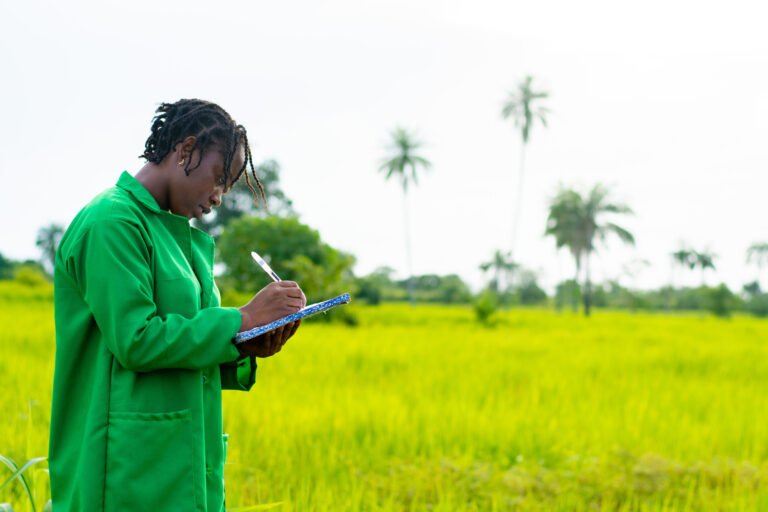
Digital farm records allow farmers to organize information about their farms in a structured and accessible format. Instead of relying on memory, loose notebooks, receipts stored in bags or scattered WhatsApp messages, farmers can maintain records of production, expenses, labour, inventory, sales, assets, cash flow and farm activities using farm management software, spreadsheets, accounting applications or other digital tools.
These records do not automatically qualify a farmer for a loan. A lender may still require bank statements, identification, collateral or guarantees, business registration, credit checks, a business plan, financial statements and other documentation depending on the type and size of the facility.
What digital records can do is help the farmer present a clearer picture of the agricultural business.
For a lender, a well-maintained record can make it easier to understand the farm’s operating history, financial performance, production capacity and expected cash flow. For the farmer, the same information can make it easier to calculate how much money is actually needed and whether the proposed loan can realistically be repaid.
This makes digital record keeping more than an administrative exercise. It can become part of the financial management system of a modern farm.
What Are Digital Farm Records?
Digital farm records are electronic records of activities, resources, costs, production and financial transactions associated with a farm.
They can be maintained with simple tools such as spreadsheets or accounting applications, or through specialized farm management software that connects production and financial information.
A commercial crop farmer, for example, may digitally record the location and size of each field, crop variety, planting date, seed quantity, fertilizer applications, crop protection activities, labour hours, machinery use, irrigation costs, harvest quantity, selling price and revenue.
A livestock farmer may record animal numbers, breeds, births, mortality, feed purchases, medication, veterinary expenses, labour, sales and other operating costs.
The important point is that the records should represent actual farm activities rather than estimates created only when a loan application is being prepared.
A consistent record covering several production cycles can provide a much more useful picture of the farm than a single financial statement prepared shortly before a loan application.
Why Farm Records Matter When Applying for Agricultural Loans
Lending decisions involve risk. A financial institution needs enough information to determine whether a proposed business activity is viable and whether the borrower has a reasonable capacity to meet repayment obligations.
Agriculture creates additional challenges because farm income can depend on weather, production cycles, commodity prices, pests, diseases, input costs and market conditions.
Good records cannot remove these risks, but they can help make the farm’s financial position easier to understand.
The World Bank has identified digital transaction and agricultural data as potentially useful for agricultural lending. Examples include input purchase records, sales receipts and agronomic information about crops and yields. Digital technologies can also reduce some of the information and verification costs associated with agricultural finance.
This is important because many farmers have valuable economic activity that is poorly documented.
A farmer may know that a hectare of maize normally produces a certain quantity, or that a poultry operation sells thousands of birds each year. However, a lender cannot simply rely on an informal verbal estimate when evaluating a financing request.
Digital records turn those activities into documented business information.
The Farm Information Farmers Should Record Digitally
A useful digital record system should cover more than expenses.
A lender assessing an agricultural business may need to understand several connected areas of the operation. Farmers therefore benefit from keeping records across production, finance, assets, sales and cash flow.
| Record category | Examples of information to record | How it can support loan preparation |
|---|---|---|
| Farm profile | Farm location, hectares, enterprises, production systems | Shows the scale and structure of the operation |
| Land and fields | Field size, ownership or lease information, crop allocation | Helps document the production base |
| Production | Planting, harvest, yield, livestock numbers | Shows productive capacity |
| Inputs | Seed, fertilizer, chemicals, feed, veterinary supplies | Demonstrates production costs |
| Labour | Workers, wages, hours, tasks | Helps calculate operating costs |
| Machinery | Equipment, hours used, repairs, depreciation information | Documents productive assets and operating expenses |
| Sales | Buyer, quantity, price, date and total revenue | Shows farm income |
| Expenses | Purchases, services, transport, utilities and other costs | Helps establish the true cost of production |
| Cash flow | Money received and money paid | Helps assess the timing of cash available for repayment |
| Assets | Machinery, buildings, livestock and other productive assets | Helps document the size of the farm business |
| Liabilities | Existing loans and repayment obligations | Gives a clearer picture of current financial commitments |
| Inventory | Seeds, fertilizer, feed, chemicals and harvested produce | Helps establish resources available for production and sale |
The objective is not to collect data simply because software makes it possible. Every record should have a practical purpose.
Digital Records Can Show the Difference Between Farm Revenue and Farm Profit
One of the most important benefits of digital farm records is that they help farmers distinguish revenue from profit.
Suppose a farmer sells harvested produce for โฆ15 million during a production cycle.
That figure represents sales revenue. It does not necessarily mean the farmer made โฆ15 million in profit.
The farmer may have spent money on land preparation, seed, fertilizer, chemicals, labour, machinery, fuel, irrigation, transport, storage, packaging, repairs, finance costs and other expenses.
If the farmer does not record these costs, it becomes difficult to determine the actual profitability of the enterprise.
A digital system can organize these transactions and calculate figures such as:
Gross revenue = Total quantity sold ร Selling price
Gross margin = Revenue – Direct production costs
Net farm income = Total farm revenue – Total applicable farm expenses
The exact accounting treatment will depend on the farm’s business structure and accounting system, but the principle is straightforward: the lender needs to understand the economics of the business, not just the amount of money moving through it.
Production Records Can Help Demonstrate Farming Capacity
Financial records are only one side of an agricultural business.
Production records can help demonstrate what the farm actually produces.
For crop production, this may include:
- hectares cultivated
- crops planted
- varieties used
- planting dates
- input quantities
- harvest dates
- harvested quantities
- yield per hectare
- post-harvest losses
- quantities sold
- quantities retained or stored
For livestock, records may include:
- herd or flock size
- animal purchases
- births
- mortality
- feed consumption
- veterinary treatments
- weight gain
- egg production
- milk production
- animals sold
- selling prices
These records can help connect the physical farm operation with its financial performance.
For example, a farmer requesting seasonal production finance can use historical records to show how much land was cultivated previously, what inputs were used, how much was harvested and how much revenue was generated.
That is more informative than simply stating that the farmer expects a good harvest.
Digital Sales Records Can Help Establish Farm Income
Sales records are particularly important because they connect production with revenue.
A useful digital sales record should include information such as the date of sale, product, quantity, buyer, unit price, total value and payment status.
For example:
| Date | Product | Quantity | Price per unit | Sales value | Payment status |
|---|---|---|---|---|---|
| 12/09/2026 | Maize | 8,000 kg | โฆX/kg | โฆX | Paid |
| 18/09/2026 | Maize | 5,000 kg | โฆX/kg | โฆX | Partly paid |
| 25/09/2026 | Maize | 6,500 kg | โฆX/kg | โฆX | Paid |
The actual prices will vary by location, crop, quality, season and market.
When sales are recorded consistently, the farmer can produce a historical picture of sales volume and revenue.
This can also help identify the difference between invoiced sales and cash actually received. That distinction becomes important when calculating cash available for loan repayment.
Expense Records Help Farmers Explain Where Money Goes
A lender may want to know how a farmer intends to use borrowed funds.
Digital expense records can help the farmer establish realistic production budgets.
For example, instead of requesting money based on a rough estimate, the farmer can review previous production cycles and identify actual spending on:
- land preparation
- seed
- fertilizer
- crop protection
- labour
- machinery
- fuel
- irrigation
- transportation
- storage
- packaging
- processing
- repairs
- animal feed
- veterinary services
Historical expense records can also reveal where production costs have been increasing.
This is useful when preparing a new farm budget because the farmer can distinguish between actual historical costs and assumptions about future costs.
Cost Per Hectare Can Strengthen a Farm Financing Plan
Farmers who maintain digital production and expense records can calculate the cost of operating each field or production unit.
For crop farming, a basic calculation is:
Cost per hectare = Total production cost รท Number of hectares cultivated
Suppose a farmer spends โฆ4 million producing maize on 20 hectares.
The recorded production cost is:
โฆ4,000,000 รท 20 = โฆ200,000 per hectare
If the farmer plans to cultivate 50 hectares in the next production cycle, the historical cost can serve as a starting point for developing a new budget, although future prices and production conditions must be considered.
This type of calculation can make a financing proposal more transparent.
It also helps the farmer avoid requesting an amount that is far below the actual working-capital requirement or significantly above what the farm can reasonably deploy.
Digital Cash Flow Records Are Especially Important
Profit and cash flow are not the same thing.
A farm may be profitable on paper but still experience periods when cash is unavailable because money is tied up in crops, livestock, inventory or unpaid customer invoices.
Agriculture is particularly affected by timing because farmers often spend money months before receiving revenue from harvest or livestock sales.
A digital cash flow record can show:
Opening cash + cash received – cash paid = closing cash
Farmers can also create monthly or production-cycle cash flow forecasts.
For example, a crop enterprise might have significant expenses during land preparation and planting, followed by fertilizer and crop protection expenses, with most revenue arriving at harvest.
A loan may therefore need to be structured around the farm’s production and cash-flow cycle.
Digital records can help the farmer explain this timing to a lender.
Digital Records Can Help Farmers Build a Better Loan Budget
Before applying for a loan, a farmer should be able to explain exactly what the money will be used for.
A digital farm management system can help turn historical records into a production budget.
For example:
| Planned use | Estimated requirement | Farmer contribution | Financing required |
|---|---|---|---|
| Land preparation | โฆX | โฆX | โฆX |
| Seed | โฆX | โฆX | โฆX |
| Fertilizer | โฆX | โฆX | โฆX |
| Crop protection | โฆX | โฆX | โฆX |
| Labour | โฆX | โฆX | โฆX |
| Machinery and fuel | โฆX | โฆX | โฆX |
| Harvest and transport | โฆX | โฆX | โฆX |
| Total | โฆX | โฆX | โฆX |
The figures should come from realistic supplier quotations, previous farm records and current market information rather than arbitrary estimates.
The farmer can then explain how the investment is expected to generate revenue and when cash will become available for repayment.
Digital Farm Records Can Support Cash Flow-Based Lending
Agricultural lenders increasingly have opportunities to use more than conventional collateral when evaluating farmers.
The World Bank has documented how digital agricultural and transaction data can potentially help lenders understand farmers’ businesses, including input purchases, sales transactions and agronomic information. Such information can complement conventional financial data.
This does not mean every lender will accept digital farm records as an alternative to collateral.
Rather, digital records can become an additional source of evidence.
For example, a farmer may have:
- several years of production records
- consistent sales records
- documented expenses
- bank transaction history
- inventory records
- customer records
- evidence of previous loan repayments
- documented farm assets
Together, these records can provide a more complete picture of the business than a single loan application form.
Digital Records Can Help Connect Farm Records With Bank Statements
Farmers should avoid treating farm records and banking records as completely separate systems.
Where possible, farm sales and business expenses should pass through identifiable business accounts.
For example, if a farmer records โฆ10 million in farm sales but the financial records show no corresponding deposits or payment evidence, a lender may have difficulty independently verifying the stated revenue.
The farmer can therefore maintain a connection between:
Farm activity โ invoice or sales record โ payment โ bank transaction
The same principle applies to expenses:
Farm purchase โ receipt or invoice โ expense record โ bank transaction
This creates a stronger audit trail.
It also helps farmers understand whether the farm is genuinely generating the cash being reported.
Digital Records Can Help Document Existing Debt
Applying for a new agricultural loan without accounting for existing obligations can create serious problems.
A farmer should digitally record existing loans and other financial commitments, including:
- lender
- original amount
- outstanding balance
- interest or financing charges
- repayment schedule
- instalments
- repayment dates
- payment history
This information helps the farmer understand how much additional debt the business can reasonably manage.
It also makes it easier to prepare an accurate financial picture for a prospective lender.
Digital Records Can Help Farmers Track Loan Utilization
Record keeping should not stop after the loan is approved.
If a farmer receives financing for fertilizer, seed, machinery, livestock or other approved purposes, the expenditure should be recorded.
The farmer can maintain a separate loan-use record showing:
- amount received
- date received
- approved purpose
- amount spent
- supplier
- transaction date
- remaining balance
- supporting receipt or invoice
This provides an audit trail and helps the farmer determine whether borrowed funds were actually used for the intended activity.
For lenders and agricultural finance programmes that monitor financed projects, transparent utilization records can also make follow-up easier.
Farm Assets Should Also Be Digitally Documented
Farmers often underestimate the value of maintaining an organized asset register.
A digital farm asset register can include:
- tractors
- planters
- harvesters
- irrigation equipment
- pumps
- generators
- vehicles
- storage facilities
- processing equipment
- livestock
- buildings
- other productive equipment
For each asset, the farmer can record the acquisition date, purchase value, identification number where applicable, current condition, maintenance history and ownership information.
Photographs and relevant supporting documents can also be stored where the software allows it.
Asset records do not automatically make an asset acceptable as loan security. The lender’s requirements determine what can be accepted and what documentation is needed.
However, an organized asset register gives the farmer a clearer understanding of the resources supporting the business.
Land Records Are Also Important
Land is central to agriculture, but farmers should distinguish between recording information about land and proving legal ownership or acceptable security rights.
A digital farm record can contain:
- farm location
- field boundaries
- hectares
- land-use history
- lease information
- ownership information
- relevant land documents
- GPS boundaries
- photographs
- production history
Mapping tools can make it easier to associate production and financial records with specific fields.
However, a digital map does not replace legally recognized land documentation.
If a lender requires a certificate, registered title, lease documentation or another form of acceptable security, the farmer must meet that requirement separately.
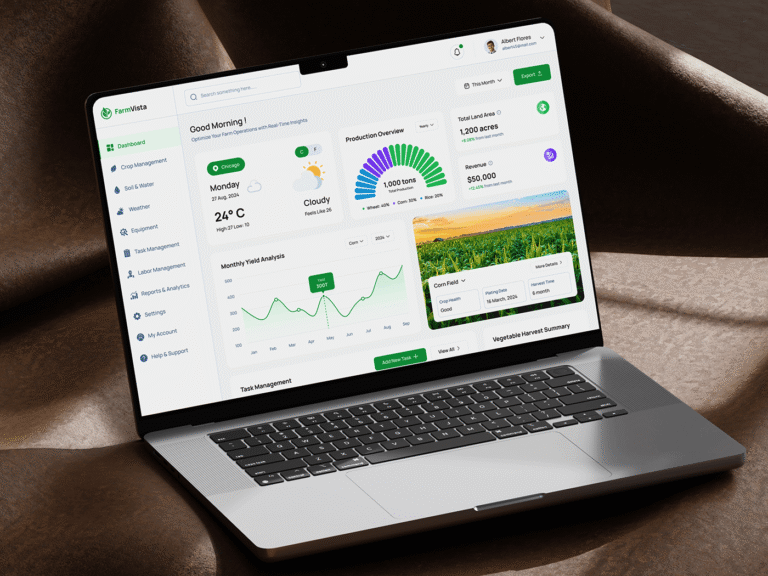
Farm Management Software Can Bring These Records Together
Farmers do not necessarily need expensive software to start.
A simple spreadsheet can be enough for a small operation if it is maintained consistently.
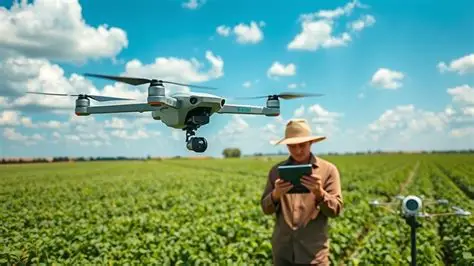
Larger farms may benefit from dedicated farm management software that connects:
- field mapping
- crop planning
- production records
- input inventory
- labour
- machinery
- expenses
- sales
- harvest
- financial records
- cash flow
- farm assets
The major advantage of integrated software is that information does not have to be entered repeatedly into separate systems.
For example, an input purchase can be recorded against an inventory account, a supplier, a field and an expense category. When fertilizer is later applied to a field, the system can associate that activity with the production cost of that field.
This can eventually make it easier to calculate the financial performance of individual crops or fields.
Smallholder Farmers Can Start With Simple Digital Records
Digital record keeping is not only for large commercial farms.
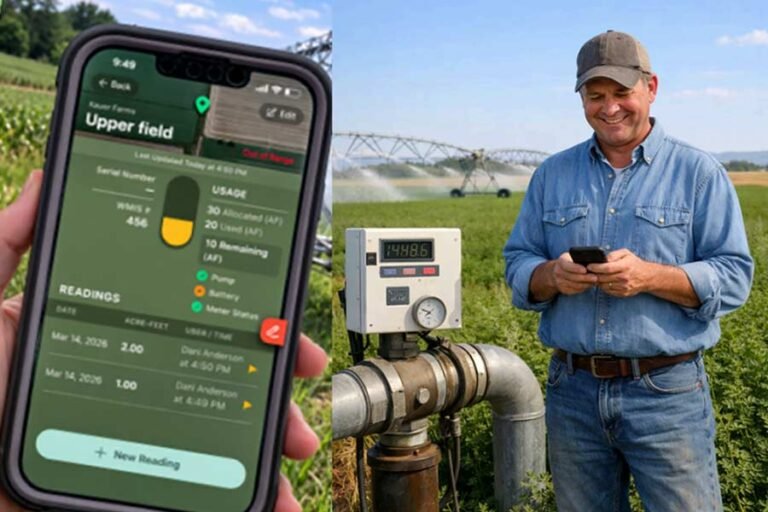
A smallholder farmer can begin with a phone, spreadsheet or simple farm-record application.
The first priority should be consistency.
A farmer with one or two hectares can start by recording:
- date
- activity
- field
- quantity
- cost
- supplier
- labour
- harvest
- sales
- buyer
- payment received
Over time, the records become a historical database.
Even if the farmer eventually moves to more advanced farm management software, the habit of recording information is more important than the sophistication of the first tool.
Digital Records Can Help Farmers Prepare a Business Plan
Some agricultural financing products require a business plan or feasibility study.
Digital records can make business-plan preparation easier because the farmer already has historical information on the operation.
A useful agricultural business plan may need to explain:
- what the farm produces
- where the farm operates
- production capacity
- target market
- input requirements
- labour requirements
- expected revenue
- operating expenses
- financing requirement
- repayment plan
- major risks
- management structure
The Bank of Agriculture, for example, currently lists business plans or feasibility studies among requirements for certain financing categories, while some of its SME lending requirements include projected cash flows, profit and loss information, bank statements and security documentation. Requirements differ by facility and borrower type.
This illustrates an important point: digital farm records can help prepare the financial evidence behind a financing proposal, but they do not eliminate the lender’s formal documentation requirements.
Digital Records Can Help Show Trends Over Several Seasons
A single good harvest does not necessarily demonstrate that a farm is consistently profitable.
Historical records can reveal trends.
A farmer may compare:
- yield per hectare
- production cost per hectare
- selling price
- revenue
- gross margin
- labour cost
- fertilizer cost
- machinery cost
- post-harvest losses
- production volume
over multiple seasons.
This can reveal whether the farm is improving, remaining stable or experiencing rising costs.
It can also help the farmer identify the enterprise that is generating the strongest financial contribution.
For example, if a farm produces maize, soybeans and cassava, digital records can show the cost and revenue associated with each enterprise rather than treating the entire farm as one undifferentiated operation.
Digital Records Can Help Farmers Make More Realistic Repayment Plans
A loan repayment plan should be connected to the farm’s expected cash flow.
Consider a crop farmer who normally plants in April, spends heavily during the production period and harvests in September.
A repayment structure that requires large monthly payments before the crop generates meaningful revenue may create unnecessary pressure.
Historical cash flow records can help the farmer identify when money typically enters the business.
This information can then be discussed with the lender when determining an appropriate repayment structure.
The lender makes the final decision on loan terms, but the farmer can enter the discussion with better evidence.
Digital Records Do Not Replace Collateral
This is one of the most important points for farmers to understand.
Keeping excellent digital farm records does not guarantee loan approval.
Depending on the lender and financing product, the farmer may still need some combination of:
- acceptable collateral
- guarantors
- bank statements
- credit history
- identity documentation
- business registration
- tax documentation
- land documents
- equity contribution
- insurance
- business plan
- evidence of repayment capacity
For example, the Bank of Agriculture’s published requirements for certain SME lending facilities include bank statements, BVN information, security and other supporting documentation.
Therefore, farmers should view digital records as part of a broader financing file rather than as a substitute for formal lending requirements.
Digital Records Do Not Guarantee Loan Approval
A lender can still reject an application even when the farm has excellent records.
Reasons may include:
- insufficient repayment capacity
- unacceptable collateral
- poor credit history
- excessive existing debt
- weak market conditions
- inadequate equity contribution
- unsuitable loan structure
- incomplete documentation
- business risks identified during assessment
- the financing product not being appropriate for the farm
Farmers should therefore avoid the assumption that buying farm management software will automatically make them eligible for credit.
The real value comes from using the technology to build a more transparent, financially organized and better-managed farm business.
How Farmers Can Build a Digital Loan-Ready Record System
Farmers who want to improve their financing readiness can start with a basic structure.
Start With the Farm Profile
Record the farm name, location, enterprises, fields, hectares, production systems and ownership or lease arrangements.
Create separate records for different farms or production units if the business operates in multiple locations.
Record Every Major Farm Transaction
Enter expenses and sales as they occur rather than waiting until the end of the season.
A delayed record is more likely to contain forgotten transactions or inaccurate estimates.
Connect Costs to Crops or Fields
Where practical, assign expenses to the crop, livestock enterprise, field or production unit that generated them.
This makes it easier to calculate cost per hectare and profitability.
Record All Farm Sales
Do not record only major transactions.
Small sales can become significant when accumulated over an entire season.
Record the buyer, quantity, price, date and payment status.
Store Supporting Documents
Keep digital copies or photographs of relevant receipts, invoices, contracts, bank confirmations and other supporting documents where appropriate and secure.
The digital record should point back to evidence wherever possible.
Reconcile With Bank Transactions
Compare farm sales and expenses with the relevant bank account regularly.
This can reveal missing transactions and reduce discrepancies.
Review the Records Monthly
Farmers should not wait until they want a loan before reviewing their financial position.
A monthly review can show:
- revenue
- expenses
- outstanding payments
- inventory
- cash position
- debt
- production costs
- expected future expenses
Produce Regular Financial Summaries
At the end of each production cycle, prepare a summary of revenue, costs, production, gross margin and cash flow.
This creates a useful historical record for future planning.
How a Farmer Can Prepare for a Loan Application Using Digital Records
Before approaching a lender, the farmer can organize a financing file containing the relevant information.
A practical preparation checklist includes:
Farm information: location, size, crops or livestock, ownership or lease details and farm structure.
Production history: hectares cultivated, livestock numbers, yields, harvests and production cycles.
Financial history: revenue, expenses, profit or gross margin and cash flow.
Sales evidence: invoices, receipts, buyer records and payment information.
Banking information: relevant account statements and transaction history.
Assets: machinery, livestock, buildings and other productive assets.
Existing liabilities: current loans and repayment obligations.
Loan requirement: amount required and exactly what the money will finance.
Projected cash flow: expected expenses, revenue and repayment capacity during the financing period.
Supporting documents: identity, registration, land or lease documents and any other documents required by the lender.
The precise requirements will vary between financial institutions and loan products.
A Practical Example of How Digital Records Can Help
Consider a hypothetical maize farmer cultivating 40 hectares.
During three previous production cycles, the farmer records:
- hectares cultivated
- seed quantities
- fertilizer purchases
- labour costs
- machinery expenses
- fuel
- crop protection
- harvest quantities
- selling prices
- transport expenses
- total revenue
The farmer also records bank deposits associated with maize sales.
When preparing for another production cycle, the farmer can review the historical records and determine the approximate cost of cultivating each hectare.
The farmer can then prepare a financing proposal showing:
- the number of hectares planned
- the estimated production cost
- the farmer’s available contribution
- the financing requirement
- expected production
- expected sales
- expected timing of revenue
- existing financial obligations
- expected repayment capacity
This does not guarantee approval.
However, the farmer is approaching the lender with documented business information rather than relying entirely on memory or unsupported estimates.
Digital Farm Records Are Becoming More Relevant to Agricultural Finance
The connection between digital agriculture and agricultural finance is becoming increasingly important.
FAO notes that digital agriculture can address bottlenecks involving finance, market access, supply chains and other agricultural services.
The World Bank similarly identifies digital solutions, including farmer registries and applications that facilitate financing, as part of the broader effort to connect farmers with finance and markets.
Nigeria is also moving toward greater use of agricultural data infrastructure. A World Bank approved project announced in March 2026 includes establishing a national digital farm and farmer registry alongside other agricultural investments.
This does not mean that every lender will immediately use farm management software data when assessing borrowers.
It does indicate that reliable agricultural data is becoming increasingly important to the wider agricultural finance ecosystem.
Digital Records Can Also Help Farmers Become Better Financial Managers
The biggest benefit of digital farm records may not be the loan application itself.
Good records help farmers make better decisions even when they are not borrowing money.
A farmer can use the same information to determine:
- which crop generates stronger margins
- which fields are expensive to operate
- where labour costs are increasing
- how much fertilizer is being used
- whether machinery is economical to own
- whether irrigation is financially viable
- when cash shortages occur
- which customers pay on time
- how much inventory is being held
- whether production costs are increasing
- how much working capital is required
This means digital record keeping should not be treated as something farmers do only because a bank asks for documents.
It should become part of normal farm management.
Choosing Farm Software for Loan Preparation
Farmers considering farm management software should look beyond attractive dashboards.
The system should make it easy to capture the information the farm actually needs.
Important features include:
Financial Record Keeping
The system should allow farmers to record income, expenses, suppliers, customers and payment information.
Field and Enterprise Costing
Farmers should be able to allocate costs to specific crops, fields, livestock units or production enterprises.
Production Records
The system should capture planting, input application, harvest, yield and other production information.
Sales Tracking
Farmers should be able to record customers, quantities, prices, invoices and payments.
Cash Flow Reporting
The system should help farmers understand money coming into and leaving the business.
Asset Records
The ability to document machinery, equipment, livestock and other productive assets can improve overall farm visibility.
Document Storage
Where available, the ability to attach receipts, invoices and other supporting documents can make record verification easier.
Data Export
Farmers should be able to export their information into common formats such as spreadsheets or financial reports.
This is particularly important because a farmer should not be locked into a system that makes it difficult to retrieve the farm’s own data.
Mobile and Offline Capability
For farms with unreliable internet connectivity, mobile and offline functionality can be extremely important.
A farmer should be able to record activities in the field and synchronize information when connectivity becomes available.
User Permissions
Commercial farms may have several workers entering information.
The software should allow appropriate permissions so that farm owners, managers, accountants and field staff can access the information relevant to their responsibilities.
Common Mistakes Farmers Should Avoid
Creating Records Only When Applying for a Loan
Records created retrospectively may contain estimates and missing information.
It is much better to build a continuous history.
Recording Revenue but Ignoring Costs
Sales figures alone do not demonstrate profitability.
Farmers should record the full cost structure of the enterprise.
Mixing Personal and Farm Transactions
When personal and farm money are mixed together, it becomes difficult to determine the actual financial performance of the farm.
Separate business and personal finances where practical.
Inflating Production or Revenue Figures
Records should represent actual transactions and production.
Inflated figures can create inconsistencies when compared with bank statements, sales documents or physical farm inspections.
Ignoring Existing Debt
A new loan should be considered alongside current obligations.
Using Software Without Backups
Important financial and production information should be backed up appropriately.
Buying Complex Software Before Establishing a Record-Keeping Routine
Technology cannot compensate for poor data entry.
A simple system used consistently is often more valuable than sophisticated software that the farm team rarely updates.
Assuming Digital Records Guarantee Financing
Digital records strengthen documentation, but the lender still evaluates the complete application.
Protecting Farmers’ Financial and Farm Data
Digital records contain sensitive business information.
Farmers should therefore pay attention to:
- password security
- user permissions
- backups
- device security
- data ownership
- data export
- privacy policies
- third-party data sharing
- cloud storage practices
- account recovery
Farmers should understand who can access their data and whether the software provider shares information with other companies or financial institutions.
This becomes particularly important when a digital platform offers financing or credit assessment directly.
Before consenting to data sharing, farmers should understand what information is being collected, why it is being collected and how it may be used.
What Farmers in Nigeria Should Consider
For Nigerian farmers, digital record keeping should reflect the realities of the local agricultural environment.
Many farms operate across fragmented plots, use a combination of paid and family labour, rely on seasonal rainfall, face variable input prices and sell through several market channels.
Some farmers may also have limited electricity, internet connectivity or access to computers.
This means a practical system should work effectively on mobile devices and, where necessary, support offline data entry.
Farmers should also consider whether the software provider offers adequate technical support, training and data export.
For farmers seeking financing, it is particularly important to check the actual requirements of the intended lender before designing the record system.
Requirements differ by institution and facility.
The Bank of Agriculture, for example, publishes different requirements for different categories of financing, including documentation relating to business plans, cash flows, bank statements, BVN, security and other supporting information.
Farmers should also be cautious about unofficial loan advertisements. In February 2026, the Bank of Agriculture warned Nigerians about unverified claims concerning agricultural loans and related programmes and advised applicants to rely on its official communication channels.
A Simple Digital Record System Farmers Can Start Today
A farmer does not need to wait until purchasing specialized farm management software.
A basic system can contain seven connected records:
Farm register: fields, hectares, crops, livestock and assets.
Activity register: planting, spraying, fertilizer application, feeding, irrigation, harvesting and other activities.
Expense register: every farm-related expenditure.
Sales register: every farm sale and payment.
Labour register: workers, tasks, hours and wages.
Inventory register: inputs, stock movements and balances.
Cash and debt register: money received, money paid and outstanding financial obligations.
At the end of every month, the farmer can summarize these records.
At the end of every production cycle, the farmer can calculate production, revenue, cost and profitability.
After several production cycles, the farm begins to develop a useful financial and operational history.
That history can become valuable when the farmer needs financing.
The Bigger Picture: From Farm Records to a Financially Visible Farm
Traditional farming can produce significant economic activity without producing much formal documentation.
Digital record keeping helps make that activity visible.
A farmer who records production, sales, expenses, assets, inventory and cash flow creates a structured history of the farm business.
That history can support financial planning, business management and, where accepted by a lender, the assessment of agricultural credit applications.
The important transition is from saying:
“I have a farm and I need a loan.”
to being able to demonstrate:
“This is what my farm produces, this is what it costs to operate, this is what it earns, this is what I already owe, this is what I need the financing for, and this is how the farm’s cash flow is expected to support repayment.”
Digital farm records help farmers build that evidence.
Final Takeaway
Digital farm records can help farmers become more financially organized and better prepared when seeking agricultural loans.
By consistently recording production, expenses, sales, labour, assets, inventory, cash flow and existing debt, farmers can develop a documented history of their businesses.
This information can help them calculate realistic financing requirements, prepare budgets, explain farm performance and organize supporting documentation for lenders.
However, digital records are not a guarantee of financing and should not be treated as a replacement for collateral, bank statements, credit history, identity documents, business plans or other lender requirements.
The strongest approach is to start recording farm information before financing is needed.
A farmer who maintains accurate digital records throughout every production cycle is better positioned to understand the business, prepare financial documents and respond when a suitable financing opportunity becomes available.
Frequently Asked Questions
Can digital farm records help me qualify for an agricultural loan?
They can help you prepare stronger documentation by showing production, revenue, expenses, cash flow and other aspects of the farm business. However, whether a lender accepts those records and how much weight they give them depends on the lender and financing product.
What farm records should I keep before applying for a loan?
Farmers should consider keeping production records, sales records, expense records, labour records, inventory records, asset records, bank transaction records, existing debt records and cash flow information. Land and business documentation should also be maintained where applicable.
Can I use Excel or Google Sheets instead of farm management software?
Yes. A spreadsheet can be sufficient for a small farm if records are complete, accurate, consistently updated and properly backed up. Specialized farm management software becomes more useful as the farm becomes larger or more complex.
Do digital farm records replace collateral?
No. Some agricultural lenders require collateral, guarantees, deposits or other forms of security. Digital records provide business and financial evidence, but they do not automatically replace formal security requirements.
How many years of farm records should I keep?
There is no universal number that applies to every lender. Farmers should maintain records continuously rather than starting only when they intend to apply for financing. Longer and consistent historical records can provide a more useful picture of the farm’s performance.
Can farm sales records help demonstrate repayment capacity?
They can provide evidence of revenue and cash inflows when properly documented. However, repayment capacity depends on the farm’s complete financial position, including costs, existing debts, cash flow, loan terms and other relevant factors.
Should I separate personal money from farm money?
Yes. Keeping farm and personal transactions separate where practical makes it easier to determine the actual financial performance of the agricultural business and produce clearer financial records.
Can a smallholder farmer benefit from digital farm records?
Yes. Smallholders can start with simple mobile applications or spreadsheets and gradually build records covering production, expenses and sales. The system does not need to be sophisticated to be useful. Consistent and accurate record keeping is the priority.