How to Start a Smart Farm From Scratch?
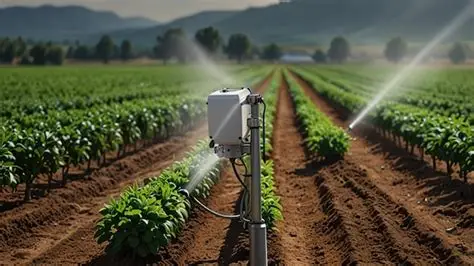
Once water infrastructure, soil monitoring and weather information are established, irrigation can become increasingly automated.
A smart irrigation system can potentially combine:
Weather data + soil moisture + crop information + irrigation flow + irrigation controls
The system can then support decisions about irrigation timing and application.
Automation may eventually allow valves, pumps or irrigation controllers to respond to defined conditions.
However, automation should not be introduced before the farmer understands the irrigation system.
A poorly designed automated irrigation system can simply automate an inefficient process.
First establish accurate water delivery.
Then establish good irrigation scheduling.
Then automate appropriate parts of the process.
Step 13: Add Precision Fertiliser Management
Once the farm has reliable field maps, soil information and crop data, precision nutrient management becomes more practical.
The farm can identify differences between management zones.
Depending on the crop and equipment, farmers may use:
- Soil testing
- Digital soil maps
- Crop imagery
- Yield maps
- Variable-rate technology
- Prescription maps
The objective is to match nutrient application more closely with field conditions.
This does not mean that every field needs variable-rate machinery.
For some farms, better soil sampling and record keeping may be a more appropriate first step.
Step 14: Use AI Only After Building a Data Foundation
Artificial intelligence can become powerful when the farm has reliable data.
Possible applications include:
- Crop disease image analysis
- Yield estimation
- Anomaly detection
- Crop classification
- Irrigation decision support
- Pest monitoring
- Weather-related analysis
- Farm planning
- Forecasting
But AI should not be the first technology purchased simply because it is fashionable.
A farm without reliable field records, sensor data or operational information may have little useful data for an AI system to analyse.
A better sequence is:
Collect reliable data → organize the data → understand the farm → identify a useful AI application → test it → evaluate its performance → scale it.
FAO’s 2026 smart-farming framework similarly places data, digital technologies, AI, IoT and precision tools within broader farm-management and resource-efficiency systems rather than treating AI as a standalone solution.
Step 15: Connect Farm Machinery
As the farm grows, machinery can become part of the digital system.
Technology options may include:
- GPS guidance
- Automatic steering
- Section control
- Variable-rate application
- Equipment tracking
- Fuel monitoring
- Machine performance monitoring
- Digital field-operation records
- Remote diagnostics
For a small farm, these technologies may not be necessary.
For a large commercial operation, they can help standardize field operations and create better records.
Again, the investment should be justified by the farm’s scale and operational needs.
Step 16: Design Power and Backup Systems
Smart farms depend on electricity.
Sensors, gateways, pumps, computers, routers, cameras, controllers and other equipment may require reliable power.
A farm should therefore plan for:
- Grid electricity where available
- Solar power
- Batteries
- Backup generators
- Surge protection
- Charging infrastructure
- Equipment redundancy where necessary
Remote sensors can often use low-power systems, but larger equipment such as pumps and automated irrigation systems can require substantially more energy.
A technology plan without a power plan is incomplete.
Step 17: Plan for Internet and Connectivity Failures
Do not assume that the internet will always work.
A smart farm should have procedures for what happens when connectivity is interrupted.
Some systems can store data locally and upload it when the connection returns.
Others may require manual operation.
Critical irrigation equipment should not necessarily become unusable simply because an internet connection fails.
Farmers should ask technology suppliers:
Can the system work offline?
Does it store data locally?
What happens during network failure?
Can equipment be controlled manually?
How long can the system operate without connectivity?
These questions are particularly important for farms in areas with unreliable network infrastructure.
Step 18: Train the Farm Team
Technology fails when people do not know how to use it.
Training should cover:
- Basic equipment operation
- Sensor installation
- Data recording
- Software use
- Troubleshooting
- Equipment maintenance
- Calibration
- Cybersecurity
- Backup procedures
- Interpretation of farm data
The person managing the technology does not necessarily need to be a software engineer.
But someone on the farm should understand how the system works well enough to identify common problems.
FAO has emphasized digital skills and local technical capacity as important components of scaling smart farming, particularly for smaller farms.
Step 19: Start With a Pilot Area
Do not immediately install smart technology across the entire farm.
Start with one field, greenhouse, irrigation block or livestock unit.
For example, a farmer establishing a 100-hectare operation could initially introduce soil sensors and smart irrigation on a smaller area.
Measure the results.
Determine whether the system is reliable.
Train the workers.
Fix installation problems.
Calculate the actual operating costs.
Then decide whether expansion makes sense.
This reduces the risk of making a large investment before understanding how the technology behaves under real farm conditions.
Step 20: Measure the Results
A smart farming project needs measurable objectives.
Possible indicators include:
- Water used per hectare
- Fertiliser used per hectare
- Crop yield
- Labour hours
- Fuel consumption
- Machinery downtime
- Crop losses
- Irrigation efficiency
- Harvest quality
- Production cost
- Revenue
- Gross margin
- Number of field inspections
- Time spent on record keeping
The exact indicators should match the original problem.
If the objective was to reduce irrigation waste, measuring water use is more relevant than counting how many sensors were installed.
How Much Does It Cost to Start a Smart Farm?
There is no universal startup cost.
The investment depends on the farm’s size, crop, production system, infrastructure and technology level.
A practical smart-farm budget can be divided into several categories.
| Budget category | Potential expenses |
|---|---|
| Land and site development | Land preparation, fencing, drainage and access |
| Water | Borehole, pump, tanks, pipes and irrigation |
| Power | Solar, batteries, generator and electrical installation |
| Connectivity | SIMs, data, gateways, routers and network equipment |
| Sensors | Soil, weather, water and environmental sensors |
| Software | Farm management platform and subscriptions |
| Mapping | GPS, surveying, satellite services or drone services |
| Automation | Controllers, valves, pumps and equipment |
| Machinery | Tractors, implements and precision systems |
| Labour | Farm workers, technicians and operators |
| Training | Technology and farm-management training |
| Maintenance | Repairs, calibration, replacement parts and support |
| Data | Analytics, imagery and specialist services |
The technology budget should be separated from the basic farm establishment budget.
There is little value in having sophisticated sensors on a farm without reliable water, suitable production infrastructure or competent farm management.
A Low-Cost Smart Farm Starting Point
A farmer with a limited technology budget could begin with:
Smartphone + digital records + farm map + weather information + soil testing + selected soil moisture sensors
This creates a basic digital foundation.
The farmer can then add:
Flow meters → weather station → satellite monitoring → smart irrigation → farm software → automation
The exact sequence will depend on the farm’s biggest problems.
A More Advanced Commercial Smart Farm
A large commercial operation may eventually build a much more integrated system.
A possible architecture could look like:
Satellite + drones + field sensors + weather stations + machinery + irrigation systems
↓
IoT gateways and connectivity
↓
Central farm management platform
↓
Data analytics and AI
↓
Farm manager and agronomists
↓
Automated or manually approved farm operations
↓
Production and financial records
This is closer to a fully connected digital farm.
But it should be built gradually.
Common Mistakes When Starting a Smart Farm
Buying Technology Before Identifying the Problem
Technology should solve a problem rather than create another expense.
Installing Too Many Sensors
More sensors do not automatically produce better decisions.
The sensors must provide information that can actually be interpreted and acted upon.
Ignoring Maintenance
Sensors need calibration, batteries need replacement and electronic equipment can fail.
Maintenance must be included in the farm budget.
Depending Entirely on the Internet
Critical operations should have suitable backup procedures.
Choosing Software That Cannot Integrate
A farm can end up with separate applications for accounting, irrigation, machinery, crop monitoring and inventory that cannot communicate.
Interoperability should be considered before committing to a technology ecosystem.
Ignoring Workers
Farm employees are the people who often interact with technology every day.
They need training and should understand why the system is being introduced.
Automating Bad Processes
Automation does not automatically improve an inefficient operation.
The process should first be understood and improved.
Expecting Immediate Returns
Some technologies produce benefits through better decisions and accumulated data rather than immediate cash savings.
The evaluation period should therefore match the purpose of the technology.
Smart Farming in Nigeria
Nigeria already has a policy and institutional environment supporting agricultural digitization.
The National Agricultural Technology and Innovation Policy 2022-2027 includes priorities around smart agriculture, digital knowledge-sharing, weather and climate information, efficient use of land and water, greenhouses and digital agricultural services.
Nigeria’s more recent agricultural investment planning also includes digitization and digitalization of crop, livestock and fisheries production, digital agricultural platforms, weather and early-warning tools, e-agriculture, data-driven farming and precision farming.
In September 2026, the Federal Ministry of Information reported that the Ministry of Agriculture and Food Security was discussing a national digital farmers register and a digital agriculture architecture as part of efforts to improve how agricultural support and farmer information are managed.
For an individual Nigerian farmer, however, national digital agriculture initiatives do not remove the need for farm-level planning.
The practical questions remain:
Is there reliable electricity?
Is there mobile coverage?
Where will equipment and replacement parts come from?
Who will install the sensors?
Who will repair them?
Can farm workers operate the software?
What happens during network failure?
Can the farm afford recurring subscriptions?
Can the technology work with local crops and production practices?
These questions should be answered before making major technology investments.
Smart Farming for Smallholders
Smart farming does not have to mean individual ownership of expensive technology.
Smallholder farmers can access technology through shared or service-based models.
Examples include:
- Drone-as-a-service
- Satellite crop monitoring
- Soil testing services
- Shared machinery
- Irrigation services
- Digital extension services
- Weather information platforms
- Contract precision agriculture
- Farm management services
FAO’s current Smart Farming approach specifically emphasizes affordable technologies, efficient resource management and local technical capacity for small-scale farmers.
This approach can be particularly relevant in Africa, where the economics of owning advanced equipment may not make sense for every individual farmer.
How to Build a Smart Farm in Phases
A practical implementation can be divided into five phases.
Phase One: Build the Foundation
Establish the farm, water system, power, roads, storage and basic production infrastructure.
Create digital farm maps and start keeping digital records.
Phase Two: Start Measuring
Install the most important sensors.
Monitor weather, soil moisture, water use, production activities and other variables connected to the farm’s biggest problems.
Phase Three: Connect the Farm
Introduce appropriate IoT connectivity, farm management software and digital dashboards.
Begin connecting different information sources.
Phase Four: Automate Selected Operations
Automate activities where there is a clear operational benefit.
This may include irrigation, greenhouse climate control, equipment guidance or environmental monitoring.
Phase Five: Add Advanced Analytics
Once enough reliable farm data has accumulated, introduce more advanced analytics, AI, predictive tools and precision agriculture applications.
This phased approach prevents the farm from becoming dependent on expensive technology before the underlying management system is ready.
A Practical Smart Farm Blueprint
A farmer starting from scratch can think about the farm as seven connected layers.
Layer 1: Production
Crops, livestock, greenhouse or aquaculture.
Layer 2: Physical Infrastructure
Land, water, irrigation, buildings, power, roads and storage.
Layer 3: Measurement
Sensors, weather stations, meters, cameras and field observations.
Layer 4: Connectivity
Mobile networks, Wi-Fi, radio, LoRaWAN or other suitable communication systems.
Layer 5: Data Management
Farm software, databases, digital records and farm maps.
Layer 6: Intelligence
Analytics, decision-support tools and AI.
Layer 7: Action
Farm workers, machinery, irrigation systems, automation and management decisions.
The system becomes smarter as these layers become better connected.
What a New Smart Farm Could Look Like After One Year
Imagine a farmer starts a commercial vegetable farm from scratch.
During the first months, the farmer establishes the land, irrigation, power and production infrastructure.
Digital field maps are created.
Planting, fertiliser, irrigation and harvest records are entered into a farm management system.
Weather information is collected.
Soil moisture sensors are installed in selected production zones.
After several months, the farmer has enough information to identify differences in water requirements between fields.
The irrigation system is then adjusted.
Satellite imagery is added to help monitor crop development.
A drone service is used periodically for detailed scouting.
By the end of the first production year, the farmer has something more valuable than a collection of agricultural gadgets.
The farm has a growing digital record of how it actually operates.
That data can then guide the next production cycle.
The Most Important Investment Is Not the Technology
A smart farm requires investment in equipment, but technology is only one part of the system.
The farm also needs:
- Good agronomic practices
- Reliable infrastructure
- Skilled workers
- Accurate records
- Preventive maintenance
- Technical support
- Clear management procedures
- Financial discipline
- Reliable markets
- Continuous learning
The technology should strengthen these areas.
It should not be expected to replace them.
Final Takeaway
Starting a smart farm from scratch is best approached as a gradual process rather than a technology shopping exercise.
Begin by selecting a viable production system and understanding the farm’s biggest risks.
Build the physical infrastructure first.
Map the farm.
Establish reliable water and power.
Start keeping digital records.
Measure important farm conditions.
Add sensors where the information will support real decisions.
Introduce connectivity and farm management software.
Use satellite imagery and drones when they provide a practical advantage.
Automate selected operations only after the underlying process is understood.
Then, when enough reliable data has accumulated, introduce advanced analytics and artificial intelligence.
The result is not simply a farm equipped with modern gadgets.
It is a farm where information flows from the field to the manager, decisions are based on measurable conditions, operations can be monitored, resources can be managed more precisely and technology grows alongside the business.
That is the foundation of a smart farm in 2026.
Frequently Asked Questions
Can I start a smart farm with a small budget?
Yes. A farmer can begin with digital records, farm mapping, weather information, soil testing and a small number of strategically placed sensors before expanding into automation and advanced analytics.
What technology should I buy first for a smart farm?
The first technology should depend on the farm’s biggest measurable problem. For a water-management problem, this may be flow meters and soil moisture sensors. For large-area crop monitoring, satellite services may be more useful. For a greenhouse, environmental sensors may be a higher priority.
Do I need internet to run a smart farm?
Not necessarily for every operation. Some systems can store data locally or communicate through local networks. However, many connected farm platforms require some form of connectivity for remote monitoring, cloud storage and alerts.
Do I need to own a drone?
No. Farmers can use agricultural drone service providers instead of purchasing and maintaining their own aircraft.
Can AI be used on a new farm?
Yes, but its usefulness depends on the application and available data. New farms should first establish reliable records and measurements before relying heavily on AI-driven analysis.
How long does it take to build a smart farm?
There is no universal timeline. A basic digital farm system can be established relatively quickly, while a fully connected commercial operation may require several production cycles and significant infrastructure development.
Is smart farming suitable for Nigerian farms?
Smart farming can be applied in Nigeria, but technology selection should account for local connectivity, electricity, equipment availability, technical support, financing, farm size, climate and production systems.
What is the biggest mistake when starting a smart farm?
One of the biggest mistakes is buying technology before identifying the farm problem it is supposed to solve. A better approach is to identify the problem, establish a baseline, select appropriate technology, run a pilot and measure the results before scaling.