What Is Smart Irrigation? How Smart Irrigation Systems Work, Costs, Benefits and Limitations
Irrigating a farm is not simply a matter of putting water on the field. The difficult part is deciding when to irrigate, how much water to apply, where it is needed, and when irrigation should stop. If a crop is watered too early or too heavily, water, energy and nutrients can be wasted. If irrigation is delayed for too long, crops can experience water stress that affects growth and yield.
Smart irrigation addresses this decision-making problem by combining irrigation equipment with information from soil sensors, weather stations, flow meters, crop water-use calculations and, in more advanced systems, software or automated control. Instead of relying entirely on a fixed irrigation timetable or visual observation, the system can use measured field conditions to support more precise irrigation decisions.
For farmers, the important point is that smart irrigation is not simply an automatic pump. It is a water-management system that uses data to determine when irrigation is required and, in some installations, automatically controls when and where water is applied.
What Is Smart Irrigation?
Smart irrigation is an irrigation management approach that uses sensors, environmental information, software and control equipment to make irrigation decisions more responsive to actual crop and soil conditions.
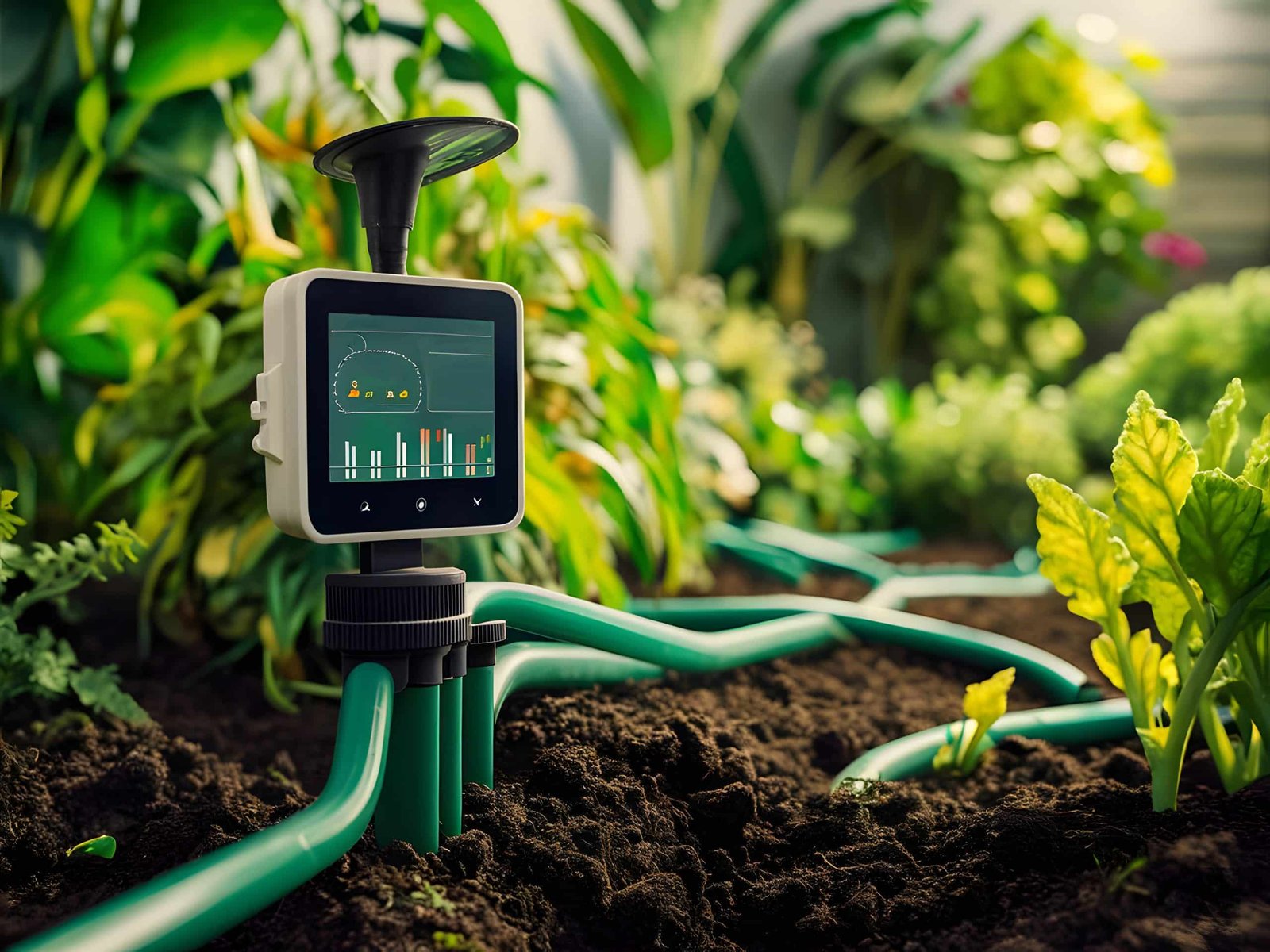
A basic system may use a soil moisture sensor to determine whether the root zone is becoming too dry. A more developed system may combine soil moisture, temperature, humidity, rainfall, weather forecasts, evapotranspiration estimates and water-flow measurements. The information can then be displayed on a phone, computer or farm-management platform, or used to control irrigation valves and pumps automatically.
This makes smart irrigation different from simply installing drip irrigation or using an electric pump with a timer.
Drip irrigation is primarily a water-delivery method. A timer is a control mechanism. Smart irrigation combines irrigation infrastructure with information and decision-making so that irrigation can respond to changing conditions.
A farmer could therefore have a highly efficient drip system without having smart irrigation. Conversely, a smart controller can be connected to different irrigation methods, provided the equipment can be controlled and monitored appropriately.
What Agricultural Problem Does Smart Irrigation Solve?
The central problem is uncertainty about soil and crop water requirements.
Farmers traditionally make irrigation decisions using experience, a fixed schedule, visual observation, soil feel, weather conditions or a combination of these methods. These approaches can still work well when the farmer understands the soil, crop and local climate. The problem is that field conditions can change rapidly.
A rainfall event can supply water that was not included in yesterday’s irrigation plan. Sandy soil can lose available water faster than heavier soil. Different parts of the same farm can have different soil characteristics. A crop’s water demand also changes as it develops.
Smart irrigation attempts to make these changes visible to the farmer.
For example, a vegetable grower may normally irrigate every morning. After a significant rainfall event, the soil may still contain enough water for the crop. A soil moisture sensor can reveal that condition, allowing the farmer or irrigation controller to delay the next irrigation instead of watering simply because the calendar says it is time.
The reverse can also occur. Hot, dry and windy conditions may cause water to leave the crop and soil faster than expected. A system that monitors soil and weather conditions can provide information that helps the farmer respond rather than relying entirely on a fixed schedule.
Irrigation scheduling is fundamentally about matching water application with crop water use. Extension guidance commonly describes two important approaches: monitoring soil water directly with sensors and estimating soil-water changes using weather information and evapotranspiration calculations.
How Does Smart Irrigation Work?
Although commercial systems differ considerably, the basic operating principle is relatively straightforward.
The field contains one or more sources of information. These may include soil moisture sensors, weather sensors, rain gauges, flow meters, water-level sensors or other monitoring devices.
The data is then transferred to a controller or software platform. Depending on the system, communication may occur through a wired connection, Wi-Fi, cellular networks, radio communication or another IoT communication method.
The controller or software interprets the information according to irrigation rules. Those rules could be as simple as irrigating when soil moisture falls below a selected threshold. More advanced systems can incorporate crop stage, weather forecasts, evapotranspiration, rainfall and historical field data.
The final stage is the irrigation response.
The farmer may receive an alert telling them that irrigation is required. Alternatively, the system may open a valve, start a pump or adjust irrigation according to predefined settings.
The farmer therefore moves from simply asking, “What time do I normally irrigate?” to a more useful question: “What is happening in the crop root zone, and what does the crop need now?”
The Main Technologies Used in Smart Irrigation
Smart irrigation does not depend on one particular piece of equipment. It is usually a combination of several technologies.
| Technology | What it measures or controls | Practical purpose |
|---|---|---|
| Soil moisture sensor | Water condition in the soil | Helps determine whether irrigation is needed |
| Weather station | Temperature, humidity, rainfall and other weather variables | Supports irrigation scheduling and crop water-use estimates |
| Rain gauge | Rainfall | Helps account for natural water received by the field |
| Flow meter | Volume or rate of water moving through the system | Helps monitor water application and identify abnormal flow |
| Water-level sensor | Water level in a tank or reservoir | Helps prevent operation when water supply is inadequate |
| Controller | Irrigation equipment | Executes programmed irrigation decisions |
| Solenoid valve | Opens or closes water flow | Allows different irrigation zones to be controlled |
| Pump controller | Pump operation | Automates or manages pumping |
| Mobile or web platform | Displays data and alerts | Allows farmers or managers to monitor irrigation remotely |
| Weather and ET data | Atmospheric crop water demand | Helps estimate when irrigation may be required |
The exact combination depends on the farm. A small greenhouse does not require the same system as a large commercial field.
Soil Moisture Sensors: One of the Most Important Components
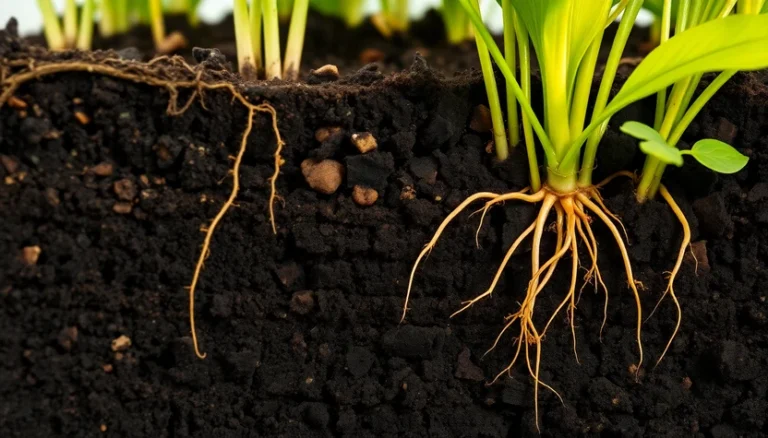
Soil moisture sensing is central to many smart irrigation systems because irrigation ultimately needs to respond to water conditions in the crop’s root zone.
Different sensors measure soil water in different ways. Some estimate volumetric water content, while others measure soil water tension or related properties.
The important issue for farmers is not simply buying a sensor. Sensor placement, calibration, soil characteristics and interpretation of the readings matter.
A sensor installed in the wrong location can provide misleading information. For example, placing a sensor directly beside an emitter may show conditions that do not represent the wider root zone. Installing only one sensor in a field with major differences in soil type or topography may also fail to represent the entire field.
Sensor depth is important as well. The measurement should relate to the portion of the soil profile where the crop’s active roots are obtaining water.
For commercial farms, it may be more useful to divide fields into irrigation zones and monitor representative areas rather than assume that one reading describes an entire farm.
Weather Data and Evapotranspiration
Smart irrigation can also use weather information to estimate crop water requirements.
One important concept is evapotranspiration, commonly abbreviated as ET. It combines water lost through evaporation from the soil and water released through plant transpiration.
Weather-based irrigation scheduling uses information such as temperature, solar radiation, humidity and wind, together with crop and field characteristics, to estimate water use.
This approach is useful because soil moisture does not change only because of irrigation. Rainfall, evaporation, plant growth and drainage also affect the amount of water available in the root zone.
A sophisticated irrigation system may therefore combine soil measurements with weather-based calculations rather than depend on a single sensor.
The combination can be particularly useful when sensor readings and calculated crop water demand are used to check each other.
Does Smart Irrigation Use Artificial Intelligence?
It can, but it does not have to.
A basic smart irrigation system may use simple rules such as:
“If soil moisture falls below the selected threshold, start irrigation.”
That is automation, but it is not necessarily artificial intelligence.
More advanced systems can use machine learning to analyse historical soil, weather and irrigation data and estimate future irrigation requirements. Research in this area is examining combinations of machine learning, evapotranspiration models, remote sensing and IoT sensors.
However, farmers should be cautious about systems marketed as “AI irrigation.” The presence of an AI label does not automatically mean that the system will produce better irrigation decisions.
The quality of the underlying data remains critical. Poorly positioned sensors, incorrect calibration, unreliable weather information or inadequate crop data can produce poor recommendations regardless of how sophisticated the software appears.
For most farms, good irrigation measurement and sound agronomic management are more important starting points than adding AI.
Can Smart Irrigation Automatically Water a Farm?
Yes, where the irrigation infrastructure has compatible controls.
An automated system can use sensor readings or programmed irrigation rules to operate valves and pumps. For example, an irrigation controller may receive a soil moisture reading indicating that a particular zone has reached a predefined moisture threshold. The controller can then open the appropriate valve and operate the pump according to the system’s configuration.
This can reduce the need for a farm worker to manually switch equipment on and off.
However, automation should not mean that the farmer stops monitoring the system.
Pumps can fail. Sensors can malfunction. Pipes can leak. Emitters can become blocked. Communication networks can go offline. A sensor can also produce an unrealistic reading because it has shifted, been damaged or is poorly installed.
For this reason, a sensible smart irrigation system should include physical inspection, maintenance and manual override options.
What Irrigation Systems Can Smart Technology Work With?
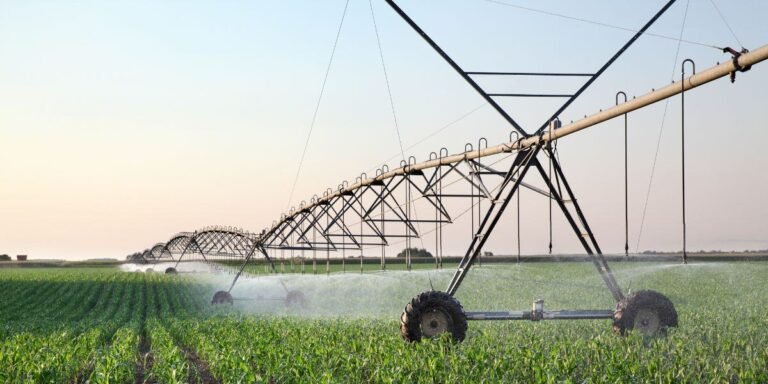
Smart controls can potentially be integrated with several irrigation methods, including drip irrigation, sprinkler systems, centre pivots and other pressurised systems.
The suitability depends on the irrigation infrastructure and the level of control available.
Drip irrigation is particularly suitable for sensor-based scheduling because water is delivered close to the crop root zone and irrigation can be divided into manageable zones. Greenhouses and high-value vegetable production can also benefit from precise monitoring because the production environment is relatively controlled.
Large farms using mechanised irrigation can use sensors and control systems to support irrigation scheduling and, where appropriate, variable-rate or zone-based irrigation.
Smart technology does not automatically correct an inefficient irrigation system. If a system has poor distribution uniformity, leaking pipes, clogged emitters or inadequate pressure, adding sensors will not fix the underlying mechanical problem.
What Crops Can Use Smart Irrigation?
Smart irrigation can be used across many irrigated crop systems.
Vegetables such as tomato, pepper, cucumber and leafy vegetables can benefit from careful water management. Field crops such as maize, rice and other crops may also use sensor-based or weather-based irrigation scheduling where irrigation infrastructure is available.
It is also relevant to orchards, plantations, nurseries, greenhouses and other intensive production systems.
The technology is particularly useful where water availability is limited, irrigation costs are significant, crop water stress can cause economic losses, or the farm requires frequent and carefully timed irrigation.
The appropriate system will still depend on crop rooting depth, soil type, irrigation method, climate and production objectives.
What Equipment Is Required?
There is no single standard smart irrigation package.
A basic installation might contain a soil moisture sensor, controller, valve and irrigation system. A more comprehensive installation could include multiple soil sensors, a weather station, flow meters, tank-level monitoring, pump controls, communications equipment and farm-management software.
The equipment can therefore range from relatively simple to highly integrated.
| Farm requirement | Possible technology |
|---|---|
| Know when soil is becoming dry | Soil moisture sensors |
| Monitor rainfall | Rain gauge |
| Estimate crop water demand | Weather station and ET-based software |
| Know how much water is being applied | Flow meter |
| Control individual irrigation zones | Automated valves |
| Control a pump | Pump controller |
| Monitor the farm remotely | Cellular, Wi-Fi or other communication system |
| Manage data and alerts | Irrigation software or mobile platform |
Farmers should avoid buying equipment before determining what irrigation problem they actually need to solve.
Does Smart Irrigation Require Internet?
Not always.
Some systems can operate locally using sensors, a controller and programmed rules without requiring continuous internet access.
Internet or cellular connectivity becomes more useful when the farmer wants remote monitoring, cloud-based data storage, mobile notifications, online dashboards or remote control.
This distinction is important in rural areas where connectivity may be unreliable.
A farmer should therefore ask a technology provider whether the system can continue operating when the internet connection fails, where data is stored, what happens when communication is interrupted and whether irrigation can still be controlled manually.
For farms in areas with unreliable grid electricity or connectivity, systems designed around local control and appropriate backup power may be more practical than systems that depend entirely on continuous cloud connectivity.
Does Smart Irrigation Require Electricity?
The answer depends on the irrigation system.
The irrigation pump itself may require electricity, diesel, solar power or another energy source. Sensors and controllers also require power, although many modern monitoring devices are designed for low-power operation.
Solar-powered systems can be useful where grid electricity is unavailable, but solar equipment introduces its own requirements, including correct sizing, batteries where needed, protection of electrical equipment and maintenance.
A smart irrigation system should therefore be designed around the farm’s actual power situation rather than assuming reliable grid electricity.
How Much Does Smart Irrigation Cost?
There is no single reliable price for a smart irrigation system because the cost depends heavily on the farm and the system design.
A small greenhouse with a few sensors and automated valves is fundamentally different from a large commercial farm requiring multiple monitoring zones, pumps, weather stations, communications equipment and software.
The major cost categories can include:
- Sensors
- Controllers
- Valves and actuators
- Pumps and pump controls
- Flow meters
- Weather stations
- Communication equipment
- Solar or backup power
- Irrigation pipes and fittings
- Installation
- Software or subscription fees
- Calibration
- Training
- Maintenance and replacement components
The correct financial question is therefore not simply “How much does the sensor cost?” It is “What will the complete system cost to install, operate and maintain on this farm?”
A cheap sensor system that produces unreliable readings may be more expensive over time than a properly designed system with dependable equipment and technical support.
Can Smart Irrigation Save Water?
It can, but water savings are not guaranteed.
Smart irrigation provides information that can help prevent unnecessary irrigation and improve scheduling. Research reviewed in 2026 found that IoT-based smart irrigation studies reported a wide range of water savings, approximately 9% to 50% compared with conventional irrigation across the reviewed studies. The review also found that results were not uniform, and some water-saving strategies could reduce yield when irrigation became too restrictive.
This variation is important.
A farmer should not assume that installing sensors will automatically reduce water use by a particular percentage. Actual results depend on the previous irrigation method, crop, soil, climate, irrigation efficiency, sensor quality, management decisions and system design.
Smart irrigation is best understood as a tool for improving decisions, not as a guaranteed water-saving machine.
What Are the Main Benefits of Smart Irrigation?
The biggest benefit is better information about irrigation conditions.
When properly designed, a smart irrigation system can help farmers identify when soil moisture is falling, monitor whether irrigation equipment is delivering water as expected, detect unusual water flow, track irrigation activity and manage different irrigation zones.
It can also reduce the need for workers to physically check irrigation equipment or switch systems on and off at every irrigation event.
For larger farms, digital records can provide another benefit. Irrigation data can be compared with weather conditions, crop growth, field performance and input use. Over time, this can help farm managers understand how different fields respond to irrigation.
Smart irrigation can therefore become part of a broader precision agriculture system rather than functioning as an isolated device.
What Are the Limitations?
Smart irrigation has several important limitations.
The first is cost. Sensors, controllers, valves, communications equipment and installation can represent a significant investment, especially for small farms.
The second is maintenance. Sensors need to remain correctly installed and functional. Batteries may require replacement. Electrical components can fail. Valves and pumps still require physical maintenance.
The third is data quality. A sensor does not automatically produce useful information simply because it is installed in the soil. Sensor placement, calibration and interpretation affect the usefulness of the data.
Connectivity can also be a problem. Systems relying on cloud platforms or remote communication may become less useful if network coverage is unreliable.
Another limitation is that smart irrigation cannot compensate for poor agronomic decisions. If the farmer has not considered soil type, crop rooting depth, irrigation uniformity and crop growth stage, automation can simply automate a poor irrigation strategy.
Is Smart Irrigation Suitable for Small Farmers?
It can be, but the system should be scaled to the actual problem.
A small farmer does not necessarily need a complex cloud-based system with numerous sensors and sophisticated analytics.
A relatively simple arrangement using soil moisture monitoring and automated control may provide useful information without creating unnecessary technical complexity.
In some cases, farmers may also benefit from irrigation technology provided as a service rather than purchasing the entire system themselves. An irrigation company, agricultural technology provider or farm service business may install and maintain equipment while the farmer pays for the service.
This model can reduce the need for the farmer to become an electronics or software specialist, although the economics and availability of such services depend on the local market.
Smart Irrigation in Nigeria and African Farming Conditions
Smart irrigation has particular relevance in farming systems where water availability, dry-season production and irrigation costs influence production decisions.
Nigeria has substantial irrigation and water-resource infrastructure needs, and the Federal Ministry of Water Resources and Sanitation identifies irrigation infrastructure and water-resource projects as part of its food-security responsibilities. The Nigeria Integrated Water Resources Management Commission also regulates access to and use of surface and groundwater for commercial agricultural operations.
For Nigerian farmers, however, adopting smart irrigation requires more than purchasing imported sensors.
The system has to fit local conditions. Electricity reliability, mobile network coverage, solar power availability, technical support, replacement parts, water-source reliability, pump type, soil variation and farmer skills all matter.
There is also growing African research into IoT-based irrigation systems. A 2025 Scientific African study developed an IoT irrigation system using soil moisture, temperature, humidity and water-level sensing with remote data monitoring, demonstrating the type of technology architecture being investigated for African agricultural conditions.
These studies are useful evidence that the technology can be adapted to resource-constrained environments, but they should not be interpreted as proof that every commercial farm will obtain the same results.
A Practical Example of Smart Irrigation
Consider a hypothetical two-hectare vegetable farm using drip irrigation.
The farmer currently irrigates according to a fixed schedule. During periods of heavy rainfall, irrigation sometimes continues even though the soil remains wet. During unusually hot weather, the crop can become stressed before the next scheduled irrigation.
The farmer could install soil moisture sensors in representative irrigation zones and connect them to a controller. A rain gauge or local weather data could provide additional information. A flow meter could confirm whether the expected volume of water is actually moving through the irrigation system.
Instead of operating only according to the calendar, the farmer could use the sensor readings to decide when each zone requires irrigation. If automation is installed, the controller could operate the valves according to predefined conditions.
The important improvement is not that the farm has a smartphone application. The improvement is that the irrigation decision is based more closely on actual field conditions.
What Farmers Should Check Before Buying a Smart Irrigation System
The first question should be: What irrigation problem am I trying to solve?
If the problem is simply that workers forget to switch the pump off, a timer or basic automation system may be sufficient. If the problem is uncertainty about soil moisture, sensors may be more useful. If the farm has major differences between soil zones, multiple sensors and zone-based irrigation may be justified.
Farmers should also ask whether the equipment works with their existing pump, valves, pipes and irrigation method.
The technology provider should be able to explain where sensors should be installed, how readings are interpreted, what happens when connectivity fails, how equipment is maintained and whether replacement components are available.
Data ownership is another consideration for larger commercial farms. If irrigation data is stored on a software platform, the farm manager should understand how the data can be accessed, exported and retained if the farmer changes providers.
Training is equally important. The farmer or irrigation manager needs to understand what the readings mean and when manual intervention is necessary.
How to Start With Smart Irrigation
A sensible implementation begins with the farm rather than the technology.
First, assess the existing irrigation system. Check water source, pump performance, pressure, distribution uniformity, leaks and irrigation zones.
Next, determine the crop’s water requirements and identify where irrigation decisions are currently going wrong.
Then decide what information is missing. Soil moisture may be the main gap, or weather information, flow measurement or zone-level monitoring may be more important.
After that, select the simplest technology capable of solving the identified problem.
The system should be tested before expanding it across the entire farm. During the testing period, compare sensor readings with field observations and irrigation performance. If the system provides useful information and operates reliably, the farmer can then consider expanding it.
This approach reduces the risk of spending heavily on technology before proving that it solves a real farm-management problem.
Is Smart Irrigation Worth It?
There is no universal answer.
Smart irrigation is more likely to be useful where irrigation decisions have a significant effect on production, water availability is constrained, irrigation is labour-intensive, field conditions vary, or the cost of poor irrigation management is substantial.
It may be harder to justify on a small farm where irrigation is simple, water is abundant, the irrigation area is small and the farmer can easily monitor soil and crop conditions manually.
The technology should therefore be evaluated using the farm’s actual economics.
Consider the complete installation cost, operating expenses, maintenance, expected useful life, labour requirements and the value of better irrigation management. Then compare those costs with the problems the technology is expected to solve.
The objective should not be to make a farm “smart” for its own sake. The objective is to make irrigation decisions more accurate, practical and economically sensible.
The Future of Smart Irrigation
Current research is moving beyond simple soil moisture thresholds toward systems that combine multiple data sources.
Recent work is examining combinations of IoT sensors, weather information, evapotranspiration modelling, machine learning, remote monitoring and automated irrigation control. A 2026 systematic review identified soil moisture sensors, weather stations, cloud platforms, machine learning and crop-related indicators among the technologies being integrated into smart irrigation research.
There is also increasing interest in systems that can operate with lower power requirements, open-source hardware, solar power and local or edge processing. These developments could be relevant to farms where electricity and connectivity are limiting factors.
However, the technology is still developing. Researchers continue to identify challenges involving sensor calibration, long-term field validation, interoperability, economic feasibility and scaling systems for smallholder farms.
For farmers, this means that the most useful smart irrigation system may not be the one with the most advanced technology. It is the one that provides reliable information, works with the farm’s existing infrastructure and helps the farmer make better irrigation decisions.
Frequently Asked Questions
What is smart irrigation in agriculture?
Smart irrigation is a water-management system that uses information from sensors, weather data, software and irrigation controls to improve decisions about when and how much to irrigate. Some systems only provide recommendations or alerts, while others can automatically control valves and pumps.
How does a smart irrigation system work?
Sensors and other data sources monitor conditions such as soil moisture, rainfall, temperature or water flow. A controller or software platform interprets the information and either informs the farmer when irrigation is needed or automatically operates compatible irrigation equipment.
What sensors are used in smart irrigation?
Soil moisture sensors are among the most important. Systems may also use temperature and humidity sensors, rain gauges, weather stations, flow meters and water-level sensors. The appropriate combination depends on the farm and irrigation system.
Does smart irrigation require internet?
No. Some systems can operate locally without continuous internet access. Internet or cellular connectivity is mainly useful for remote monitoring, cloud storage, mobile alerts and remote control.
Can smart irrigation reduce water use?
It can improve irrigation scheduling and reduce unnecessary applications, but water savings vary considerably between farms and systems. Results depend on the irrigation system, crop, soil, climate, previous management and quality of implementation.
Is smart irrigation suitable for small farms?
It can be, especially when the system is kept simple and addresses a specific irrigation problem. Small farms may not need the same sensors, software and automation infrastructure used on large commercial farms.
Does smart irrigation use artificial intelligence?
Some advanced systems use machine learning or other analytical techniques to predict irrigation requirements. However, smart irrigation does not require AI. A system based on soil moisture thresholds and automated controls can also be a smart irrigation system.
What should farmers consider before buying smart irrigation technology?
Farmers should assess the existing irrigation system, water source, power supply, connectivity, sensor requirements, installation cost, maintenance, technical support, replacement parts and training requirements. Most importantly, they should identify the irrigation problem they want the technology to solve before choosing equipment.