How Farmers Use Drones to Spray Fertilizer and Pesticides?
Spraying crops can become one of the most demanding jobs on a farm when fields are large, crops are difficult to enter, labour is limited, or wet conditions prevent tractors and other ground equipment from moving through the field. Manual spraying can also expose workers to agricultural chemicals when appropriate protective and application procedures are not followed.
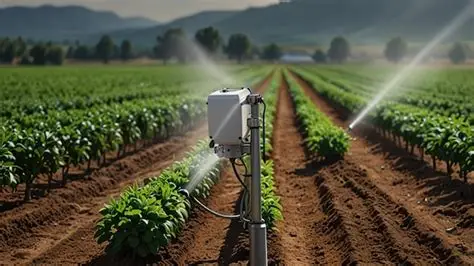
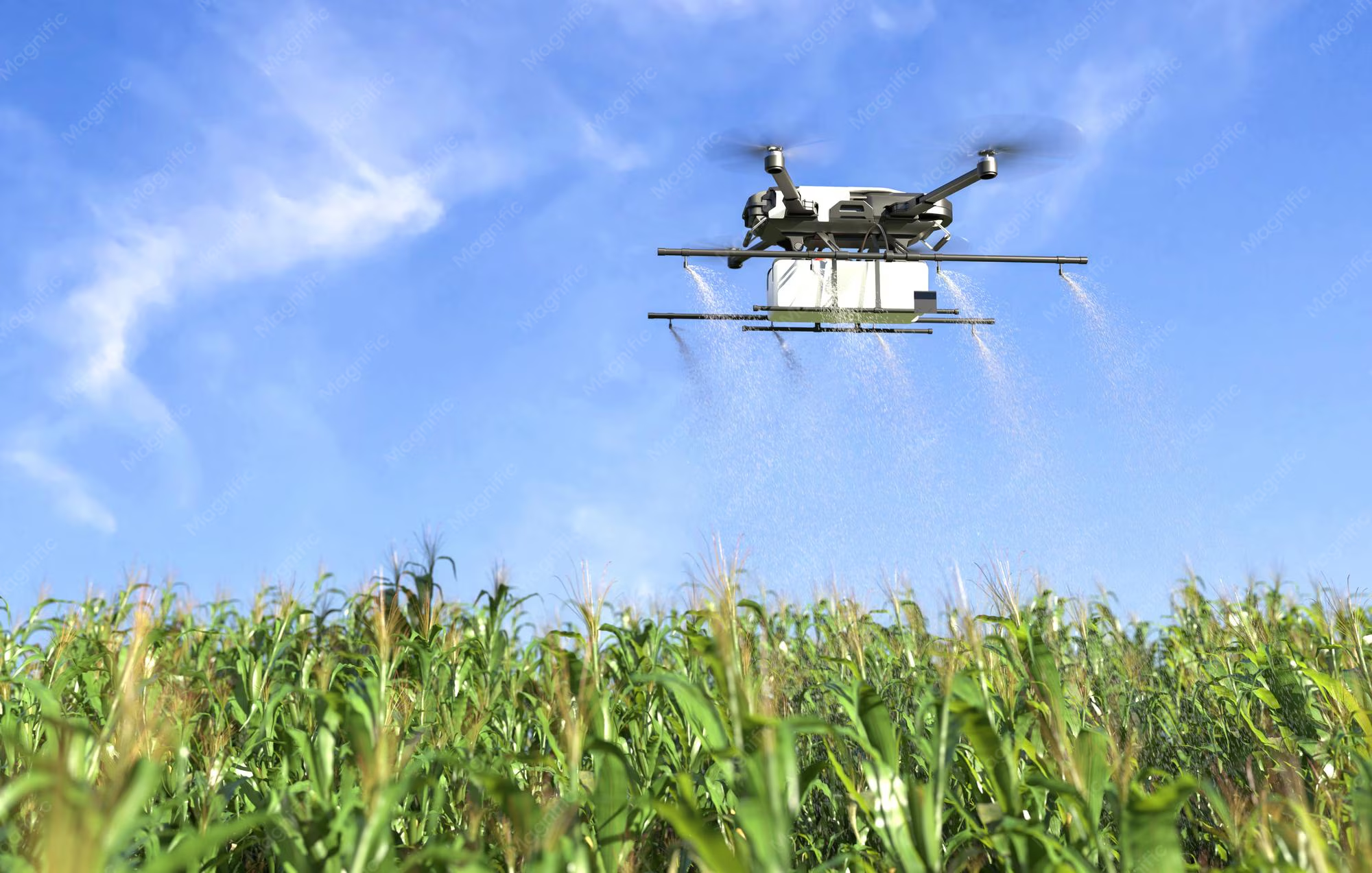
Agricultural spraying drones provide another method. Instead of carrying a spray boom across the field, a purpose-built drone carries a liquid tank and spraying system above the crop and releases the product through controlled nozzles. Some systems can also spread dry granular materials such as fertilizer.
The important point is that a spraying drone is not simply a camera drone with a chemical tank attached. Agricultural spray drones are designed around application rate, droplet formation, flight path, height, speed, nozzle configuration, tank capacity, battery capacity and terrain following. Current commercial systems range from relatively small machines to much larger platforms with spray tanks measured in tens of litres. For example, manufacturer specifications for current agricultural drones include models with 20, 40, 50, 70 and 100 litre-class spraying or spreading capacities, depending on the system.
For farmers, the real question is not whether drones look more advanced than conventional sprayers. The question is whether drone application can deliver the required product to the crop accurately, safely, legally and economically.
Agricultural drones can be configured for different liquid applications, but farmers cannot assume that every agricultural chemical can legally or agronomically be applied by drone.
Potential applications can include selected:
- Herbicides
- Insecticides
- Fungicides
- Foliar fertilizers
- Micronutrient products
- Other agricultural products where the product label and applicable regulations permit aerial or drone application
The critical qualification is the last one.
A product being chemically suitable for a crop does not automatically mean that it is approved for every application method. The product label, local pesticide regulations and crop-specific requirements must be checked before application.
This is particularly important with pesticides because application method can affect droplet size, coverage, drift, off-target movement and ultimately the effectiveness and safety of the treatment.
How Do Drone Sprayers Apply Fertilizer?
Fertilizer application by drone can take two different forms.
The first is liquid fertilizer spraying. A drone uses a liquid tank, pump and nozzles to distribute a foliar fertilizer or another permitted liquid nutrient product.
The second is dry spreading. Some agricultural drones can replace the spraying equipment with a spreading mechanism designed for selected granular materials.
The spreading system does not operate in the same way as a liquid sprayer. It uses components such as a hopper, auger or centrifugal spreading mechanism, depending on the machine.
Current agricultural drone systems demonstrate this distinction. For example, manufacturer specifications for some current platforms list separate liquid spraying and dry spreading systems, with the compatible particle size and spreading width depending on the configuration.
This means farmers should not ask simply, “Can this drone apply fertilizer?”
They should ask:
What form of fertilizer is being applied, what application rate is required, and is the drone’s spreading or spraying system designed and approved for that material?
How Do Drone Sprayers Apply Pesticides?
Pesticide application requires considerably more attention than simply filling the tank and flying over the crop.
The operator has to manage the relationship between spray volume, droplet characteristics, nozzle configuration, flight height, flight speed, weather and crop canopy.
Droplets that are too fine can increase the risk of drift under unsuitable conditions. Droplets that are too large may reduce coverage for some applications. The correct balance depends on the product, target pest, crop, application method and label requirements.
Penn State Extension’s 2026 guidance specifically highlights spray volume, height above the canopy, droplet size and coverage as important factors in drone herbicide applications. It also notes that drone applications can present greater drift concerns than ground broadcast applications under some conditions.
The practical lesson is important: precision spraying is not simply flying precisely. It also requires getting the spray onto the intended target in an appropriate form.
Why Flight Height Matters
The distance between the drone and crop canopy influences how the spray reaches the target.
Flying too high can allow spray droplets to move away from the intended application zone before reaching the crop. Flying too low may create other operational problems, particularly where the terrain or crop height changes.
Agricultural drones therefore use terrain-following, radar, GNSS or other sensing technologies on some platforms to help maintain a more consistent operating position.
Current commercial systems demonstrate how these technologies are integrated. For example, manufacturer specifications for several AGRAS platforms list GNSS or RTK positioning and radar or related sensing capabilities, although the exact capabilities vary by model.
The farmer should still understand that electronic positioning does not eliminate the need for an experienced operator.
How Weather Affects Drone Spraying
Weather can determine whether a spraying operation should proceed.
Wind is particularly important because it can move droplets away from the intended target. Temperature, humidity, rainfall and atmospheric conditions can also influence evaporation and deposition.
Spraying during unsuitable conditions can result in poor coverage, off-target movement or reduced effectiveness.
Pesticide labels may specify restrictions concerning wind speed, application conditions, droplet size, buffer areas and other factors. The U.S. Environmental Protection Agency, for example, identifies wind speed, droplet size, release height and buffer requirements as important spray-drift management factors. Specific requirements vary by product and jurisdiction, so farmers should follow the applicable local label rather than applying a generic rule from another country.
This is especially important for drone spraying because the aircraft is operating close to the crop while producing an airborne spray pattern.
Can Drones Replace Tractor Sprayers?
Not in every situation.
Drone spraying and ground spraying solve some of the same problems, but they have different strengths.
A tractor-mounted boom sprayer can carry substantial quantities of liquid and cover broad areas without repeatedly returning to a refill point. It may be highly practical on large, accessible fields with suitable terrain.
A drone can work where ground equipment has difficulty operating and can avoid wheel traffic through the crop. It may also be useful for smaller fields, irregular fields, steep or difficult terrain and certain situations where crop damage from machinery is a concern.
The comparison should therefore be based on the farm rather than on the technology’s novelty.
| Factor | Spray drone | Tractor-mounted sprayer |
|---|---|---|
| Crop traffic | No wheels travelling through the crop | Wheels can cause crop traffic and compaction |
| Wet fields | May operate where ground access is difficult, subject to safe flight conditions | May be restricted by soil conditions |
| Tank capacity | Usually much smaller than a large tractor sprayer | Generally much larger |
| Field access | Useful for difficult or irregular areas | Best suited to accessible fields |
| Battery or fuel | Requires charged batteries and charging infrastructure | Requires fuel and machinery support |
| Operator skill | Requires trained drone operator | Requires trained machinery operator |
| Drift management | Critical because application is airborne | Also important |
| Terrain | Can be useful on some difficult terrain | Can be limited by slope and ground conditions |
| Refilling | Frequent refilling may be necessary | Longer operating periods may be possible between refills |
| Initial investment | Can be significant | Can be significant, especially when considering tractor and sprayer |
| Service model | Can be hired from a drone operator | Custom spraying services are also available |
Neither system is automatically more economical or more effective in every farm situation.
What Equipment Is Needed for Drone Spraying?
A professional spraying operation requires more than the aircraft.
The equipment package can include the drone itself, flight batteries, charger or generator, remote controller, spray system, spare parts, mixing and handling equipment, transport equipment and appropriate personal protective equipment.
The operator may also need mapping software, GNSS correction services or other digital tools depending on the aircraft and application.
Battery management is particularly important. Spray drones consume substantial electrical power during flight, and the aircraft cannot remain in operation indefinitely on one battery.
A commercial operator therefore needs a system for charging, rotating and maintaining batteries.
For remote farms, the availability of electricity can become a major consideration. Where grid power is unreliable, operators may require suitable alternative power systems, but these add equipment, fuel or energy-storage costs.
How Accurate Are Agricultural Spray Drones?
Accuracy has several different meanings.
A drone may be highly accurate in following a planned flight path while still producing poor agricultural results if the spray system is incorrectly calibrated.
Likewise, a drone may maintain its position precisely while wind carries droplets away from the target.
Modern agricultural drones can use RTK positioning and other navigation technologies to improve flight positioning. Some current models specify centimetre-level positioning under stated RTK conditions. However, that specification describes aircraft positioning, not guaranteed pesticide deposition or biological control.
Farmers should therefore evaluate accuracy at three levels:
- Navigation accuracy: Did the aircraft follow the intended path?
- Application accuracy: Was the intended quantity distributed in the intended area?
- Agronomic effectiveness: Did the treatment reach the target sufficiently to produce the desired result?
These are different measurements.
Can Drones Reduce Chemical Use?
They can potentially support more targeted application, but a fixed percentage reduction should not be assumed for every farm.
Chemical use depends on the product, crop, target pest, application method, field size, treatment strategy, spray volume and operating conditions.
A drone may reduce unnecessary traffic and allow particular areas to be treated separately. But if the entire field requires treatment, the drone still has to apply the required product to the entire target area.
There is also a difference between reducing the amount of carrier water and reducing the amount of active ingredient.
A farmer should never reduce the pesticide rate simply because a drone uses a lower spray volume unless the product label and validated agronomic guidance specifically permit the application method and rate.
The objective should be correct application, not simply using the smallest possible quantity.
What Are the Main Benefits of Drone Spraying?
The strongest practical benefit is access.
Drones can reach areas that may be difficult or undesirable to enter with ground equipment. This can be valuable in standing crops, wet fields, steep areas and irregular fields.
They can also reduce physical crop traffic because the aircraft does not need to drive between crop rows.
Another benefit is application timing. When a crop requires treatment within a relatively narrow window, the ability to deploy a drone without waiting for a tractor to access the field can be useful.
Drone spraying can also reduce the need for workers to carry a loaded sprayer across a field. However, this does not eliminate chemical hazards. Workers still handle pesticides during preparation, loading, cleaning and equipment maintenance, so appropriate safety procedures remain essential.
What Are the Limitations of Drone Spraying?
Drone spraying has several limitations that farmers should understand before investing.
The first is tank capacity. Even relatively large spray drones carry much less liquid than many tractor-mounted systems. This means the aircraft may need frequent refilling.
The second is battery management. Flight time depends on aircraft configuration, payload, weather and other operating conditions. A drone cannot be evaluated independently of its battery and charging system.
The third is weather sensitivity. Strong or gusty winds can interfere with spray deposition and increase drift risk.
The fourth is application complexity. The operator must understand both drone operation and agricultural spraying.
The fifth is regulation. Commercial drone operations can require aviation approvals, registration, certification or other permissions depending on the country and type of operation.
The sixth is maintenance. Pumps, nozzles, spray lines, batteries, motors and other components require inspection and maintenance.
The seventh is economic utilization. A drone that sits unused for much of the year may be difficult to justify financially.
How Much Does an Agricultural Spraying Drone Cost?
There is no reliable single price for agricultural spraying drones because the total cost depends on aircraft capacity, batteries, charging equipment, spreading or spraying configuration, navigation technology, software, transport, taxes, import costs, training, insurance, maintenance and local support.
Current commercial equipment prices in Nigeria also vary considerably between suppliers and configurations. Some local sellers publish prices for individual platforms, but these should be treated as supplier-specific quotations rather than a universal market price.
For farmers, the more important calculation is the total cost of ownership.
This can include:
- Drone and spray system
- Batteries
- Charging equipment
- Generator or alternative power system where required
- Spare nozzles and pumps
- Repairs
- Software
- Training
- Insurance where applicable
- Regulatory compliance
- Transport
- Operator labour
- Product handling
- Storage
- Maintenance
A farmer should compare this with the cost of existing spraying methods over the acreage actually treated each season.
Should Farmers Buy a Spray Drone or Hire a Service?
For many farmers, hiring a professional drone operator may be more practical than purchasing a drone.
Ownership makes more sense when the farm or farming business has sufficient recurring work to justify the aircraft, has trained operators, can maintain the equipment and has the infrastructure required to operate it.
A service model removes much of the equipment ownership burden.
The farmer pays for a spraying operation while the service provider handles the drone, operator, batteries, maintenance and much of the operational setup.
This can be particularly relevant to smallholders and farmer groups.
A cooperative, for example, may organize drone spraying across several farms rather than requiring each farmer to purchase a separate aircraft.
The important issue when hiring a provider is to verify what is included in the price. The farmer should establish whether the quoted fee covers transport, operator labour, application planning, product handling, batteries, repeat visits and any other charges.
Drone Spraying in Nigeria
Nigeria is developing a more formal regulatory framework for remotely piloted aircraft systems.
The Nigeria Civil Aviation Authority’s Part 21 of the Nigeria Civil Aviation Regulations covers certification, registration, operations and surveillance of remotely piloted aircraft systems. The NCAA states that organizations conducting commercial RPAS operations in Nigeria require an RPAS Operations Certificate.
The NCAA also launched a digital drone regulation portal in May 2026 to streamline drone regulatory processes.
This matters to agricultural operators because an agricultural spraying drone is still an aircraft from an aviation-regulatory perspective.
Farmers should therefore avoid assuming that purchasing a drone automatically gives them permission to conduct commercial operations.
There is also a separate pesticide issue. NAFDAC’s pesticide regulations cover registration and use requirements for pesticide products in Nigeria, including labelling and precautionary information.
Therefore, Nigerian drone spraying operations need to consider both the aviation requirements governing the aircraft and the agricultural chemical requirements governing the product.
Safety Is More Important Than Flight Automation
Automated flight planning does not make pesticide spraying automatically safe.
The operator remains responsible for the application environment.
Before spraying, the operator should identify nearby homes, workers, livestock, water bodies, sensitive crops, roads and other areas that could be affected by spray movement.
The operator should also check the applicable product instructions and weather conditions.
Pesticide handling requires appropriate protective equipment and safe procedures for mixing, loading, transport, storage and cleaning. The drone itself can reduce the need for a worker to walk through a treated field, but it does not remove exposure risks during product handling.
Spray drift also deserves particular attention. A drone releases droplets from the air, so wind and droplet characteristics can influence where those droplets land.
A poorly calibrated drone can create a false sense of precision.
A Practical Drone Spraying Workflow for Farmers
A good farm operation should begin with the crop problem, not with the drone.
Suppose a hypothetical commercial rice farm has a disease problem that requires treatment.
The farm manager first confirms the problem and determines whether chemical treatment is appropriate. The crop stage, affected area, weather and product instructions are checked.
The field is then mapped and obstacles identified. The operator determines whether the drone can safely access the field.
The spraying system is calibrated according to the permitted application requirements. The operator checks weather conditions and establishes an appropriate flight plan.
The drone then treats the field while the operator monitors the operation.
Afterward, the treated area is inspected and the application is recorded.
If the treatment is unsuccessful, the farmer should investigate the reason rather than automatically increasing the application rate. Possible causes could include incorrect diagnosis, poor coverage, unsuitable weather, resistance, timing or another agronomic factor.
This is where drone spraying becomes part of precision agriculture rather than simply replacing a knapsack sprayer with an aircraft.
What Farmers Should Check Before Hiring a Drone Spraying Service
Before allowing a service provider to spray a farm, the farmer should ask practical questions.
The operator should be able to explain what drone is being used, what application system it has, how the field will be mapped, how weather conditions will be assessed and how the application will be recorded.
The farmer should also establish who is responsible for selecting the agricultural product, who supplies it, whether the product is legally permitted for the intended application and what safety procedures will be followed.
It is also worth asking how the operator handles battery failures, equipment breakdowns, bad weather and missed areas.
For commercial farms, application records can be valuable. The records may include field location, date, product, application information, operator and other relevant details.
What Farmers Should Look for When Buying a Spray Drone
Farmers should not select a drone based only on tank capacity.
A larger tank may be useful, but the aircraft also needs suitable batteries, charging infrastructure, spray components, navigation systems and after-sales support.
Important questions include:
| Buying factor | Why it matters |
|---|---|
| Spray tank capacity | Determines how much liquid can be carried per mission |
| Flow rate | Determines how quickly liquid can be delivered |
| Nozzle system | Influences droplet characteristics and application pattern |
| Spray width | Affects field coverage and flight planning |
| Battery capacity and availability | Determines operational continuity |
| Charging system | Determines how quickly batteries can be returned to service |
| GNSS or RTK capability | Supports accurate flight positioning |
| Terrain sensing | Can help maintain safer and more consistent operation where supported |
| Spare parts | Determines how easily downtime can be addressed |
| Local technical support | Important when repairs or calibration are required |
| Software | Affects mapping and mission planning |
| Warranty | Reduces some equipment ownership risk |
| Training | Determines whether operators can use the system correctly |
| Regulatory support | Important for compliant operation |
| Data handling | Matters when maps, field records and operational data are collected |
The best specification depends on the farm’s actual operating conditions.
Who Can Benefit Most From Spray Drones?
Spraying drones can be particularly relevant to farms where conventional spraying creates a specific operational problem.
This may include farms with difficult terrain, irregular fields, standing crops, wet conditions, limited access or a need to reduce ground traffic.
They can also be useful for agricultural service businesses that work across multiple farms.
Large commercial farms may benefit where repeated spraying operations create enough workload to justify ownership or where a dedicated drone team can be kept productive.
Smallholder farmers may benefit more from shared services, cooperatives or commercial operators than from individual ownership.
Who May Not Need a Spraying Drone?
A farmer with a small, easily accessible field and an efficient existing spraying system may have little reason to purchase a drone.
Likewise, a farm that does not have reliable battery charging, trained operators, appropriate regulatory clearance or technical support may struggle to operate one effectively.
If the main problem is simply that a farmer needs occasional spraying, purchasing an aircraft may not be economically sensible.
In such cases, hiring a qualified spraying service can provide access to the technology without taking on the full ownership burden.
The Future of Drone Spraying Is More Than Just Flying Higher
Agricultural drones are increasingly being connected with other precision-agriculture technologies.
A farmer can potentially combine field maps, satellite imagery, crop scouting, sensors and drone data to identify where crop problems occur before planning an application.
The long-term value is therefore not just the aircraft.
The stronger system is one in which scouting identifies a problem, digital maps locate it, agronomic assessment determines the appropriate response, the drone performs a correctly planned application where appropriate, and farm records document what happened.
Artificial intelligence may also assist with image analysis, field mapping and decision support, but it should not be treated as an automatic pesticide prescription system. The quality of the recommendation still depends on the data, model, crop, local conditions and agronomic validation.
The Practical Role of Spray Drones on Modern Farms
Agricultural spraying drones can solve real farm problems, especially where ground access is difficult, crop traffic is undesirable, labour is constrained or applications need to be made in locations that conventional equipment cannot easily reach.
But the drone itself does not guarantee precision.
Precision comes from the complete operation: correct product selection, appropriate application method, accurate calibration, suitable weather, correct flight planning, proper equipment maintenance, trained operators and careful observation of the crop.
Farmers should also remember that the cheapest spraying operation is not necessarily the one with the lowest price per hectare. Poor coverage, drift, crop damage, incorrect application or ineffective treatment can cost far more than the spraying service itself.
The most practical approach is to identify the farm’s spraying problem first and then determine whether a drone actually solves it.
For some farms, the right answer will be ownership. For others, it will be a professional drone-spraying service. For others, a conventional ground sprayer will remain more appropriate.
The technology should follow the agricultural requirement, not the other way around.
Frequently Asked Questions
How do farmers use drones to spray pesticides?
Farmers or trained operators use purpose-built agricultural drones fitted with liquid tanks, pumps and spray nozzles. The field is assessed and mapped, the application is planned and the drone follows the planned route while regulating the spray system. Product labels, weather conditions, safety requirements and applicable regulations must be followed.
Can agricultural drones spray fertilizer?
Yes, some agricultural drones can apply liquid fertilizers through their spray systems, while other models can distribute selected granular materials using a spreading attachment. The appropriate system depends on the fertilizer formulation, required application method and equipment specifications.
Can a drone replace a tractor sprayer?
Not in every situation. Drones can be useful where ground equipment cannot easily operate, while tractor sprayers generally have much larger liquid capacity and can be efficient on accessible fields. The appropriate method depends on crop type, field conditions, terrain, acreage, labour, equipment availability and application requirements.
How much does drone spraying cost?
There is no universal price. Costs depend on farm size, crop, location, application requirements, travel, operator services, equipment, weather and whether the farmer owns the drone or hires a service provider. In Nigeria, farmers should obtain current local quotations rather than relying on international price estimates.
Is drone pesticide spraying safe?
It can be conducted safely when the aircraft, chemical product and application are managed correctly. However, drones do not eliminate pesticide hazards. Operators must consider product instructions, worker protection, weather, spray drift, nearby sensitive areas and applicable aviation and pesticide regulations.
Do agricultural spray drones need a trained operator?
Yes. Safe operation requires more than knowing how to control a drone. The operator needs to understand flight operations, application settings, weather, equipment maintenance, agricultural spraying principles and relevant regulations. Commercial operations may also require specific regulatory certification or authorization.
Can small farmers use agricultural spraying drones?
Yes, but ownership may not be the most practical model. Smallholders may gain access through cooperatives, farmer groups or professional drone service providers. Sharing services can avoid the capital cost, battery-management burden and maintenance requirements associated with owning specialized equipment.
Can drones spray during windy weather?
Wind can increase spray drift and reduce application control, so spraying should only take place when conditions meet the requirements for the particular application. Farmers should follow the product label and applicable local guidance rather than using a universal wind limit for every pesticide or drone.