How to Track Crop Production With Farm Management Software
Tracking crop production becomes increasingly difficult as a farm grows. A farmer may need to know when each field was planted, which seed variety was used, how much fertilizer was applied, when irrigation was carried out, which pest or disease problems occurred, how much labour was used, when harvesting started, and how much each field eventually produced.
When these records are scattered across notebooks, spreadsheets, phone messages and memory, it becomes difficult to reconstruct what happened during the production cycle. This can make it harder to compare fields, investigate poor yields, plan the next season and understand production costs.
Farm management software provides a structured way to bring these records together. Modern Farm Management Information Systems have developed from basic recordkeeping tools into systems designed to support production management, field records, budgeting, machinery management, documentation and other farm decisions. Research on FMIS has specifically identified open-field crop production and the farm manager as important areas of application.
For farmers, however, the value of the software is not simply having a digital farm diary. The real benefit comes from connecting production activities with specific fields, crops, inputs, labour, machinery, observations and harvest results.
What Does Crop Production Tracking Mean?
Crop production tracking is the process of recording what happens to a crop from the beginning of a production cycle through harvest.
A complete production record can include information such as:
| Production information | Examples |
|---|---|
| Field | Field name, location and size |
| Crop | Maize, rice, cassava, tomato, cocoa or another crop |
| Variety | Seed or planting material used |
| Planting | Planting date, method and quantity |
| Soil preparation | Tillage, land preparation and amendments |
| Fertilization | Product, quantity, date and application method |
| Crop protection | Herbicide, insecticide, fungicide and application records |
| Irrigation | Irrigation dates, water applications and system activities |
| Labour | Workers, hours, tasks and costs |
| Machinery | Equipment, operating hours and field activities |
| Crop monitoring | Growth observations, pests, diseases and field conditions |
| Harvest | Date, quantity, quality and destination |
| Production costs | Input, labour, machinery and other costs |
| Yield | Total production and yield per unit area |
The objective is to create a production history that can be reviewed during and after the season.
FAO guidance on crop assessment similarly emphasizes keeping consistent records of crop management activities such as sowing, fertilizer application, weed and disease control, irrigation and harvesting because these records can help identify factors that may be limiting yield.
Why Farmers Need Digital Crop Production Records
A production record is useful only when it can answer practical questions.
A farmer may want to know why one maize field produced less than another. The answer may involve planting date, seed quantity, fertilizer application, weed pressure, rainfall, irrigation, pest damage, soil conditions or harvesting losses.
If those activities were recorded against individual fields, the farmer has a much stronger basis for investigating the difference.
This is one reason field-level records are important. Agricultural production data can become much more useful when the farmer can connect an outcome, such as yield, with the management practices that occurred before it.
The Open Crop Manager platform developed through Penn State, for example, integrates field locations, management records, yield outcomes and field-condition reports at field scale.
How Farm Management Software Tracks Crop Production
Create Digital Farm and Field Records
The first step is to establish the farm structure inside the software.
A farmer can create the farm, fields or plots, field sizes and, where supported, geographical boundaries.
Each field can then become a production unit to which crop activities are attached.
For a large farm, this is particularly important because the farm may contain dozens or hundreds of fields with different crops, planting dates and management requirements.
Instead of writing “fertilizer applied to farm” in a general notebook, the digital record can specify the field, crop, date, product and quantity.
This creates a much more useful production history.
Record the Crop and Variety
The next step is recording what is planted.
The software can contain information such as crop type, variety, planting material, planting date and production season.
This allows the farmer to distinguish different production cycles.
For example, a farm growing maize on several fields may plant different varieties at different times. If all production is recorded simply as “maize,” the farm loses important information.
Separating the records by field, variety and season makes later comparisons more meaningful.
Record Planting Activities
Planting is one of the first major production events to record.
Depending on the crop, useful information can include planting date, seed quantity, planting method, spacing, field area and seed variety.
For crops such as rice, maize and vegetables, these records can later be compared with crop establishment, management activities and harvest results.
Current agricultural data collection work in Nigeria demonstrates the value of field-level production records. A 2025 dataset on rice management in Nigeria includes information covering land preparation, variety, planting date, seed quantity, fertilizer applications, weed control, pest management, disease control and crop duration.
The purpose of recording this information digitally is not to collect data for its own sake. It is to preserve the production history needed to understand how management practices relate to results.
Record Field Operations
Crop production involves many activities between planting and harvesting.
Farm management software can provide an activity record for operations such as:
- Land preparation
- Planting
- Weeding
- Fertilizer application
- Spraying
- Irrigation
- Pruning
- Thinning
- Crop scouting
- Pest control
- Disease management
- Harvesting
Each activity can potentially be associated with a date, field, crop, worker, machinery, input and cost.
This is where digital crop tracking becomes more useful than a simple crop calendar.
The system can show what actually happened rather than only what was planned.
Track Crop Inputs by Field
Input tracking is closely connected to crop production.
A farm may purchase fertilizer in bulk, but that purchase does not tell the manager how much was eventually applied to each field.
Farm management software can allow input applications to be recorded against specific production areas.
For example:
| Input | Field | Quantity | Date | Crop |
|---|---|---|---|---|
| Seed | Field A | X kg | Date | Maize |
| NPK fertilizer | Field A | X kg | Date | Maize |
| Herbicide | Field A | X litres | Date | Maize |
| Urea | Field A | X kg | Date | Maize |
| Insecticide | Field A | X litres | Date | Maize |
This creates a field-level input history.
The same approach can be used for rice, cassava, tomatoes, vegetables, cocoa and other crops, although the specific records will differ according to the production system.
Track Labour Used in Crop Production
Labour is another important component of crop production.
A digital system can record who worked on a field, what activity they performed and how much time was spent.
For example, the farm could record that a particular crew spent a certain number of hours weeding a particular field.
The information can then be connected to the crop production record.
This becomes useful when calculating production costs because labour can be associated with the field or crop rather than appearing only as a general farm expense.
Research on digital crop-production systems has demonstrated field-level recording of labour information alongside crop, field, input and operational data.
Track Machinery and Equipment Use
Machinery can also be incorporated into crop production records.
A tractor may be used for land preparation on several fields. A planter may cover multiple production areas. A sprayer may be used across several crops.
Recording machinery use against each field can help establish a more complete production history.
Relevant information may include:
- Machine used
- Date
- Field
- Activity
- Operating hours
- Fuel used
- Operator
- Service or repair information
This becomes particularly useful on commercial farms where machinery is shared across multiple production units.
Monitor Crop Growth and Field Conditions
Crop production tracking should not stop at recording activities.
Farmers also need to know what is happening to the crop.
Farm management software can provide a place to record field observations such as crop growth stage, weed pressure, pest presence, disease symptoms, water stress and other abnormalities.
Some systems also connect field records with satellite imagery, scouting information, weather data or other monitoring tools.
The important distinction is that software itself does not automatically know the condition of a crop. The information must come from a data source such as field scouting, sensors, imagery, machinery or manual observations.
FAO crop-monitoring guidance emphasizes repeated and structured field observations because changes in crop condition need to be recorded consistently if they are to be useful for later analysis.
Use GPS and Digital Field Mapping
GPS and digital mapping can make crop records more location-specific.
Instead of treating the entire farm as one production area, the farm can be divided into identifiable fields or blocks.
This is particularly useful for large farms where several crops or production cycles are operating simultaneously.
A digital map can help users understand:
- Where each crop is planted
- Field size
- Crop rotation history
- Production activities
- Irrigation areas
- Problem locations
- Harvest records
For precision agriculture, location is especially important because crop conditions and resource requirements can vary within the same farm.
Track Crop Health Problems
A production record should also capture problems that occur during the season.
For example, a farmer may notice pest damage in one section of a field.
The record can contain the date, location, crop stage, observed problem, action taken and subsequent observation.
Over several seasons, this can create a historical record of recurring problems.
The farmer may discover that particular areas repeatedly experience waterlogging, weed pressure, pest damage or poor establishment.
This information can be more useful than a general note saying that “the farm had pest problems.”
Connect Weather Data With Crop Records
Weather can strongly influence crop production.
Farm management software may allow weather information to be viewed alongside production activities.
For example, a farmer could examine planting dates alongside rainfall records, or irrigation activities alongside soil moisture and weather information where the necessary data sources are available.
This does not mean software can automatically determine the cause of every yield difference.
Weather information must be interpreted alongside crop variety, soil conditions, management practices, pest pressure and other factors.
The purpose is to give the farm manager more information for investigating production outcomes.
Track Irrigation Activities
For irrigated crops, water management should be part of the crop production record.
A farmer may record:
- Irrigation date
- Field or block
- Irrigation method
- Pump operation
- Water application
- Irrigation duration
- Soil moisture readings where available
- Irrigation-related costs
More advanced systems can integrate sensor information or irrigation equipment.
However, the level of automation depends on the farm’s infrastructure.
A farm does not need automated irrigation simply because it uses crop management software.
Record Harvest Information
Harvest records are one of the most important parts of crop production tracking.
The farmer needs to know not only that harvesting occurred but also what was harvested.
Depending on the crop and operation, the record may include:
| Harvest information | Why it matters |
|---|---|
| Harvest date | Establishes production timing |
| Field | Identifies production source |
| Crop and variety | Allows crop-level comparison |
| Quantity harvested | Measures output |
| Unit | Tonnes, kilograms, bags, crates or other appropriate units |
| Quality | Records grade or quality characteristics |
| Harvest crew | Supports labour analysis |
| Storage location | Tracks post-harvest movement |
| Buyer or destination | Connects production with sales |
This allows production to be followed from field to harvest rather than ending with the last field activity.
Calculate Yield From Digital Production Records
Yield is one of the most important measurements in crop production.
A basic yield calculation is:
Yield per hectare = Total harvested quantity รท Harvested area
For example, if a field produces a recorded quantity of grain from a known harvested area, the software can calculate production per hectare.
The usefulness of the calculation depends on the quality of the area and harvest records.
If the field area is incorrect or the harvested quantity is incomplete, the calculated yield will also be unreliable.
FAO farm-management materials describe production records as useful for understanding how a production programme is performing and for comparing farm performance.
Compare Yield Between Fields
Once yield records are organized by field, farmers can compare production performance.
For example:
| Field | Crop | Area | Harvest | Yield per hectare |
|---|---|---|---|---|
| Field A | Maize | X ha | X tonnes | X t/ha |
| Field B | Maize | X ha | X tonnes | X t/ha |
| Field C | Maize | X ha | X tonnes | X t/ha |
The important question is what caused the differences.
The software can show that Field B produced less than Field A, but it does not necessarily explain why.
The farmer may need to examine fertilizer applications, planting dates, soil conditions, weed pressure, water availability, pest damage, crop variety and weather.
This is where farm management software becomes a decision-support tool rather than simply a digital notebook.
Compare Production Across Seasons
Historical production records become increasingly valuable when they are maintained consistently.
A farmer can compare:
- Crop yields
- Planting dates
- Input use
- Labour
- Production costs
- Pest incidents
- Disease incidents
- Irrigation
- Harvest dates
- Crop varieties
For example, a maize farmer could compare the performance of the same field across several seasons.
If yield consistently declines, the historical record provides a starting point for investigating possible causes.
Without historical records, the farmer may have to rely heavily on memory.
Connect Crop Production With Farm Costs
Production tracking becomes more powerful when it is connected to financial information.
Suppose a farm records that a field produced a certain quantity of maize.
If the same field record contains seed, fertilizer, labour, machinery, irrigation and crop-protection costs, the manager can begin to understand the economics of that production unit.
This can support calculations such as:
Production cost per hectare = Total relevant production cost รท Area
Cost per unit of output = Total relevant production cost รท Quantity produced
The precise accounting treatment depends on which costs are included and how shared farm costs are allocated.
Farm management information systems have historically included budgeting, finance, recordkeeping, machinery management and documentation alongside production management.
Track Production Against the Farm Plan
Farm management software can also compare planned activities with actual activities.
Before planting, the farm may create a production schedule.
The plan might specify when fields should be:
- Prepared
- Planted
- Fertilized
- Sprayed
- Irrigated
- Scouted
- Harvested
As work progresses, actual activities can be recorded.
This allows the manager to identify delays.
A planting operation that was scheduled for one date but occurred much later may affect subsequent activities and potentially the production cycle.
The software does not automatically determine whether a delay was harmful. It provides the record that allows the manager to investigate.
Track Crop Production Across Multiple Farms
Large agricultural businesses may manage several farms or estates.
Managing these locations separately through paper records can make it difficult for headquarters to understand overall production.
A centralized digital system can allow farm managers to maintain records for different locations while management views consolidated information.
The exact capability depends on the software architecture.
Some current commercial farm-management systems provide multi-farm and multi-field structures, while Nigerian platforms increasingly market digital systems for farms operating across multiple locations. These are provider-reported capabilities and should be verified before procurement.
Using Mobile Devices for Field Data Collection
Crop records are often created away from the farm office.
A supervisor may be standing in a field when fertilizer is applied, a crop problem is observed or harvesting begins.
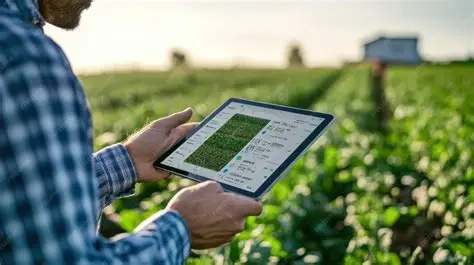
A mobile application can allow information to be entered at the point of activity.
This can reduce the delay between an activity occurring and the information reaching the farm’s central records.
Mobile data collection has also been used for crop tracking in Nigeria. A documented seed-yam tracking project in Ibadan used Android-based mobile data collection to improve the speed and availability of production information compared with notebook-based collection followed by later data entry.
Offline Crop Tracking for Farms With Weak Connectivity
Connectivity is an important consideration for digital agriculture.
A farm-management application that requires continuous internet access may be difficult to use in remote fields.
Offline-capable systems allow field records to be captured without an active connection and synchronized later, depending on the system.
Several agricultural software providers serving African or Nigerian users currently advertise offline functionality. These are product claims rather than independent evidence of performance, so farmers should test the system under their actual field conditions before adoption.
For farms with poor connectivity, offline capability should therefore be evaluated alongside battery consumption, synchronization reliability and data recovery procedures.
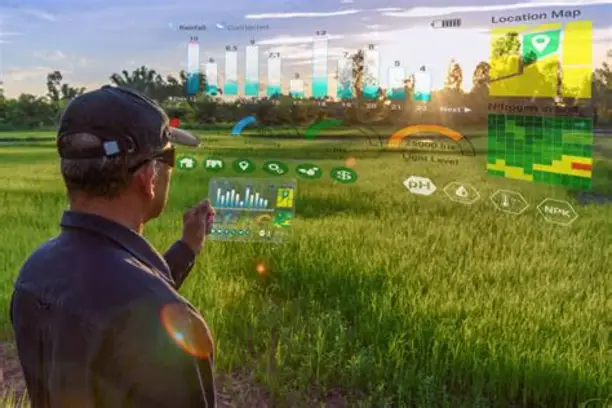
Integrate Crop Tracking With Precision Agriculture
Farm management software can become more powerful when connected to precision agriculture technologies.
Potential data sources include:
- GPS and GNSS
- Satellite imagery
- Agricultural drones
- Soil sensors
- Weather stations
- Yield monitors
- Machinery systems
- Irrigation sensors
The purpose of integration is not simply to collect more data.
The useful outcome is the ability to connect observations and measurements with specific locations and production activities.
For example, a farmer could combine field boundaries, crop records, satellite observations and yield data to investigate whether lower-performing areas correspond with particular field conditions.
This is one reason FMIS and precision agriculture are closely related. Research describes precision agriculture as one of the information-intensive application areas for farm-management information systems.
Does Farm Management Software Automatically Monitor Crops?
No.
This is an important distinction.
Farm management software is primarily a system for recording, organizing, viewing and analyzing farm information.
Automatic crop monitoring may require additional technologies such as satellite imagery, drones, sensors or computer-vision systems.
A software platform may integrate these technologies, but farmers should check exactly where the underlying data comes from.
For example, a dashboard showing crop-health information from satellite imagery is different from a system that relies entirely on manual field observations.
The farmer should understand the source, update frequency, resolution and limitations of the data before using it for management decisions.
How AI Can Be Used With Crop Production Records
Artificial intelligence can be added to farm management systems when sufficient structured data is available.
Potential applications include identifying patterns in historical production records, supporting crop-risk analysis, detecting anomalies and assisting with decision support.
However, AI performance depends heavily on data quality and the relevance of the underlying information.
A system trained or configured around conditions that differ from the farmer’s crop, climate, soil, management system or production scale may not provide equally useful results.
AI should therefore be treated as an additional decision-support layer rather than a replacement for agronomic knowledge and field observation.
How Much Does Crop Tracking Software Cost?
There is no single reliable price for farm management software.
Costs can vary according to:
| Cost factor | Why it affects price |
|---|---|
| Number of users | More users can require larger plans |
| Farm size | Larger operations may need more fields or records |
| Number of farms | Multi-location operations may require additional capacity |
| Features | Advanced analytics, mapping and integrations can increase cost |
| Mobile access | Field applications may be part of the subscription |
| Integrations | Sensors, accounting and machinery systems may require additional configuration |
| Support | Training and technical support can affect total cost |
| Data storage | Large amounts of imagery or records may require additional capacity |
| Hardware | Sensors, tablets, GPS devices or other equipment may be separate |
| Implementation | Large farms may require configuration and staff training |
Some platforms advertise free tiers or free trials, while others use subscriptions or enterprise pricing. Current Nigerian farm-management providers also offer different approaches, but advertised pricing and features can change, so farmers should obtain current commercial terms directly from providers.
The important financial measure is total cost of ownership, not simply the software subscription.
Is Farm Management Software Worth It for Small Farms?
A small farm does not necessarily need an enterprise farm-management platform.
If a farmer operates a few fields and already maintains accurate records, a simple digital record system may provide enough value.
The case for more sophisticated software becomes stronger when the farm has multiple fields, multiple crops, several employees, significant input use, machinery, irrigation, multiple production cycles or a need for detailed production-cost analysis.
The technology should therefore be matched to the farm’s management problem.
Buying sophisticated software before establishing a need can create unnecessary cost and complexity.
Is Farm Management Software Useful for Large Commercial Farms?
Large farms can benefit from centralized production records because operational complexity increases as the number of fields, workers, machines and production activities increases.
A large operation may need to know what happened across many fields without requiring headquarters staff to reconstruct information from separate notebooks.
Digital systems can also support coordination between field teams and management.
Research into large-scale field management systems has specifically addressed problems created by dispersed fields, complex farming operations and labour management, using linked field and operation records to support planning and decision-making.
Farm Management Software for Nigerian Crop Farmers
For Nigerian farmers, software selection needs to reflect local operating conditions.
A platform may have impressive features but still be difficult to use if it depends on continuous connectivity, expensive devices or specialized technical skills.
Farmers and agribusinesses should consider whether the system supports the crops they grow, the way their fields are organized, the units they use, local workforce arrangements and their available connectivity.
Offline operation can be particularly relevant for remote fields.
Technical support and user training are also important because farm software depends on consistent data entry. A system cannot produce reliable production analysis if field teams rarely record activities or enter incomplete information.
Current Nigerian platforms demonstrate that local farm-management software is increasingly being developed around crop tracking, field activities, harvest records, costs and offline field use. These are provider claims and should be evaluated through demonstrations and farm trials rather than accepted solely from marketing material.
What Farmers Should Check Before Choosing Crop Management Software
Farmers should start by identifying the production information they currently struggle to track.
For example, if the major problem is knowing what was applied to each field, input and field-recording functions should receive priority.
If the problem is comparing yields, the system needs reliable harvest and field-area records.
If the farm has multiple estates, multi-farm management may be important.
If field connectivity is unreliable, offline operation should be tested before purchase.
A practical evaluation can focus on whether the system can:
| Requirement | What to verify |
|---|---|
| Field management | Can fields be mapped and organized? |
| Crop records | Can crops and varieties be tracked by field? |
| Activity tracking | Can actual field operations be recorded? |
| Input tracking | Can quantities and applications be associated with fields? |
| Harvest records | Can harvest quantity and quality be captured? |
| Yield analysis | Can yield be calculated and compared? |
| Cost tracking | Can production costs be connected to fields or crops? |
| Mobile access | Can workers record information in the field? |
| Offline use | Can data be captured without internet? |
| Reporting | Can managers generate useful production reports? |
| Data export | Can the farm retrieve its own data? |
| Integration | Can the system connect with other farm technologies? |
| User permissions | Can access be controlled by role? |
| Support | Is local or responsive technical support available? |
A Practical Way to Start Tracking Crop Production Digitally
Farmers do not need to digitize every operation on the first day.
Start with the farm structure.
Create the fields, record their sizes and identify the crops being grown.
Next, establish a standard production record for each field.
Record planting, inputs, labour, machinery, crop observations, irrigation and other important activities as they occur.
Then record harvest quantities and calculate yield.
After one production cycle, review the information and identify gaps.
Perhaps fertilizer applications were recorded well but labour was not. Perhaps harvest quantities were available but field areas were inaccurate. Perhaps workers entered activities inconsistently.
Fix these weaknesses before adding more advanced technologies.
Once reliable records have been established, the farm can consider integrating weather data, satellite imagery, sensors, drones, machinery data or other precision-agriculture technologies.
The principle is simple: build reliable farm records first, then add technology that makes those records more useful.
Common Mistakes When Tracking Crop Production Digitally
Recording Activities Without the Field
A note saying that fertilizer was applied is incomplete if the system does not identify where it was applied.
Field-level association is essential for meaningful production analysis.
Recording Planned Activities Instead of Actual Activities
A production plan shows what should happen.
A production record shows what actually happened.
Both are useful, but they should not be confused.
Collecting Data That Nobody Uses
Farm workers should not be asked to record dozens of measurements simply because the software allows them.
Each important data field should have a management purpose.
Ignoring Data Quality
Incorrect dates, quantities, field names and units can produce misleading reports.
Consistent data-entry procedures are therefore essential.
Assuming Software Explains Poor Yield Automatically
A production dashboard may reveal that one field produced less than another.
It does not necessarily establish the cause.
Agronomic interpretation is still required.
Buying Advanced Technology Before Fixing Basic Records
A farm may invest in sensors, drones or AI while still failing to record planting dates or fertilizer applications consistently.
Advanced analysis cannot compensate for fundamental gaps in farm records.
Final Takeaway
Farm management software helps farmers track crop production by creating a connected digital record of what happens in each field from planting to harvest.
Instead of keeping planting dates, fertilizer applications, labour records, crop observations and harvest information in separate places, farmers can organize these activities around individual fields, crops and production cycles.
The greatest value comes from connecting the records.
A farmer can compare yield between fields, review input use, investigate production problems, calculate production costs, monitor activities against plans and build a historical record for future seasons.
More advanced systems can extend this foundation by connecting crop records with GPS, satellite imagery, drones, sensors, weather data, machinery and other precision-agriculture technologies.
But the technology itself does not guarantee better production. The quality of the information collected, the consistency of field records and the ability of the farm manager to interpret and act on the information remain critical.
For most farms, the practical starting point is straightforward: map the fields, identify the crops, record important activities as they occur, capture harvest results accurately and use the resulting history to make better production decisions.
Frequently Asked Questions
What is crop production tracking?
Crop production tracking is the process of recording and monitoring crop activities from planting through harvest, including field information, inputs, labour, crop conditions, irrigation, machinery and production results.
How does farm management software track crops?
Farm management software typically organizes crop information around farms, fields and production seasons. Farmers can record planting, inputs, field activities, observations, harvests, yields and costs against the relevant production areas.
Can farm management software track crop yield?
Yes. If the system records harvested quantity and the corresponding production area, it can calculate measures such as yield per hectare or yield per acre.
Can farmers track fertilizer use with farm management software?
Yes. Many farm management systems allow fertilizer applications to be recorded by field, crop, date and quantity. This creates a historical input record that can be compared with crop performance.
Can small farmers use crop management software?
Yes. Small farmers can use digital crop-recording tools, but they may not need the same level of functionality as large commercial farms. The appropriate system depends on the number of fields, crops, workers and management requirements.
Does farm management software require internet access?
Not always. Some systems support offline data collection and later synchronization. Farmers operating in areas with unreliable connectivity should verify and test offline functionality before adopting a platform.
Can farm management software work with drones and satellite imagery?
Some platforms can integrate remote-sensing data, satellite imagery or drone-derived information. The exact capability varies by system, so farmers should verify which data sources and integrations are actually supported.
Does farm management software automatically improve crop yields?
No. Software primarily improves the collection, organization and analysis of farm information. Any improvement in production depends on how accurately the data is collected and how effectively farmers use the information to improve management decisions.