How Farmers Can Use AI to Detect Crop Diseases Early?
Crop diseases can become expensive farm problems before a farmer has enough time to respond. A disease may begin with a few spots on leaves, slight discoloration, wilting, unusual growth, or other symptoms that are easy to miss during routine field scouting. When the problem becomes obvious across a large part of the field, disease management may already be more difficult and costly.
Artificial intelligence is being used to help address this problem. AI crop disease detection systems can analyse plant photographs and other crop-monitoring data to identify patterns associated with particular diseases or unhealthy plants. Depending on the system, images can come from smartphones, field cameras, drones, or other agricultural imaging equipment.
For farmers, however, the important question is not simply whether AI can recognise a diseased plant. The practical question is whether it can help identify suspicious plants or field areas early enough to improve scouting and decision-making.
This article explains how AI crop disease detection works, how farmers can use it, what equipment and infrastructure may be required, how accuracy should be evaluated, what it can cost, where it has limitations, and how farmers can test the technology before investing heavily in it.
What Is AI Crop Disease Detection?
AI crop disease detection is the use of artificial intelligence, machine learning, and computer vision to analyse agricultural data and identify patterns associated with crop diseases.
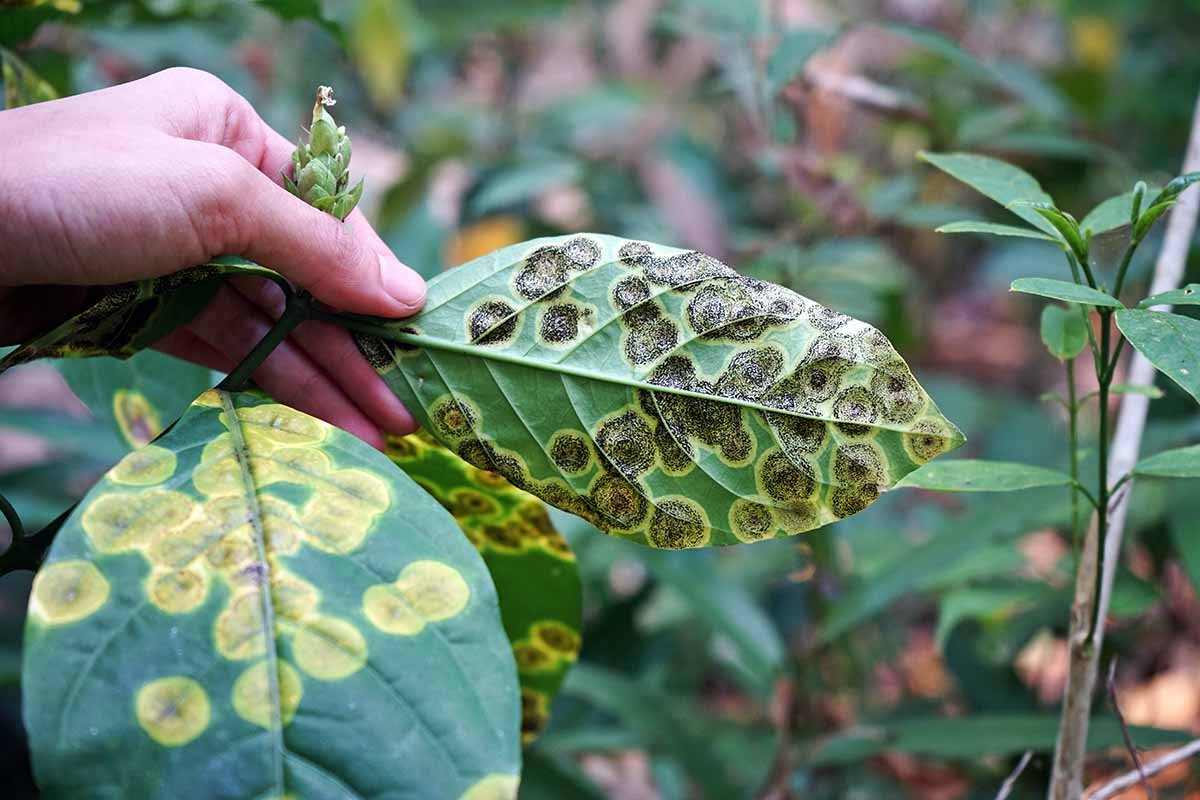
The most accessible form is image-based detection. A farmer photographs a plant or leaf using a smartphone, and software analyses the image for visual characteristics associated with diseases included in its model.
Machine learning models are trained using collections of images that have been labelled according to plant condition or disease. During training, the system learns patterns within those images. When a new image is submitted, the model compares its characteristics with patterns it has learned.
Depending on the system, the output may identify a likely disease, classify the plant as healthy or affected, highlight suspicious areas, or provide a probability or confidence level.
This distinction matters because an AI result is not necessarily a confirmed plant pathology diagnosis. The system is interpreting available data according to its training. If several diseases or environmental stresses produce similar symptoms, additional agricultural investigation may be necessary.
Why Early Crop Disease Detection Matters to Farmers
Farmers already scout crops for disease. The difficulty is that manual scouting takes time, requires experience, and becomes increasingly difficult as the cultivated area increases.
A small vegetable farmer may be able to inspect a significant portion of a field personally. A commercial operator managing several fields may have to rely on field scouts who cannot inspect every plant every day.
Early detection technology can help by making scouting more targeted.
Instead of attempting to inspect every plant equally, a farm team can use photographs or aerial imagery to identify plants or field zones that appear unusual. Those locations can then receive closer attention.
The objective is not to eliminate field scouting. It is to improve where and when scouting resources are used.
Early identification can also give farmers more time to investigate the cause of the problem, obtain professional advice, monitor disease development, and determine whether a control measure is actually necessary.
How AI Detects Crop Diseases From Images
The process begins with image collection. A farmer, scout, camera, or drone captures an image of the crop.
The software processes the image and extracts visual information. Depending on the application, the system may analyse leaf colour, spots, lesions, tissue damage, patterns, shape, texture, or other visible characteristics.
The machine learning model then compares these characteristics with patterns represented in its training data.
The system produces an output based on that analysis. A farmer may receive a disease classification, a possible list of conditions, a healthy or unhealthy result, or an indication that further investigation is required.
The farmer then combines this result with actual field information.
A useful workflow is:
Crop observation → image capture → AI screening → field verification → professional confirmation when necessary → management decision → follow-up monitoring
This approach is more appropriate for commercial farming than simply accepting whatever disease name appears on a phone screen.
The Quality of the Photograph Can Affect the Result
One of the simplest factors affecting AI crop disease detection is image quality.
A blurry photograph, poor lighting, distant subject, cluttered background, or partially hidden leaf may make it difficult for the software to recognise relevant symptoms.
Farmers should try to capture clear photographs of affected plant parts while also taking wider photographs showing the plant and surrounding crop.
Taking several photographs can be more useful than relying on one unusual leaf.
The farmer should also record information about the field. Crop variety, crop age, recent weather, irrigation, fertilizer application, pesticide use, soil conditions, and the distribution of symptoms can provide useful context.
For example, symptoms appearing throughout a poorly drained section of a field may have a different explanation from similar symptoms occurring randomly across otherwise healthy plants.
AI sees the image. The farmer understands the production environment.
Both forms of information can therefore be valuable.
Using Smartphones for AI Crop Disease Detection
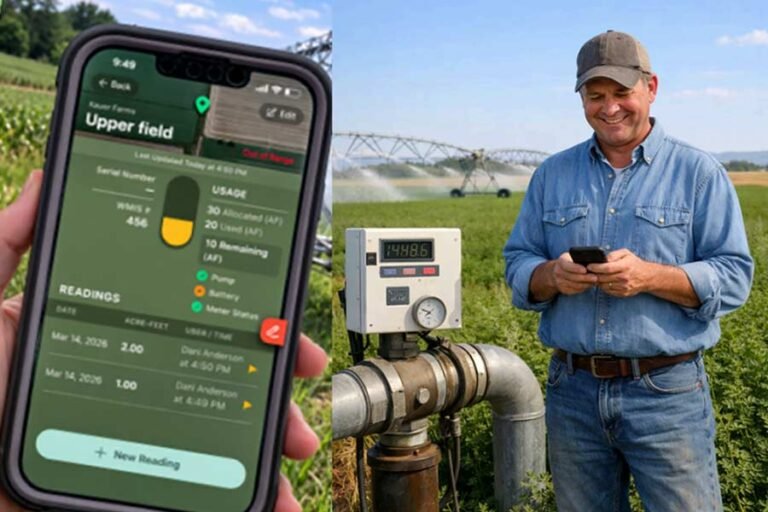
A smartphone is often the simplest entry point for farmers because it combines a camera, computing device, communication tool, and data-recording system in one device.
A suitable AI application can allow a farmer or field scout to photograph a plant and receive an initial assessment.
Some applications can perform certain functions without continuous internet access, while others depend on cloud-based processing. Farmers should therefore verify the connectivity requirements of a particular application instead of assuming that every AI disease detection tool works offline.
Smartphone-based systems can be useful for routine scouting, especially when a farm has many fields or when agricultural specialists are not immediately available.
The technology can also create digital records of crop-health observations. This can help farms compare symptoms over time and document where problems have occurred.
However, smartphone AI should remain a screening and decision-support tool where diagnostic uncertainty exists.
Using Drones to Monitor Crop Diseases
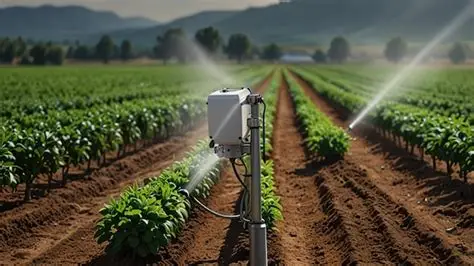
Drones can extend AI-based crop monitoring from individual plants to larger areas.
A drone can capture images across a field much faster than a person walking through every section. Software can then process those images to identify areas showing unusual vegetation patterns or other signs of stress.
This can be particularly useful on larger farms where manual scouting of every part of a field is difficult.
However, crop stress is not automatically crop disease.
Water shortage, nutrient deficiency, insect damage, heat stress, poor drainage, soil compaction, disease, and other problems can all affect crop appearance.
A practical drone disease-monitoring system therefore often involves two stages:
Aerial detection identifies suspicious areas, then ground scouting determines what is actually happening.
More advanced systems may use sensors that collect information beyond ordinary visible photographs. These systems can provide additional information about crop condition, but they also increase equipment, data-processing, training, and operating requirements.
Farmers should therefore consider whether drone-based monitoring solves a sufficiently large scouting problem to justify the additional complexity.
Can AI Detect Diseases Using Satellite Imagery?
Satellite imagery can also contribute to large-area crop monitoring.
Satellites can repeatedly capture information over agricultural areas, allowing unusual crop patterns or changes in vegetation condition to be identified.
This is more useful for identifying areas that deserve investigation than for diagnosing a disease from a single image.
Satellite monitoring is particularly relevant to large farms, agricultural organisations, crop-monitoring services, and geographically distributed production systems.
Cloud cover, image resolution, revisit frequency, crop type, growth stage, and the type of information being analysed can affect usefulness.
A satellite system may therefore tell a farm manager that a particular section of a field is behaving differently without necessarily identifying the exact disease responsible.
Ground verification remains important.
Combining AI With Weather and Farm Data
AI disease detection can become more useful when image information is combined with other agricultural data.
Relevant information may include:
| Data source | What it can contribute |
|---|---|
| Plant photographs | Visible symptoms and disease-related patterns |
| Weather data | Temperature, rainfall, humidity, and other environmental conditions |
| Field history | Previous disease occurrences and management history |
| Crop growth stage | Context for interpreting symptoms |
| Soil information | Possible environmental or nutritional factors |
| Irrigation records | Water-management context |
| Farm scouting records | Previous observations and locations |
| Drone imagery | Field-level spatial information |
| Satellite imagery | Large-area crop condition monitoring |
The reason this matters is that disease development is influenced by more than what a leaf looks like.
Environmental conditions can affect disease development and spread. Crop density, irrigation, rainfall, temperature, humidity, crop variety, and previous disease pressure can all be relevant depending on the crop and disease.
Combining these information sources can therefore provide more useful decision support than relying on a photograph alone.
Which Crops Can Use AI Disease Detection?
AI crop disease detection has been researched across many agricultural crops, including cereals, vegetables, fruits, legumes, roots and tubers, and plantation crops.
However, there is no universal crop disease model that should automatically be assumed to work for every crop.
A system developed for tomato leaf diseases should not automatically be expected to diagnose cassava diseases accurately.
Even within one crop, performance can vary according to variety, growth stage, location, lighting, disease severity, and field conditions.
This is particularly important for African farmers. A model developed using images from another geographical region may encounter different crop varieties, environmental conditions, disease patterns, field backgrounds, and farming practices.
Before adopting a system, farmers should establish:
| Question | Why it matters |
|---|---|
| Which crops are supported? | A system may be designed for specific crops |
| Which diseases are included? | The model may not recognise every disease |
| Where were the images collected? | Geography can affect field performance |
| Were real field images used? | Controlled images may not represent farm conditions |
| Does it work with local varieties? | Visual characteristics can differ |
| What happens when the model is uncertain? | Unknown conditions require human investigation |
| Can results be verified? | Important decisions may require professional confirmation |
AI Crop Disease Detection for Nigerian Farmers
Nigeria’s agricultural sector includes smallholder farms, commercial farms, plantations, greenhouse operations, and other production systems. These farms differ significantly in their access to electricity, internet connectivity, smartphones, technical expertise, agricultural services, and financing.
That means AI disease detection needs to be evaluated according to the actual production environment.
A smartphone application may be practical for one farmer but difficult for another if it requires continuous internet access or a subscription that does not fit the farm’s operating costs.
Local validation is also important.
Research into AI-based disease detection is expanding in Nigeria and other African countries, including work involving crops such as cassava and maize. However, a research model or academic prototype should not automatically be treated as a fully validated commercial product.
Farmers should look for evidence that a system has been tested under field conditions comparable to their own.
Local disease pressure, crop varieties, weather, field management, image quality, and connectivity can all affect practical performance.
How Accurate Is AI Crop Disease Detection?
Accuracy is one of the most important questions farmers should ask, but a single percentage does not tell the entire story.
A model may achieve strong results on a carefully prepared research dataset while producing different results under normal field conditions.
Real farms contain much greater variation.
Leaves may overlap. Lighting changes during the day. Plants may be wet or dusty. Symptoms can appear at different stages. Several stresses can occur simultaneously. Backgrounds may contain soil, weeds, other plants, machinery, or other objects.
Research in plant disease detection has repeatedly identified the difference between controlled image datasets and real-world field conditions as an important challenge.
Farmers should therefore ask more detailed questions than simply, “What is your accuracy?”
Useful questions include:
Was the technology tested on real farms?
Were the test images separate from the images used to train the model?
Which crops and diseases were included?
Where were the images collected?
How does the system perform with poor lighting or complex backgrounds?
What happens when it encounters a condition it does not recognise?
Can the system identify uncertainty instead of forcing every image into a disease category?
These questions provide a more realistic picture of suitability.
Why AI Should Not Automatically Replace Plant Diagnosis
Visual symptoms can have several possible causes.
Yellowing can result from nutrient problems, water stress, disease, ageing, root problems, or other factors.
Leaf spots can have different causes.
Wilting can result from disease, drought, root damage, heat, or other environmental conditions.
An AI model may recognise a pattern without knowing every factor that produced it.
For this reason, farmers should avoid treating an AI result as a guaranteed diagnosis, particularly when a wrong decision could lead to expensive treatment or significant crop losses.
Where the diagnosis is uncertain or the economic consequences are serious, farmers may need assistance from an agronomist, extension professional, plant pathologist, or laboratory.
This is especially important before applying agricultural chemicals.
An AI result should help the farmer investigate the problem. It should not automatically trigger chemical treatment.
What Equipment Is Required?
Equipment requirements depend on the level of monitoring.
A basic smartphone-based system may require only a suitable smartphone and the relevant application.
A drone-based system requires considerably more infrastructure.
Commercial operations may combine several technologies, including smartphones, drones, field cameras, satellite imagery, weather stations, sensors, geographic information systems, and farm-management software.
The following comparison illustrates the difference.
| Approach | Main equipment | Main use | Complexity |
|---|---|---|---|
| Smartphone AI | Smartphone | Individual plant and leaf screening | Low |
| Field camera | Camera system | Repeated monitoring of selected areas | Moderate |
| Drone imagery | Drone, camera or sensor | Monitoring larger fields | Moderate to high |
| Satellite monitoring | Computer or mobile device plus imagery service | Large-area monitoring | Moderate |
| Integrated AI system | Multiple data sources and software | Advanced crop decision support | High |
The right option depends on the problem being solved.
A small vegetable farm does not necessarily need a drone because a smartphone-based scouting system may provide sufficient value.
A large commercial farm may have a stronger reason to investigate aerial monitoring because of the size and complexity of its fields.
Does AI Crop Disease Detection Require Internet?
Not necessarily.
Some systems can perform certain tasks locally on a device, while others rely on cloud servers.
Cloud-based systems may require internet access to upload photographs, process images, retrieve results, update disease databases, or synchronise farm records.
This creates an important consideration for farmers operating in areas with unreliable connectivity.
Before adopting a system, confirm whether it can:
Operate offline
Store images until connectivity is restored
Process images directly on the device
Synchronise records later
Function effectively with low-bandwidth connections
Offline capability can make a technology more practical in remote farming areas, but it should not be assumed that an offline system is automatically accurate or suitable for the farmer’s crops.
What Does AI Crop Disease Detection Cost?
The cost varies widely according to the type of system.
A farmer using an existing smartphone may have little additional hardware expenditure. However, software subscriptions, mobile data, technical support, training, or other service costs may still apply.
Drone-based systems can involve substantially greater expenditure because of aircraft, cameras or sensors, batteries, software, training, maintenance, data processing, and operator requirements.
Large farms may also incur costs for integrating AI into existing farm-management or monitoring systems.
A realistic technology budget should therefore consider total cost of ownership rather than only the purchase price.
| Cost factor | What farmers should consider |
|---|---|
| Hardware | Smartphone, camera, drone, sensors or computer |
| Software | Application, platform or subscription fees |
| Connectivity | Mobile data or internet service |
| Training | Staff training and technical onboarding |
| Maintenance | Equipment servicing and repairs |
| Data processing | Cloud or specialised processing where applicable |
| Technical support | Provider or local technical assistance |
| Replacement | Batteries, cameras, sensors or other components |
| Labour | Time required for scouting and verification |
| Professional diagnosis | Expert or laboratory confirmation when required |
Exact costs should be obtained from the technology provider and evaluated against the farm’s actual operating conditions.
There is no responsible universal ROI figure for AI crop disease detection because the financial result depends on crop, farm size, disease pressure, labour costs, technology performance, management practices, and other conditions.
Benefits of Using AI for Crop Disease Detection
The main benefit is potentially earlier identification of suspicious plants or areas.
This can help farmers focus field scouting where it is most needed.
AI can also make repeated crop monitoring easier. Digital photographs can create records that allow farm teams to compare crop conditions over time.
On larger farms, aerial monitoring can reduce the amount of field area that must be manually inspected in the first stage of scouting.
AI can also support more consistent monitoring between different field workers. Instead of relying entirely on one person’s visual judgement, a farm may have a digital screening tool that provides an additional source of information.
However, these benefits depend on the quality and suitability of the technology.
The existence of an AI system does not guarantee lower disease losses, reduced pesticide use, or higher yields.
Those outcomes have to be demonstrated under the farm’s own conditions.
Limitations Farmers Need to Understand
AI disease detection has several important limitations.
The first is data quality. Poor images can lead to poor results.
The second is model coverage. A system may only recognise the crops and diseases represented in its development and validation data.
The third is field variability. A model developed under controlled conditions may encounter much more difficult conditions on a real farm.
The fourth is symptom similarity. Different diseases and non-disease stresses can produce similar visual patterns.
The fifth is local adaptation. A model developed using data from another country may not perform equally well in a different agricultural environment.
Connectivity can also be a limitation for cloud-based systems.
There are also human factors. Farmers and field workers need to understand how to capture useful images and how to interpret AI outputs correctly.
Finally, there is the question of cost. A technology that provides useful information but costs more than the operational problem it solves may not be economically justified.
Who Should Consider Using AI Disease Detection?
AI disease detection may be useful for farmers and agricultural businesses that face recurring crop-health monitoring problems.
Large commercial farms may use it to support field scouting across multiple fields.
Medium-sized farms may use smartphone-based systems to supplement existing crop inspections.
Agronomists, extension services, cooperatives, crop consultants, and agricultural service providers may use AI tools as part of broader advisory or scouting services.
Farmers managing crops with recurring disease problems may also have a stronger reason to investigate the technology.
The strongest candidate is not necessarily the farmer with the largest farm. It is the farmer with a clear disease-monitoring problem that the technology can realistically address.
Who May Not Need AI Disease Detection?
AI is not automatically necessary for every farm.
A farmer managing a small plot may be able to inspect crops effectively without specialised technology.
If a crop has a simple disease-management system and experienced field workers can identify problems reliably, an AI application may add little value.
The same applies when the available technology does not support the farm’s major crops or diseases.
Farmers should therefore identify the problem first and investigate technology second.
A Practical Example From a Hypothetical Maize Farm
Consider a hypothetical commercial maize farm where field workers notice unusual lesions appearing on leaves in one section of a field.
Instead of immediately treating the entire field, the farm manager instructs the scouting team to photograph several affected plants.
The photographs are analysed using an AI disease detection tool. The tool identifies a possible disease, but the farm does not immediately treat the field based solely on that result.
The team examines additional plants in the affected area and records crop growth stage, recent rainfall, irrigation conditions, field history, and previous disease problems.
If the evidence remains consistent with the suspected disease, the farm seeks appropriate professional confirmation before selecting a management response.
The affected area is then monitored again.
In this example, AI has not replaced the farm’s agronomist or field scouts. It has helped the farm identify a suspicious area and organise the investigation more efficiently.
How Farmers Can Test AI Before Adopting It
Farmers should consider a pilot before committing significant money to an AI disease detection system.
Start with one crop and a clearly defined disease-monitoring problem.
Test the system using real photographs from the farm rather than demonstration images supplied by a vendor.
Where possible, compare AI results with assessments from experienced agricultural professionals.
Record correct identifications, incorrect identifications, missed cases, time required, connectivity problems, and any additional labour involved.
The farm should also determine whether the technology changes decisions in a useful way.
For example, does it help scouts reach problem areas sooner? Does it improve documentation? Does it reduce unnecessary field inspections? Does it help identify a disease problem before it becomes widespread?
These are more meaningful measures of value than simply counting the number of AI diagnoses generated.
Questions to Ask an AI Technology Provider
Before adopting an AI crop disease detection platform, farmers should ask specific technical and operational questions.
Which crops and diseases does the system support?
The provider should clearly identify the crops and disease categories covered by the system. Farmers should not assume that broad claims about plant disease detection mean every crop is supported.
Was the system tested under real field conditions?
Testing under controlled conditions does not necessarily demonstrate performance on farms. Ask whether the technology has been tested using real field photographs and conditions.
Does the system work offline?
This is particularly important for farms with unreliable internet or mobile connectivity. Confirm whether image analysis, data storage, and other essential functions continue without a live connection.
What happens when the system is uncertain?
A responsible diagnostic system should not necessarily force every image into a disease category. Farmers should understand how the platform handles unknown or ambiguous conditions.
How is farm data handled?
Farmers should understand how photographs, field information, location information, and other data are stored and used. Commercial farms should pay particular attention to data ownership and access arrangements.
What training and technical support are available?
The software may be simple to operate, but users still need to know how to capture good images and interpret results correctly.
A Practical Implementation Process
Farmers considering AI disease detection can follow a gradual adoption process.
Identify the actual disease-monitoring problem
Determine which crop-health problem is consuming the most scouting time or creating the greatest uncertainty.
Determine whether AI is appropriate
Check whether the problem can realistically be identified using the type of data available to the AI system.
Evaluate the available technology
Compare crop coverage, disease coverage, field validation, connectivity, equipment requirements, support, data policies, and cost.
Conduct a small farm trial
Use real farm conditions and actual field photographs. Do not rely only on demonstrations.
Verify the results
Compare AI outputs with field observations and professional diagnosis where appropriate.
Measure practical value
Record whether the system improves scouting speed, monitoring coverage, documentation, or decision-making.
Expand only when justified
If the pilot demonstrates useful results at an acceptable total cost, the farm can gradually expand the technology to additional fields or crops.
This staged approach reduces the risk of purchasing expensive technology before establishing whether it solves a real problem.
The Role of AI in the Future of Crop Disease Monitoring
Agricultural AI is moving toward systems that combine different types of information rather than relying only on individual photographs.
Future systems may increasingly combine computer vision with weather data, satellite imagery, field sensors, crop history, farm records, and other information.
This could allow disease-monitoring systems to move from simple image classification toward more comprehensive decision support.
Another important development is the use of AI models that can operate on lower-powered devices. This could become particularly relevant in agricultural regions where continuous cloud connectivity is difficult.
However, greater technical sophistication does not automatically mean greater farm value.
The important test remains whether the system performs reliably under actual farming conditions and whether the information it produces leads to better decisions.
For farmers, practical reliability matters more than the complexity of the underlying AI model.
Conclusion
AI crop disease detection can help farmers identify suspicious crop symptoms earlier and make field scouting more targeted. Smartphone applications, field cameras, drones, satellite imagery, and other data sources can all contribute to different levels of crop-health monitoring.
The technology is most useful when it becomes part of a broader agricultural workflow rather than being treated as an automatic diagnosis machine.
Farmers still need to consider crop type, disease coverage, image quality, local field conditions, connectivity, equipment, training, technical support, and total cost. In important or uncertain cases, professional or laboratory confirmation may still be necessary.
The best starting point is therefore not to purchase the most advanced AI system available. It is to identify a real crop disease-monitoring problem, test whether AI can address it under actual farm conditions, measure the results, and expand adoption only when the technology provides practical value.
Frequently Asked Questions
Can AI detect crop diseases from a photograph?
AI can analyse photographs and identify visual patterns associated with certain crop diseases. However, similar symptoms can have different causes, so an AI result should not automatically be considered a confirmed diagnosis.
How accurate is AI crop disease detection?
Accuracy varies according to the crop, disease, model, image quality, training data, and field conditions. Research results from controlled datasets may not represent performance on farms, so farmers should look for evidence from real agricultural environments.
Can small farmers use AI to detect crop diseases?
Yes. Smartphone-based tools can provide an accessible way for small farmers to use AI for preliminary crop-health screening. The technology must still support the farmer’s crop and disease, and its cost and connectivity requirements must be practical.
Does AI crop disease detection require internet access?
Some systems require internet access because images are processed through cloud services. Others can perform certain functions offline. Farmers should check the specific application’s connectivity requirements before adopting it.
Can AI detect diseases in every crop?
No. AI models are generally developed for particular crops, diseases, or conditions. A system designed for one crop should not automatically be assumed to provide reliable results for another.
Can drones be used to detect crop diseases?
Drones can help identify unusual crop patterns and locate areas that require ground inspection. They can cover large fields efficiently, but aerial imagery does not always identify the exact cause of crop stress.
Should farmers spray pesticides after AI identifies a disease?
No. Farmers should not automatically apply pesticides solely because an AI system has identified a possible disease. The result should be considered alongside field symptoms and appropriate agricultural advice, particularly where the diagnosis is uncertain.
Is AI crop disease detection worth the cost?
It depends on the farm’s disease-monitoring needs and the performance of the technology. Farmers should compare the total cost of ownership with measurable improvements in scouting, monitoring, response time, documentation, or crop-loss management rather than assuming that AI will automatically produce financial returns.