
Why Every Commercial Farmer Needs Digital Farm Records
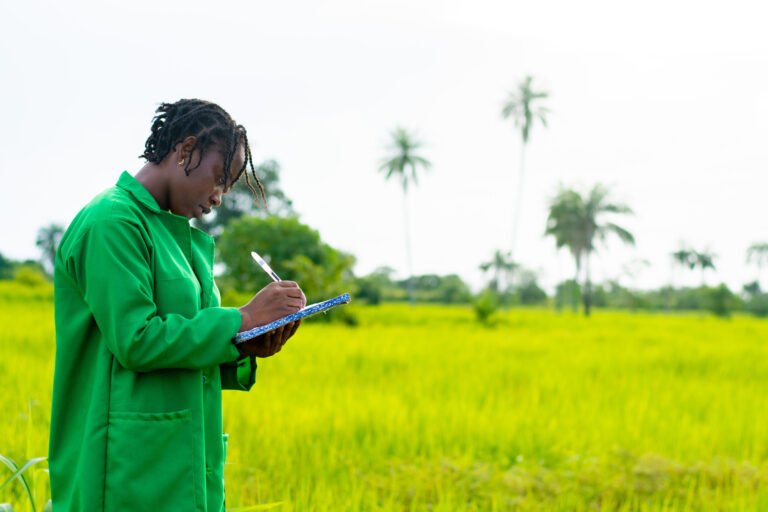
A farmer may know how many hectares were planted, approximately how much fertilizer was purchased and roughly how much was spent on labour. But commercial agriculture involves hundreds or thousands of individual decisions and transactions throughout a production cycle.
Without organized records, important information is easily lost. A commercial farm needs to know how much each crop costs to produce, which fields are performing well, how much labour is being used, where inputs are going, how much machinery is costing, how much produce has been harvested, which customers owe money and whether the business is generating enough cash to continue operating. Digital farm records provide a structured way to capture and organize this information.
They can range from simple spreadsheets to specialized farm management software that connects field operations, production, inventory, labour, machinery and financial information. Digital records do not automatically make a farm profitable. They do something more fundamental: they give the farmer better information from which to make decisions.
For a commercial operation, that information can be the difference between managing by assumption and managing by evidence.
A farm’s history is an important management asset.
After several production seasons, digital records can reveal patterns.
The farmer may discover that:
- a particular field consistently performs better
- a certain planting period produces stronger results
- one crop variety performs better under local conditions
- fertilizer costs are increasing
- labour requirements are changing
- a particular buyer consistently pays late
- machinery repair costs are increasing
- post-harvest losses are higher in certain seasons
Without historical records, these patterns are easy to miss.
With digital records, the farmer can compare seasons instead of relying on memory.
A farmer operating several farms or production sites can face a major information problem.
A manager may need to know what is happening across locations without physically visiting every farm every day.
Cloud-based farm management systems can allow authorized users to view records from multiple locations.
Management can compare:
- production
- costs
- labour
- inventory
- machinery
- sales
- field performance
across farms.
This can improve oversight, provided the underlying data is entered accurately.
A farm may begin with a simple notebook.
That can work when there are only a few transactions.
As the farm grows, the number of fields, workers, machines, suppliers, customers and transactions also grows.
The record-keeping system must grow with it.
This does not necessarily mean buying expensive software immediately.
A farm can move gradually:
Notebook → Spreadsheet → Structured digital records → Farm management software → Integrated farm data system
The right stage depends on the size and complexity of the operation.
A record that is never reviewed has limited management value.
Farm managers should establish weekly or monthly review routines.
Collecting information without using it wastes much of the potential value.
Yes, depending on the technology. Farmers operating in areas with poor connectivity should consider systems that support offline data entry and synchronization when an internet connection becomes available.
What is the biggest problem with digital farm records?
Poor data quality is one of the biggest problems. If workers enter incomplete or incorrect information, the resulting reports may also be inaccurate. Staff training, clear procedures and regular verification are therefore important.
Can digital records support precision agriculture?
Yes. Digital farm records can provide the foundation for connecting field information with GPS, satellite imagery, drones, sensors, weather data and other precision-agriculture technologies.
Should small commercial farms use digital records?
Yes. The system does not need to be sophisticated. A small commercial farm can begin with a spreadsheet or simple mobile application and gradually adopt more advanced tools as the business becomes more complex.