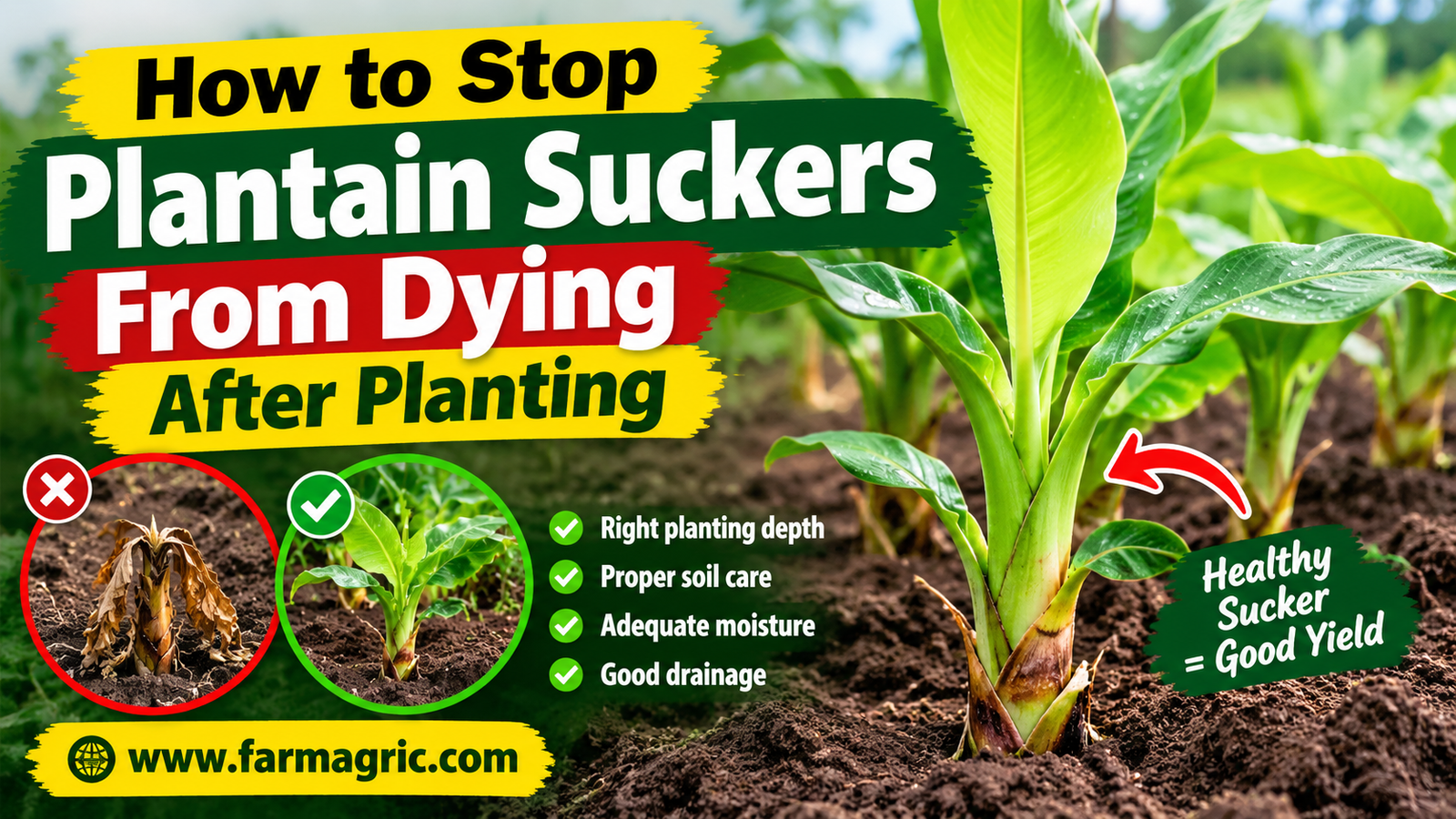
How to Stop Plantain Suckers From Dying After Planting
How to Stop Plantain Suckers From Dying After Planting
The first plantain suckers I ever planted for money were two hundred healthy, fat suckers I carried home on a rented truck. Three weeks later, a hundred and ten of them were soft, brown, and smelling like something had crawled in and died. I stood at the edge of that field and did the sums in my head, and the sums were ugly.
Here is the direct answer. Plantain suckers die after planting for four main reasons: rot from poor handling or wet soil, damage from weevils and nematodes that were already in the sucker, planting in dry soil without keeping the roots moist, and planting the wrong kind of sucker to begin with. Almost every loss I have seen comes down to the sucker you chose, how you prepared it, and how you planted it, and all three are in your hands before the rain does anything.
The good news is that you can cut your losses to a handful per hundred with a few habits that cost very little. Let me walk you through what I do now, and what I wish someone had told me thirty years ago.
What most farmers get wrong
Most farmers treat a sucker like a stick. They cut it from wherever is cheapest, dump it in a hole, and wait for the rain. A sucker is a living thing with a wound on its bottom, and that wound is an open door for rot and pests.
The first big mistake is choosing the wrong sucker. People love the huge, fat, water-filled suckers because they look strong. Those are called water suckers, and they are weak. They have broad, floppy leaves, a thin neck, and a soft body full of water. They grow slowly, rot easily, and give poor bunches. The suckers you want are sword suckers, which are narrow-leaved with a thick, solid corm at the base, like a sword with a heavy handle.
The second mistake is planting a sucker straight from a neighbour’s farm without cleaning it. Nematodes and weevil grubs live inside the corm, and you carry them straight into your clean field. I did this for years and wondered why every new plot started with a disease problem.
The third mistake is planting too deep or too shallow, in soil that is either bone dry or sitting in water. The fourth is leaving the sucker lying in the sun for days after cutting, so it dries out before it ever touches the ground.
Choosing the right sucker
Walk through the mother farm and look for the right plants. A good sword sucker is about one to one and a half metres tall, with narrow, spear-like leaves. The corm is firm and heavy for its size. You should be able to cut it with a clean sweep of the machete and see white, solid flesh, not water or dark streaks.
Pick suckers from healthy mother plants. Look at the mother stool first. If the plant is stunted, leaning, rotting at the base, or covered in black spots, leave it alone, because its suckers carry the same trouble. A good mother plant is upright, green, and bearing a decent bunch.
I also avoid suckers that grow very close to the mother plant and look squeezed. Pick the ones growing a little to the side that have had room and light.
If you can afford it, buy clean planting material from a research institute, a nursery, or a tissue culture supplier. Tissue culture plantlets cost more per plant, but they come free of the main pests and diseases, and when you count the losses I used to take, they often cost less in the end. Ask your local agricultural extension office where to find reliable sources near you.
Preparing the sucker before it goes in the ground
This is where I win or lose the whole season. Preparation takes me about an hour per hundred suckers, and it has saved me more money than any fertilizer.
First, cut the sucker cleanly. Use a sharp, clean machete or knife, and wipe it between plants if you suspect any disease. Dull blades crush tissue, and crushed tissue rots.
Second, pare the corm. That means shaving off the outer layer of the corm, especially the dark, rough bits and all the old roots. Look carefully for small tunnels. A weevil grub makes a tunnel about as wide as a matchstick, and if you see one, cut deeper until you reach clean white flesh. If you cannot get rid of the tunnels, throw that sucker away. It hurts to discard a plant, but planting it will cost you the plant and then some.
Third, cut the pseudostem, the leafy part above the corm, down to about 20 to 30 centimetres above the corm. Long leafy tops lose water through the leaves before the roots are ready to supply any, and the sucker wilts and dies.
Fourth, treat the corm. Many farmers dip the pared sucker in hot water to kill nematodes. The usual method is to hold the corm in water heated to around 53 to 55 degrees Celsius for about twenty minutes. It takes a bit of work and a thermometer, but it works. If you do not have the setup, ask your extension officer about an approved treatment for your area, and follow the instructions on the label exactly. I would rather you use a proven method than guess with chemicals.
Fifth, let the cut surface dry in the shade for a day. Do not leave it in the sun and do not put it in a closed bag. A day of drying in a shaded, airy spot lets the wound seal over a little, so rot has a harder time getting in. Then plant within a few days. A sucker sitting around for two weeks loses vigour quickly.
Preparing the planting hole and the soil
Plantain wants deep, loose, well-drained soil that is rich in organic matter. It hates wet feet. If water stands in your field after a day of rain, the suckers will rot, and no treatment will rescue them.
For my own fields, I dig holes about 45 centimetres wide and 45 centimetres deep, which is roughly the length of my forearm in each direction. In heavy soil I make them a bit bigger so the roots can spread. I mix the topsoil from the hole with a few shovels of well-rotted compost or old manure. I use only well-rotted material, because fresh manure burns the young roots and invites pests.
In low, wet fields I plant on raised mounds or ridges so the corm sits above the water. This single change rescued an entire plot of mine that had been losing suckers every year.
Spacing depends on your variety and your system, but a common spacing is around 3 metres by 3 metres for many plantain types. Check what your local advisors recommend. Crowding leads to weak plants and more disease.
Planting the sucker properly
Plant at the start of the rains, when the soil is already moist and more rain is coming. Planting in dry soil and hoping the rain comes in time is a gamble I have lost more than once.
Set the sucker upright in the hole with the corm sitting about 10 to 15 centimetres below the soil surface. Planting too deep smothers the growing point, and planting too shallow leaves the corm exposed and the plant top-heavy. Fill the hole with the soil and compost mix, and press it down gently around the corm to remove air pockets. Do not stamp on it hard, because that can crack the corm.
Water the sucker well at planting if the soil is dry, and keep the soil moist, not soaked, for the first month. If the rains are late or patchy, water by hand early in the morning. A layer of mulch, like dry grass, banana leaves, or crop residue, around the plant but not touching the stem keeps the soil moist and cool and cuts down weeds.
What the first six weeks look like
A healthy sucker should produce a new green spear leaf at the centre within three to four weeks. That new leaf is the clearest sign that the roots have taken hold. The old leaves may dry and fall away, and that is normal because the plant is dropping what it cannot support.
If you see no new leaf by week five or six, scratch the corm gently with a knife where it meets the soil. Firm and white means it is alive and just slow. Brown, soft, and smelly means it has rotted and needs replacing.
Warning signs of trouble
Watch for a leaf that yellows and collapses within the first two weeks. That usually points to a rotting corm or a root problem, not a lack of food.
Watch for a soft, foul-smelling base. That is rot, and it spreads in wet conditions.
Watch for small holes or tunnels in the corm, with sawdust-like residue. That is weevil damage.
Watch for stunted growth, poor roots, and dark lesions on the roots. That points to nematodes.
Watch for plants leaning or toppling easily, which means weak anchorage from damaged roots.
When I find a dead or dying sucker early, I dig it out, look at it, and learn from it. Pull it up, check the corm, and replant a fresh, treated sucker in a freshly dug hole. Do not simply drop a new sucker into the same wet, rotted hole without clearing out the old material.
Feeding young suckers without killing them
Many farmers lose suckers by overfeeding too early. Fertilizer touching a fresh corm can burn it. In the first month, I rely on the compost in the hole and nothing more. Once the plant has put out two or three new leaves and the roots are established, I start light feeding with a balanced fertilizer, placed in a ring away from the stem and covered lightly. Plantain also loves potassium, so as the plant grows I make sure the programme includes it. Your extension office can advise on rates for your soil.
What I would do differently if I started today
I would never again plant a sucker I had not pared and inspected. The extra hour per hundred suckers pays for itself many times over.
I would pay for clean planting material for at least my first plot, and then multiply my own healthy suckers from that clean stock rather than buying random suckers from anywhere.
I would build ridges or mounds in any field that holds water, from the very first season.
I would time my planting to the rains and have the holes ready before the first good downpour, so no sucker waits around in the sun.
And I would keep a notebook of how many suckers I planted, how many survived, and why the dead ones died. After two seasons that notebook taught me more than any training course.
Frequently asked questions
Why are my plantain suckers turning yellow after planting?
A little yellowing of the oldest leaves in the first couple of weeks is normal as the plant adjusts. If the whole plant yellows and collapses, suspect rot, waterlogging, or pest damage in the corm. Dig around the base and check the corm to confirm.
How long does it take for a plantain sucker to sprout after planting?
Most healthy, treated suckers push a new leaf within three to four weeks when the soil is moist. Slower growth in dry or cool conditions is common, but nothing at all after six weeks usually means the sucker has died.
Can I plant plantain suckers in the dry season?
You can if you have reliable irrigation, but I do not recommend it without one. Dry-season planting without water is the quickest way I know to lose a whole planting.
Can I use a water sucker if I have nothing else?
I would not. Water suckers grow weakly and produce small bunches. If you must use them, expect lower survival and lower yield, and plan to replace failures quickly.
Should I cut off the leaves before planting?
Yes, I trim the top of the pseudostem to around 20 to 30 centimetres above the corm. That reduces water loss while the roots are still getting started.
The advice worth bookmarking
A plantain field is won or lost before the sucker touches the soil, so spend your effort on the sucker you choose and the wound you heal, and the rain will do the rest.