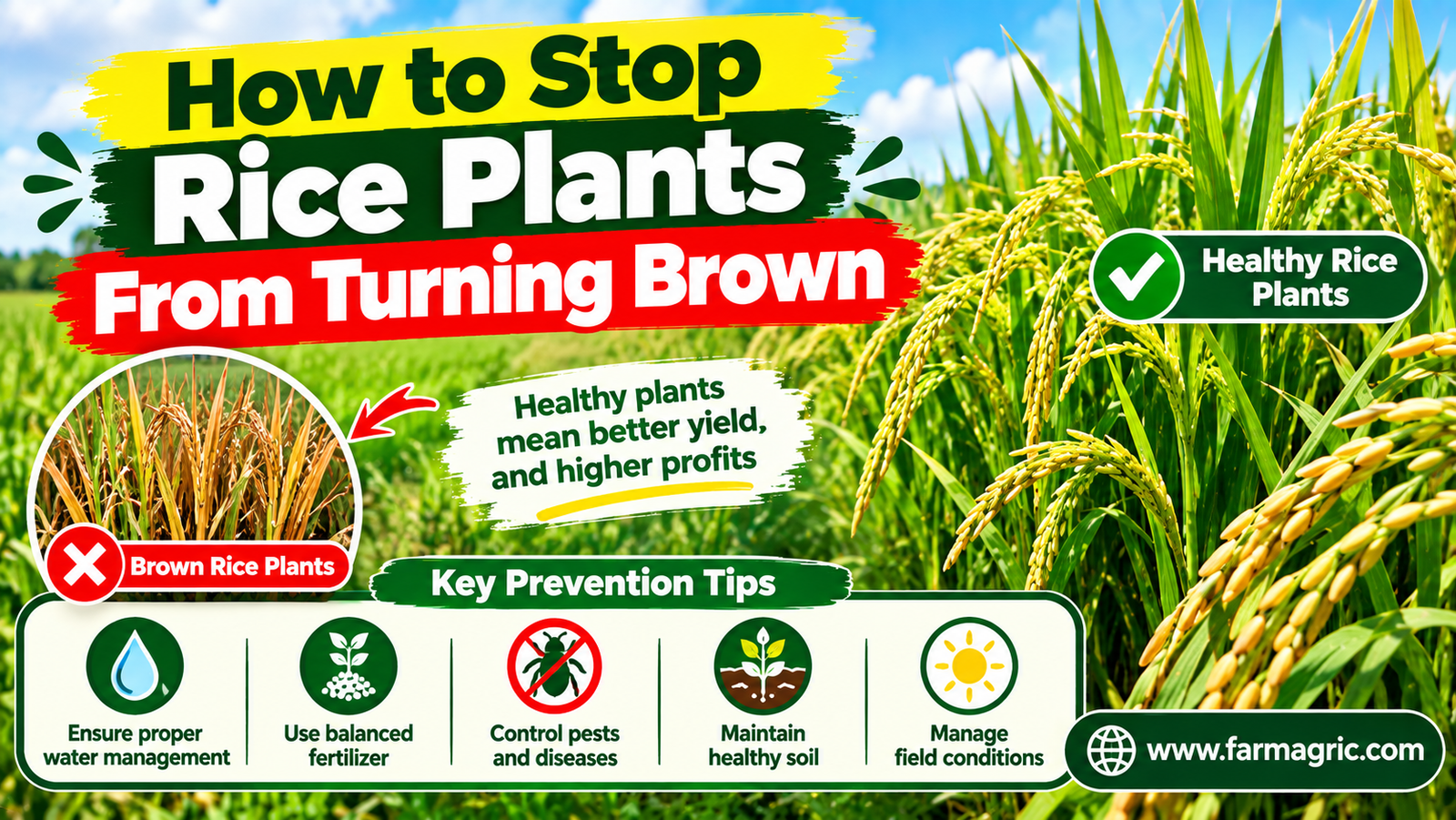
How to Stop Rice Plants From Turning Brown
How to Stop Rice Plants From Turning Brown: A Farmer’s Guide to Diagnosing the Real Cause
I moved into rice farming about fifteen years after I’d already been growing maize for a living, and the first time I watched a whole section of my paddy turn a dull orange-brown over the course of about ten days, I genuinely panicked in a way I never had with maize. Rice hides its problems differently, the water covers so much of what’s happening, and by the time browning shows above the surface, whatever caused it has usually been building for a while already. That first bad patch turned out to be a combination of two things I didn’t even know to look for back then, iron toxicity from water that had been sitting stagnant too long, and a potassium deficiency underneath it that made everything worse. I fixed the water movement, corrected the potassium, and watched most of that section recover within a few weeks. Rice has taught me to slow down and actually get my feet wet before guessing at anything.
So let me answer you straight, because I know you’re standing at the edge of your paddy right now looking at leaves that shouldn’t be that color. Rice plants turn brown from one of several distinct causes, most commonly iron toxicity in poorly drained or stagnant water, potassium or magnesium deficiency, fungal diseases like brown spot or leaf blight, or drought stress in rainfed systems, and the fix depends entirely on correctly identifying which of these is actually happening in your specific field. Browning in rice is rarely just one simple thing, and treating the wrong cause, applying fertilizer for a disease problem or fungicide for a nutrient problem, wastes money while the real issue keeps spreading.
Why Rice Browning Is Different From Other Crop Problems
Rice grows in conditions most other crops never experience, standing water for extended periods, which changes the entire chemistry of how the plant interacts with its environment. In flooded soil, iron and other minerals behave completely differently than they do in normal dry-land farming, and problems that would never happen in a maize field, like iron toxicity, become common realities in a poorly managed rice paddy. At the same time, rice remains vulnerable to the same broad categories of stress every crop faces, nutrient deficiency, disease, and drought, just expressed slightly differently because of the water it’s growing in. Learning to read which category you’re dealing with, water chemistry, nutrition, disease, or moisture stress, is the entire foundation of fixing browning rice correctly.
What Most Farmers Get Wrong
The first mistake, the one that caught me completely off guard early on, is assuming all browning in rice is disease and reaching straight for fungicide. Fungal diseases do cause browning, but so do at least three or four other completely unrelated problems, and fungicide does nothing for a nutrient deficiency or a water chemistry issue.
The second mistake is ignoring water management as a potential cause entirely. Farmers coming from dry-land crop backgrounds, myself included at first, don’t automatically think to check whether water has been sitting stagnant too long or whether drainage and flooding cycles have been managed poorly, even though this is one of the most common causes of browning specifically in rice.
The third mistake is not distinguishing between browning that starts on older versus younger leaves. Like most crops, rice shows different deficiency patterns depending on which leaves are affected first, and skipping this basic diagnostic step leads to a lot of wasted guessing.
The fourth mistake is applying fertilizer without considering that flooded, waterlogged soil behaves very differently from dry soil in terms of nutrient availability. Potassium and other nutrients can become less available under certain water management conditions even when soil test levels look adequate on paper, something dry-land farmers don’t usually have to think about.
The fifth mistake is misjudging the difference between browning caused by drought stress in rainfed rice systems versus browning caused by too much stagnant water, since both can produce a similar dull, discolored appearance from a distance despite having completely opposite causes and completely opposite fixes.
Step-by-Step: Diagnosing and Fixing Brown Rice Plants
1. Check your water management first. Walk the paddy and assess whether water has been sitting stagnant, unmoving and undrained, for an extended period, particularly in warmer weather. Stagnant water in certain soil types, especially those high in iron, leads to iron toxicity, which shows up as a bronzing or browning starting at the leaf tips and moving down, often with tiny brown spots developing across the leaf surface.
2. Improve drainage and water flow if stagnation is the issue. Where possible, allow periodic draining and reflooding rather than maintaining completely static water for extended periods, since this alternating cycle helps prevent the buildup of excess iron and other compounds that cause toxicity in continuously flooded conditions.
3. Examine the pattern of browning on the leaf. Iron toxicity typically starts at leaf tips and shows a bronze or orange-brown tinge with small brown spots. Potassium deficiency often shows browning starting at the leaf margins and tips of older leaves first, sometimes with a slightly scorched appearance along the edges. Fungal diseases like brown spot show distinct oval or circular brown lesions scattered across the leaf, often with a slightly different colored border or halo around each spot.
4. Test or estimate soil and water pH if resources allow. Rice generally tolerates a fairly wide pH range, but water and soil that are significantly too acidic can worsen iron toxicity risk considerably, so correcting pH with appropriate amendments can reduce browning tied to this specific cause.
5. Apply potassium if deficiency symptoms match what you’re seeing. Where browning follows the older-leaf, margin-first pattern typical of potassium deficiency, apply a potassium-containing fertilizer such as muriate of potash, split across the season similarly to how nitrogen is managed, since potassium demand increases significantly during the reproductive growth stages.
6. Identify and treat fungal disease if the lesion pattern matches. For brown spot or similar fungal diseases, showing distinct circular or oval lesions rather than a general leaf tip or margin discoloration, an approved fungicide applied early in the disease’s development is far more effective than waiting until lesions have spread extensively. Improving field airflow through appropriate spacing and avoiding excessive nitrogen, which promotes the dense, humid canopy conditions fungal diseases favor, helps prevent recurrence.
7. Assess moisture levels in rainfed systems separately from flooded systems. If you’re growing rainfed rice without standing water management, browning that follows a period of dry weather, particularly with leaf rolling and a dull, dry-looking discoloration rather than the wet, bronze tinge of iron toxicity, points to drought stress rather than a water chemistry or nutrient problem.
8. Correct organic matter and soil health for chronic iron toxicity problems. Fields with a persistent history of iron toxicity often benefit from incorporating well-decomposed organic matter, which helps improve soil structure and drainage capacity over successive seasons, reducing the recurring conditions that allow iron toxicity to develop each time the field is flooded.
9. Scout regularly through the season rather than only when browning is already severe. Weekly checks during the vegetative and reproductive stages catch early signs of any of these causes while intervention is still straightforward, rather than discovering a widespread problem only once a large section of the paddy is already visibly affected.
Warning Signs to Watch For
Bronze or orange-brown discoloration beginning specifically at leaf tips, especially paired with small brown spots and a general dulling of the normally healthy green color, points strongly toward iron toxicity tied to water management. Browning concentrated on older, lower leaves with a scorched appearance along the margins suggests potassium deficiency, particularly if it appears during the reproductive stage when potassium demand peaks. Distinct, well-defined oval or circular lesions scattered somewhat randomly across leaves, rather than a general tip or margin pattern, point toward a fungal cause requiring different treatment entirely. And leaf rolling combined with a dry, dull brown color, especially in a rainfed system after a dry spell, indicates moisture stress rather than any of the water-chemistry or nutrient causes common in flooded systems.
What I’d Do Differently If Starting Again Today
If I were starting over in rice, knowing what I know now, I’d learn the water management side of this crop before I ever planted my first paddy, rather than bringing dry-land instincts into a system that behaves completely differently once flooded. I’d check my leaf browning pattern methodically from day one, tip versus margin versus scattered lesions, instead of guessing based on what had worked for browning problems in maize, which turned out to be far less useful here than I expected. I’d also build periodic draining and reflooding into my water schedule as standard practice from the beginning, rather than only adopting it after that first bad iron toxicity patch taught me the hard way what stagnant water actually does. And I’d pay much closer attention to potassium specifically, since rice’s demand for it during the reproductive stage caught me off guard more than once in those early years.
Frequently Asked Questions About Brown Rice Plants
What causes rice leaves to turn brown at the tips specifically?
Browning that starts at the leaf tips and shows a bronze or orange tinge, often with small brown spots developing, is most commonly a sign of iron toxicity, which develops in poorly drained or stagnant flooded conditions, particularly in soils naturally high in iron.
Is brown spot disease in rice treatable?
Yes, brown spot can be managed with an approved fungicide applied early in its development, along with improved field airflow through proper spacing and avoiding excessive nitrogen application, which helps prevent the dense, humid conditions the fungus favors.
Can too much water cause rice plants to turn brown?
Yes, stagnant, poorly managed standing water is one of the most common causes of browning in rice specifically, since it creates conditions that lead to iron toxicity and can also reduce the availability of certain nutrients like potassium to the plant.
How do I know if my rice is browning from drought instead of too much water?
Drought-related browning in rainfed rice typically shows leaf rolling and a dry, dull brown appearance following a period without adequate rainfall, which looks and feels noticeably different from the wet, bronze-toned discoloration typical of iron toxicity in flooded systems.
Does potassium deficiency in rice look different from potassium deficiency in other crops?
The general pattern is similar to other crops, older leaves affected first with browning or scorching along the margins, but in rice this deficiency is often worsened by water management conditions that reduce potassium availability even when soil levels appear adequate on a standard test.
If there’s one thing I want you to remember from all this, it’s that rice tells its story through the water as much as through the leaves, so check how that water has been moving and sitting before you ever reach for a fertilizer bag or a fungicide sprayer, because in a paddy, the cause of brown is usually standing right there with you, ankle deep.