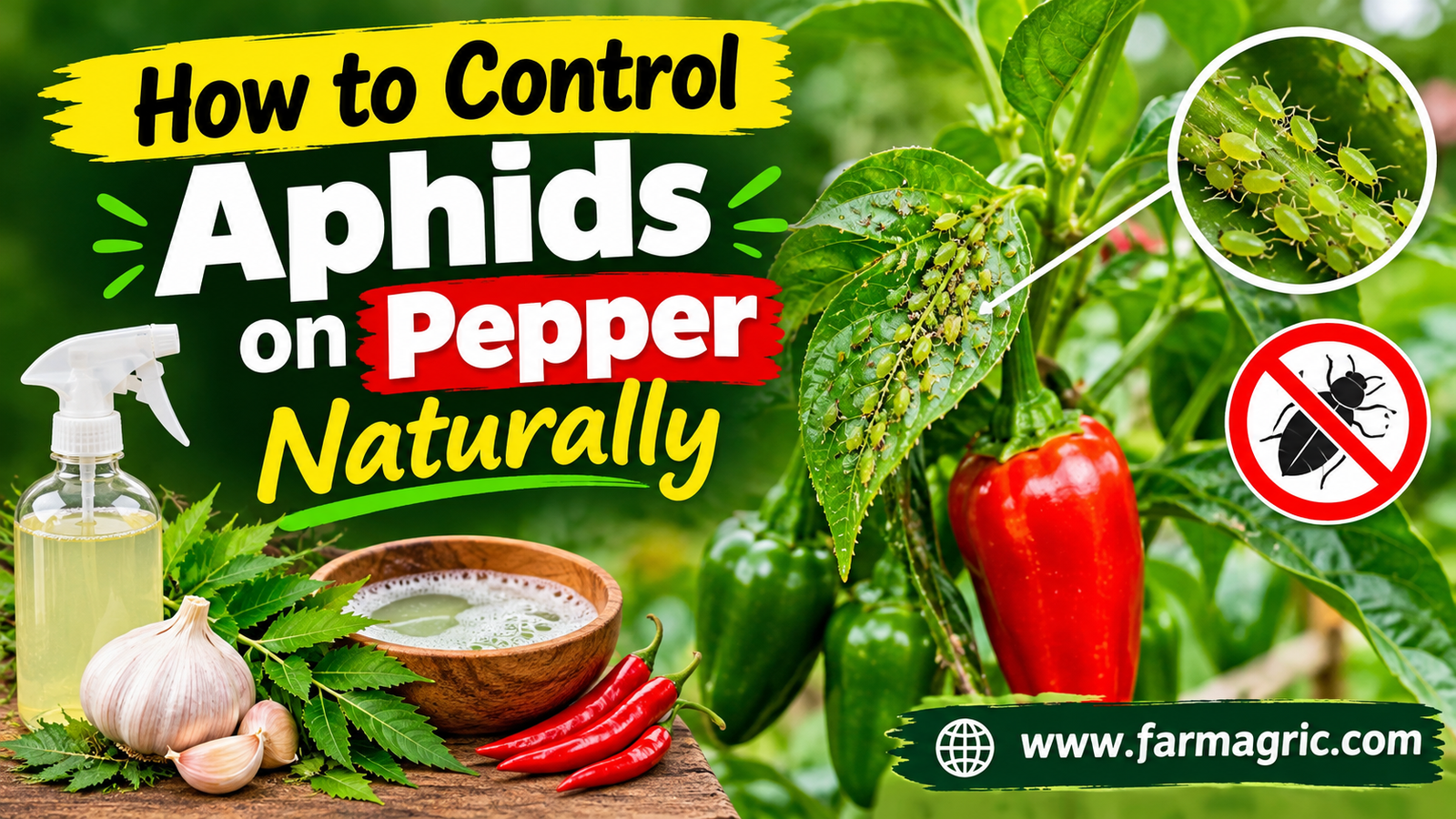
How to Control Aphids on Pepper Naturally
How to Control Aphids on Pepper Naturally
The first time I lost a whole bed of peppers to aphids, I blamed the weather. The leaves were curling, the plants looked tired, and a sticky shine had settled on everything below the top shoots. I figured it was heat stress. By the time I turned a leaf over and saw the colonies packed along the veins, the flowers were dropping and the season was already half gone. That mistake cost me more than any pest ever did, and it taught me something I still repeat to every farmer who asks: aphids rarely kill a pepper plant in a week, they kill it by being ignored for three.
So here is the short answer, and then we will go deeper. To control aphids on pepper naturally, you do four things together. First, knock the colonies off with a strong spray of water and check under the leaves every few days so you catch them early. Second, spray a mild soap solution or a properly diluted neem mix on the underside of the leaves, repeating every five to seven days for about three rounds. Third, protect and feed the insects that eat aphids, like ladybirds, lacewings and hoverflies, instead of wiping them out with a broad spray. Fourth, fix what invited the aphids in the first place, which is usually too much nitrogen, ants farming them, and weedy edges. No single trick does the job. The combination does.
What most farmers get wrong
After many seasons of watching people deal with aphids, I see the same handful of mistakes over and over.
They spray the top of the leaf. Aphids live mostly on the underside of the leaves and on the soft new growth at the tips. A spray that wets only the top surface looks like work and does almost nothing. Contact products like soap and neem only kill what they touch. If the liquid does not reach the pests, you have wasted your afternoon.
They spray once and walk away. Aphids multiply fast. A few of them can turn into a full colony in a week or two in warm weather, and many of them give birth to live young without needing a mate. One spray kills the adults it hits and misses the rest. You need repeat visits, spaced a few days apart, until the colonies are gone.
They reach for a harsh chemical too early. A strong broad-spectrum insecticide will kill aphids, yes. It will also kill the ladybirds, the tiny parasitic wasps and the hoverfly larvae that were quietly doing half your work for free. Aphids bounce back quickly after a chemical spray, and now your helpers are gone. I have watched farmers get stuck in this cycle for years, spraying more and more because the natural balance was destroyed.
They ignore the ants. If you see ants marching up and down your pepper stems, you do not just have an ant problem. You have an aphid problem being protected. Ants feed on the sugary honeydew that aphids produce, and in return they chase off ladybirds and other predators. Killing aphids while leaving the ants alone is like bailing a boat without fixing the leak.
They overfeed with nitrogen. This one surprises people. Soft, lush, dark green growth is exactly what aphids love. When you push peppers with heavy nitrogen, you grow a salad bar. A balanced feeding, with enough potassium and phosphorus for fruiting, gives you tougher plants that aphids find less attractive.
Why aphids on pepper are worth taking seriously
A few aphids on a few leaves is not an emergency. A heavy infestation is, and here is why.
Aphids suck sap from the plant. Light feeding is something a healthy pepper can shrug off. Heavy feeding twists and curls the new leaves, stunts the shoots, and can cause flowers to drop, which means fewer peppers.
They also leave behind honeydew, that sticky shine I mentioned. A black sooty mold often grows on it. The mold does not feed on the plant itself, but it covers the leaf surface and cuts down the light the plant can use.
The most serious problem is that aphids can carry plant viruses from plant to plant. Peppers are vulnerable to several of these viruses, and once a plant has one, there is no cure. You pull the plant. That is the real reason I tell farmers not to wait and see. Keeping aphid numbers low early is cheaper and safer than dealing with a virus later.
Step-by-step: the natural control plan that works
Here is the routine I would follow on any pepper planting, from a few pots to a full field edge.
Step 1: Scout properly. Walk your rows at least twice a week. Look at the growing tips, the undersides of young leaves, and the stems near the top. Do not just glance at the plant from standing height. Bend down and turn leaves over. Look for clusters of small soft-bodied insects, which can be green, yellow, black or grey depending on the species. Also look for curled leaves, sticky leaves, white shed skins that look like specks of dust, and ants climbing the stems. Yellow sticky cards placed near the crop can help you notice winged aphids arriving, though they are a warning tool and not a cure.
Step 2: Knock them off with water. If the infestation is small, a firm jet of water from a hose or sprayer will remove a surprising number of aphids, and many of them do not find their way back to the plant. Do this in the morning so the leaves dry out during the day. On young or delicate plants, keep the pressure moderate so you do not tear the leaves.
Step 3: Use a soap spray. A simple insecticidal soap works by breaking down the soft outer coating of the aphids. Use a purpose-made insecticidal soap and follow the label, or make a mild mix by dissolving about one teaspoon of pure liquid soap, without added degreasers or strong perfumes, in a liter of water. Avoid harsh detergents, because they can burn leaves. Test the mix on a few leaves first and wait a day to check for damage. Spray in the early morning or late evening, never in hot midday sun, and cover the undersides of the leaves thoroughly. Repeat every five to seven days, for around three rounds, or until you no longer find live colonies.
Step 4: Use neem carefully. Neem products can reduce aphid feeding and slow down their reproduction. Follow the label on whatever neem product you buy, because strengths vary a lot. As with soap, spray in the cooler part of the day and test on a small area first. Neem works best when combined with the other steps, and it is not instant. Do not expect aphids to drop dead in minutes. Also, avoid spraying neem on plants that are blooming heavily while bees are actively visiting, or spray in the evening when pollinators have gone to rest.
Step 5: Protect and attract the natural enemies. Ladybirds and their spiky, alligator-looking larvae eat huge numbers of aphids. Lacewing larvae do the same. Hoverfly larvae are soft little maggots you might mistake for pests, but they are quiet aphid killers. Tiny parasitic wasps lay their eggs inside aphids, and you will recognize their work when you see swollen, tan or bronze aphids that look like papery mummies stuck to the leaf. Leave those alone. They are your helpers.
To keep these insects around, grow flowering plants near your peppers. Small-flowered herbs and flowers like coriander, dill, sweet alyssum and marigold give the adult predators nectar and pollen. Skip the broad-spectrum sprays whenever you can. If you buy and release beneficial insects, do it when aphids are present, because the predators need food to stay.
Step 6: Deal with the ants. If ants are climbing your peppers, break their route. Keep mulch and soil from touching the lower stem in a way that gives them a bridge, and clear weeds and debris that create nesting sites near the plants. Sticky barrier bands on stems of larger plants can stop ants from climbing. When you reduce the ants, the natural predators get access to the aphids again, and the colonies shrink faster than you would expect.
Step 7: Prune and clean up. If only a few shoots are badly infested, pinch them off, bag them and remove them from the field. Do not just drop them in the row, because the aphids will crawl to nearby plants. At the end of the season, remove old pepper residue so aphids do not carry over to the next planting.
Step 8: Fix the conditions. Avoid heavy nitrogen feeding. Keep weeds under control around the beds, since many weeds host aphids and can feed them before they move to your crop. Water consistently, because stressed plants attract more pests. Where you can, use reflective mulch such as silver or metallic-coated film around young plants. Aphids tend to avoid landing on plants over reflective surfaces, which can reduce early infestation and virus spread. This is more practical on smaller plantings or high-value crops.
Warning signs to watch for
Catch these early and you will save yourself a lot of trouble:
- Curled, twisted or puckered young leaves at the tips
- Sticky, shiny residue on leaves, stems or even the soil and plants beneath
- Black sooty mold on leaf surfaces
- Ants moving up and down stems in numbers
- Tiny white flakes on leaves, which are shed aphid skins
- Stunted new growth or flower drop
- Mottled, yellow-patterned or distorted leaves that do not recover, which may point to a virus
If you see that last one, do not keep waiting. Remove the affected plants so the virus does not spread, and tighten up your aphid control on the rest.
A few homemade sprays, and my honest opinion
Farmers love homemade recipes, and some of them have a place. A garlic and hot pepper spray is popular, and many people find it helps as a repellent or a mild deterrent. I treat it as a supporting player and not the main plan. The evidence for these homemade sprays is more mixed than for soap and neem, and results depend a lot on how strong the mix is and how well it covers the leaves. If you try one, test it on a small area first, because strong homemade mixes can scorch leaves. Wash your hands well afterward, and keep chili spray away from your eyes.
A word on salt, oil and strong kitchen chemicals: please do not improvise with them. I have seen leaves burned, soil harmed and plants set back for weeks by well-meaning experiments. Stick to products and mixes that are designed for the job, or tested on a few leaves first.
What I would do differently if I were starting again today
If I were planting peppers fresh this season, I would start with the flowers before the first transplant went in. I would put coriander, dill and alyssum along the field edges and between a few rows, so the predators already had a home when the first aphids arrived. I would hold back on nitrogen and feed for steady, sturdy growth. I would also check the plants twice a week from the very first week, with a hand lens if my eyes needed it, and treat the first small colonies right away with water and soap before they ever got a foothold. And I would never spray a broad-spectrum chemical just because I felt nervous.
The farmers who struggle most with aphids are usually the ones who start late and then overreact. The ones who stay calm, look often and act early rarely have a crisis at all.
FAQ
What is the fastest natural way to kill aphids on pepper plants?
For a quick knockdown, a strong jet of water followed by an insecticidal soap spray on the undersides of the leaves works best. Both act on contact. Repeat the soap every five to seven days, because the first round will not catch everything.
Is neem oil safe for pepper plants?
Used as directed, neem is commonly used on peppers, but strengths and formulations differ, so follow the label of the product you buy. Test a small area first, and spray in the cool part of the day. Avoid spraying in strong sun, and avoid blooms when bees are active.
Do ladybirds really control aphids on peppers?
They help a lot, and so do lacewing larvae, hoverfly larvae and tiny parasitic wasps. They work best when you avoid broad-spectrum sprays and give them flowers to feed on. Releasing purchased ladybirds can help, but they tend to fly away if there are not enough aphids to eat.
Why do my pepper leaves curl and feel sticky?
Curled leaves and a sticky coating are classic signs of aphids feeding under the leaf. The stickiness is honeydew. Turn the leaves over and check for colonies, and look for ants on the stems.
Can aphids spread disease to pepper plants?
Yes. Aphids can transmit several plant viruses to peppers, and there is no cure once a plant is infected. This is why early control matters. Remove plants that show persistent mottling or distortion so the problem does not spread.
Bookmark this
You do not beat aphids by out-spraying them. You beat them by showing up early, protecting your helpers, and never letting the first colony become the tenth.