
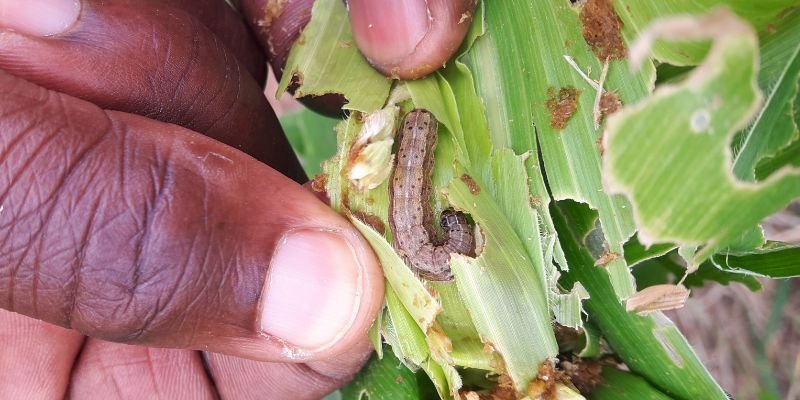
Control Fall Armyworm in Maize Without Chemicals
How to Control Fall Armyworm in Maize Without Chemicals: A Farmer’s Field-Tested Guide
I lost almost half a plot to fall armyworm back in 2018, the year it first tore through our region like nobody had ever seen. I still remember kneeling down in the rows at six in the morning, pulling back the whorl of a young maize plant, and finding it packed with frass that looked like sawdust and a fat green caterpillar curled up right in the heart of the plant. I’d farmed maize for over twenty years by then and had never seen anything eat a crop that fast or that aggressively. That season taught me that chemical sprays alone were never going to be the answer, partly because the worm hides so deep in the whorl that sprays barely reach it, and partly because I couldn’t afford to keep buying pesticide every ten days for a whole season. What I learned instead, through trial, error, and a lot of stubborn observation, is that fall armyworm can be controlled without chemicals if you catch it early and attack it from several directions at once.
So let me answer you directly, because if you’re reading this you’ve probably already found the telltale ragged holes and sawdust-like droppings in your maize whorls. You can control fall armyworm without chemicals by combining early scouting, physical removal, biological controls like neem and ash, encouraging natural predators, and smart planting practices that make your field less attractive to the moths in the first place. No single method works alone against this pest. It takes a layered approach, done consistently, starting from the day you plant, not the day you first spot damage.
Why Fall Armyworm Is So Hard to Control
Fall armyworm, or Spodoptera frugiperda, is different from the old African armyworm most of us grew up dealing with. It doesn’t march across a field in one big wave you can see coming. It hides. The young caterpillars burrow straight into the whorl of the maize plant within hours of hatching, and once they’re in there, they’re protected from rain, sun, and most sprays. By the time you see the classic window-pane holes in unfurled leaves, the worm has usually already been feeding for several days.
It also breeds fast and spreads on the wind as an adult moth, so a field that was clean last week can be infested this week from moths flying in from a neighboring farm miles away. That’s part of why chemical-only approaches frustrate so many farmers, you spray, it looks better for a few days, then a fresh wave of moths lays eggs and you’re back where you started, spending money you don’t have.
What Most Farmers Get Wrong
The biggest mistake I see is farmers waiting until the damage is obvious before doing anything at all. By the time the leaves look shredded, the caterpillar has usually moved past the stage where non-chemical methods work best, since larger caterpillars are tougher, hungrier, and harder to kill with anything gentle. Scouting has to start from the moment seedlings emerge, not two or three weeks later.
The second mistake is treating the whole field the same way regardless of infestation level. I’ve seen farmers go plant to plant applying heavy treatment across an entire hectare when only a small patch near the field edge was actually infested. That wastes time, wastes material, and often kills off the very predators that would have helped control the pest naturally.
The third mistake is ignoring the moths themselves. Everyone focuses on the caterpillar because that’s what you can see, but the adult moth is laying hundreds of eggs at night on the undersides of leaves. If you never check for egg masses, you’re always reacting one generation too late.
The fourth mistake is planting in a way that practically invites the pest in. Maize planted alone, in wide clean rows with nothing else growing nearby, is far more attractive to egg-laying moths than a field with some diversity around it. I learned this one slowly, over several seasons of comparing my intercropped plots to my pure maize plots.
Step-by-Step Non-Chemical Control Method
1. Scout every single week, starting from emergence. Walk your rows and check the whorls of at least twenty plants scattered across different parts of the field, not just near the edges. Look for the ragged, translucent “windowpane” feeding marks on young leaves and the sawdust-like frass sitting in the whorl. Catching it at this stage, before the caterpillars are large, is the single biggest factor in whether non-chemical control works.
2. Hand-pick and destroy caterpillars and egg masses. This sounds tedious, and it is, but it’s genuinely one of the most effective methods for smallholder plots. Egg masses look like fuzzy grey-white patches on the underside of leaves, usually laid in groups of fifty to two hundred. Crush them or drop them into a container of soapy water. For caterpillars already in the whorl, use a stiff piece of wire or a thin stick to hook them out, then crush them. I do this walk-through two to three times a week during the peak risk weeks.
3. Apply ash or fine sand directly into the whorl. This is one of the oldest tricks passed down from farmers before me, and it genuinely works. Wood ash, mixed with a small amount of sand or lime, dries out the caterpillar’s body when applied directly into the funnel of the whorl where it’s feeding. Apply a pinch into each affected whorl, ideally in the early morning while there’s still some dew to help it stick. Reapply after rain.
4. Make and apply a neem-based spray. Neem doesn’t kill the caterpillar outright the way a chemical would, but it disrupts feeding and growth badly enough that populations drop over one to two weeks. Crush neem seeds or leaves, soak roughly one kilogram in ten liters of water overnight, strain it, add a small amount of soap as a sticking agent, and spray directly into the whorls in the early morning or late evening when the caterpillars are most active near the surface.
5. Encourage natural predators instead of wiping them out. Earwigs, ants, ladybird beetles, and several wasp species all prey on fall armyworm eggs and young caterpillars. I stopped using broad chemical sprays partly because I noticed my predator populations recovering within a season, and my armyworm pressure dropped noticeably as a result. Avoid burning field margins and leave some flowering weeds nearby, since these support the beneficial wasps that parasitize armyworm eggs.
6. Intercrop and diversify your planting. Maize planted alongside legumes like cowpea, beans, or desmodium, in what’s sometimes called push-pull cropping, confuses the egg-laying moths and reduces landing rates significantly. Napier grass planted as a border crop also draws moths away from the maize itself, acting as a trap crop. I started intercropping cowpea between my maize rows after that bad 2018 season, and my infestation levels have been noticeably lower every year since.
7. Time your planting with your neighbors. Fall armyworm pressure is worse when planting dates are spread out across a community, because there’s always tender young maize somewhere nearby for moths to move into. Where farmers in my area coordinated planting within the same two to three week window, overall pressure across all our fields dropped.
Warning Signs to Watch For
Windowpane damage on young leaves, thin and translucent patches where the caterpillar has scraped but not fully eaten through, is your earliest warning sign and the best time to act. Sawdust-like frass sitting in the whorl means an active caterpillar is feeding right now, not days ago. Ragged holes with torn edges on unfurled leaves mean the caterpillar has grown larger and moved past the easiest stage to control. If you start seeing damage on the tassel or developing cob itself, the infestation has gone on too long without treatment and you’re now looking at real yield loss, not just leaf damage.
What I’d Do Differently If Starting Again Today
If I were starting over knowing what I know now, I’d begin scouting from the day of emergence instead of waiting for visible damage, because those first ten days after planting are when early action makes the biggest difference. I’d intercrop with cowpea or desmodium from the very first season rather than treating it as an afterthought, since the reduction in moth landing alone would have saved me a huge amount of hand-picking labor over the years. I’d also coordinate planting dates with my neighbors from the start instead of learning that lesson the hard way after watching pressure bounce between our fields for two full seasons. And I’d stop reaching for anything harsh on the predator population, because I now understand that a field full of ladybird beetles and parasitic wasps is doing free work every single day that I don’t have to pay for.
Frequently Asked Questions About Fall Armyworm Control
Does ash really work against fall armyworm, or is it just an old farming myth?
It genuinely works, though it’s not a one-time fix. Ash applied directly into the whorl dehydrates the caterpillar’s soft body, but it needs reapplication after rain and works best on younger caterpillars rather than fully grown ones.
How often should I scout my maize field for fall armyworm?
At least once a week from emergence through to tasseling, and twice a week during periods of known high moth activity in your area, since populations can build quickly between visits.
Can intercropping alone control fall armyworm without any other method?
No, intercropping reduces the rate of infestation significantly but rarely eliminates it completely. It works best combined with regular scouting and hand removal rather than as a standalone solution.
Is neem safe to use close to harvest?
Yes, neem breaks down quickly and doesn’t carry the withholding period concerns that chemical pesticides do, making it safe to apply even fairly close to harvest if needed.
What’s the difference between fall armyworm damage and stalk borer damage?
Fall armyworm leaves the ragged windowpane feeding pattern and sawdust-like frass concentrated in the whorl of young plants, while stalk borer damage typically shows as small round holes bored straight through the stem itself, often lower down the plant.
If there’s one thing I want you to remember from all this, it’s that fall armyworm rewards the farmer who looks closely and often, and punishes the one who waits for the damage to become obvious. Get into your field early, get your hands dirty, and you can beat this pest without ever opening a bottle of chemical spray.