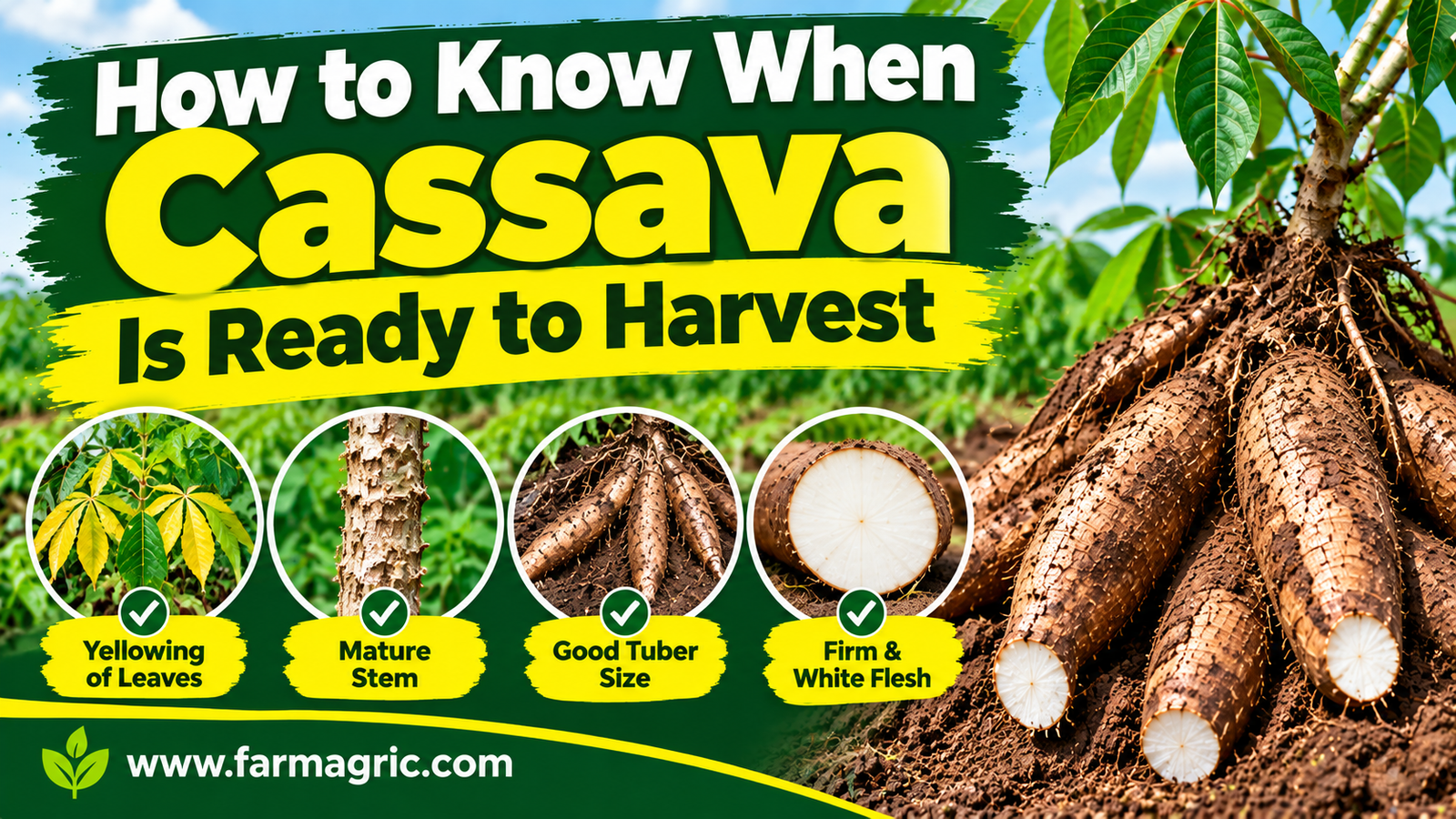
How to Know When Cassava Is Ready to Harvest
How to Know When Cassava Is Ready to Harvest: A Farmer’s Guide to Digging at the Right Time
I dug up a whole plot of cassava at seven months once because the market price was high and I was tempted by quick money. The roots were there, but they were thin, watery, and light, and when I weighed the harvest against what the same plot would have given me two or three months later, I had thrown away almost a third of my income for the sake of a few weeks. The next year I made the opposite mistake. I left another plot in the ground for nearly two years because I thought bigger meant better, and I dug up roots so woody and fibrous that the buyers turned them away, with several rotted through where the rains had soaked the soil. Between those two seasons I learned that cassava has a right time, and that the plant gives you signs if you know where to look.
So let me answer you straight, because I know you are standing in your field wondering whether to dig now or wait. Cassava is ready to harvest when the roots have reached full size and starch content, which for most improved varieties is between nine and twelve months after planting, with some early varieties ready at seven to nine months and some local types taking up to fourteen, and the surest way to know is to dig up a test plant, check that the roots are thick, firm, and heavy with white flesh inside, and confirm that the plant is showing signs of slowing down, such as yellowing and dropping of the lower leaves. The calendar gives you a window, but the root itself gives you the answer. Never harvest a whole field based on age alone without first digging a few plants to see what is actually underground.
Why Timing Matters So Much With Cassava
Cassava is unusual because it does not have a single harvest date the way maize or rice does. The roots can stay in the ground for a long time, and that flexibility tempts farmers into guessing. But the roots change as they age. In the early months they are still filling, so they are smaller and contain less starch. At full maturity they are at their best for eating, processing into garri, flour, or starch, and selling. After that point, if the roots stay in the ground too long, they gradually become woody and fibrous, their starch quality drops, and the risk of rot rises, especially through wet seasons.
Cassava also has a second problem after harvest. Once the roots are dug, they begin to deteriorate within a few days, so you cannot dig them all and store them the way you would grain. This is why farmers harvest cassava in stages, digging only what can be eaten, processed, or sold within a day or two. Knowing when the crop is ready lets you plan that staged harvest properly instead of being forced to dig in a rush.
What Most Farmers Get Wrong
The first mistake, the one I made at seven months, is harvesting too early because of pressure from the market or from needing money. Roots dug before they have filled are smaller, lower in starch, and give a poorer yield of garri or flour per basket. You may get money sooner, but you almost always get less of it overall.
The second mistake is the opposite, leaving cassava in the ground far too long as a form of savings. Many farmers treat the field as a bank, but the roots do not stay good forever. Past the ideal window, especially through a second rainy season, roots turn woody, lose quality, and start to rot.
The third mistake is judging readiness only by the look of the plant above the soil. Some plants stay green and leafy long after the roots are ready, and others drop leaves for reasons unrelated to maturity, such as drought, pests, or disease. The leaves alone can mislead you in either direction.
The fourth mistake is assuming all varieties mature at the same time. An early-maturing variety may be ready at eight months, while a late one still needs twelve or more. Farmers who use one rule for every variety end up harvesting some fields too soon and others too late.
The fifth mistake is harvesting the whole field at once without a plan for what to do with the roots. Because cassava spoils quickly after digging, a huge harvest that cannot be processed or sold in time is simply lost.
Step-by-Step: How to Check If Your Cassava Is Ready
1. Start from the planting date and your variety. Write down when you planted, and find out the typical maturity period for your variety from your seed supplier or extension officer. Begin checking about a month before the earliest expected date.
2. Look at the plant for general signs of maturity. Mature cassava often shows yellowing and dropping of the lower leaves, a slowing of new growth at the top, and stems that have turned brown and woody toward the base. These are supporting signs only, not proof.
3. Dig up a test plant. Choose a plant that looks average, not your best or your worst. Loosen the soil around the base with a hoe or fork, taking care not to cut the roots, and lift the plant out gently.
4. Check the size and number of the roots. Mature roots should be thick, well filled, and usually a good length, often forearm-sized or bigger depending on the variety. If you find only thin, pencil-sized roots, the crop needs more time or something went wrong earlier in the season.
5. Cut a root open and look at the flesh. Healthy, mature roots have firm, white or cream flesh, depending on the variety. Snap or slice one across. The inside should look solid and starchy, not watery, and not stringy or full of hard fibers.
6. Feel the weight. A well-filled root feels heavy for its size. Light, spongy roots are usually immature or already declining.
7. Check several plants from different parts of the field. Dig at least three or four test plants, since soil, drainage, and planting date can differ across the plot. If the results are very different, harvest the ready parts first and let the rest continue.
8. Look for signs of rot or woodiness. Soft, grey, brown, or black patches, a sour smell, or very hard, fibrous, woody flesh all mean the roots are past their best. If you see these, harvest that part of the field urgently and check nearby plants.
9. Plan your harvest in stages. Dig only what you can sell, cook, or process within a day or two. Harvest one section at a time, and leave the rest standing while it stays in good condition and the weather is not too wet.
10. Choose the weather carefully. Dig when the soil is moist enough to loosen easily but not saturated. Very dry, hard soil breaks roots and makes harvest difficult, and very wet soil speeds up postharvest spoilage.
11. Harvest with care to avoid damaging the roots. Cut the stems about thirty to fifty centimeters above the ground first, leaving a handle to pull on, then loosen the soil and lift the whole plant. Bruised and cut roots deteriorate faster.
12. Process or sell quickly. Move the roots out of the field the same day, and process or sell within about two days. If you cannot, consider processing into chips, flour, or garri, which store much longer than fresh roots.
Warning Signs You Have Waited Too Long
Roots that are hard, woody, and full of thick fibers when you cut them open are past their prime, and the woodiness will show up as poor-quality garri or flour. Soft patches, dark discoloration, and a sour smell in the roots mean rot has started, often after too many wet weeks in the ground. Plants that pull out of the soil with almost no resistance may already have rotting roots. New shoots sprouting strongly from the stem in a very old crop, together with a weakening of the older roots, often signal that the plant has moved on from filling its roots and the quality is beginning to decline. And if a test plant produces roots that are noticeably smaller or more fibrous than the ones you dug a month earlier, the crop has passed its peak and should be harvested now.
What I’d Do Differently If Starting Again Today
If I were starting over, I would dig a test plant every three or four weeks as my expected harvest window approached, instead of trusting either the calendar or the look of the leaves. I would keep a simple record of planting dates for every plot, so that I always knew how old each section was. I would plant in stages, a section every month or two, so that I always had a plot coming to maturity and never had to dig everything at once or leave it sitting too long. I would never again dig early for a market price when the loss in weight and starch would be larger than the gain in price. And I would arrange my buyers or my processing before digging, so that no root ever had to wait in a pile while its quality slipped away.
Frequently Asked Questions About Cassava Harvest Time
How many months does it take for cassava to be ready for harvest?
Most improved varieties are ready between nine and twelve months after planting. Early-maturing types can be ready at seven to nine months, while some local varieties take twelve to fourteen months. Digging a test plant is the best way to confirm.
Can I harvest cassava too early?
Yes. Roots harvested before they have filled are smaller, watery, and lower in starch, which reduces both yield and quality for garri, flour, and starch. You may get money sooner, but you usually lose a substantial share of the total harvest.
What happens if I leave cassava in the ground too long?
The roots gradually become woody and fibrous, lose starch quality, and become more vulnerable to rot, particularly through additional wet seasons. Very old roots are harder to process and often fetch a lower price.
How can I tell if cassava roots are mature without pulling up the whole field?
Dig up two or three test plants from different parts of the field and check the roots. They should be thick, firm, and heavy, with solid white or cream flesh. Yellowing and dropping of lower leaves supports the result but should not be your only sign.
How soon after harvest should cassava be processed or sold?
Fresh cassava roots begin to deteriorate within a day or two of digging, so they should be processed or sold within about two days. If that is not possible, process them into chips, flour, or garri, which keep much longer.
If there is one thing I want you to remember from all this, it is that cassava will wait for you in the ground, but not forever, so dig a test plant, trust the root instead of the leaves, and harvest in stages, because the farmer who digs on time keeps both the weight and the quality that the other two lose to impatience or delay.