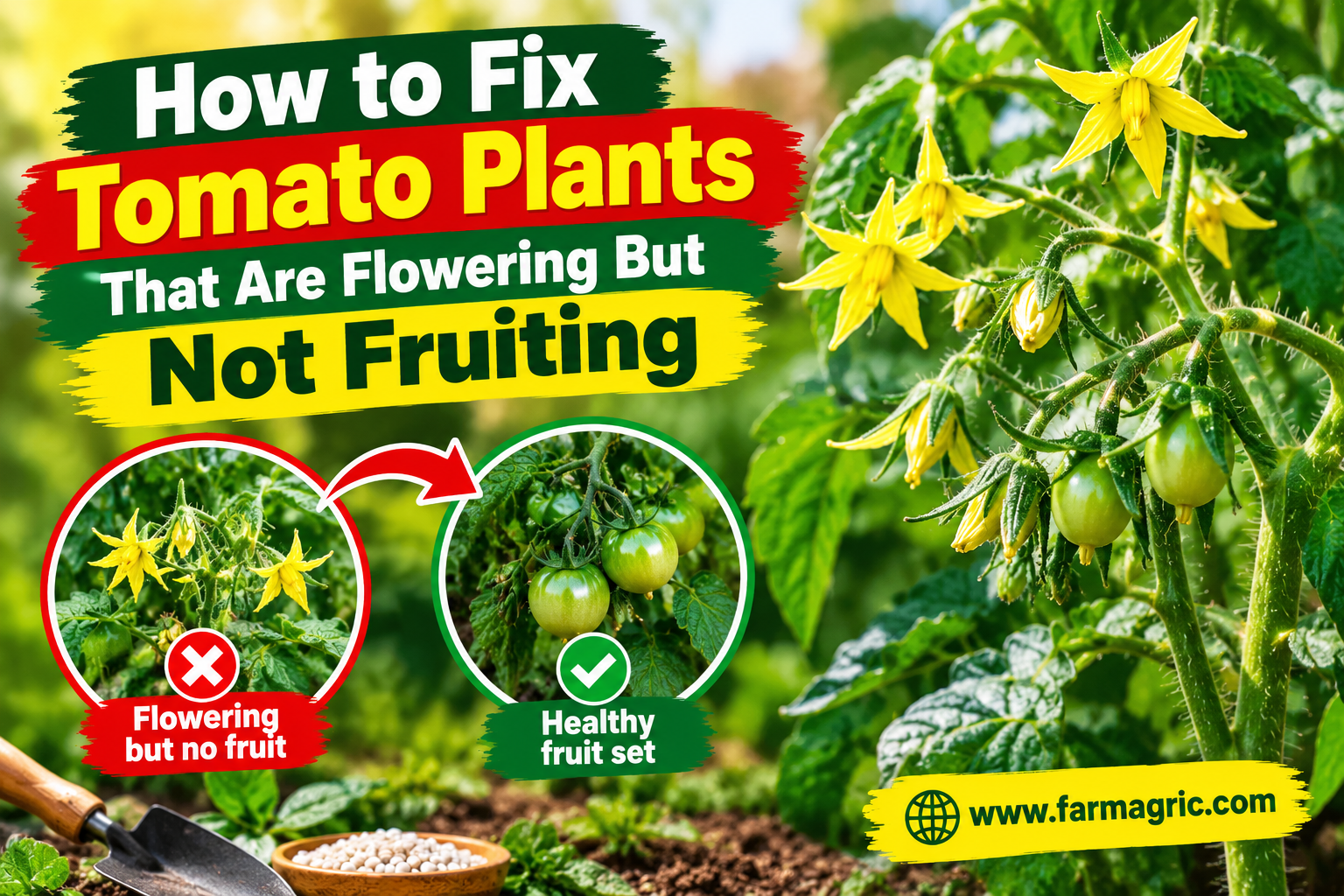
How to Fix Tomato Plants That Are Flowering But Not Fruiting
How to Fix Tomato Plants That Are Flowering But Not Fruiting: A Farmer’s Guide to Solving the Season’s Most Frustrating Puzzle
I had a customer once, a woman who grew tomatoes in a small backyard plot and called me over specifically because she was convinced her plants were cursed. Six weeks of flowers, she told me, more flowers than she had ever seen, and not a single tomato to show for any of it. She had already replaced her fertilizer twice and was about to pull the plants entirely when I walked over and looked closely at what was actually happening. The flowers were opening, staying yellow for a day or two, then dropping cleanly off the plant without any swelling at the base at all, not even the smallest sign of a fruit trying to form. That clean drop, with nothing left behind, told me almost everything I needed to know before I even asked about her watering or her weather. Flowering without fruiting is not one problem, it is a small handful of very specific problems that all produce the same disappointing outcome, and learning to tell them apart from how the flower actually behaves as it fails is the fastest way to stop guessing and start fixing the real cause.
So let me answer you straight, because I know you have a plant covered in yellow flowers and an empty vine to show for it. Tomato plants flower without fruiting mainly because of failed pollination from temperature extremes or still air, excess nitrogen that keeps the plant locked in vegetative growth instead of shifting toward reproduction, insufficient light from overcrowding or heavy shade, plant stress from irregular watering or transplant shock, or in rare cases a genuine hormonal or varietal issue, and the fix depends on watching exactly how the flowers are failing, whether they drop cleanly with no fruit start at all, or whether a tiny fruit begins and then aborts partway through. A flowering plant with no fruit is not lacking effort, it is a plant that has completed the visible, easy part of reproduction and stalled somewhere in the invisible part, and your job is figuring out exactly where that stall is happening.
Why Flowering and Fruiting Are Not the Same Achievement
It is worth being clear about something that trips up a lot of farmers and gardeners early on, that a tomato plant producing flowers has not actually accomplished very much yet toward giving you fruit. Flowering itself is a relatively low-cost, low-risk process for the plant, triggered mainly by the plant reaching a certain stage of maturity combined with reasonable growing conditions. Successful fruit set, by contrast, requires that flower to be properly pollinated, requires the plant to have the physiological readiness to commit resources to that developing fruit rather than continuing to prioritize leaf and stem growth, and requires that early fruit to survive a vulnerable initial period without being aborted due to stress. A plant can sail through the first step easily while failing at either of the two steps that follow, and because all three steps look similar from a distance, a mass of yellow flowers on green foliage, it is easy to assume the plant is doing fine right up until harvest time reveals otherwise.
What Most Farmers Get Wrong
The first mistake, the one that had that backyard grower ready to give up entirely, is assuming a flowering problem when the actual issue is happening after the flower, not with the flower itself. She had already tried more fertilizer and better care for the flowers, without realizing the flowers were opening and functioning normally and the failure was happening at pollination, a step no amount of general plant care actually addresses.
The second mistake is not looking closely enough at how the flower drop actually happens. A flower that drops cleanly, with absolutely nothing left behind at the point of attachment, tells a very different story than a flower that leaves behind a tiny, pea-sized fruit that then yellows and drops a week or two later. The first pattern points toward failed pollination, while the second points toward the fruit having started successfully but then being aborted due to stress after that point, and treating both the same way wastes effort on the wrong fix.
The third mistake is continuing heavy nitrogen fertilization well past the point where the plant needed it for its early vegetative growth, not realizing that a tomato plant kept in a nitrogen-rich, leafy-growth mode can genuinely struggle to shift its priorities toward reproduction, continuing to flower somewhat halfheartedly while investing the bulk of its actual resources into more leaves and stems instead.
The fourth mistake is overcrowding plants or letting a dense canopy develop without managing airflow and light penetration, not connecting that the flowers deep inside a shaded, crowded canopy receive both less light and less air movement than flowers on a more open plant, both of which reduce the chances of those specific flowers ever setting fruit successfully.
The fifth mistake is underestimating how much general plant stress, from irregular watering, from a recent transplant, from root disturbance during cultivation, or from a recent heavy pruning, can cause a plant to abort young fruit even after pollination has technically succeeded, treating the flowering and fruiting process as separate from the plant’s overall stress level rather than deeply connected to it.
Step-by-Step Plan to Fix Flowering Without Fruiting
Begin by examining exactly how your flowers are failing before changing anything else. Watch a handful of open flowers over several days and note specifically whether they drop cleanly with no fruit start visible at the point of attachment, which points toward a pollination failure, or whether you can find tiny, recently dropped fruit, even pea-sized ones, on the ground beneath the plant or still attached but yellowing, which points toward early fruit abortion after successful pollination rather than a pollination problem itself.
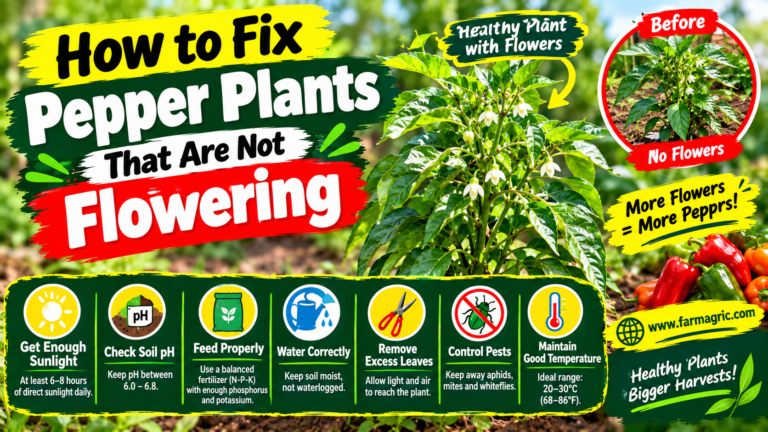
If you are seeing clean flower drop with no fruit starting at all, focus your attention on pollination specifically. Check recent temperatures during the flowering period, since daytime heat much above the low thirties Celsius or nighttime cold much below the low teens Celsius both interfere significantly with pollen viability. Gently shake or tap flowering trusses by hand around midday to assist pollen movement within each flower, particularly during calm, still weather with little natural wind or insect activity to help this process along naturally.
If you are finding small, aborted fruit rather than flowers dropping with nothing attached, shift your attention toward general plant stress rather than pollination specifically, since the plant has clearly managed successful fertilization but is failing to support that young fruit through its vulnerable early development. Review your recent watering consistency, looking for swings between drought stress and heavy watering that could be causing the plant to shed fruit it cannot currently support.
Check your fertilizer history and reduce nitrogen if it has been applied heavily or continuously, shifting toward a more balanced blend with adequate phosphorus and potassium once the plant has reached flowering size, since these nutrients support the plant’s shift toward reproduction far better than continued heavy nitrogen does.
Assess your plant spacing and canopy density, thinning out excessive side growth or suckers if the plant has become notably crowded and shaded internally, since improving light penetration and airflow to the flowering trusses genuinely improves both pollination success and the plant’s ability to support the fruit that follows.
Consider whether a recent transplant, a significant pruning session, or root disturbance from nearby cultivation could be contributing to general plant stress around the time flowering without fruiting became noticeable, since plants under this kind of mechanical or transitional stress commonly abort young fruit even when the underlying growing conditions are otherwise reasonable.
Provide some afternoon shade during any stretch of particularly intense heat, since this single intervention addresses both the pollination failure pathway and the general stress pathway simultaneously, protecting pollen viability while also reducing overall heat stress on the whole plant during a vulnerable period.
Mulch thoroughly around the base of plants to stabilize soil moisture, reducing the swings between dry and wet conditions that contribute to both poor pollination indirectly, through general plant stress, and direct fruit abortion after successful pollination.
Review whether you have recently applied any herbicide nearby, or whether drift from a neighboring application could be affecting the plants, since certain herbicide exposure, even at low levels insufficient to cause obvious leaf damage, can specifically disrupt flowering and fruit set without producing the more dramatic, easily recognized leaf distortion typically associated with more direct herbicide injury.
Give any changes you make at least one to two weeks before judging their effectiveness, since flowers already in the failing process when you make an adjustment will likely still fail, and the real test is whether flowers opening after your correction go on to set fruit successfully.
Keep a simple record of weather conditions, fertilizer applications, and watering patterns alongside your observations of flowering and fruiting success, since this record, built over a season or two, often reveals which specific factor matters most on your particular land, letting you anticipate and manage it more proactively going forward.
If flowering without fruiting persists despite addressing pollination, nutrition, watering, and stress factors reasonably well, consider whether the variety itself might simply be a poor match for your specific climate, since some varieties genuinely struggle with fruit set under conditions that others handle without difficulty, and switching to a variety known to perform well locally can resolve a persistent problem that management changes alone have not fixed.
Warning Signs to Watch For
Flowers dropping cleanly from the plant with absolutely nothing left behind at the point where they were attached is the clearest sign that pollination itself is failing, and this pattern calls for the pollination-focused fixes above rather than anything addressing the fruit directly, since no fruit ever actually started. Small, pea-sized or slightly larger fruit that yellow and drop after appearing to start successfully points toward stress-driven abortion after pollination, calling instead for attention to watering consistency, nitrogen levels, and overall plant stress rather than pollination assistance specifically. A plant that is notably lush, dark green, and vigorous in its leafy growth relative to how much flowering and fruiting it is producing suggests a nitrogen imbalance keeping the plant oriented toward vegetative growth rather than reproduction. Flowering and fruiting problems that are worse specifically in the most shaded, crowded interior sections of a dense plant compared to more open, exposed parts of the same plant point toward light and airflow limitations within the canopy itself. And a pattern where flowering without fruiting coincides closely with a recent transplant, heavy pruning session, or nearby soil disturbance suggests mechanical or transitional stress as a meaningful contributing factor, one that often resolves on its own within a couple of weeks as the plant settles and recovers.
What I’d Do Differently If Starting Again Today
If I were starting over, I would train myself to look closely at exactly how flowers were failing from the very beginning, rather than lumping every case of flowering without fruiting into one vague category the way I did in my early years, since that backyard grower’s clean flower drop taught me how much information is actually available in that small detail alone. I would moderate nitrogen far more deliberately once flowering began, understanding now how easily a plant can get stuck prioritizing leafy growth when nitrogen stays generous well past the point where the plant needed it for that earlier stage. I would manage canopy density more actively through the season, thinning crowded growth before it became a genuine barrier to light and airflow reaching the flowering trusses, rather than only addressing overcrowding after noticing a fruiting problem had already developed. And I would think of watering consistency, transplant timing, and pruning schedule as directly connected to fruiting success rather than as separate considerations, since I now understand how much general plant stress, regardless of its specific source, shows up first and most visibly as fruit the plant simply could not afford to keep.
Frequently Asked Questions About Tomato Plants Flowering Without Fruiting
What is the difference between a pollination problem and a fruit abortion problem in tomatoes? A pollination problem shows up as flowers dropping cleanly with nothing left behind at the point of attachment, meaning fertilization never happened, while a fruit abortion problem shows up as small, already-started fruit yellowing and dropping after pollination succeeded, meaning the plant could not support that young fruit through its early development due to stress.
Can too much nitrogen really stop tomato plants from fruiting even with plenty of flowers? Yes, heavy or continuous nitrogen application keeps a plant oriented toward vigorous leafy growth, and a plant strongly committed to that vegetative mode can continue flowering somewhat halfheartedly while directing most of its actual resources toward more leaves and stems rather than toward successfully setting and supporting fruit.
Does plant stress from watering or transplanting really cause flowers to fail even after they seem to pollinate successfully? Yes, a tomato plant under general stress, whether from inconsistent watering, recent transplant shock, or root disturbance, will often abort young fruit that has already started rather than commit limited resources to supporting it through full development, which is why addressing overall plant stress matters even when pollination itself has clearly succeeded.
How long after fixing the problem should I expect to see actual fruit? Since flowers already failing at the time of your correction will typically still fail, expect roughly one to two weeks before newly opened flowers under the improved conditions begin successfully developing into small, visibly growing fruit, giving you a reasonable timeframe to judge whether your changes actually addressed the real cause.
Could my tomato variety just be a bad fit if nothing else seems to fix the problem? Yes, if pollination assistance, nutrient balance, watering consistency, and general stress management have all been reasonably addressed without improvement, a genuine mismatch between the variety and your local climate is worth considering, since some varieties handle challenging local conditions for fruit set noticeably better than others.
If there is one thing I want you to remember from all this, it is that a flower dropping cleanly and a fruit dropping after it started are two completely different stories, so look closely at what is actually falling from your plant before you change anything, because the answer to why your tomatoes are flowering without fruiting is usually sitting right there at the base of the flower itself, waiting for you to notice which version of failure you are actually looking at.