How to Control Pod Borers in Cowpea Naturally
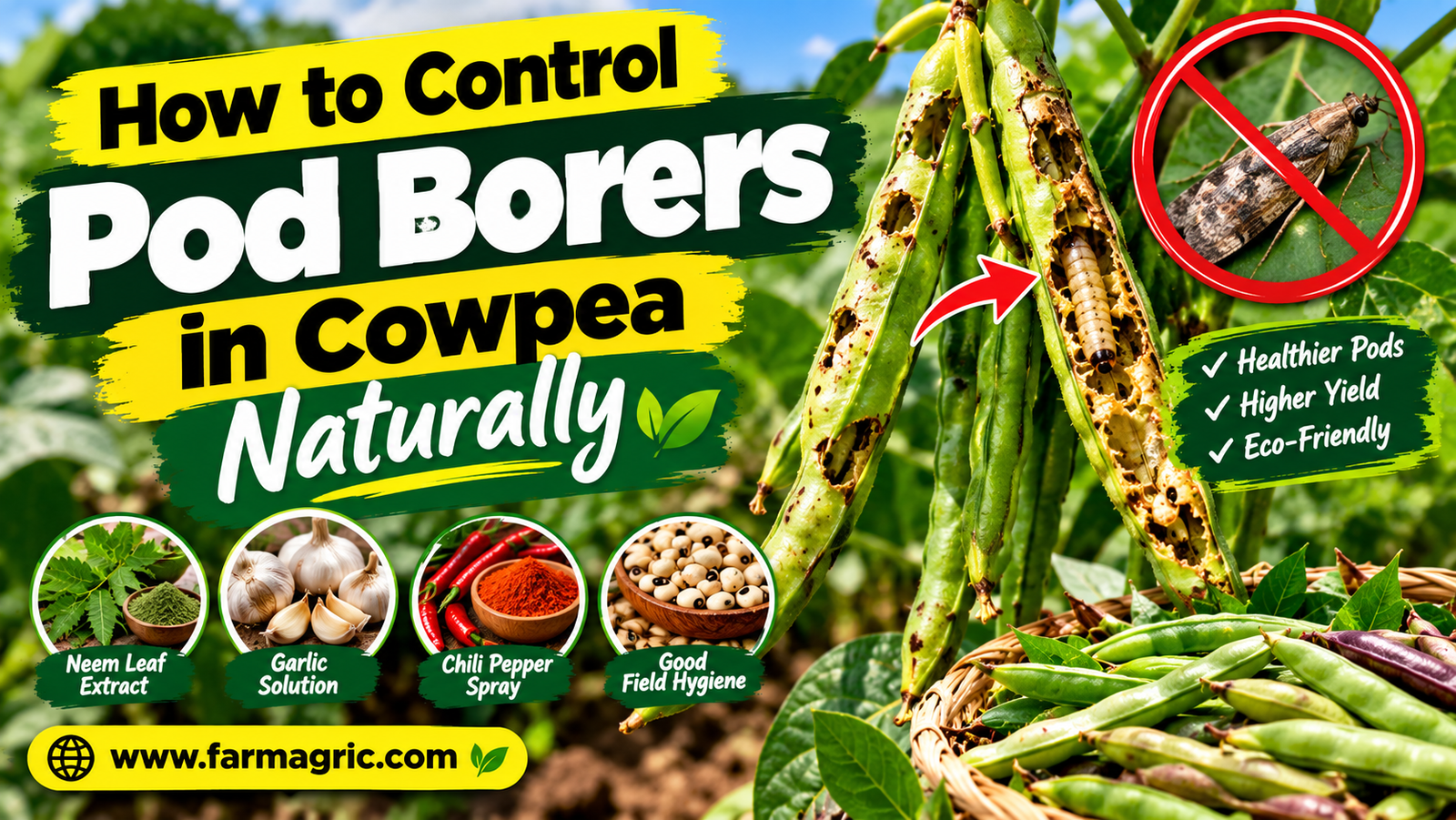
How to Control Pod Borers in Cowpea Naturally
I still remember the first time I really looked at a pod borer. I had been losing flowers for two seasons and blaming the weather. Then one morning I pulled apart a clump of webbed flower buds and found a pale, spotted caterpillar curled inside, fat and well fed on what should have been my harvest. It was a pod borer. It had been in my field the whole time, hidden behind the very flowers I was trying to protect.
I did not want to spray strong chemicals every week. I had a young family, bees on the farm, and a tight budget. So over many seasons I worked out how to keep pod borers down using mostly natural methods. It is not magic, and I will be honest about where natural control works well and where it needs help. This is what I do.
The short answer
To control pod borers in cowpea naturally, start by planting at the right time and in a way that breaks their life cycle, then scout your flowers early and often, hand pick or crush the caterpillars you find, and spray a homemade or biological product such as neem seed extract, a Bt biopesticide or a Maruca virus product at flower bud stage and again at peak flowering. Protect the farm’s natural enemies, remove wild host plants nearby, and clean up crop residue after harvest. The key is timing. Natural products work on young caterpillars and on pests that are hit early, not on big ones already buried inside the pods.
What most farmers get wrong
I made all of these mistakes, so I say this without judgment.
They look for the pest too late. Pod borers feed on flowers and buds first, and they hide inside webbed clusters. By the time farmers see holes in pods, many caterpillars have already grown large and are beyond the reach of any natural spray.
They check the field at midday. The heat drives the caterpillars deeper into the buds, and you see nothing. Go early in the morning, or in the evening, when the field is cooler.
They expect one spray to do it all. Natural products break down faster than strong chemicals, and they work mostly on contact or when the caterpillar eats them. You need to spray at the right stage, and repeat if the pests are still there.
They spray everything that moves. Broad spectrum chemicals kill the wasps, spiders and beetles that quietly eat pod borer eggs and young caterpillars for free. Farmers then wonder why the pest comes back worse than before.
They leave the field a mess after harvest. Old pods, dried stalks and wild beans around the edges carry the pest over to the next season.
Know your pest
The main pod borer in cowpea is the legume pod borer, called Maruca by researchers. The adult is a small, brownish moth with pale markings on its wings. It lays tiny eggs on flower buds, flowers and young pods, usually at night. The eggs hatch in a few days into small, pale caterpillars with dark spots.
The young caterpillar feeds on buds and flowers first. It spins a web that glues flowers, buds and pods together, and it hides inside. Later it bores into green pods and eats the developing seeds, leaving the inside soiled and rotten. A single caterpillar can ruin several pods. In bad years, the loss is serious.
There are also other pod feeders in cowpea, including pod sucking bugs and some other caterpillars. Most of the natural methods below help against all of them, but the timing is built around Maruca because it does the most damage.
Here is the thing that changed my farming. The caterpillar is vulnerable only for a short window, while it is small and before it settles deep in the pod. Every natural method works best inside that window.
Step by step: how I control pod borers naturally
Step 1: Plant early and plant together
Pod borer numbers build up as the season goes on. Fields planted late in the season, after the neighbours’ crops have already carried the pest for weeks, usually suffer worst. I plant at the start of the reliable rains, and I try to agree a planting time with the farmers next to me, so our crops flower at about the same time. When one farm flowers alone, the moths from all around pile in. When everyone flowers together, the pressure spreads out.
Step 2: Rotate and keep your distance from old bean fields
Never plant cowpea straight after cowpea or other beans on the same land. Pest eggs and pupae carry over in the soil and residue. A season of maize, sorghum or millet in between breaks the cycle. I also avoid planting my fresh crop right next to an older cowpea or bean field that is already finished and left standing.
Step 3: Intercrop with a cereal
Mixing cowpea with sorghum, millet or maize in alternating rows is common in many farming areas, and it does help. The tall cereal confuses the moths, gives shelter to the natural enemies of the pest, and makes it harder for the pest to move through your field. I grow cowpea in rows between cereal rows on part of my land every season. Yields per crop are sometimes a little lower in a mixed field, but the pest damage drops, and the cereal gives me a second harvest from the same land.
Step 4: Clear the wild hosts
Pod borers live on wild plants before your cowpea flowers. Many wild legumes and weedy beans around field edges hold the pest through the dry season and send moths into your crop the moment it flowers. At the start of the season I slash and remove the weedy legumes along my field borders and ditches. Keep the borders clean, but do not strip everything. A strip of flowering plants that do not host the pest can feed the beneficial insects.
Step 5: Scout early, every few days
From the moment the first flower buds appear, I walk the field every three to four days. I go early in the morning. I open a handful of buds and flowers from different parts of the field, and I look for webbing, small caterpillars, dark droppings, and flowers stuck together. I also look at the very youngest pods.
I keep a simple count. If I find caterpillars in more than a few of every hundred buds I open, I act that same day. If I find almost none, I wait and check again. This habit alone prevents most of the panic spraying I used to do.
Step 6: Hand pick and crush
On a small plot, you can do a surprising amount by hand. Open the webbed clusters carefully and remove the caterpillars, then crush them or drop them in a bucket of soapy water. Remove and destroy badly infested flowers and pods instead of leaving them on the plant, where the caterpillar will finish its life. It takes patience, but for a farm of an acre or two, a family working together in the cool of the morning can protect a lot of crop.
Step 7: Spray neem seed extract at the right stage
Neem is the natural spray I trust most. It works as a feeding deterrent and as a growth disruptor, so young caterpillars eat less, grow poorly and die over a few days.
To prepare it, I crush about five hundred grams of dried neem seed kernels, tie the powder in a cloth, and soak it in about ten litres of water overnight. In the morning I squeeze the cloth well, strain the liquid, and add a small amount of liquid soap, about a teaspoon, so the spray sticks to the leaves. I use the mixture the same day, because it loses strength quickly, especially in sunlight.
I spray in the early evening or very early morning, so the sun does not break it down and so bees are not flying. I cover the flower clusters and buds well, because the spray has to reach the caterpillars hiding inside. I begin at flower bud stage, repeat at peak flowering, and repeat again at podding, about every five to seven days if the pest is still present.
If you cannot make your own, there are commercial neem products sold in many places. Follow the label for the dose, and test any new mixture on a few plants first.
Step 8: Use a biological product for a stronger natural option
When pest pressure is high, a biological product gives stronger control while still being gentle on the farm.
Bt, short for Bacillus thuringiensis, is a bacterium that makes a protein that harms caterpillars when they eat it, and it does not harm people, bees or most beneficial insects. Products based on Bt are sold in many countries for use on beans. It works best on young caterpillars, and it has to be eaten, so cover the buds and flowers thoroughly. Follow the label and spray in the evening, because sunlight breaks it down.
There is also a virus based product, a Maruca specific virus, developed through research for control of this pest in cowpea in West Africa. It targets only the Maruca caterpillar and leaves other insects alone. It is not yet sold everywhere, so ask your extension office or a local agro dealer whether it is available in your area.
Always check that any biological product is registered for use in your country before you buy it.
Step 9: Protect the helpers
Nature supplies a surprising amount of free pest control, but only if you leave the helpers alive. Small parasitic wasps lay their eggs in pod borer caterpillars and eggs. Spiders, ladybirds, ground beetles, lacewings and ants eat eggs and small caterpillars. Birds pick off the larger ones.
I avoid broad spectrum sprays, I leave a few untouched flowering strips at the edge of the field, and I keep ground cover between the rows instead of leaving the soil bare. When I walk the field I see more wasps, spiders and beetles now than I did twenty years ago, and my pest problems are lighter for it.
Step 10: Harvest promptly and clean up
Pick dry pods on time, and do not leave mature pods standing in the field for weeks, because late pods become a feeding ground. After the final harvest, remove old pods and stalks, and bury, burn or compost them well away from the field. Tilling the soil after harvest exposes pupae to birds and sun. This simple clean up lowers the pest numbers for the next season.
Warning signs of pod borers
The first sign is usually flowers and buds stuck together with fine silky webbing. Opening one often reveals a small pale caterpillar with dark spots inside. Flowers that wilt, turn brown and fall off before forming pods point to feeding damage in the bud. Small round holes in green pods, with dark, wet looking droppings near the hole, mean the caterpillar has already entered. When you open the pod, you may find damaged, soiled seeds and a caterpillar inside. Finally, moths flying out of the field when you walk through it in the evening tell you the adults are active, and eggs are probably being laid.
What I would do differently if I started again today
If I were starting over, I would begin scouting on the very first day flower buds appeared, not a week later. The first week is when the pest is easiest and cheapest to stop.
I would plant a cereal strip or intercrop from the beginning, and I would clean the field borders before the rains started.
I would learn to make neem extract properly and keep the materials ready before the flowering stage, because the worst mistake is running around looking for a spray when the caterpillars are already inside.
I would be gentle on the wasps and spiders from the first day, because they work every hour of every day for nothing.
And I would be honest with myself about one thing. In a very bad year, with heavy pest pressure and no early action, natural methods alone may not save everything. In that case, I would rather use one carefully chosen, properly registered product, on the label, at the right stage, than lose the whole crop. Natural farming is a way of working, not a test of pride.
Frequently asked questions
What is the best natural spray for pod borers in cowpea?
Neem seed extract is the most widely used natural option, and Bt biopesticides give stronger control on young caterpillars. Both work best when applied at flower bud stage and again at peak flowering, in the cool of the evening or early morning, with thorough coverage of the buds and flowers.
When should I spray cowpea for pod borers?
Start at flower bud stage, before heavy damage shows, and repeat at peak flowering and early podding if the pest is still present. Natural sprays work best on small caterpillars, so spraying late, after the pest has gone inside the pods, gives poor results.
Can I control cowpea pod borers without any chemicals?
You can reduce them a great deal with good timing, crop rotation, intercropping, clean borders, hand picking, neem and biological products, and by protecting natural enemies. In a year with very heavy pest pressure you may still need a registered product as a backup.
How do I know if my cowpea has pod borers?
Open a handful of flower buds early in the morning. Look for webbing that sticks flowers together, small pale caterpillars with dark spots, dark droppings, and tiny holes in young pods. Check from the first flower bud, every three to four days.
Does intercropping really reduce pod borers in cowpea?
It can help. Growing cowpea in alternating rows with sorghum, millet or maize makes it harder for moths to find and move through the crop, and it gives shelter to beneficial insects. It works best along with the other practices in this guide, not by itself.
The one thing to bookmark
You cannot out-spray a pod borer that is already inside the pod, so beat it in the bud stage, early, often and gently, and the harvest is yours.