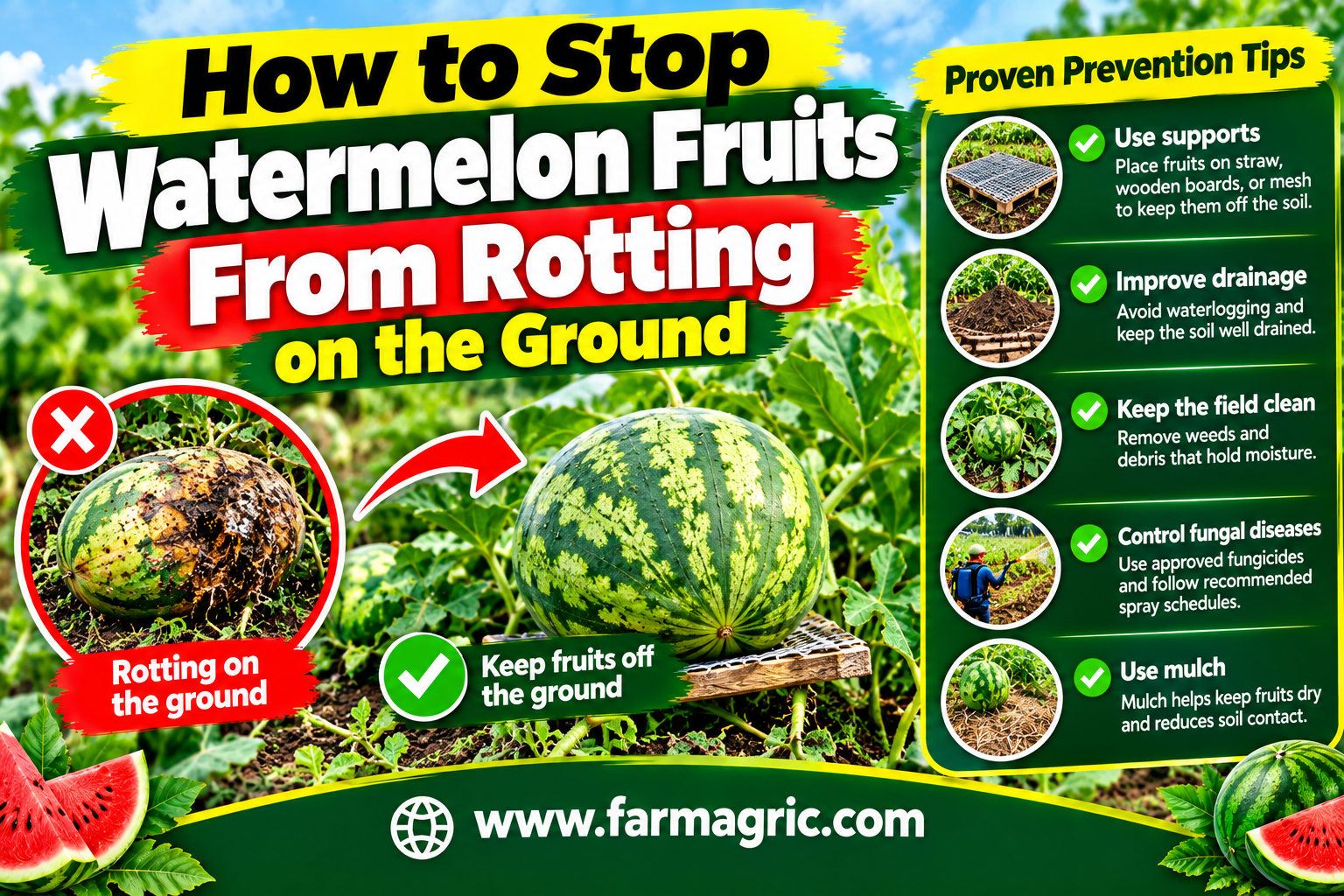
How to Stop Watermelon Fruits From Rotting on the Ground
How to Stop Watermelon Fruits From Rotting on the Ground: A Farmer’s Guide to Protecting Fruit From the Soil It Grows On
I remember rolling a watermelon over in my field expecting the same smooth, pale rind I saw on every other side of that fruit, only to find a soft, sunken, dark patch covering a large section of the underside that had been resting against the damp soil for weeks. The top half looked perfect, the kind of fruit that would have fetched a good price, and the bottom half was already breaking down into something I would never be able to sell at all. I lost a meaningful portion of that harvest to exactly this problem before I understood that watermelon rotting on the ground is not really a single disease or a single cause, it is what happens almost inevitably when a heavy, moisture-rich fruit sits in constant contact with wet soil for the many weeks it takes to mature, and that the fix has far more to do with what sits between the fruit and the ground than with anything I could spray on the plant itself.
So let me answer you straight, because I know you have found that same dark, sunken patch on the underside of a fruit you were counting on, and you want to stop losing more of your harvest the same way. Watermelon fruits rot on the ground mainly because of prolonged, direct contact with wet soil, which creates a constantly moist environment where fungi and bacteria establish easily, combined with poor field drainage, overcrowded vines that trap humidity around the fruit, and physical damage or insect entry points on the fruit’s skin that give rot organisms an easy way in, and you stop it by placing a barrier such as straw, plastic mulch, or a raised cradle beneath developing fruit, improving field drainage so water does not pool around the vines, turning fruit periodically so no single spot bears prolonged ground contact, and managing vine spacing and pruning so air can actually move around the developing melons rather than sitting trapped and humid against the soil surface. The fruit itself is not inherently fragile, what is working against it is simply the amount of time it spends in direct, unbroken contact with damp ground during the many weeks it needs to size up and ripen, and breaking that contact is almost the entire solution.
Why Watermelon Is So Vulnerable to Ground Rot Specifically
Watermelon vines sprawl along the ground rather than climbing or being staked the way many other vine crops can be, which means the developing fruit itself typically rests directly on the soil surface for the entire eight to ten weeks or more it takes to grow from a small, newly set fruit to a full-sized, ripe melon. During this extended period, the underside of the fruit sits in essentially constant contact with whatever moisture, organic debris, and microbial life exists at the soil surface beneath it, and because that contact point rarely dries out completely between waterings or rain events, it creates close to ideal conditions for rot organisms to establish and spread, particularly once any small wound, insect feeding site, or even simple prolonged softening of the rind from sustained moisture exposure gives those organisms an entry point into the fruit’s interior. This is fundamentally different from a fruit like tomato or pepper that typically hangs above the ground on the plant itself, and it is exactly why ground contact management matters so much more specifically for watermelon than it does for many other vegetable crops a farmer might be more used to growing.
What Most Farmers Get Wrong
The first mistake, the one that cost me that fruit with the perfect top half and ruined bottom half, is simply letting watermelon fruit rest directly on bare soil for its entire development period without placing any kind of barrier underneath it, treating ground contact as an unavoidable, inherent feature of how this particular crop grows rather than something that can be actively and fairly easily managed.
The second mistake is planting or allowing vines to grow in poorly drained areas of a field, placing fruit at risk in low spots where water naturally collects and lingers after rain rather than selecting better-drained ground or improving drainage in the specific areas where fruit will be developing and resting for an extended period.
The third mistake is allowing vines to grow so densely and overlapping that almost no airflow reaches the fruit and the soil surface immediately around it, trapping humidity in a way that keeps the ground contact point consistently damp even during stretches of otherwise dry weather.
The fourth mistake is never turning or repositioning developing fruit during its growth period, leaving the exact same patch of rind in constant contact with the same patch of soil for the entire development window rather than periodically shifting that contact point to prevent any single area from bearing the full brunt of prolonged moisture exposure.
The fifth mistake is ignoring minor physical damage or insect feeding marks on the fruit’s skin as unimportant, not recognizing that these small breaks in the rind’s protective surface are often exactly where rot organisms gain their actual entry point, turning what might otherwise have been manageable ground contact into an active, spreading infection.
Step-by-Step Plan to Stop Watermelon Fruit From Rotting on the Ground
Begin by assessing your field’s drainage honestly before fruit even begins developing, walking the area after a heavy rain and noting where water pools or drains slowly, since planting or allowing vines to sprawl into these low, poorly drained sections significantly increases the ground rot risk for any fruit that ends up resting there for its full development period.
Improve drainage in problem areas where practical, through shallow channels that direct water away from the lowest sections of the field, or through raised beds or ridges for the main planting rows themselves, ensuring that water moves away from where fruit will eventually be resting rather than collecting and lingering around it.
Place a barrier between developing fruit and the bare soil as soon as individual melons begin to size up noticeably, using clean, dry straw, dried grass, or another suitable mulch material spread in a layer thick enough to genuinely separate the fruit from direct soil contact rather than simply thinning out and exposing bare ground again within a few weeks.
Consider plastic mulch as a more durable alternative to organic material where it is available and practical for your scale of operation, since a sheet of plastic laid beneath developing vines and fruit provides a longer-lasting, more consistent barrier against ground moisture compared to organic mulch that gradually breaks down and needs replenishing over the fruit’s extended development period.
Use simple raised cradles or supports under individual larger fruit where you are growing on a smaller scale or specifically protecting higher-value melons, fashioning a small platform from scrap wood, an overturned container, or another suitable material that lifts the fruit slightly clear of direct ground contact entirely rather than merely placing a barrier layer beneath it.
Turn or gently reposition developing fruit periodically through the growing season, shifting the melon slightly every week or two so that no single section of the rind bears the full, uninterrupted weight of ground contact for the entire development period, taking care to handle the fruit gently and avoid twisting or straining the vine where it attaches.
Manage vine density and spacing to improve airflow around developing fruit, thinning excessive vine growth or guiding vines into a more organized pattern rather than allowing a dense, overlapping tangle to develop that traps humidity around both the fruit and the soil surface beneath it.
Water at the base of plants rather than through overhead sprinkling where practical, directing moisture to the root zone rather than wetting the fruit and surrounding soil surface directly, since overhead watering adds additional, unnecessary moisture exactly where you are trying to reduce it around developing melons.
Inspect developing fruit periodically for any sign of physical damage, cracking, or insect feeding marks on the skin, since these small breaks in the rind are frequently where rot organisms actually gain entry, and addressing pest pressure or handling fruit more carefully during any necessary repositioning helps prevent creating these vulnerable points in the first place.
Harvest fruit promptly once it reaches proper maturity rather than leaving ripe melons sitting in the field longer than necessary, since fully ripe fruit left on damp ground for extended additional time faces continued rot risk for no corresponding benefit, unlike fruit still actively sizing up that genuinely needs the remaining development time.
Rotate watermelon plantings to different sections of your land across seasons where practical, since soil that has hosted watermelon or related vine crops repeatedly can accumulate higher populations of certain rot-causing organisms over time, and a season or more of a different crop can help reduce this buildup before watermelon is planted in that same location again.
Keep simple records of which sections of your field experienced the most ground rot in a given season, since this pattern, tracked over a few plantings, often reveals a fairly clear relationship with specific drainage problems or vine density issues in particular parts of your land, letting you prioritize barrier placement, drainage improvement, or different planting locations more effectively in future seasons.
Warning Signs to Watch For
A soft, water-soaked looking patch developing on the underside of a fruit, often starting as a slightly discolored area before progressing to a darker, sunken appearance, is the earliest visible sign of ground rot beginning, and catching this early, before the affected area has spread extensively, sometimes allows you to harvest and salvage the unaffected portion of a fruit that is otherwise approaching maturity. A distinctly musty or unpleasant smell noticed when lifting or checking fruit resting on the ground, even before obvious visual discoloration is easy to spot, can indicate rot developing at the contact point before it becomes fully visible from a casual glance at the fruit’s exposed upper surface. Soil that remains visibly damp or waterlogged around the base of vines well after rain has stopped and surrounding areas have dried, signals a drainage problem in that specific section worth addressing before more fruit develops and rests in that same vulnerable spot. Dense, overlapping vine growth with little visible soil or airflow between individual plants suggests a humidity-trapping environment that increases ground rot risk even in fields with otherwise reasonable overall drainage. And fruit showing any visible cracking, insect feeding marks, or other skin damage deserves particular attention and perhaps earlier harvest or more careful protection, since these compromised areas are frequently where ground rot organisms find their actual point of entry into an otherwise healthy-looking melon.
What I’d Do Differently If Starting Again Today
If I were starting over, I would place a straw barrier beneath every developing watermelon fruit as a standard, non-negotiable practice from the very first season, rather than only recognizing how much simple ground contact was costing me after that fruit with the perfect top and ruined bottom finally forced me to pay closer attention to what was actually happening underneath my melons throughout their development. I would assess and address my field’s drainage before planting rather than discovering problem areas only after fruit had already developed and rotted in exactly the low, poorly drained spots I could have identified and avoided from the start. I would manage vine density more deliberately, thinning and organizing growth to keep reasonable airflow around developing fruit rather than letting vines sprawl into the dense, overlapping tangle that I now understand was trapping humidity right where I least wanted it concentrated. And I would turn and reposition developing fruit periodically as routine practice through the growing season, understanding now how much that simple, low-effort habit reduces the risk of any single contact point bearing the full burden of weeks of uninterrupted ground moisture exposure.
Frequently Asked Questions About Watermelon Rotting on the Ground
What causes watermelon to rot on the bottom while the rest of the fruit looks healthy? This pattern typically results from prolonged, direct contact between the underside of the fruit and damp soil, which creates a consistently moist environment favorable to fungi and bacteria, while the exposed upper surface of the fruit, not in constant ground contact, remains dry enough to stay healthy and unaffected.
Does using straw or mulch under watermelon really prevent ground rot? Yes, placing a barrier such as straw or another suitable mulch material between developing fruit and bare soil significantly reduces direct moisture contact at the point where ground rot most commonly begins, making it one of the most effective and accessible preventive steps available to most growers.
Should I turn my watermelon fruit while it is still growing to prevent rot? Yes, periodically repositioning developing fruit so that no single section of the rind bears constant, uninterrupted ground contact for its entire development period helps distribute moisture exposure more evenly and reduces the likelihood of a single contact point developing into a rot problem over many weeks.
Can poor field drainage really cause watermelon to rot even without heavy rain? Yes, soil that drains slowly or holds water in low spots keeps the ground surface damp for extended periods even after rainfall has stopped elsewhere in the field, meaning fruit resting in these poorly drained areas faces elevated rot risk compared to fruit developing on better-drained ground nearby, regardless of total seasonal rainfall.
Is plastic mulch better than straw for preventing watermelon ground rot? Plastic mulch generally provides a more durable, consistent barrier against ground moisture over the fruit’s extended development period compared to organic mulch like straw, which gradually breaks down and may need replenishing, though straw remains a widely accessible and genuinely effective option, particularly for smaller plantings where replenishing it periodically is practical.
If there is one thing I want you to remember from all this, it is that a watermelon rotting on the ground is rarely a mystery illness, it is simply the predictable result of a heavy, moisture-sensitive fruit spending many weeks pressed against damp soil with nothing between the two of them, so give every developing melon something dry to rest on, keep your field draining properly, and turn your fruit now and then, because the perfect top half I once found attached to a ruined bottom taught me that the difference between a fruit I could sell and one I could not was never really about the melon at all, it was about what I had, or had not, put underneath it.