How to Space Watermelon Plants for Bigger Fruits
How to Space Watermelon Plants for Bigger Fruits: A Farmer’s Guide to Giving Every Vine Room to Actually Size Up
I once planted a watermelon patch so tightly that by the time the vines had spread out for a couple of months, I genuinely could not tell where one plant ended and the next began, the whole bed had become one tangled, overlapping mass of leaves and runners with no clear separation anywhere. I remember feeling confident about that density, certain I was going to pull an unusually heavy harvest from a relatively small plot. What I actually pulled was a disappointing number of small to medium melons, several of them oddly shaped, from a bed that a neighbor farming the same variety on similar soil, but with proper spacing, used to produce noticeably larger, more uniform fruit from roughly the same area. That side-by-side difference taught me that watermelon vines sprawling over each other are not quietly cooperating to fill the space efficiently, they are competing hard for light, water, and root space, and that competition shows up directly in the size of the fruit you eventually cut.
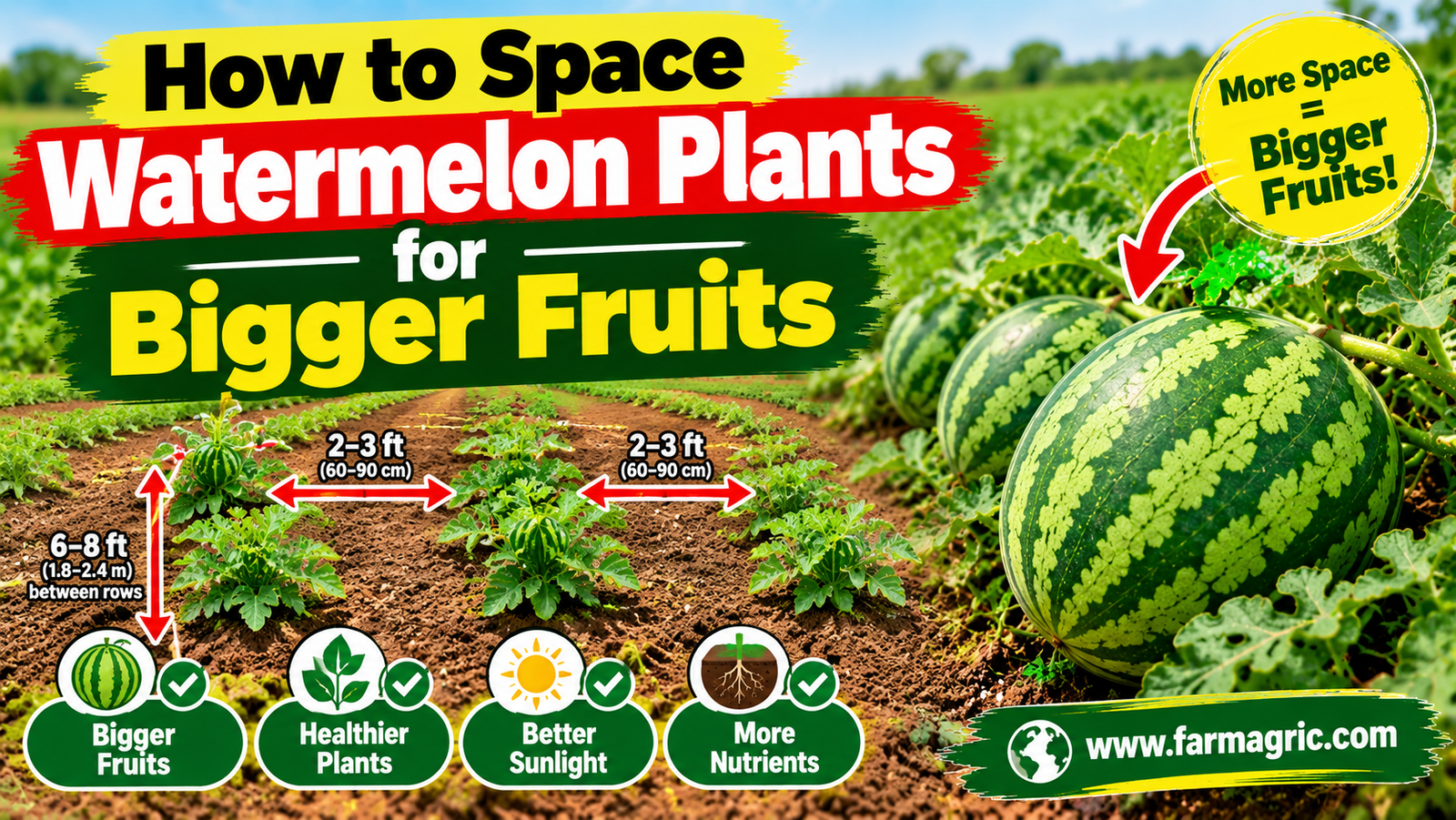
So let me answer you straight, because I know you are deciding right now how far apart to plant your watermelon seeds or seedlings and whether tighter spacing really does waste less land. Watermelon plants should generally be spaced about ninety centimeters to one and a half meters apart within rows, with rows spaced about two to two and a half meters apart, depending on your specific variety’s vine vigor and your soil fertility, since proper spacing gives each plant enough root volume to draw water and nutrients from, enough direct sunlight on its leaves to fuel vigorous growth, and enough physical room for its vines to spread and support multiple developing fruit without choking its closest neighbors. Watermelon vines are large, sprawling plants that can extend several meters from their base over the course of a season, and squeezing plants closer together than their vines will eventually require does not give you more total fruit from the same ground, it gives you more plants dividing up a resource pool that was already going to be stretched thin even at proper spacing.
Why Spacing Affects Fruit Size So Directly in Watermelon
A watermelon plant builds the sugars and energy needed to size up its developing fruit primarily through photosynthesis happening across its leaf surface, and a vine that is shaded or crowded by its neighbors produces less usable energy overall than one with clear access to full sunlight across its full canopy. At the same time, the root system below ground is drawing water and nutrients from a defined volume of soil, and when plants are spaced too closely, those root systems overlap and compete for the same limited pool of resources rather than each plant having a reasonably exclusive zone to draw from. Watermelon fruit, unlike a smaller vegetable crop, requires a genuinely large, sustained energy investment to reach full size, often needing six to eight weeks or more of steady growth from pollination to maturity, and a plant whose energy production and resource access have been constrained by crowding throughout this entire period simply cannot support the same size of fruit that a properly spaced plant, drawing on a full, uncontested share of light, water, and soil nutrients, is able to achieve.
What Most Farmers Get Wrong
The first mistake, the one behind my own disappointing, oddly shaped harvest, is treating watermelon spacing as primarily a question of how to fit more plants into a given area, without accounting for how directly crowding reduces the size each individual plant is able to grow its fruit to, often resulting in more total vines but a lower total harvest weight than a properly spaced planting would have produced on the same ground.
The second mistake is applying one fixed spacing number regardless of the specific variety’s vine vigor, using the same distance for a compact, bush-type watermelon variety that a large, vigorously spreading standard variety actually needs, and ending up with either unnecessary wasted space for the compact type or serious overcrowding for the vigorous one.
The third mistake is not accounting for soil fertility when finalizing spacing, using identical spacing on both rich and poor ground without recognizing that richer soil can often support somewhat closer spacing while still allowing good fruit size, while poorer soil generally needs wider spacing to give each plant access to a larger share of more limited available nutrients.
The fourth mistake is underestimating just how far watermelon vines will eventually spread once the season progresses, planting based on how much open space a young seedling appears to need in its first few weeks, rather than planning spacing around the mature vine length that variety is known to reach by mid-season.
The fifth mistake is leaving too many fruit to develop simultaneously on a single, improperly spaced and overcrowded plant, compounding the competition problem from tight between-plant spacing with an additional layer of competition between fruit on the very same vine, each pulling from the same already-stretched resource pool.
Step-by-Step Guide to Spacing Watermelon Plants Properly
Identify your specific variety’s typical vine vigor and mature spread before finalizing your spacing plan, since this genuinely changes the right answer for your particular planting. A large, vigorously spreading standard variety generally needs spacing toward the wider end of the typical range, sometimes one and a half meters or more between plants and up to two and a half meters between rows, while a more compact, bush-type or short-vine variety can usually be spaced closer, sometimes down toward ninety centimeters to one meter, without the same degree of competition developing.
Assess your soil fertility honestly, since richer, well-fertilized soil with good organic matter content and reliable moisture can generally support spacing toward the closer end of the appropriate range for your variety without a meaningful reduction in fruit size, while poorer, less fertile soil benefits from spacing toward the wider end, giving each plant access to a larger share of the more limited nutrients available in that ground.
Measure your spacing using a marked rope, a cut stick of the correct length, or a consistent physical guide when planting seeds or transplanting seedlings, rather than estimating by eye, since this single habit does more than almost anything else to produce a planting with uniform fruit size rather than a patchwork of crowded, undersized melons mixed with properly spaced, larger ones across the same field.
Plant in a pattern that anticipates the mature spread of the vines rather than only the space a young plant appears to need, accounting for how far runners from this specific variety typically extend by the time flowering and fruit development are underway, since a spacing that looks generous around a small seedling can become seriously inadequate once vines have grown out to their full mature length over the following several weeks.
Train or guide vine growth where practical, directing runners into the open rows between plants in a somewhat organized pattern rather than letting them sprawl and tangle randomly in whatever direction happens to be open, since this helps maintain better airflow and light access across the whole planting even as vines extend well beyond their original planting point.
Thin seedlings promptly where more than one seed was planted per station as insurance against poor germination, removing all but the single strongest seedling at each point within the first couple of weeks after emergence, since leaving multiple seedlings to compete at the same planting station recreates the same kind of resource competition that improper between-plant spacing causes, just concentrated at an even smaller scale.
Limit the number of fruit allowed to develop simultaneously on each vine, particularly for larger-fruited varieties, by selectively removing some of the smaller, later-developing fruit on a vine that has already set more melons than it can realistically size up well, since concentrating the plant’s resources into fewer fruit per vine generally produces a smaller number of significantly larger, better-quality melons rather than a larger number of disappointing, undersized ones.
Monitor your planting as vines develop through the season, watching for early signs that your spacing may have been too tight, such as vines from neighboring plants overlapping and tangling heavily well before fruit has begun sizing up seriously, which provides useful, concrete information for your very next planting even if the current one is now difficult to meaningfully correct.
Avoid interplanting additional watermelon into open-looking space between young plants simply because that space looks underused early in the season, since vines that appear small and contained in their first few weeks will extend substantially further as the season progresses, and ground that looks wasted early on is typically fully claimed by sprawling vines well before fruit reaches its full size.
Consider intercropping a compatible, lower-growing, shorter-term crop into the genuinely open space between young watermelon plants during the first several weeks before vines have spread out fully, rather than adding more watermelon into that temporarily available area, since this can generate useful additional production from that space without creating the long-term competition problem that extra watermelon plants spaced too closely would cause for the rest of the season.
Keep simple records of the spacing used, the variety planted, and the resulting average fruit size and total harvest weight across different plantings or sections of your land, since this record, built over a few seasons, often reveals a fairly clear and specific relationship relevant to your particular soil and climate, letting you fine-tune spacing with real confidence going forward.
Warning Signs Your Watermelon Spacing Needs Adjustment
Vines from neighboring plants overlapping and tangling heavily well before fruit has begun developing seriously is an early visual sign that spacing was likely too tight for the variety and soil conditions involved, and this competition for light and root space typically shows up later as smaller average fruit size across the planting. Fruit that comes in consistently smaller than what the variety is known to produce under good conditions, in a planting that otherwise received adequate water and fertilizer, often traces back to spacing as the limiting factor once other more obvious causes have been ruled out. Oddly shaped or lopsided fruit, rather than the well-rounded or appropriately elongated shape typical of the variety, can sometimes result from a developing melon being squeezed or restricted by surrounding crowded vine growth during its critical sizing period. A planting where some plants have produced large, well-formed fruit while immediate neighbors show notably smaller, less developed melons frequently reflects inconsistent spacing from planting by eye rather than any genuine difference in the individual plants’ health or potential at the time of planting. And a pattern across multiple seasons or different sections of your land, visible once you begin keeping records, where wider spacing consistently correlates with larger average fruit size confirms the general relationship in a way worth taking seriously for future plantings.
What I’d Do Differently If Starting Again Today
If I were starting over, I would measure my spacing with a marked rope from the very first watermelon planting instead of estimating by eye and feeling satisfied with how tightly I had managed to fit plants into a small plot, since that tangled, disappointing bed taught me directly how much that satisfaction was costing me in actual fruit size. I would research my specific variety’s typical mature vine spread before planting rather than spacing based purely on how much room a small seedling appeared to need in its first few weeks. I would pay much closer attention to matching spacing to my actual soil fertility rather than using one standard distance across ground of varying quality. I would thin multiple-seed planting stations promptly rather than letting competing seedlings linger together longer than necessary. And I would limit the number of fruit I allowed each vine to carry simultaneously, understanding now how much more satisfying a harvest of fewer, genuinely large melons is compared to a larger number of the small, underwhelming ones that overcrowding and excessive fruit load produced for me that first disappointing season.
Frequently Asked Questions About Spacing Watermelon Plants
What is the best spacing for watermelon to get larger fruit? Most standard varieties perform well with plants spaced about ninety centimeters to one and a half meters apart within rows and rows spaced about two to two and a half meters apart, with compact bush-type varieties able to use the closer end of this range and large, vigorously spreading varieties generally needing the wider end.
Does planting watermelon too close together really reduce fruit size? Yes, crowded watermelon plants compete for both light and soil resources in ways that directly limit how much energy and water each individual vine can direct toward sizing up its fruit, typically resulting in smaller average melon size and often a lower total harvest weight compared to a properly spaced planting on the same ground.
Should watermelon spacing change based on the variety I am growing? Yes, compact, bush-type or short-vine varieties can generally be spaced closer together than large, vigorously spreading standard varieties, since the mature vine spread differs considerably between these types, and matching spacing to your specific variety’s typical growth habit is important for avoiding both wasted space and unnecessary overcrowding.
Does limiting the number of fruit per vine really make the remaining fruit bigger? Yes, removing some of the smaller, later-developing fruit from a vine that has set more melons than it can realistically support well concentrates the plant’s available energy and resources into the remaining fruit, generally producing fewer but noticeably larger and higher-quality melons compared to leaving every set fruit to compete for the same limited resources.
Can I intercrop something in the space between young watermelon plants before the vines spread out? Yes, planting a compatible, shorter-term, lower-growing crop in the open space between young watermelon plants during their first several weeks can make good use of temporarily available ground without creating the long-term competition problem that additional watermelon plants spaced too closely would cause once vines fully extend later in the season.
If there is one thing I want you to remember from all this, it is that a watermelon patch where you can no longer tell one plant from the next is not a patch working efficiently together, it is a patch of vines quietly fighting each other for the light and root space that every single melon on them needed in order to grow large, so space generously enough for your variety and your soil, and let the size of what you cut at harvest, not how full the bed looked in its early weeks, be the real measure of whether your spacing decision paid off.