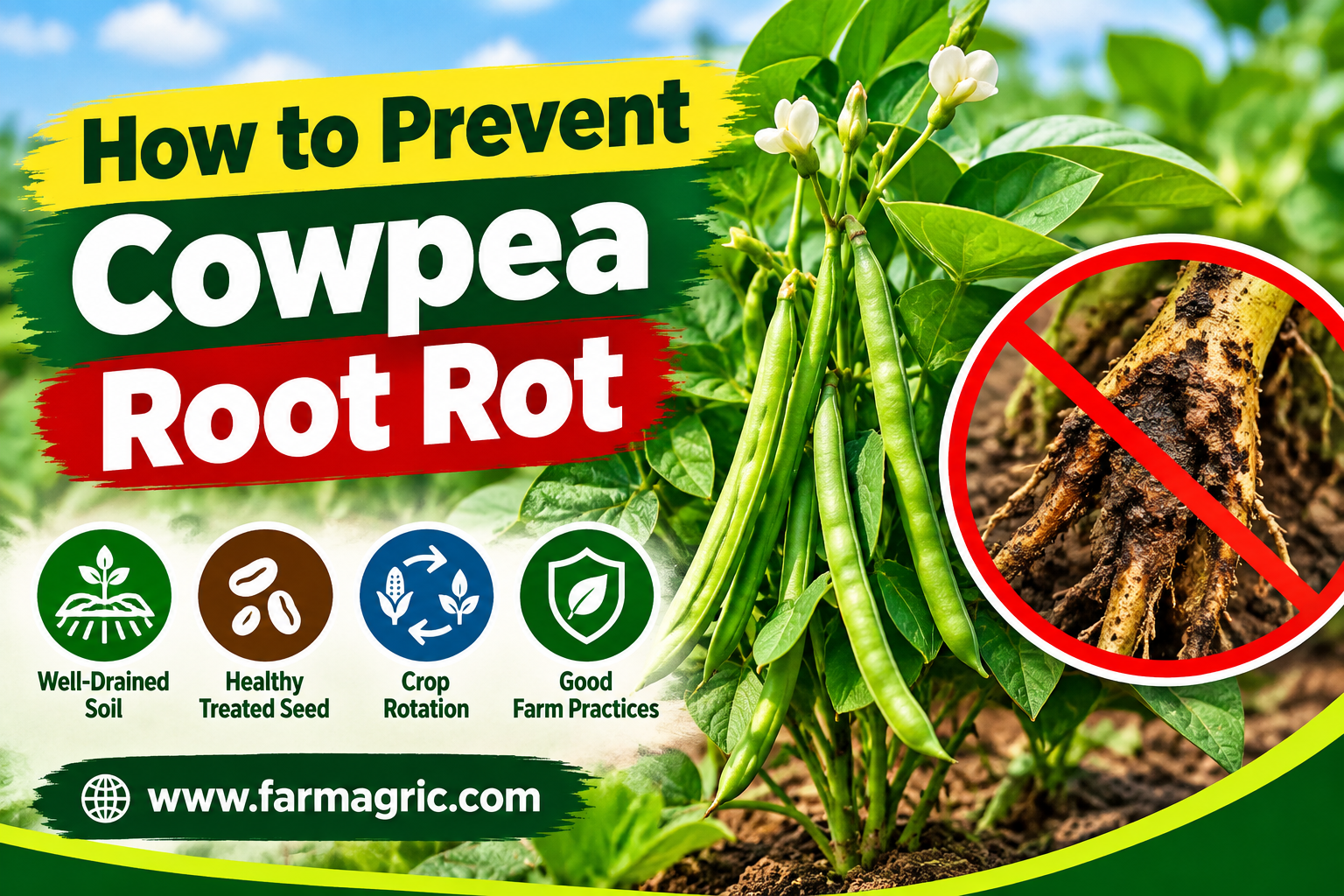
How to Prevent Cowpea Root Rot
How to Prevent Cowpea Root Rot
One of my best looking cowpea fields turned into one of my worst losses in about nine days. The seedlings had come up evenly, the rows were straight, and the first rains were generous. Then the plants began to wilt in patches, first a few, then whole sections. I assumed the heat was the problem and watered them more. That was exactly the wrong thing to do. When I finally pulled up a wilted plant, the roots came out brown, soft and slimy, and the stem near the soil line was dark and sunken. The plant had been dying below the ground for a week while I was fussing over the leaves.
I have fought root rot on and off for thirty years, and I can tell you it is far easier to prevent than to cure. By the time you see the wilting, the damage underground is already done. This is what I do now to keep it out of my fields.
The short answer
To prevent cowpea root rot, plant in well drained soil on ridges or raised rows, rotate with cereals like maize or sorghum for at least two to three seasons, use clean certified seed (treated with a registered seed dressing where it is advised), avoid planting too deep or into cold, waterlogged soil, avoid wounding the roots when weeding, and never let water stand around the plants. Most root rot is a water and soil management problem first and a disease problem second. If you fix the conditions, the fungi that cause it have very little to work with.
What most farmers get wrong
I made all of these mistakes, so I say this as a friend.
They water a wilting plant. Wilting from root rot looks exactly like wilting from thirst, so farmers add water. But the roots are already rotting because they are too wet and cannot breathe. More water speeds the problem up.
They plant the same field to beans year after year. The fungi that cause root rot live in the soil and in old crop residue for a long time. Every season you plant cowpea or another bean on the same ground, you feed the problem and let it grow.
They ignore drainage because the field looks flat and fine in the dry season. A field can hide low spots that only show up after a heavy rain, when water collects and sits around the roots for days. Those low corners are always the first to fail.
They blame the seed company, the weather or bad luck. Sometimes the seed is the problem, but more often the real cause is something in the field that the farmer can change.
They pull and compost infected plants carelessly, or leave them lying in the field. That spreads the fungus to the next crop. I will explain how to handle them properly later.
Know the enemy: what causes cowpea root rot
Root rot is not one disease. It is a group of problems caused by several soil fungi and fungus-like organisms, and more than one can attack the same field at the same time.
Pythium and Phytophthora are water moulds that love wet, waterlogged soil. They attack seeds and seedlings and cause damping off, where young plants collapse at the soil line. Rhizoctonia causes sunken, reddish brown lesions on the stem base and roots, often in warm, humid soil. Fusarium causes dry, brown root rot and wilting, and it can live in the soil for years. Macrophomina, which causes charcoal rot, strikes mostly in hot, dry conditions, especially when plants are stressed by drought, and leaves tiny black specks on the roots and stem. Sclerotium rolfsii attacks the stem at the soil line, covering it with white, cottony growth and small, round, mustard seed sized balls.
You do not need to identify the exact fungus to protect your field. The prevention steps are largely the same, because all of these organisms thrive when the soil is wet, the plants are stressed, and the fungus has already built up in the field.
Step by step: how I prevent root rot
Step 1: Choose the right field
Pick land that drains freely. Avoid low spots, heavy clay that stays soggy, and places where water collects after rain. If you must use heavy soil, plan to improve drainage before you plant. A field that has had root rot before is a higher risk, so if you have a choice, start in a clean field and keep the infected one for a cereal crop.
Step 2: Plant on ridges or raised beds
This is the single most effective thing I do on my own land. Raised rows let water run off the root zone and keep the crown of the plant drier. In wet seasons, a ridge about twenty to thirty centimetres high can be the difference between a healthy field and a failed one. Open drains at the field edges and between blocks so heavy rain does not pond.
Step 3: Rotate your crops, and mean it
Do not grow cowpea or other beans on the same land more than once every two to three years if you can help it. In between, grow a cereal such as maize, sorghum or millet. Cereals do not host the same root rot fungi, so the disease pressure in the soil falls slowly over the seasons. Avoid following cowpea with other legumes or crops that share the same diseases. Rotation is slow work, but it is one of the cheapest and most reliable tools you have.
Step 4: Start with clean, certified seed
Poor seed carries fungi on its surface and inside the seed coat, and it often produces weak seedlings that rot easily. Buy certified seed from a reliable source, and reject any that is mouldy, cracked, discoloured or full of weevil holes. Where seed treatment is advised in your area, use a seed dressing that is registered for cowpea in your country, and follow the label exactly. Handle treated seed safely and never use it for food or feed.
Step 5: Plant at the right time and depth
Avoid planting into cold, soggy soil right at the start of a heavy rain, when the seed sits and rots before it can germinate. Wait until the soil is warm and moist, not saturated. Sow the seed about two to four centimetres deep. Planting too deep slows the seedling, leaving it weak and exposed to the fungi in the soil for longer. Plant at a sensible spacing too, because a thick, shaded stand holds humidity and keeps the soil wet around the stems.
Step 6: Choose tolerant varieties where you can
Some improved cowpea varieties show better tolerance to common root and stem diseases than others. Ask your extension office or a trusted seed seller which varieties do best in your area, especially if you have a history of root rot on your land. No variety is completely immune, so tolerance should be one tool among several, never the only one.
Step 7: Build healthy, balanced soil
Stressed, hungry plants rot more easily. Add well rotted compost or manure before planting, not fresh manure, which can encourage fungi and burn young roots. Make sure phosphorus is adequate, because it supports strong root growth. Avoid heavy nitrogen, which makes soft, lush plants that are easier for diseases to attack. If your soil is very acidic, ask the extension service about liming. Healthy roots with plenty of nodules resist rot much better than weak ones.
Step 8: Manage water carefully
Do not irrigate on a fixed schedule without checking the soil. Push your finger a few centimetres into the soil. If it is moist, wait. Water in the morning so the surface dries in the afternoon, and avoid keeping the soil constantly wet around the stems. After heavy rain, check the low spots and clear any blocked drains quickly. In dry spells, water lightly and steadily, because swings from very dry to flooded stress the roots and open the door to Macrophomina and Fusarium.
Step 9: Protect the roots when you weed
Hoeing too close or too deep cuts and bruises the roots, and every wound becomes an entrance for fungi. Weed shallowly and a little away from the stem, especially once the plants are a few weeks old. Where you can, pull weeds by hand near the plants and use the hoe only between rows. Mulching helps too, because it suppresses weeds without disturbing the roots. Use clean, dry mulch, and keep it a little away from the stem base so it does not hold moisture against the stem.
Step 10: Use helpful soil microbes where available
Biological products based on Trichoderma, a beneficial fungus, can help suppress some root rot fungi when used as a seed treatment or soil application. Results vary, and they work best along with good drainage and rotation, not as a replacement for them. If you want to try one, ask your local agro dealer for a registered product and follow the instructions. Well made compost also encourages the soil life that keeps disease fungi in check.
Step 11: Clean up and keep the disease from spreading
If you find infected plants, pull them out carefully, roots and all, as soon as you notice them. Do not shake the soil around the field. Carry them out in a bag or basket, and burn them or bury them deep, well away from the field. Do not add diseased plants to your compost heap. After handling them, wash your hoe, machete and boots before moving to a healthy part of the field, because the fungus travels on tools and soil. After harvest, remove old plant residue and, where you can, till the soil to expose the fungi to sun and drying. In hot, sunny seasons, covering a small, badly affected bed with clear plastic for several weeks, a method called solarisation, can reduce soil fungi, though it is practical mainly on small plots.
Warning signs of root rot
Catching it early gives you a chance to protect the rest of the field. Seedlings that fail to emerge or collapse at the soil line, with the stem looking thin, water soaked and pinched, are the first warning and point to damping off. Plants that wilt in the afternoon and do not recover by morning, even though the soil is moist, are a strong sign of root trouble. Yellowing lower leaves and stunted growth in patches suggest the roots are not working properly.
When you pull a suspect plant, look at the roots. Healthy roots are white or cream and firm, with pink nodules. Rotted roots are brown or black, soft or mushy, may peel away easily, and often smell sour. Dark, sunken lesions at the base of the stem, white cottony growth with small round seed-like balls near the soil line, or tiny black specks on the roots and lower stem all point to specific fungi.
If you see the signs spreading in a patch, remove the plants, stop watering that area, improve drainage, and avoid moving soil from that spot to the rest of the field.
What I would do differently if I started again today
If I were starting over, I would walk every field after the first heavy rain of the season and mark the low spots where water stands. I would either fix them with drains and ridges or leave them out of the cowpea plan entirely.
I would never plant cowpea twice in a row on the same land, no matter how tempting the field looked.
I would spend money on certified seed and, where advised, a registered seed treatment before I spent anything on sprays.
I would dig up a few plants at two to three weeks after planting to inspect the roots, long before any wilting. It is a five minute habit that would have saved me a lot of grief.
And I would keep a simple record of which fields had root rot, in which season and after which crop. After a few seasons, my own notes would show me exactly where and why the problem appears.
Frequently asked questions
What causes root rot in cowpea?
Root rot is caused by soil fungi and water moulds, including Pythium, Rhizoctonia, Fusarium, Macrophomina and Sclerotium. They thrive in waterlogged, compacted or stressed soil and in fields where beans have been grown repeatedly.
Can I save a cowpea plant with root rot?
Usually not. Once the roots are badly rotted, the plant rarely recovers. The best approach is to remove the affected plants, protect the healthy ones by improving drainage and avoiding overwatering, and prevent the problem next season through rotation and better field preparation.
How long should I wait before planting cowpea again in the same field?
Rotate with a cereal crop for at least two to three seasons where you can. This gives the fungi in the soil time to decline. Avoid following cowpea with other beans or crops that share the same diseases.
Does too much water cause cowpea root rot?
Waterlogged soil is one of the biggest causes. It starves the roots of air and favours the water moulds that cause damping off and root rot. Plant on ridges, keep drains open and avoid overwatering.
Should I treat cowpea seed before planting?
In areas with a history of seedling and root diseases, a seed dressing registered for cowpea can protect young plants during their most vulnerable stage. Always use only registered products, follow the label carefully, and never use treated seed as food or animal feed.
The one thing to bookmark
Root rot is not a disease you fight in the leaves, it is a problem you prevent in the soil, so give the roots air, give the field a rest, and the fungus starves.