How to Know When Watermelon Is Ready to Harvest
How to Know When Watermelon Is Ready to Harvest: A Farmer’s Guide to Reading the Signs Instead of Guessing
I remember cutting open a watermelon in front of a group of buyers once, fully confident based on how the field looked and how long it had been since I planted, only to reveal pale, slightly pink flesh that was nowhere near the deep red, sweet melon they were expecting. That was an embarrassing moment I have never forgotten, and it taught me something I now pass on to every new grower I meet, that watermelon gives almost no reliable clue about its ripeness from the outside the way many other fruits do. There is no color change across the whole fruit, no softening you can press and feel, nothing that behaves the way a mango or a tomato does as it ripens. Watermelon ripens quietly and privately on the inside, and you have to learn to read a handful of small, specific external clues together, rather than relying on any single obvious sign, because none of them alone is reliable enough to bet a harvest on.
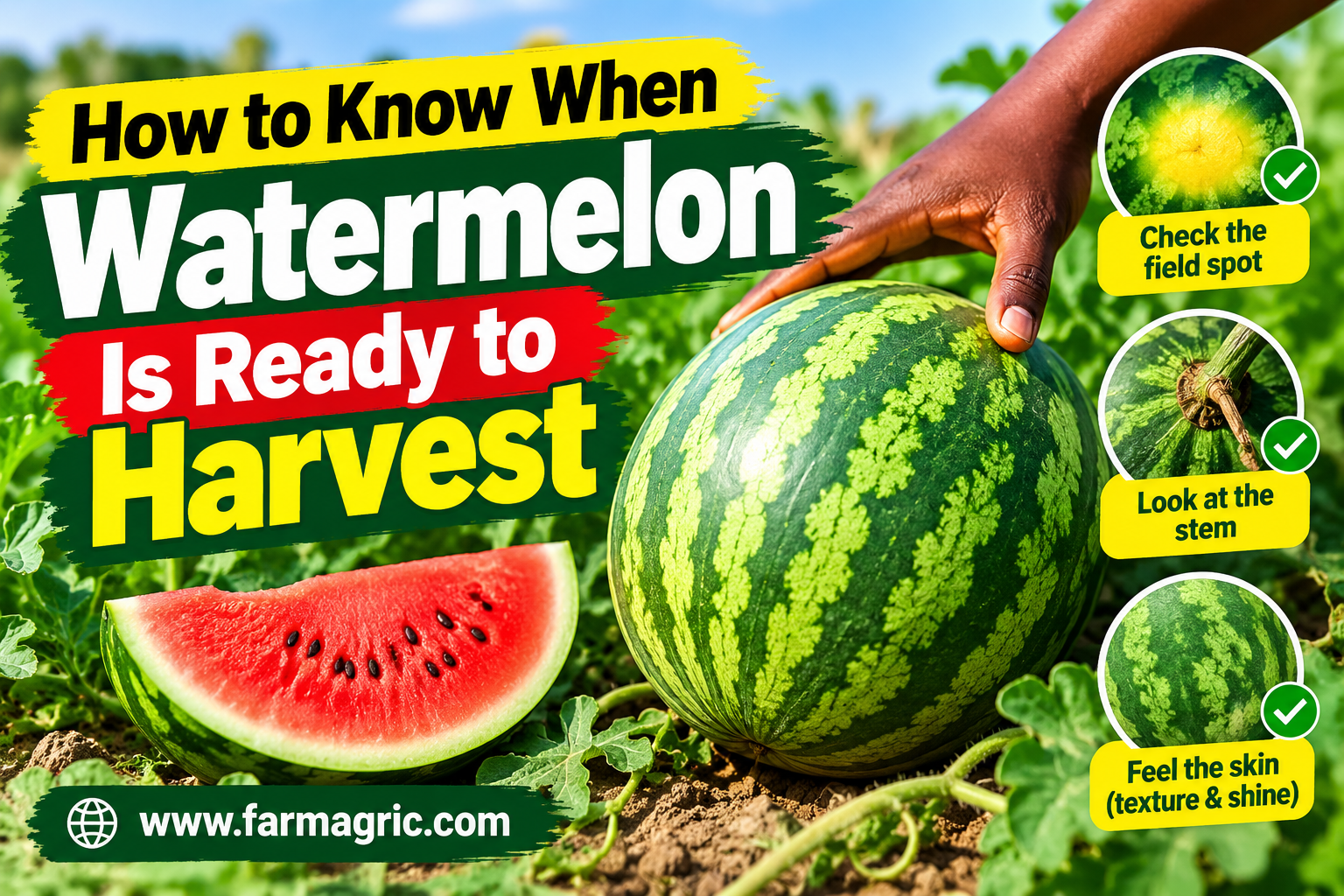
So let me answer you straight, because I know you are standing in your patch right now trying to decide if this is the week. Watermelon is ready to harvest when the tendril closest to the fruit’s stem has dried up and turned brown, the ground spot where the fruit rests on the soil has changed from white or pale green to a creamy yellow, the surface of the rind has lost its glossy shine and taken on a duller, slightly waxy look, and thumping the fruit produces a deep, hollow sound rather than a sharp, high-pitched one. No single one of these signs is fully reliable on its own, which is exactly why relying on only one of them is how farmers like me end up cutting open a disappointing, underripe melon in front of people we were hoping to impress. Together, though, these four signs read consistently enough that checking all of them before cutting a single fruit will save you from that same embarrassment far more reliably than guessing from days-since-planting alone.
Why Watermelon Gives So Few Reliable External Clues
Unlike a fruit such as mango or banana, where the skin itself visibly changes color and the flesh softens as the fruit ripens, watermelon’s thick, tough rind does not change dramatically in color or firmness as the interior sweetens and ripens underneath it. The fruit continues to look, on a casual glance, very much the way it looked weeks earlier, which is exactly why so many farmers either harvest too early out of excitement or impatience, or end up cutting into a fruit that turns out disappointing despite looking perfectly normal from the outside. The handful of signs that do change, the tendril drying, the ground spot coloring, the rind’s surface texture, and the sound the fruit makes when thumped, are subtle and easy to misread individually, but they change in a reasonably predictable, correlated way as the fruit actually approaches maturity, which is why checking them together gives a far more trustworthy picture than any single sign checked in isolation.
What Most Farmers Get Wrong
The first mistake, the one behind my own embarrassing cut-open melon, is relying on days since planting alone, assuming that because a certain number of weeks have passed since the seed went into the ground, the fruit must be ready, without accounting for how much variety, weather, and individual plant vigor can shift the actual maturity timeline earlier or later than a generic calendar estimate would suggest.
The second mistake is relying entirely on the thump test by itself, since while a dull, hollow sound genuinely does correlate with ripeness, it is also the single easiest sign to misjudge for an inexperienced ear, and farmers who use this test alone without checking the tendril or ground spot as well frequently end up disappointed by fruit that sounded right but was not actually ready.
The third mistake is checking the ground spot color without accounting for how it can vary somewhat by variety, assuming every watermelon variety should show the exact same shade of yellow at maturity, when some varieties naturally develop a more pronounced ground spot color change than others, making this single sign, like the others, more reliable when read alongside the rest rather than in isolation.
The fourth mistake is harvesting based purely on fruit size, assuming that because a melon has reached an impressively large size it must be ready, when size is driven considerably more by variety, plant vigor, and growing conditions than by ripeness specifically, and a large fruit can still be genuinely underripe just as a smaller fruit of the same variety can sometimes be fully mature.
The fifth mistake is checking only one or two fruits in a large planting and assuming the whole field is at the same stage, when maturity can vary meaningfully across a field due to differences in when individual fruit actually set, differences in soil moisture or fertility across the plot, and even differences in how much sun exposure a particular melon received during its development.
Step-by-Step Guide to Checking Watermelon Ripeness
Start by locating the tendril, the thin, curling, vine-like growth closest to where the fruit’s stem connects to the main vine, and check its color and texture. A tendril that is still green and fresh-looking generally means the fruit needs more time, while a tendril that has dried out completely and turned brown is one of the more reliable individual signs that the fruit has reached or is very close to full maturity.
Gently turn the fruit, without detaching it from the vine, to find the ground spot, the area of the rind that has been resting directly against the soil throughout the fruit’s development. An immature fruit typically shows a white or pale greenish ground spot, while a mature, ready fruit usually shows this spot having changed to a creamy yellow or, in some varieties, a deeper yellow-orange color.
Examine the overall surface of the rind, comparing its current appearance to younger, clearly immature fruit nearby on the same vine if possible. Immature watermelon rind typically has a slightly glossy, shiny appearance, while a fruit approaching full maturity generally develops a duller, slightly waxy or matte look across its surface, a subtle change that becomes easier to recognize with a bit of practice comparing fruit at different stages side by side.
Thump the fruit firmly with your knuckles or the flat of your fingers, listening carefully to the sound produced. An immature fruit tends to produce a sharper, higher-pitched, almost metallic sound, while a mature fruit typically produces a deeper, more hollow, duller thud, though this particular sign benefits considerably from practice and from comparing the sound against a fruit you have already confirmed is ripe through other means.
Check these signs together on the same fruit rather than relying on any single one, since a fruit showing a browned tendril and a yellowed ground spot but still sounding somewhat sharp when thumped, for example, is giving you a more complete and trustworthy picture than any one sign alone, and general agreement across most or all of these signs gives considerably more confidence than a single promising indicator.
Count days from planting or from when you observed flowering and fruit set as a general supporting guide rather than your primary indicator, since most common varieties reach maturity somewhere between seventy-five and ninety days from planting, or around thirty-five to forty-five days from pollination of the specific flower that became that fruit, giving you a reasonable window to begin checking the more direct physical signs closely rather than relying on the day count as your final answer.
Sample a test fruit from the field before committing to harvesting the whole crop, particularly for a larger planting where maturity may vary across different sections, cutting open one fruit that shows strong signs of readiness across all the indicators above and checking the flesh color, texture, and seed development directly, since ripe watermelon flesh should show a solid, deep color appropriate to the variety, a crisp rather than mushy or watery texture, and dark, mature seeds rather than pale, white, immature ones.
Check multiple fruit from different parts of your field before harvesting broadly, since soil moisture, fertility, and sun exposure differences across a planting can mean fruit in one section is ready somewhat earlier or later than fruit in another section, even among melons that set around a similar time.
Harvest promptly once a fruit is confirmed ready rather than leaving it on the vine indefinitely out of caution, since watermelon does not continue ripening in any meaningful way once cut from the vine the way some other fruits do, and overripe fruit left too long in the field can develop mealy, less desirable flesh texture or become more vulnerable to splitting, pest damage, and the ground rot problems covered in protecting fruit from prolonged soil contact.
Cut the fruit from the vine with a sharp knife or shears rather than pulling or twisting it free, leaving a short section of stem attached to the harvested fruit, since this reduces the risk of damaging the rind at the point of detachment and helps the harvested melon hold up somewhat better during handling and transport afterward.
Keep simple records of planting date, variety, and the specific combination of signs you observed when a fruit turned out to be properly ripe versus when one turned out disappointing, since this record, built over a few seasons, helps you calibrate your own eye and ear more precisely to your specific varieties and growing conditions over time.
Warning Signs You May Have Waited Too Long
A dull thump that has shifted toward an unusually flat, almost dead sound rather than the deep but still resonant hollow sound of proper ripeness can indicate a fruit that has moved past its ideal harvest window and is beginning to develop a drier or mealier interior texture. A ground spot that has darkened considerably beyond a creamy yellow into a deep orange or brownish color, particularly combined with a tendril that has not just browned but has become quite brittle and dry, suggests the fruit may be significantly overripe. Visible cracking or splitting in the rind, sometimes appearing suddenly, often indicates a fruit that has been left on the vine too long past maturity, with internal pressure from an overripe interior contributing to the rind giving way. A noticeable softening felt when pressing firmly on the rind, something that should not be present in a properly ripe watermelon with its characteristically firm, hard exterior, points toward a fruit well past its ideal harvest point and potentially beginning to break down. And fruit that has developed noticeable pest damage or insect entry points while sitting mature in the field for an extended period signals that delayed harvesting is creating unnecessary additional risk on top of whatever quality decline is already happening internally.
What I’d Do Differently If Starting Again Today
If I were starting over, I would never again rely on a single sign, or worse, on days since planting alone, the way I did before that embarrassing pale, underripe melon taught me how unreliable that approach actually is for this particular crop. I would practice the thump test deliberately against fruit I had already confirmed ripe through the tendril and ground spot checks, building my ear’s ability to recognize that deep, hollow sound with real confidence rather than guessing at it without any reference point. I would sample a test fruit from different sections of any larger planting before committing to a full harvest, understanding now how much maturity can genuinely vary across a field even among melons that looked similar from a distance. And I would keep better records from the very beginning, tracking which specific combination of signs actually predicted a good, ripe fruit on my own land with my own varieties, rather than relying purely on memory and general guidelines that do not always translate precisely to every grower’s specific conditions.
Frequently Asked Questions About Knowing When Watermelon Is Ready to Harvest
What is the most reliable single sign that a watermelon is ripe? No single sign is fully reliable on its own, but the tendril closest to the fruit’s stem turning completely brown and dry is generally considered one of the stronger individual indicators, and it becomes considerably more trustworthy when checked together with the ground spot color and the sound produced by thumping the fruit.
Does the color of the ground spot really tell you if a watermelon is ripe? Yes, a ground spot that has changed from white or pale green to a creamy yellow or deeper yellow-orange is a genuinely useful sign of approaching maturity, though the exact shade can vary somewhat by variety, which is why it works best as one of several signs checked together rather than relied upon entirely by itself.
How many days does it take for watermelon to be ready for harvest? Most common varieties reach maturity somewhere between seventy-five and ninety days from planting, or roughly thirty-five to forty-five days from the pollination of the specific flower that became that fruit, though this should be used as a general guide for when to start checking physical ripeness signs closely rather than as a definitive harvest date on its own.
Can watermelon continue to ripen after it has been picked? No, unlike some other fruits, watermelon does not continue ripening in any meaningful way once cut from the vine, which makes correctly judging ripeness before harvest especially important, since a fruit picked too early will not sweeten or improve further in storage the way certain other fruit can.
Why did my watermelon look ripe on the outside but turn out pale and underripe when cut open? This typically happens when a farmer relies on only one or two signs, such as fruit size or a promising-sounding thump, without checking the tendril and ground spot together as well, since watermelon’s thick rind does not change dramatically in color or firmness the way many other ripening fruits do, making a combination of subtle signs necessary rather than any single obvious visual cue.
If there is one thing I want you to remember from all this, it is that a watermelon keeps its ripeness a secret right up until you cut it open, so never trust just one sign, check the tendril, the ground spot, the rind’s shine, and the sound together, because the pale, disappointing melon I once cut open in front of a group of waiting buyers taught me that this particular fruit punishes a farmer who guesses and rewards one who checks.