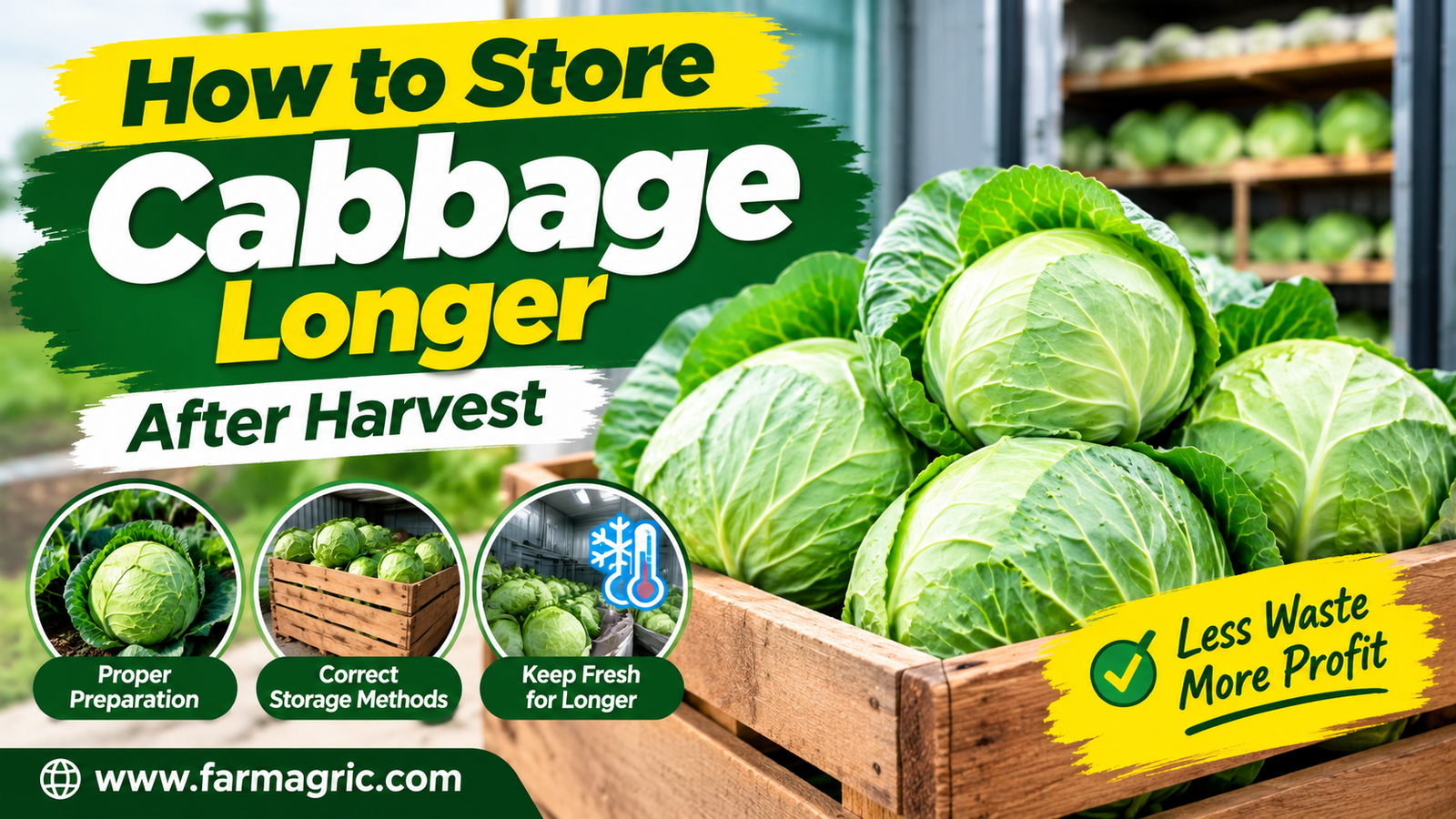
How to Store Cabbage Longer After Harvest
How to Store Cabbage Longer After Harvest
One season I cut a whole field of cabbage on a Saturday, stacked the heads in a closed shed to wait for the Monday market, and came back to find the stack hot to the touch and the bottom layer turning slimy. I had grown a good crop and then lost a third of it in two days, just from how I handled it after cutting. Nothing in the field had gone wrong. Everything went wrong between the field and the market.
Here is the direct answer. To store cabbage longer after harvest, start with the right kind of cabbage, cut mature, firm, undamaged heads on a dry day, leave a few outer wrapper leaves on, keep the heads out of the sun and out of the rain, and store them dry, cool and well ventilated in a single loose layer, away from ripening fruit. The cooler you can keep them, the longer they last, and the real prize is a cool, humid place just above freezing. If your climate is hot and you have no cold store, be realistic, because fresh cabbage will keep for days to a couple of weeks, not months. For anything beyond that, turn the surplus into sauerkraut or another preserved product before it spoils.
The rest of this article shows you how, and what usually goes wrong.
What most farmers get wrong
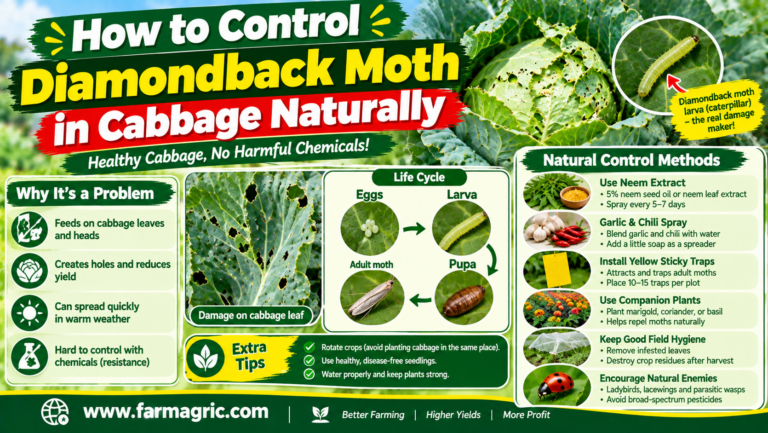
They grow the wrong type for storage. Not all cabbage keeps equally well. Early, fast-maturing varieties with soft, loose heads are meant to be eaten fresh and sold quickly. Later, dense, firm-headed varieties are the ones that tend to store best. If you plan to hold cabbage for weeks, ask your seed supplier which varieties are known to store well, and plant those.
They harvest at the wrong time. Cabbage cut before the head is firm and mature does not keep well, and neither does cabbage left in the field until the heads crack. A head that has split often rots quickly in storage, because the crack lets in moisture and disease.
They cut during or just after rain. Wet heads with water trapped between the leaves invite rot. Harvest on a dry day, after the dew has lifted, when the heads are dry and firm.
They strip off all the outer leaves. Those loose outer leaves, called wrapper leaves, protect the head from bruising and drying out. Peeling them all off makes the cabbage look clean but leaves it exposed. Keep a few on for storage and transport, and trim them later when you sell.
They stack cabbages in hot, closed spaces. Like most fresh produce, cabbage is alive and gives off heat and moisture. A heap in a closed shed builds heat quickly, and rot spreads from head to head.
They store damaged heads with good ones. Bruised, split, insect-damaged or diseased heads go bad first and spread rot to their neighbors. Mixing them in is one of the most common and most expensive mistakes.
They store cabbage next to ripening fruit. Ripening fruit, such as apples, pears, bananas and ripe tomatoes, gives off a gas called ethylene, which can cause cabbage leaves to yellow and drop. Keep them apart.
Why cabbage spoils, in plain terms
A harvested cabbage is still breathing. It loses water from its leaves, so it wilts and shrivels if the air is dry. It generates heat as it respires, so warm, stuffy conditions speed up aging. And its leaves can be attacked by bacteria and fungi, particularly where there are wounds, trapped water or damage from insects. So the three enemies are heat, dryness or trapped wetness, and damage. A good storage plan keeps cabbage cool, keeps the air humid but not dripping, keeps air moving, and prevents injury.
Commercial growers store late-type cabbage in cold stores kept just above freezing with high humidity, and under those conditions good heads can last for months. Most farmers do not have that, which is why it matters to understand what you can realistically achieve with simpler methods.
Step-by-step: how to store cabbage longer after harvest
Step 1: Start in the field. Good storage begins before harvest. Choose a storage-suited variety. Avoid heavy nitrogen late in the season, because lush, soft growth stores poorly. Keep up pest and disease control so heads are clean and undamaged. Many growers ease off irrigation shortly before harvest, which can reduce splitting after a heavy watering, but do not let the crop become severely drought-stressed.
Step 2: Harvest at the right stage and in the right conditions. Cut when the heads are firm, solid and full-sized for the variety. Press the top of the head, and it should feel dense. Harvest on a dry day, in the cool of the morning, once the dew has dried. Use a clean, sharp knife, cut the stem low, and leave a few wrapper leaves around the head. Handle the heads gently, because bruising and dropping them leads to rot later.
Step 3: Get them into shade right away. Do not leave cut cabbage lying in the sun. Even an hour or two of strong sun warms the heads and cuts their storage life. Move them to shade quickly, and let them cool and dry before you pack or store them.
Step 4: Sort ruthlessly. Go through every head. Set aside anything cracked, soft, bruised, insect-damaged, spotted, or showing any signs of rot. Use or sell those first. Only firm, clean, sound heads go into storage. Also separate small, loose heads from large, dense ones, because they will not last equally long.
Step 5: Do not wash them. Water trapped between the leaves encourages rot. If a head is dirty, trim off the soiled outer leaf and leave the rest. If you must wash for sale, do it at the last minute and let the cabbage dry well.
Step 6: Choose your storage place carefully. You want somewhere cool, shaded, dry overhead but with some humidity, and well ventilated. A cool cellar, a shaded store with good airflow, or a covered, breezy shed on the cooler side of a building will work better than a closed, hot room. Keep the space away from direct sunlight, heat sources and roofing that heats up during the day. Raise the cabbages off the ground so air can move beneath them and ground moisture does not reach them.
Step 7: Arrange the heads properly. Store cabbages in a single layer, or at most a shallow stack, on clean slatted shelves, racks or in ventilated crates. Make sure they do not press tightly against each other, since touching heads pass rot along. Some growers wrap each head loosely in clean, dry newspaper or paper, which can cushion the head, reduce moisture loss and slow the spread of problems from one head to the next. Others, in cool climates with proper storage space, hang whole plants by the root and stalk, though this suits cooler cellar conditions better than hot, humid ones.
Step 8: Keep them away from ethylene sources and strong odors. Store cabbage well apart from ripening fruit. Also be aware that cabbage gives off a strong smell as it ages, which can taint other produce stored nearby, so give it its own space if you can.
Step 9: Aim for the coolest conditions you can create. The ideal storage temperature for cabbage is just above freezing, with high humidity, but in many places you will not be able to reach that. Do what you can. Choose the coolest part of your property, shade it well, ventilate it at night when the air is cooler and close it against the hottest part of the day. In dry climates, a simple evaporative cooler made by keeping a shaded, breezy structure covered with wet cloth or wet sacks can lower the temperature a few degrees. It works less well in humid air, so check how it performs in your conditions.
Step 10: Check the stored cabbage every few days. Walk through your storage regularly. Remove any head that has soft spots, slime, dark patches, mold or a strong sour smell. Peel back yellowing outer leaves if they start to rot, since the head underneath is often still sound. One removed head can protect dozens of its neighbors.
Step 11: Set realistic time expectations. Under cool, humid, well-managed conditions, late-type cabbage can keep for many weeks to several months. In warm or humid weather without cold storage, expect more like several days to two or three weeks, depending on the variety, head quality and conditions. Plan your selling and processing around that. Do not hold cabbage hoping the price will rise if the heads are already starting to age.
When fresh storage is not enough: preserve the surplus
If you have more cabbage than you can sell in time, preserving it is the best way to avoid waste.
Sauerkraut is the simplest and most reliable method, and it needs no refrigeration. Shred the cabbage finely, mix it with salt, using roughly 2 to 2.5 percent salt by weight of the cabbage, which is about 20 to 25 grams of salt per kilogram, and massage or pound it until it releases its juices. Pack it tightly into a clean container, press it down so the cabbage stays under its own liquid, cover loosely, and keep it at a moderate room temperature while it ferments for a couple of weeks or longer, tasting along the way. Always use clean equipment, keep the cabbage submerged, and discard any batch that smells rotten or shows mold on the cabbage itself. A good recipe from a reliable source is worth following closely. Once fermented, store it in a cool place.
Kimchi-style fermented cabbage follows a similar principle, with added spices, and can be a good value-added product.
Drying is another option. Shred or slice the cabbage thinly, blanch briefly, and dry on raised racks in a clean, airy, covered place or a solar dryer until brittle. Store it in clean, dry, airtight containers. Dried cabbage works well in soups and stews.
Cooking and selling processed products such as shredded cabbage mixes, fermented products or dried vegetables can also bring a better return than selling aging heads at a discount.
Warning signs your cabbage is going bad
Look for outer leaves turning yellow, soft or slimy, dark or black patches, grey or white mold, a sour or rotten smell, heads that feel light and spongy, and cracks or splits that were not there before. A few discolored outer leaves can simply be removed, but a head that is slimy, smells bad or has rot running through the inside should be thrown away. Never eat cabbage that is moldy or smells rotten.
What I would do differently if I were starting again today
I would plan storage before I planted. I would pick varieties suited to the length of time I wanted to hold the crop, and stagger my plantings so I was never cutting everything on one day. I would cut in the cool morning, bring the heads straight into shade, sort hard, and never stack them in a closed shed. I would have a well-ventilated, shaded storage space ready before the first harvest, and a clear plan to ferment any surplus within a few days instead of letting it age.
Most of my losses were never caused by anything dramatic. They came from small habits, a late cut, a wet head, a hot stack, a damaged head left in the pile. Fix those habits, and cabbage keeps far longer than most farmers expect.
FAQ
How long does cabbage last after harvest without refrigeration?
It depends on the variety, head quality and weather. In a cool, shaded, well-ventilated place, good cabbage may last from one to a few weeks. In hot, humid conditions, expect less. With proper cold, humid storage, late-type cabbage can keep for months.
Should I wash cabbage before storing it?
No. Water trapped in the leaves encourages rot. Remove dirty outer leaves, and wash only just before using or selling.
Should I leave the outer leaves on cabbage for storage?
Yes, leave a few wrapper leaves on to protect the head from bruising and drying. Trim them off when you sell or cook.
Can I store cabbage with other vegetables or fruit?
Keep it away from ripening fruit such as apples, pears and bananas, which give off ethylene and can cause yellowing. Cabbage also has a strong odor, so a separate space is best.
What is the best way to preserve extra cabbage without a fridge?
Fermenting it into sauerkraut is the easiest and most reliable method, followed by drying. Both need clean equipment and a tested recipe, especially for the right amount of salt.
know this
Cabbage does not spoil in storage, it spoils from what happened before storage: pick it dry, sort it hard, keep it cool, and ferment what you cannot sell.