How to Fix Cassava Plants That Are Not Bulking
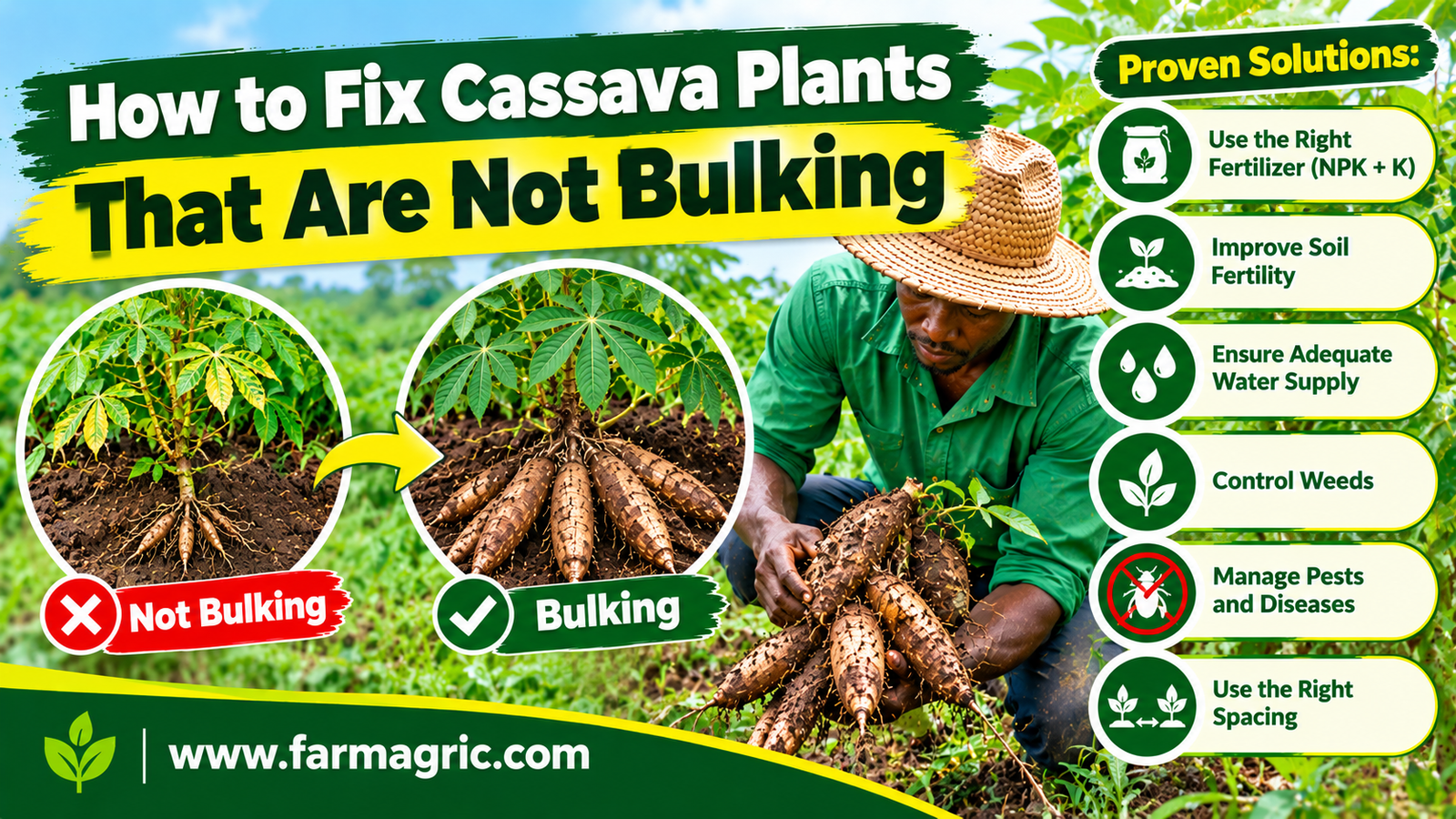
A plant with unusually tall, vigorous, dark green growth and thick stems, particularly where nitrogen has been applied generously, deserves a mid-season check of the roots rather than being assumed automatically productive, since this exact appearance is what fooled me in my own field. Roots that feel thin, almost carrot-like rather than thick and full, when dug as a test partway through the season indicate that bulking has not progressed as it should, and the earlier this is caught, the more time remains in the season to correct what can still be influenced. Soil that resists a probing stick noticeably more than soil elsewhere in the field points toward compaction limiting root expansion in that specific area. A canopy so dense that little light reaches the ground between plants suggests overcrowding is likely reducing bulking across the whole stand rather than just isolated plants. And a visibly reduced or damaged canopy from pest or disease pressure, even if it seems minor, is worth taking seriously as a potential drag on bulking, since less leaf area consistently means less sugar available to fill the roots regardless of how good the soil and nutrition otherwise are.
What I’d Do Differently If Starting Again Today
If I were starting over, I would dig a test root at four or five months as standard practice on every plot, rather than waiting until the full harvest to discover whether bulking had actually been happening, since that thin-rooted crop taught me how completely appearance above ground can mislead. I would balance my fertilizer program around potassium from the very beginning instead of leaning on nitrogen-heavy manure applications that I now understand were quietly working against the very root development I was trying to encourage. I would loosen my soil more deeply before every planting, treating land preparation as seriously as I treat the planting material itself, since I now know how much a physically restrictive soil can undermine even a well-fed crop. And I would pay much closer attention to spacing and to protecting leaf area from pests through the whole season, rather than assuming a crop that survives to harvest without dying has necessarily bulked the way it should have along the way.
Frequently Asked Questions About Cassava Not Bulking
Why does my cassava grow tall and leafy but produce thin roots? This pattern usually points to excess nitrogen relative to potassium, since nitrogen encourages the plant to keep investing in leaf and stem growth rather than shifting energy toward filling the storage roots, which is exactly the imbalance that produced a lush but poorly bulked crop in my own field.
Can compacted soil really stop cassava roots from bulking even with good fertilizer? Yes, root bulking requires physical space to expand into, so even a well-fed plant will produce thin, restricted roots if the surrounding soil is too hard for them to swell against, making deep land preparation before planting just as important as the fertilizer program that follows.
At what age should cassava roots start bulking noticeably? Most varieties begin shifting significant energy toward root filling from around the third or fourth month onward, assuming the initial storage roots were properly established earlier in the season, which is why digging a test plant around this age can reveal bulking problems early enough to still make some corrections.
Does drought really affect cassava bulking if the plant survives the dry spell? Yes, even though cassava tolerates drought better than many crops without dying, a prolonged dry period specifically during the bulking months slows the physical process of the roots filling with starch, meaning a surviving plant can still show a real yield loss from moisture stress during this window.
Is it possible to fix poor bulking in a crop that is already growing, or only in future plantings? Some correction is possible in an already-growing crop, particularly around fertilizer balance and protecting leaf area from pests, but issues like soil compaction or overcrowding are difficult to correct without disturbing the roots, so much of the real fix for these specific causes applies to how the next crop is planted rather than the current one.
If there is one thing I want you to remember from all this, it is that a beautiful cassava plant above ground is not a promise of what is happening below it, so dig a test root partway through the season, check the balance between nitrogen and potassium, and give the roots loose soil and room to expand, because the field that looks the proudest from the path is sometimes the one quietly failing at the only job you actually planted it to do.