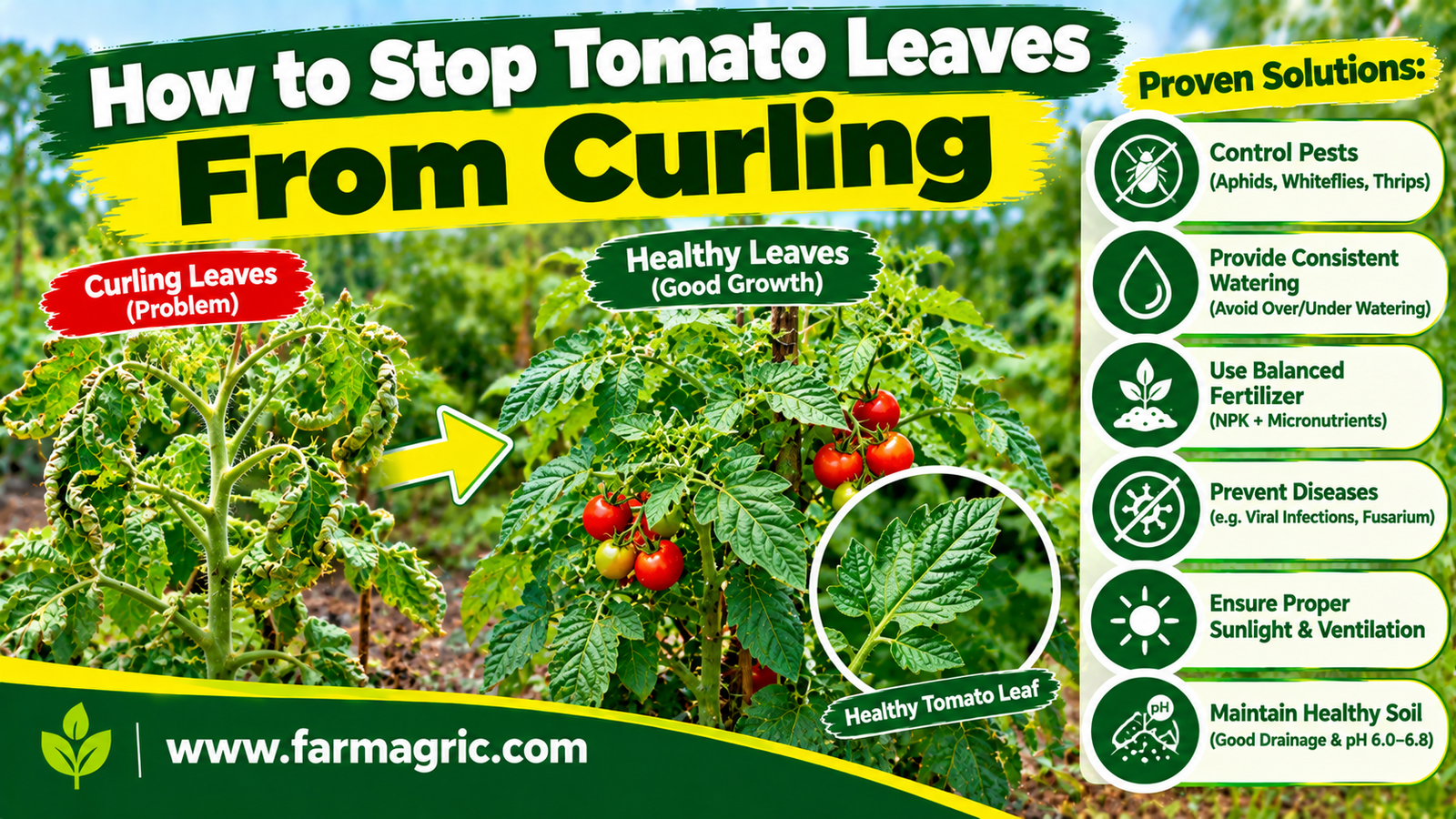
How to Stop Tomato Leaves From Curling
How to Stop Tomato Leaves From Curling: A Farmer’s Guide to Reading the Real Cause Before You Panic
I remember the first time I saw a whole bed of my tomato plants curl their leaves upward like little canoes, almost overnight it seemed, after weeks of looking perfectly healthy. My first thought was disease, since that is usually what curling leaves make a farmer fear the most, and I nearly pulled and burned the entire bed before an older tomato grower stopped by and asked me a few simple questions about the weather that week and how much water those plants had been getting. It turned out to be nothing more than heat and moisture stress, a completely reversible problem, and I would have destroyed a healthy crop out of fear if I had acted on my first instinct. That day taught me that curling leaves are one of the most misread signals in the whole garden, because at least four or five very different problems can all produce a leaf that curls, and treating the wrong one wastes time while the real cause keeps working against you.
So let me answer you straight, because I know you are standing over curling tomato leaves right now trying to decide whether to panic or wait it out. Tomato leaves curl mainly for one of five reasons, physiological leaf roll caused by heat, drought, or excess moisture stress, viral disease spread by whiteflies or aphids, herbicide drift damage, aggressive pruning or heavy fruit load pulling on the plant, or a nutrient imbalance, and the fix depends completely on figuring out which of these is actually happening, since a stress-related curl often corrects itself with better watering while a viral curl has no cure at all and calls for removing the plant instead. Curling leaves are the tomato plant’s general distress signal, similar to a fever in a person, and just like a fever, the leaf curl itself tells you something is wrong without telling you exactly what, which is why learning to read the accompanying signs matters more than reacting to the curl alone.
Why Curling Is Such a Confusing Symptom to Diagnose
A tomato leaf curls when the plant is redirecting resources away from maintaining a flat, open leaf surface, and several completely different situations can trigger that same basic response. Physiological curling, by far the most common cause I see in my own fields, happens when the plant is under heat or moisture stress and curls its leaves upward as a defensive reaction to reduce water loss through the leaf surface, essentially the plant protecting itself the way a person might squint against strong sun. Viral curling looks superficially similar but comes from an infection that has hijacked the plant’s growth at a cellular level, and it never reverses no matter how well you manage water or fertilizer afterward. Herbicide damage twists and distorts the leaf in ways that can resemble curling but usually comes with a more dramatic, misshapen appearance affecting new growth specifically. And curling from heavy pruning or fruit load is simply mechanical stress on the plant’s structure rather than any disease or nutrient problem at all. Learning to separate these by looking closely at which leaves are affected, how the curl is shaped, and what else is happening on the plant is the entire foundation of fixing the problem correctly.
What Most Farmers Get Wrong
The first mistake, the one that nearly cost me a healthy bed, is jumping straight to disease as the assumed cause and either spraying aggressively or destroying plants before actually confirming what is happening. Physiological curling from heat and water stress is far more common than viral disease in most seasons, and it corrects itself once conditions improve, so reacting with drastic measures before ruling this out wastes effort and sometimes destroys a perfectly recoverable crop.
The second mistake is not distinguishing between which part of the plant is curling. Older, lower leaves curling upward during a hot afternoon and recovering somewhat by evening is a very different situation from young, new growth at the top of the plant curling and staying distorted, which points much more strongly toward a viral or herbicide problem.
The third mistake is overwatering in response to curling, assuming the plant must be thirsty, when in many cases the curling is actually caused by excess moisture and waterlogged roots rather than drought. Adding more water to a plant already suffering from overwatering makes the underlying problem considerably worse rather than better.
The fourth mistake is ignoring whitefly and aphid populations as a contributing factor, since these insects are the primary carriers of the viruses that cause the most serious, incurable form of leaf curl in tomatoes. Farmers who never scout specifically for these insects miss the chance to prevent a viral infection before it ever establishes itself in the crop.
The fifth mistake is pruning too aggressively, removing too much foliage at once in the name of airflow or tidiness, without recognizing that this shock itself can trigger a temporary curling response in the remaining leaves as the plant adjusts to its sudden change in leaf area.
Step-by-Step Guide to Diagnosing and Fixing Curling Tomato Leaves
Start by identifying exactly which leaves are curling and how severely. Check whether it is mainly the older, lower leaves, the younger top growth, or the whole plant uniformly, since this single observation narrows down the likely cause more than almost anything else you can check.
Look closely at the shape and texture of the curl itself. A gentle upward cupping or rolling along the edge of the leaf, especially on older leaves during the hottest part of the day, points toward physiological stress from heat or water. A tighter, more distorted curl on young leaves, sometimes accompanied by yellowing, mottling, or a stunted, bushy appearance to new growth, points more strongly toward viral infection. Leaves that are twisted, narrowed, or oddly cupped in a way that looks almost feathery or fernlike suggests herbicide drift rather than either of the other two causes.
Check your recent watering history and the weather over the past week or two. A hot, dry spell combined with inconsistent watering, alternating between very dry and then suddenly very wet, is one of the most common triggers for physiological leaf curl, and correcting this pattern toward more consistent, moderate watering often resolves the curling within several days to a week.
Dig near the base of a few affected plants and check soil moisture and drainage directly. Soil that is soggy or waterlogged points toward overwatering or poor drainage as the cause, in which case the fix is reducing watering frequency and improving drainage rather than adding more water. Soil that is bone dry several centimeters down points toward drought stress, in which case a deep, thorough watering rather than frequent shallow watering is the better response.
Scout the undersides of leaves specifically for whiteflies, small, pale insects that fly up in a small cloud when a plant is disturbed, and for aphids, which cluster in small groups particularly on new growth and the undersides of leaves. High populations of either insect raise real concern about viral transmission and call for direct pest management, both to protect the plants directly affected and to prevent further spread through the rest of the planting.
Examine new growth carefully for other viral symptoms beyond curling alone, such as yellow mottling or mosaic patterning, stunted and bushy growth at the growing tip, or a general reduction in vigor compared to unaffected plants nearby. If these additional signs are present alongside the curling, viral infection becomes the much more likely explanation, and unfortunately there is no treatment that reverses this once it has taken hold.
Consider whether any herbicide has been used nearby recently, whether on your own land for weed control in another crop, or potentially drifting in from a neighboring field. Herbicide damage often shows up within a day or two of exposure and affects new growth specifically, with a distinctive twisted, narrowed appearance that differs from the smoother cupping of physiological stress.
Review your recent pruning and the current fruit load on affected plants. If you removed a significant amount of foliage recently, or if plants are carrying an unusually heavy load of fruit relative to their leaf area, some degree of curling in the remaining leaves is a reasonable, usually temporary response to that stress rather than a sign of disease.
For physiological curling confirmed by process of elimination, correct watering to a consistent, moderate schedule, avoiding both drought stress and waterlogging, provide some afternoon shade in particularly intense heat if practical, and mulch around the base of plants to help regulate soil moisture and temperature more evenly.
For suspected viral infection, remove and destroy affected plants promptly to prevent the virus from spreading further through the planting via whiteflies or aphids moving between plants, and focus remaining effort on managing the insect populations responsible for transmission in the rest of the crop.
For herbicide damage, there is often little to do for the specific affected growth beyond waiting to see whether new growth emerging afterward is unaffected, while addressing the source of the herbicide exposure, whether through your own application practices or communication with a neighboring farm, to prevent recurrence.
For curling tied to pruning or fruit load, simply avoid removing large amounts of foliage in a single session going forward, spreading necessary pruning across multiple smaller sessions instead, and ensure adequate support and nutrition for plants carrying a heavy fruit load so the stress is better managed.
Warning Signs to Watch For
Curling that is worse in the afternoon heat and noticeably improves by the following morning is a strong sign of physiological stress rather than disease, since this daily pattern of worsening and partially recovering is not something viral curling typically does. Curling combined with yellow mottling, mosaic-like patterning, or stunted, bushy new growth at the growing tip is a much more serious combination pointing toward viral infection, and this combination calls for prompt action rather than a wait-and-see approach. A sudden appearance of twisted, narrow, distorted leaves within a day or two of any herbicide use nearby, especially affecting new growth specifically, points clearly toward chemical drift rather than a biological cause. High numbers of whiteflies or aphids on the undersides of leaves, even before any curling becomes severe, is worth treating as an early warning that viral risk is elevated in that planting, regardless of whether curling has developed yet. And curling that affects an entire planting uniformly, appearing at roughly the same time across many plants regardless of individual plant history or care, points more toward an environmental cause like heat or a water issue than a disease, which tends to appear more unevenly as it spreads gradually from initial infection points.
What I’d Do Differently If Starting Again Today
If I were starting over, I would learn to pause and diagnose properly before reacting to curling leaves at all, instead of nearly destroying that healthy bed out of fear the way I almost did in my early years. I would pay far closer attention to my watering consistency during hot spells, since I now understand how directly an irregular watering pattern during intense heat triggers the physiological curling that has turned out to be, by a wide margin, the most common cause I actually deal with. I would scout specifically for whiteflies and aphids as a standard practice rather than only noticing them once curling had already appeared, since catching high insect populations early gives a real chance to prevent viral transmission before it ever happens rather than only reacting after the damage is already done. And I would spread my pruning out across several smaller sessions rather than removing large amounts of foliage all at once, since I now recognize how much of the occasional curling I used to blame on mystery causes was really just the plant adjusting to a pruning shock I had created myself.
Frequently Asked Questions About Curling Tomato Leaves
What is the most common cause of tomato leaves curling? Physiological leaf curl caused by heat and inconsistent watering is by far the most common cause in most gardens and fields, and it typically resolves within several days to a week once watering becomes more consistent and moderate, making it far less alarming than the viral causes farmers often fear first.
How can I tell if my tomato leaf curl is from a virus and not just heat stress? Viral curling usually affects young, new growth specifically rather than older leaves, often comes with additional symptoms like yellow mottling or stunted, bushy growth at the tip, and does not improve when watering is corrected, while heat-related curling typically affects older leaves more, worsens in the afternoon and improves somewhat overnight, and responds to more consistent watering within a week or so.
Can curled tomato leaves go back to normal on their own? Yes, if the cause is physiological stress from heat or inconsistent watering, affected leaves often flatten back out once conditions and watering practices improve, though leaves already severely damaged by a virus or herbicide exposure typically do not recover their normal shape even after the underlying cause is addressed.
Does overwatering cause tomato leaves to curl, or is it always about too little water? Overwatering and poor drainage can cause curling just as readily as drought, since waterlogged roots struggle to function properly regardless of how much water is technically available, so checking actual soil moisture directly, rather than assuming the plant needs more water, is an important step before responding to curling.
Should I remove a tomato plant if I suspect it has a viral leaf curl? Yes, if additional viral symptoms like mottling or stunted new growth accompany the curling and there is no improvement after ruling out and correcting watering issues, removing and destroying the affected plant is generally the right response, since there is no treatment that cures a viral infection and leaving the plant in place risks the virus spreading further to healthy neighbors through whiteflies or aphids.
If there is one thing I want you to remember from all this, it is that a curling tomato leaf is asking a question, not making an accusation, so look closely at which leaves are curling, check your watering and your pests before you reach for anything drastic, because the plant that looks like it is dying from disease is very often just thirsty, overwatered, or catching its breath after a hot afternoon.