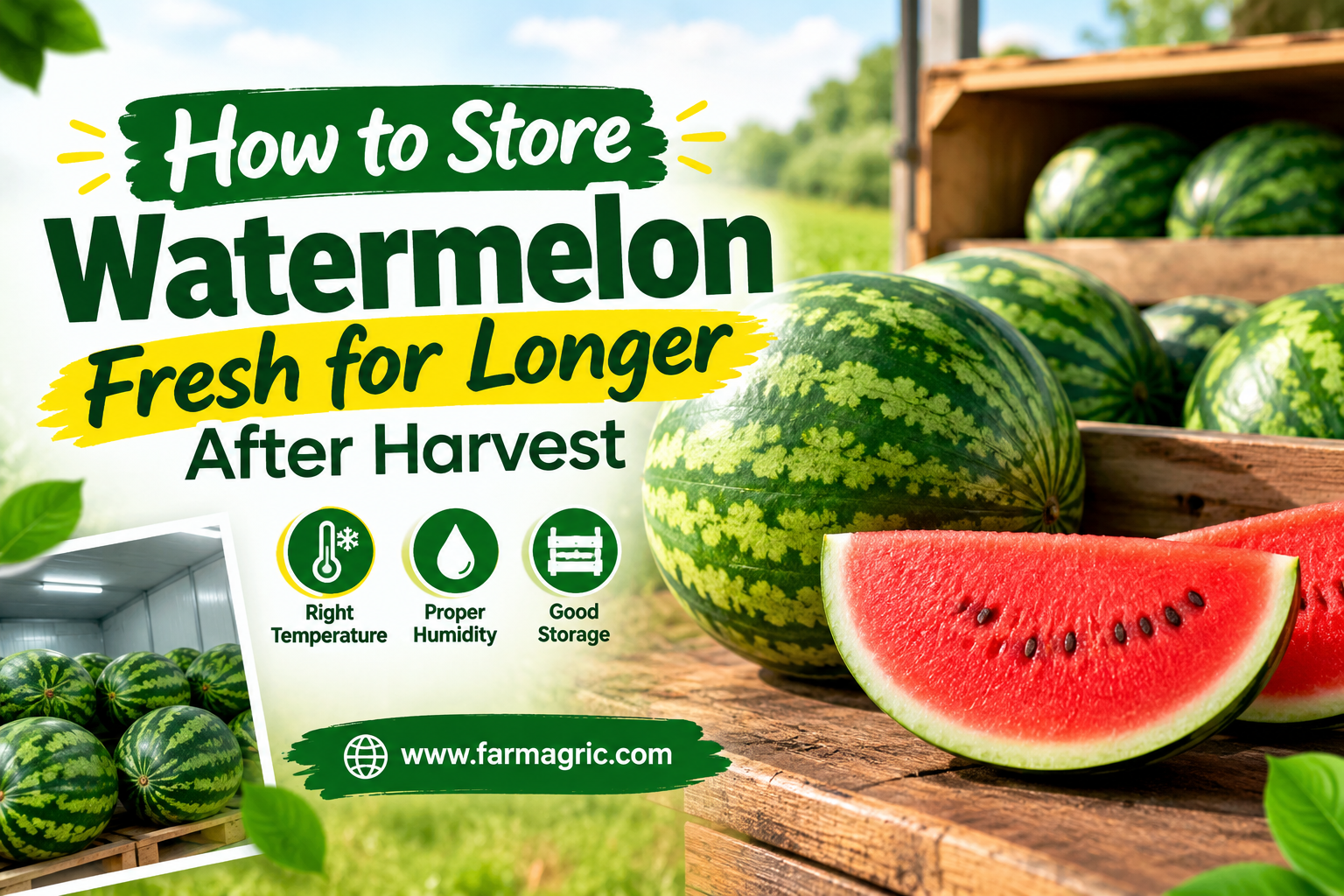
How to Store Watermelon Fresh for Longer After Harvest
How to Store Watermelon Fresh for Longer After Harvest: A Farmer’s Guide to Protecting Quality Once the Melon Leaves the Vine
I once harvested a full trailer load of watermelon during a good market week, confident that the fruit would hold its quality for however long it took me to move it all, only to find that a noticeable portion had developed soft, mealy patches and a flat, disappointing flavor by the time the last of that batch finally sold nearly three weeks later. I had assumed, the way many farmers do, that because watermelon has such a thick, tough rind, it must be forgiving about how long it sits around after harvest compared to a more delicate fruit. That assumption cost me real money that week, and it sent me looking for a better understanding of what actually happens to a watermelon once it leaves the vine, since I realized I had been treating storage as an afterthought for a fruit that, it turns out, genuinely rewards a bit of deliberate care after harvest.
So let me answer you straight, because I know you have harvested fruit sitting around right now and you want it to hold its quality for as long as possible before it reaches a buyer or your own table. You store watermelon fresh for longer after harvest by keeping uncut fruit in a cool, shaded location away from direct sun and heat, ideally between ten and fifteen degrees Celsius for longer-term holding, handling melons gently to avoid bruising or cracking the rind, storing fruit off the bare ground on a clean, dry surface, avoiding stacking melons in a way that puts pressure on the fruit beneath, and checking stored fruit periodically for any sign of soft spots or developing rot so affected melons can be pulled and used before they spoil the quality of the whole batch sitting nearby. Unlike some fruit that continues ripening and improving after harvest, watermelon simply holds at whatever quality it had when picked and then gradually begins to decline, which means good storage is not about helping the fruit get better, it is about slowing down the inevitable decline for as long as the conditions you provide genuinely allow.
Why Watermelon’s Tough Rind Can Be Misleading About Its Storage Needs
A watermelon’s thick, hard rind genuinely does protect the fruit from a great deal of the surface damage and moisture loss that would quickly spoil a thinner-skinned fruit, and this real toughness is exactly what leads many farmers to assume the fruit needs little deliberate storage care beyond simply keeping it somewhere reasonably out of the way. What that toughness does not protect against, though, is the fruit’s internal quality changing over time even while the outside continues to look essentially fine, since warm temperatures accelerate the breakdown of sugars and the softening of flesh texture well before any external sign becomes obvious, and rough handling can create internal bruising or small cracks that are invisible from the outside but that open the door to decay from within. This gap between how resilient the exterior looks and how much the interior is actually changing is exactly what caught me off guard with that mealy, flavor-flat batch, since every melon in that load still looked perfectly solid and intact from the outside throughout the three weeks it sat waiting to sell.
What Most Farmers Get Wrong
The first mistake, the one behind my own disappointing trailer load, is assuming that because watermelon has such a tough exterior, it does not need any particular storage care beyond simply keeping it somewhere out of immediate harm, not accounting for how much internal quality can decline from heat exposure and time even while the rind itself shows no obvious outward sign of that decline.
The second mistake is storing or stacking harvested melons directly in full sun or in a hot, poorly ventilated space, not recognizing how much that heat accelerates internal breakdown compared to a cooler, shaded storage location, even for a fruit whose tough rind makes it feel like heat exposure should matter less than it actually does.
The third mistake is handling melons roughly during harvest, loading, and transport, tossing or dropping fruit in a way that can create internal bruising or hairline cracks in the rind that are not immediately visible but that significantly shorten how long that particular melon will hold up in storage afterward.
The fourth mistake is stacking harvested fruit carelessly, piling melons several layers deep without adequate support, which puts sustained pressure on the fruit at the bottom of the stack and can lead to internal damage or even visible cracking in melons that were perfectly fine at the moment of harvest.
The fifth mistake is not inspecting stored fruit periodically, treating a harvested batch as something you can simply leave alone until it is time to sell or use it, rather than checking periodically for any early signs of soft spots or developing problems that, if caught early, allow you to pull and use a declining melon before it spoils and before whatever is affecting it has the chance to influence fruit sitting in close contact nearby.
Step-by-Step Guide to Storing Watermelon Fresh for Longer
Harvest fruit at proper maturity using the ripeness signs covered in judging watermelon readiness, rather than harvesting early fruit that will not develop further in storage or waiting so long that fruit is already approaching its natural decline point before storage even begins, since the quality a melon has at the moment of harvest is essentially the best quality it will ever have afterward.
Handle fruit gently from the very moment of harvest, cutting the fruit from the vine with a sharp knife rather than pulling or twisting it free, and carrying or placing harvested melons carefully rather than tossing or dropping them, since even minor impacts can create internal bruising or small rind cracks that are not visible immediately but that significantly shorten storage life.
Move harvested fruit out of direct sun and into shade as quickly as possible after harvest, since field heat absorbed by the fruit while it sits exposed in full sun accelerates the internal quality decline that storage is meant to slow down, making prompt shade placement one of the simplest and most effective steps available immediately after picking.
Allow freshly harvested fruit that has been sitting in warm field conditions to cool somewhat in a shaded area before placing it into tighter, more enclosed storage, since moving very warm fruit directly into a confined storage space can trap heat and humidity around the melons in a way that works against the cooling and quality preservation you are actually trying to achieve.
Store uncut watermelon in a cool location wherever possible, ideally in the range of ten to fifteen degrees Celsius for longer-term holding, since cooler temperatures meaningfully slow the internal breakdown of sugars and the softening of flesh texture compared to fruit left sitting at warm ambient temperatures, extending the window during which the melon retains good eating quality.
Avoid refrigerating watermelon at very cold temperatures for extended periods if you do have access to refrigeration, since temperatures that are too cold, well below the ideal range, can actually damage flesh texture and flavor over time, making a moderately cool rather than near-freezing storage environment the better target for maintaining quality.
Place harvested fruit on a clean, dry surface rather than directly on bare, potentially damp ground, using a raised platform, clean straw, or another suitable barrier, since direct ground contact can introduce moisture and contribute to localized spoilage at the point of contact, similar in principle to the ground rot risk covered for fruit still developing on the vine.
Avoid stacking melons more than one or two layers deep, and where stacking is genuinely necessary due to volume, ensure adequate support and cushioning between layers so that fruit at the bottom of a stack is not bearing sustained, concentrated pressure from the weight of melons above it, since this pressure can cause internal damage or cracking even in fruit that was perfectly sound when it was first stacked.
Provide reasonable airflow around stored fruit rather than packing melons tightly together with no space between them, since adequate ventilation helps prevent the buildup of humidity and heat immediately around the fruit surface that can otherwise accelerate spoilage, particularly in a warm storage environment.
Inspect stored fruit periodically, checking for any soft spots, discoloration, cracking, or an off smell developing, since catching a melon that has begun declining early allows you to pull it from the batch and use or sell it promptly before it spoils completely, while also protecting the quality of other fruit stored in close proximity that might otherwise be affected by a decaying neighbor.
Rotate your stored stock using a first-in, first-out approach where you are holding fruit over any meaningful period, selling or using the earliest harvested melons before moving on to more recently picked fruit, since even under good storage conditions, earlier harvested fruit has had more cumulative time for its quality to begin declining compared to fruit picked more recently.
Plan your harvest timing around your actual ability to sell or use the fruit within a reasonable window, rather than harvesting a large volume all at once simply because the field looks ready, since even good storage practices only slow decline, they do not stop it indefinitely, and matching harvest volume to realistic turnover time protects quality far more reliably than storage technique alone can compensate for.
Warning Signs Your Stored Watermelon Is Starting to Decline
A dull, slightly duller sound when thumping a stored melon compared to how it sounded at harvest, shifting toward a flatter, less resonant quality, can indicate internal texture changes beginning to develop even before any external sign becomes obvious. A slightly soft area felt when gently pressing the rind, particularly if it was not present at the time of harvest, suggests internal breakdown has started at that specific spot and that melon should be checked more closely or used promptly rather than left to continue declining in storage. Visible cracking or splitting in the rind that was not present immediately after harvest often indicates either rough handling or storage pressure that has caused structural damage, and fruit showing this kind of damage should be used quickly rather than held for extended further storage. A sour or fermented smell developing around stored fruit, rather than the fruit’s normal neutral smell, signals that internal decay has progressed to a point where that specific melon is likely no longer good quality and may also be worth removing promptly to avoid affecting fruit stored nearby. And flesh that, when a stored melon is finally cut open, shows a watery, mealy, or notably less crisp texture compared to how a freshly harvested fruit of the same variety should feel confirms that quality decline occurred during the storage period, information worth using to adjust your storage duration, temperature, or handling practices for future harvests.
What I’d Do Differently If Starting Again Today
If I were starting over, I would move harvested fruit out of direct sun and into shade immediately after cutting it from the vine as an absolute standard practice, rather than letting melons sit exposed in the field for however long it took to finish harvesting the rest of a planting, since I now understand how much that early heat exposure was likely contributing to the disappointing quality decline I saw in that trailer load years later. I would handle every melon with far more deliberate care during harvest and loading, treating even this tough-skinned fruit the way I would treat something genuinely fragile, since I now know how much invisible internal damage rough handling can cause well before any crack or bruise becomes visible from the outside. I would never stack fruit more than one or two layers deep without proper support, understanding now how much sustained pressure from careless stacking was likely contributing to problems I used to simply attribute to the fruit itself rather than to how I was storing it. And I would check stored fruit periodically rather than treating a harvested batch as something to leave alone until the moment I was ready to sell it, since I now understand how much earlier I could have caught and addressed that declining trailer load if I had simply been checking on it along the way rather than discovering the problem only once buyers started receiving disappointing fruit.
Frequently Asked Questions About Storing Watermelon Fresh for Longer
Does watermelon continue to ripen or improve after it has been harvested? No, watermelon does not continue ripening in any meaningful way once cut from the vine, so the quality a melon has at the moment of harvest is essentially the best it will ever be, which makes both correct harvest timing and careful storage afterward important for preserving that quality for as long as possible rather than expecting any further improvement.
What is the ideal temperature for storing whole, uncut watermelon? A range of roughly ten to fifteen degrees Celsius is generally considered ideal for longer-term storage of uncut watermelon, since this is cool enough to meaningfully slow internal quality decline without being so cold that it risks damaging flesh texture and flavor the way prolonged exposure to very near-freezing temperatures can.
How long can a whole watermelon be stored before quality starts to decline noticeably? Under reasonably good storage conditions, cool, shaded, and handled gently, a whole watermelon can often maintain good quality for roughly two to three weeks, though this varies with variety, initial maturity at harvest, and how carefully the fruit has been handled and stored, making periodic quality checks more reliable than relying on a fixed timeframe alone.
Why does watermelon sometimes taste disappointing even though it still looks perfectly fine on the outside? This happens because the fruit’s tough rind continues to look solid and intact well after internal quality, sugar content, and flesh texture have already begun declining from heat exposure, time, or handling damage, which is exactly why relying on outward appearance alone is not a reliable way to judge whether stored watermelon still has good eating quality.
Does stacking watermelons during storage really damage the fruit? Yes, stacking melons too deeply or without adequate support puts sustained, concentrated pressure on fruit at the bottom of the stack, which can cause internal bruising or even visible rind cracking over time, even in melons that were perfectly sound and undamaged when they were first harvested and stacked.
If there is one thing I want you to remember from all this, it is that a watermelon’s tough rind is protecting less than it looks like it is protecting, so treat every melon gently from the moment you cut it from the vine, keep it cool and shaded rather than trusting that toughness to handle the heat on its own, and check on your stored fruit along the way rather than only discovering a problem once a disappointed buyer cuts one open, because the trailer load that taught me this lesson looked completely fine from the outside for every single one of the three weeks it took to quietly lose the quality I had worked all season to grow into it.