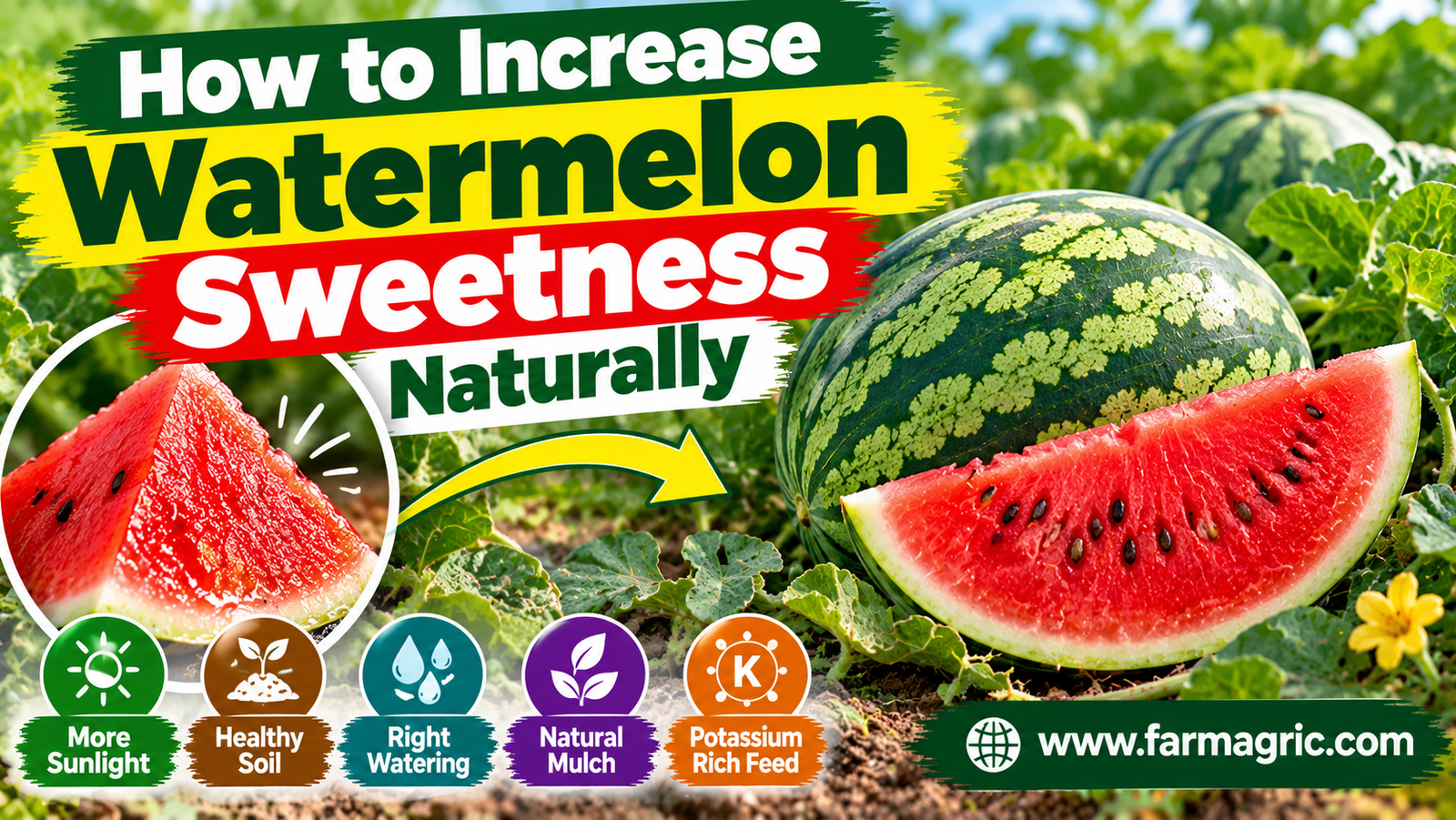
How to Increase Watermelon Sweetness Naturally
How to Increase Watermelon Sweetness Naturally
I once grew a field of watermelons that looked like a prize winner. Big, heavy, dark green, with a perfect yellow belly spot. The first one I cut open was pale, watery, and barely sweet. I had watered right up to the day I cut it, and I had cut it a week early because a buyer was waiting. A neighbor, whose melons were smaller and uglier, sold every fruit in two days because people came back for more. His secret was not a product. It was timing, water, and patience, all things that cost nothing.
Here is the plain answer. Watermelon sweetness comes from sugar the leaves make and the fruit stores in its last two to three weeks on the vine. To increase it naturally, you need healthy leaf cover to feed the fruit, plenty of sun and warmth, balanced feeding with enough potassium and not too much nitrogen, steady water that you reduce as the fruit ripens, a limited number of fruits per vine, and harvest at full ripeness, not a day early. A watermelon does not get sweeter after it is cut, so most of the work is done before harvest.
The short version of what I do is this. I plant in full sun on warm, well-drained soil, feed with compost and potassium, hold back nitrogen once fruits set, keep the vines healthy and covered with leaves, leave two or three fruits per vine, ease off the water in the last week or two, and cut only when the signs of ripeness are clear. The rest of this article explains each step and the mistakes that cost farmers sweetness.
What Most Farmers Get Wrong
The first mistake is cutting too early. A watermelon that is full size is not necessarily ripe. The sugar builds fastest at the end, so a fruit cut a week early can be a fraction as sweet. Buyers who hurry the farmer are paying for water.
The second mistake is watering heavily right before harvest. Lots of water in the last days dilutes the sugar and makes the flesh watery and bland. It can also split the fruit.
The third mistake is too much nitrogen. Heavy nitrogen gives huge, lush vines with a lot of leaf and fewer, less sweet fruit. Many farmers keep feeding nitrogen after the fruits form, which is exactly when the plant should be putting its energy into sugar.
The fourth mistake is leaving too many fruits on each vine. A vine can only make so much sugar. Spread across six fruits, that sugar is thin. Spread across two or three, each fruit is sweeter.
The fifth mistake is losing the leaves. Leaves make the sugar. Leaf diseases, pests, and sunburn that strip the vines before the fruit is ripe cost you sweetness directly.
The sixth mistake is the wrong variety. Some are bred for size and shipping, others for sugar. If sweetness is your selling point, choose a variety known for high sugar content.
The seventh mistake is growing in shade or cold. Watermelon needs hot, sunny weather to build sugar. A cloudy, cool ripening period gives bland fruit no matter what you do.
Choose a Sweet Variety
Variety sets the ceiling. Seed companies list sugar content, often as degrees Brix, and describe the flavor. Ask your seed dealer, extension office, or the farmers who sell at your market which varieties are known for sweetness and do well in your climate. Buy certified seed from a trusted source.
Smaller, early types are often sweeter than very large ones, because the plant has less fruit to fill. Seedless types can be very sweet but need warmth and careful handling, and they need a pollinizer variety planted nearby. Match the variety to your season, because a sweet variety planted at the wrong time will not reach its potential.
Warmth, Sun, and Planting Time
Watermelon is a hot-weather crop. Sugar builds best when days are warm and sunny, and nights are not too cold. Plant in full sun, and time the planting so the last three weeks of ripening fall in sunny, dry weather, not in the middle of the rains. Count back from the expected maturity date to find your window.
Plant on well-drained soil, ideally sandy loam, which warms quickly. Raised beds or ridges help in heavy soil. Black plastic mulch can warm the soil early in cooler areas, though in very hot climates, straw mulch is better to keep roots cool.
Soil and Feeding
Prepare the soil deeply and work in plenty of well-rotted compost or manure before planting. Aim for a soil pH of roughly 6.0 to 6.8. A basic soil test tells you what you need and saves money.
Feed in stages. Early in the plant’s life, give a balanced feed with moderate nitrogen to build a strong vine. Once flowers appear and fruits set, cut back nitrogen and shift toward potassium, which is strongly linked to sugar content, fruit quality, and firm flesh. Phosphorus supports root and early fruit development. Calcium and magnesium matter too, so a soil test is useful. Boron shortage can cause poor fruit set and misshapen fruit, so check local advice.
Apply fertilizer at the label rate, away from the stem, and water it in. Do not double the dose, because overfeeding burns roots and gives leafy, bland fruit. Compost and well-rotted manure improve how the plant takes up nutrients, which makes every feeding work harder.
Water: Steady, Then Ease Off
Watermelons need steady moisture while the vines grow and fruit sets. Check the soil by pushing a finger a knuckle deep. If it is dry, water slowly and deeply. Drip irrigation is excellent because it keeps the leaves dry and delivers steady water at the root. Mulch to hold moisture and keep fruit off bare soil.
As the fruits reach full size and begin to ripen, reduce watering, and stop or cut back sharply about a week to ten days before harvest. This concentrates the sugar and improves flavor. Do not let the plant wilt badly or the field go bone dry, and avoid a heavy watering or heavy rain right before cutting, which dilutes the sugar and can split fruit. If rain is heavy and frequent at ripening, good drainage and raised beds protect quality.
Limit Fruit Per Vine
This habit makes a big difference in sweetness. Once fruits are set and growing, thin them so each vine carries two to three fruits for large types, or a few more for small-fruited types. Remove the misshapen, damaged, and late-set fruits, keeping the best-formed ones close to the base of the vine.
Fewer fruits means more sugar per fruit. It costs you count but gives you quality, and sweet melons sell faster and at better prices. Test this on a few vines first, so you can compare in your own field.
Protect the Leaves and Vines
Healthy leaves make sugar, so protect them. Scout twice a week for aphids, whiteflies, spider mites, and cucumber beetles, and for leaf diseases such as downy mildew, powdery mildew, and anthracnose. Treat early with products approved for watermelon in your area, following the label and the days to wait before harvest. Avoid overhead watering to reduce leaf disease. Keep the field weeded, since weeds compete for water and hide pests.
Do not remove leaves, and avoid walking on the vines or turning them roughly. Protect fruit from sunburn with leaf cover, straw, or light shade in extreme heat. Rotate watermelon with cereals or legumes, and avoid planting after cucumbers, melons, or pumpkins in the same ground for at least three years, since they share diseases.
Make sure pollination goes well. Poorly pollinated fruit is small and often less sweet. Bees do the work, so avoid spraying while flowers are open, and spray in the evening if you must.
Harvest at Full Ripeness
Since the fruit does not sweeten after cutting, harvest timing is critical. Use several signs together, not one.
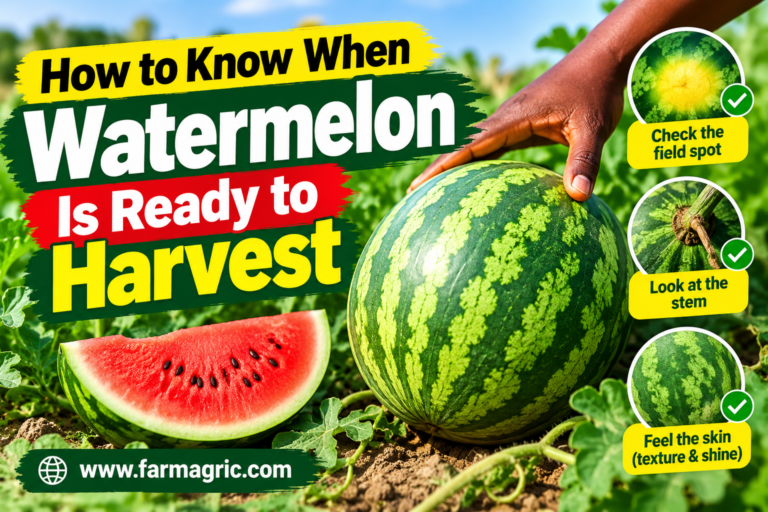
Look at the tendril. The small curly tendril on the stem nearest the fruit turns brown and dries when the melon is ripe. Look at the ground spot, the patch where the fruit rests on the soil. It turns from white or pale green to a creamy yellow. Check the skin, which loses its shine and turns dull, and feels slightly rough when scratched with a fingernail. Tap the fruit, and a ripe melon gives a deep, hollow sound, while an unripe one sounds high and tight. Count the days from pollination or planting against the variety’s maturity range, as a rough guide.
Cut the stem with a sharp knife, leaving a short piece of stem on the fruit. Harvest in the cool of the morning, handle gently, and keep fruit in the shade. If you can, cut and taste one fruit from each batch before you pick the field, since your own tongue is the best test.
Step-by-Step Practical Plan
If I were planning your next crop, it would run like this.
Choose a sweet, well-adapted variety and buy certified seed.
Plant in full sun on warm, well-drained soil, timed so ripening falls in sunny, dry weather.
Prepare the soil with compost, check pH, and set up drip irrigation and mulch.
Feed a balanced fertilizer early, then cut nitrogen and increase potassium once fruits set.
Keep the water steady during growth, and protect leaves from pests and disease.
Thin fruits to two or three per vine for large types.
Ease off the water about a week to ten days before harvest.
Check the tendril, ground spot, skin, and sound, and taste a sample.
Harvest ripe fruit in the cool morning with a sharp knife.
Record variety, feeding, fruit load, and sweetness so you can improve next season.
Warning Signs to Watch For
Learn to catch the problem early. Huge, dark green, leafy vines with few fruits mean too much nitrogen. Yellowing, spotted, or dying leaves before the fruit is ripe mean lost sugar. Splitting fruit after heavy water or rain shows overwatering at ripening. Pale, watery flesh in test cuts suggests early harvest or too much water. Many small fruits on one vine will be less sweet. Cool, cloudy weather during ripening will hurt sugar no matter what you do.
If you see any of these, act that week, not next month.
What I Would Do Differently If Starting Again Today
If I were starting fresh, I would choose a variety for sweetness first and size second. I would plant so that the last three weeks fell in the sunniest part of the season, and I would thin to two or three fruits per vine without exception. I would put in drip irrigation and mulch before planting, and I would cut the water back before harvest even when the plants looked thirsty. I would taste a fruit from every batch before picking the field, and I would keep a notebook of planting dates, feeding, and harvest dates, because patterns show up on paper that memory never catches.
I would also stop letting buyers set my harvest date. A sweet melon sells itself, and one cut early costs you the customer.
FAQ
How can I make my watermelon sweeter?
Choose a sweet variety, give it full sun and warmth, feed with compost and potassium, cut back nitrogen once fruits set, thin to two or three fruits per vine, ease off water before harvest, and cut only fully ripe fruit.
Does fertilizer make watermelon sweeter?
Potassium supports sugar and fruit quality, while too much nitrogen gives leafy vines and bland fruit. Use balanced feeding guided by a soil test, and avoid overfeeding.
Does watering less make watermelons sweeter?
Easing off water in the last week or two before harvest concentrates the sugar. Keep water steady earlier in the season, and do not let the plants wilt badly.
Do watermelons get sweeter after picking?
No. Unlike some fruits, watermelon does not build sugar after it is cut. It must ripen fully on the vine.
How do I know a watermelon is ripe and sweet?
The tendril nearest the fruit turns brown and dry, the ground spot turns creamy yellow, the skin looks dull, and the fruit sounds hollow when tapped. Tasting a sample is the surest check.
The Advice Worth Bookmarking
Sugar is made by the leaves and stored in the last weeks. Keep the vines healthy, ease off the water, and never cut a melon early.