How to Fix Poor Pod Filling in Groundnut
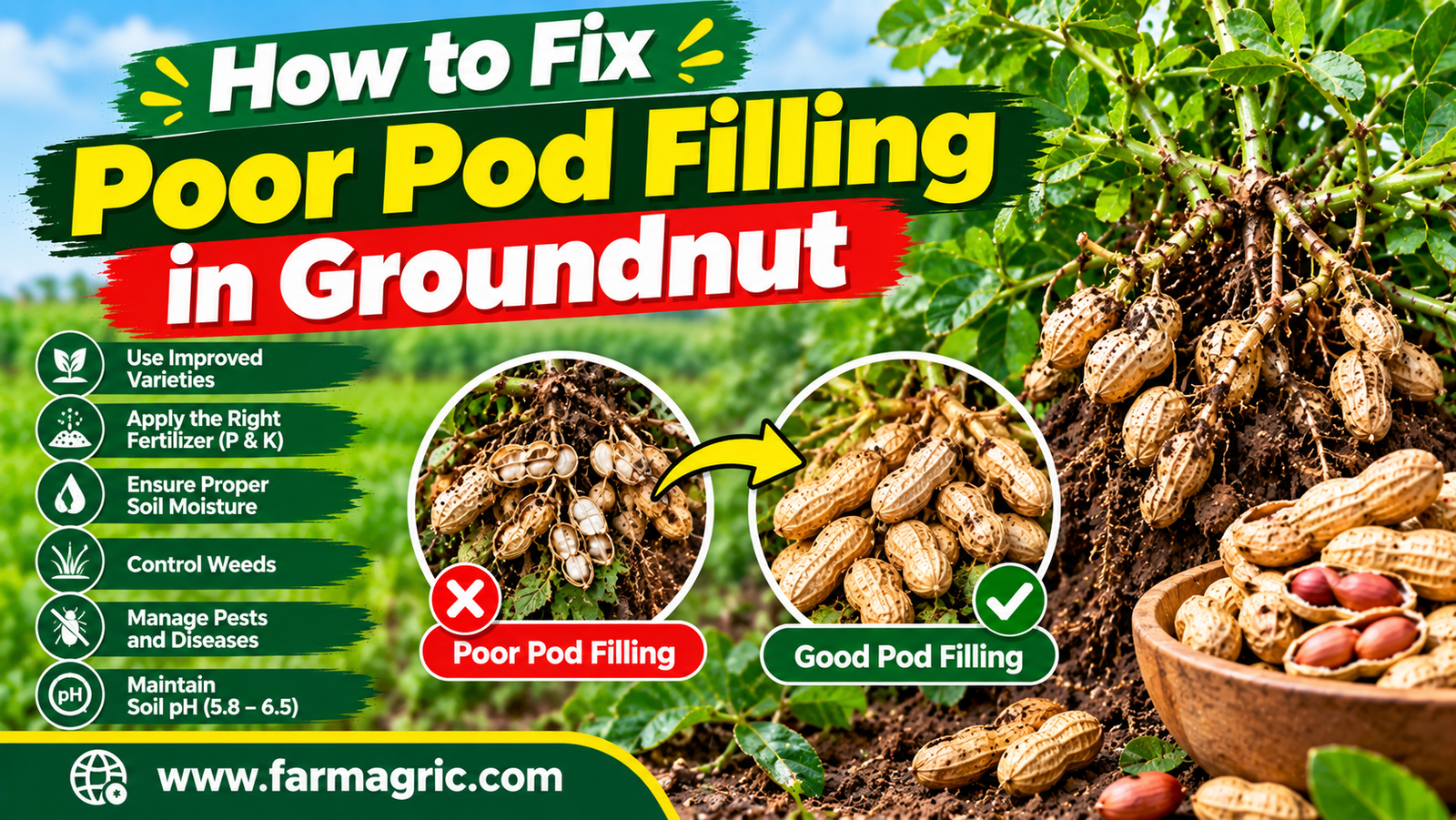
A test plant that produces numerous pegs but relatively few actual pods, with many pegs seemingly failing to develop into anything substantial, often points toward either poor peg penetration from compacted or crusted soil, or calcium deficiency specifically limiting pod formation at the peg tip despite successful penetration. Pods that are present in reasonable numbers but feel notably light and flat, with thin or poorly developed seeds when cracked open, suggest that pods formed successfully but then failed to fill properly, pointing more toward calcium availability or moisture stress during the filling period itself rather than a peg penetration problem. Hard, crusted soil visible around the base of plants, particularly following a pattern of heavy rain followed by hot, drying weather without any cultivation in between, signals a physical barrier likely limiting peg penetration regardless of how good the underlying fertility might be. Unusually lush, dark green, vigorous leafy growth paired with disappointing pod numbers suggests a nitrogen imbalance keeping the plant oriented toward vegetative growth rather than reproductive development. And a pattern of worse pod filling in sections of a field known to be drier or more exposed during the flowering and pegging weeks, compared to sections with more reliable moisture during that same window, points clearly toward moisture stress as the limiting factor in those specific areas.
Why does my groundnut plant look healthy above ground but produce poor pods underneath? This disconnect happens because groundnut forms and fills its pods through a unique underground process involving pegs that grow down from the flower, and this process depends heavily on conditions in a very specific shallow soil zone, particularly calcium availability and moisture, that have little direct connection to how healthy the leaves and stems appear above ground.
Does groundnut really need calcium applied separately from general fertilizer? Yes, because the developing pod absorbs calcium directly from the immediate surrounding soil in the pegging zone rather than relying on calcium transported from deeper in the root system, a calcium application timed and placed specifically for this shallow zone, often through surface-applied gypsum around early flowering, addresses a need that general fertilizer or deep soil calcium often does not reach effectively.
What is the most critical time for watering groundnut to ensure good pod filling? The flowering and pegging period, generally beginning several weeks after planting and continuing through early pod development, is considerably more sensitive to moisture stress than groundnut’s overall drought-tolerant reputation might suggest, making this window the top priority for any available irrigation capacity during the season.
Can compacted or crusted soil really stop groundnut pegs from forming pods? Yes, since the peg must physically penetrate the soil surface to reach the point where pod formation occurs, hard, crusted, or compacted soil in that shallow zone can prevent pegs from entering the ground successfully at all, regardless of how favorable the fertility and moisture conditions might otherwise be.
Does too much nitrogen fertilizer hurt groundnut pod development? Yes, since groundnut is a legume capable of producing much of its own nitrogen through its relationship with soil bacteria, excess nitrogen fertilizer often pushes the plant toward vigorous leafy growth at the expense of flower and pod development, making a more restrained nitrogen approach generally more appropriate for this crop than for many non-legume crops.
If there is one thing I want you to remember from all this, it is that groundnut hides its real story in a few centimeters of soil that most farmers never think to examine closely, right where the peg meets the ground, so dig a test plant partway through the season, check that shallow pegging zone for calcium and moisture, and keep that soil surface loose enough for every peg to actually reach the depth it needs, because the plant that looks proudest above ground is sometimes quietly failing at the one underground job you actually planted it to do.