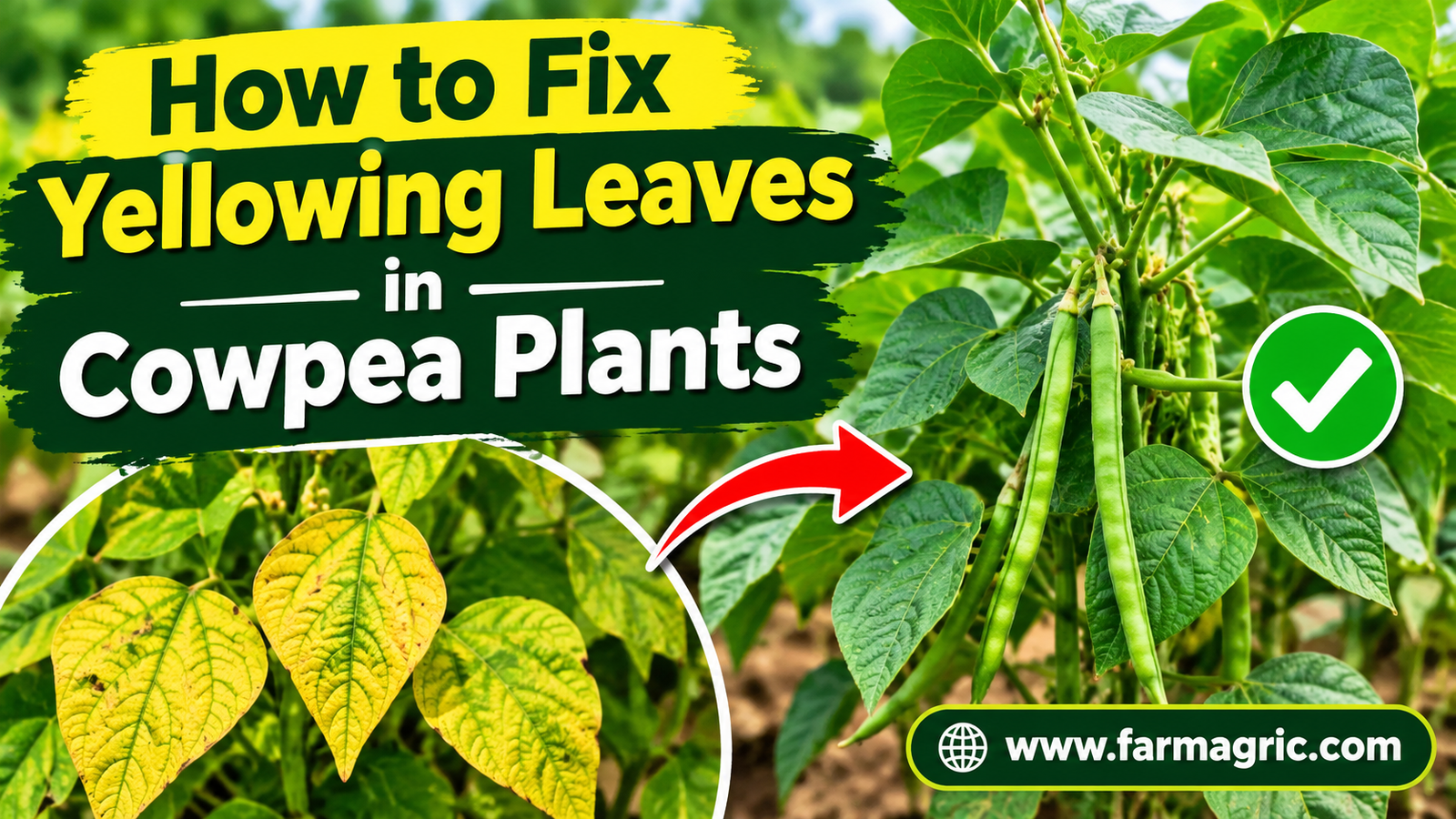
How to Fix Yellowing Leaves in Cowpea Plants
How to Fix Yellowing Leaves in Cowpea Plants
A farmer once phoned me in a panic and said, “My cowpea is turning yellow, I have already put urea twice, and it is getting worse.” I asked him one question: “Did you dig up a plant and look at the roots?” He had not. When he did, the roots were brown and soft, and the soil around them was soaked. The urea had never been the answer. Waterlogging was killing the roots, and the yellow leaves were only the plant crying out about it.
I have grown cowpea for over thirty years, and I have been that farmer too. In my early seasons I treated every yellow leaf the same way, with fertiliser. It worked about one time in five. Yellow leaves are a symptom, and the same symptom can come from at least eight different causes. Before you fix anything, you need to know which one you are dealing with. This is how I read the field.
The short answer
Cowpea leaves turn yellow for these main reasons: waterlogged or compacted soil, root rot and other soil diseases, nutrient shortages (nitrogen, phosphorus, potassium, iron, sulphur or zinc), poor nodulation, virus diseases carried by aphids and whiteflies, sap sucking pests, drought stress, and natural ageing of the lower leaves. To fix it, first look at where the yellowing starts (old leaves or new leaves) and what pattern it takes (whole leaf, between the veins, patches or mottling), dig up a plant to check the roots and nodules, and then treat the real cause. Fertiliser is the right answer only some of the time, and it can make some of these problems worse.
What most farmers get wrong
I made every one of these mistakes, so I say this as a friend.
They pour nitrogen on every yellow cowpea. Cowpea makes most of its own nitrogen through the bacteria in its root nodules. If the plant is yellow because the roots are rotting, or because of a virus, urea does nothing and wastes money. If the problem is poor nodulation, heavy nitrogen can make the nodules even lazier.
They only look at the leaves. Most yellowing starts below the ground. Farmers who never dig up a plant are guessing.
They ignore the weather and the soil. A week of heavy rain or a stretch of drought can turn a healthy field pale. Sometimes the right fix is patience and better drainage, not a sack of fertiliser.
They confuse normal ageing with disease. The lowest, oldest leaves of a mature cowpea plant turn yellow and drop as the plant moves its food into the pods. That is natural and no cause for worry.
They spray before they know the cause. A fungicide will not cure a nutrient shortage, and a fertiliser will not cure a virus.
Read the yellowing: what the pattern tells you
The way a leaf turns yellow often points straight to the cause. Before I touch anything, I check three things: which leaves are affected, what the pattern looks like, and how the yellowing is spread across the field.
If the yellowing begins on the oldest, lowest leaves and moves upward, the plant is usually short of a nutrient it can move around, such as nitrogen, phosphorus, potassium or magnesium. The plant robs the old leaves to feed the new growth.
If the yellowing shows first on the youngest, topmost leaves, the shortage is usually an element the plant cannot move once it is in the leaf, such as iron, sulphur, zinc or calcium.
If the leaves are yellow between the veins but the veins stay green, that points to iron, magnesium or zinc trouble, often caused by soil that is too alkaline or too acid.
If the leaf is mottled, with patches of light and dark green or yellow, crinkled or curled, think virus, often with aphids or whiteflies around.
If the whole plant is pale and wilting in patches, and the soil is wet, think root rot or waterlogging.
If the yellowing follows a clear pattern in the field, such as a low corner, a compacted path or a section that had manure, the cause is probably the soil and not a disease.
The real causes, one by one
Waterlogging and poor drainage
This is the most common cause I meet. Cowpea roots need air. When soil stays soaked for more than a day or two, the roots suffocate, stop taking up nutrients, and the leaves turn pale yellow, starting from the bottom. The plants may wilt even though the soil is wet. The yellowing usually appears in low spots, in heavy clay, and after prolonged rain.
Root rot and soil diseases
Fungi such as Pythium, Rhizoctonia and Fusarium attack the roots and stem base. The plant yellows, stunts and wilts, often in patches that slowly spread. When you pull one up, the roots are brown or black, soft and sometimes smelly, and the stem near the soil line may be dark or sunken.
Nitrogen shortage and poor nodulation
Cowpea needs very little added nitrogen when its nodules work well. When they do not, the older leaves turn a uniform pale yellow and the plant looks stunted. This is common on very poor, sandy, acidic or compacted soils, and in fields where cowpea has never been grown. Healthy nodules are pink or reddish when you cut them open. White, green or grey nodules, or no nodules at all, mean the nitrogen factory is not working.
Phosphorus and potassium shortage
Low phosphorus gives small, dull, dark green or bluish plants with a purplish tint, and later yellow lower leaves, weak roots and poor flowering. Low potassium shows as yellowing and browning along the edges and tips of the older leaves, with weak stems and poor pod fill, especially on sandy soils.
Iron, sulphur, zinc and other minor nutrients
Iron shortage causes yellow young leaves with green veins, often in alkaline or very wet soils. Sulphur shortage turns whole young leaves pale yellow. Zinc shortage causes pale, small, bronze tinged leaves. These are less common than the others, and a soil test is the safest way to confirm them.
Soil that is too acid or too alkaline
Very acid soil locks up some nutrients and harms the nodule bacteria, while very alkaline soil locks up iron and zinc. Either way, the plants turn pale and weak even when the nutrients are in the ground.
Virus diseases
Cowpea mosaic and similar viruses cause mottled, crinkled, puckered or curled leaves with light and dark green patches, and the plants stay small and yield very little. Viruses are spread by aphids, whiteflies, beetles and sometimes through infected seed. There is no cure once the plant is infected.
Sap sucking pests
Aphids, whiteflies, jassids (leafhoppers) and mites suck sap from the leaves and weaken the plants. Leaves turn yellow, curl, and may be sticky or covered with black sooty mould. Heavy attacks stunt young plants and carry viruses from plant to plant.
Drought and heat stress
When the soil dries out, cowpea sheds its lower leaves to save water, and the leaves yellow and fall. A mild bit of this is normal, but heavy yellowing during flowering and pod fill costs yield.
Natural ageing
As pods fill and mature, the plant recycles nutrients out of the oldest leaves. They yellow and drop. If only the lowest leaves are affected and the rest of the plant is healthy and loaded with pods, leave it alone.
Step by step: how I diagnose and fix it
Step 1: Walk the field and map the pattern
Go early in the morning, when the leaves are not stressed by heat. Note whether the yellowing is everywhere or only in patches, in low spots or on high ground, along the edges or in the middle. Patches that follow the slope of the land often point to water. A uniform pale field often points to nutrition. Scattered mottled plants often point to virus.
Step 2: Dig up the plant, do not pull it
Use a hoe or a trowel to lift three or four plants from different spots, with plenty of soil, so the roots are not torn off. Compare a yellow plant with a healthy one next to it. Check the roots first. Healthy roots are white or cream and firm. Brown, black, soft or rotting roots point to waterlogging or root disease. Then cut open a few nodules. Pink or red inside means working. White, green or grey means weak or dead.
Step 3: Check the leaves and growing tips closely
Look at the undersides of the leaves and at the tips. Aphids, whiteflies and mites hide there. Check for curling, crinkling, sticky honeydew and sooty mould. Mottled, crinkled leaves on small plants, with insects nearby, point to virus.
Step 4: Fix waterlogging and drainage
If the soil is wet and the roots are suffocating, drain the field. Open furrows and channels to carry the water away, break up any hard, compacted layer between rows with a light, shallow hoe, and stop any irrigation. For the next planting, use ridges or raised beds so water drains away from the roots. Plants that are only mildly affected often recover within a week or two once the soil drains.
Step 5: Handle root rot
If the roots are rotting, remove badly affected plants, roots and all, and carry them out of the field to burn or bury them. Do not compost them, and wash your tools before moving to healthy plants. Improve drainage, avoid wounding the roots when weeding, and avoid watering more. Next season, rotate with a cereal for two to three seasons, use certified seed, and plant on ridges. Where seed dressing is advised in your area, use a registered product on the label.
Step 6: Correct nutrient problems
If a nutrient shortage is the cause, correct the right one. For pale, stunted plants with weak roots and poor flowering, a phosphorus source such as single super phosphate, banded near the roots, helps. For leaf edge yellowing and browning on sandy soil, a potassium source such as muriate of potash helps. For yellow young leaves with green veins, ask your extension office about iron or other micronutrients, because a soil test avoids guessing. A foliar spray with a suitable micronutrient fertiliser can give a quick response while you fix the soil. Always use the rate on the label, and never apply fertiliser on dry leaves in the midday sun.
Avoid heavy nitrogen unless a soil test or your extension officer says the soil is truly very poor. A very small starter dose at planting is the most I would ever consider.
Step 7: Improve nodulation
If the nodules are poor, work on the soil and the bacteria. Add well rotted compost before planting, make sure phosphorus is adequate, and correct acid soil with lime based on a soil test. In a field that has never grown cowpea or other legumes, a registered rhizobium inoculant applied to the seed helps the nodules form. Check the nodules again about four to five weeks after planting.
Step 8: Control the aphids, whiteflies and other sap suckers
Scout the growing tips and leaf undersides twice a week. For light infestations, a neem seed extract or a soap and water spray, applied in the early morning or evening and covering the undersides of the leaves, often works. Encourage ladybirds, lacewings and wasps by avoiding broad spectrum sprays. For heavy infestations, use a product registered for cowpea in your country, follow the label for dose, timing and waiting period, and rotate products where possible.
Step 9: Deal with virus
You cannot cure a virus infected plant. Rogue out, meaning remove and destroy, any plants that show clear mottling, crinkling and severe stunting early in the season, before the virus spreads. Control the aphids and whiteflies that carry it, weed the field and its edges, and avoid planting next to an old, infected bean field. Use certified, clean seed, because some viruses pass through seed, and choose varieties with some virus tolerance where they are available.
Step 10: Manage water in dry spells
If drought is stressing the crop, water lightly and regularly through flowering and pod fill where you can irrigate, and mulch between the rows with dry grass or crop residue to hold moisture and keep the soil cool. Do not flood the field. Steady moisture is better than swings between dry and soaked.
Step 11: Recheck in a week
After you correct the cause, give the plants a week or two. New growth should come in green and healthy. Old yellow leaves will not turn green again, so judge the plant by its new leaves and not the damaged ones.
When yellowing is nothing to worry about
Do not rush to treat a field that does not need it. If the lowest leaves on mature plants yellow and drop as the pods fill, and the upper plant is green, flowering and carrying healthy pods, that is the plant doing its normal job. If the yellowing appears at the end of the season as the crop approaches maturity, it is a sign the harvest is close.
Warning signs to act on quickly
Act fast if you see yellowing on young seedlings, because root rot and damping off move quickly in the first few weeks. Act fast if the yellowing spreads from patches to wider areas in a few days, or if plants wilt and collapse in a patch while the soil is wet. Also act quickly on mottled, crinkled leaves with insects present, because every day you wait lets the pests carry the virus to more plants.
What I would do differently if I started again today
If I were starting my first cowpea crop again, I would never reach for the urea sack at the first yellow leaf. I would stop, dig up a plant, and look at the roots.
I would plant on ridges in any field that holds water, and I would clear the drains before the rains.
I would do a soil test once and learn exactly what my soil lacks, instead of guessing every season.
I would buy certified seed and rotate with maize or sorghum, so root rot and viruses had less to build on.
And I would write down what I saw, what I did and what happened. After a few seasons, my notes would let me read a yellow leaf in seconds.
Frequently asked questions
Why are my cowpea leaves turning yellow?
The common causes are waterlogged soil, root rot, nutrient shortages, poor nodulation, virus diseases, sap sucking pests and drought. Check which leaves are affected, look at the pattern, and dig up a plant to examine the roots and nodules before you treat.
Should I apply nitrogen fertiliser to yellow cowpea?
Usually not. Cowpea fixes its own nitrogen through root nodules, and the yellowing is more often caused by waterlogging, root disease, other nutrient shortages or virus. Heavy nitrogen can also reduce flowering and nodulation.
Can yellow cowpea leaves turn green again?
Leaves that have turned fully yellow rarely regain their colour. If you fix the cause, new growth should come in green, so judge your success by the new leaves.
Are yellow lower leaves on cowpea normal?
Yes, in mature plants. As pods fill, the plant moves nutrients out of the oldest leaves, which yellow and drop. If the rest of the plant is healthy and loaded with pods, there is no need to treat it.
How do I tell virus from nutrient deficiency in cowpea?
Nutrient deficiency usually shows a regular pattern across many plants, such as yellowing of the older leaves or between the veins, and responds to correction. Virus shows as irregular light and dark mottling, crinkling or curling on scattered plants, often with stunting and insects nearby, and does not respond to fertiliser.
The one thing to bookmark
A yellow leaf is a message, not a diagnosis, so dig up the plant, read the roots, and treat the cause instead of the colour.