How to Fix Plantain Plants That Are Not Fruiting
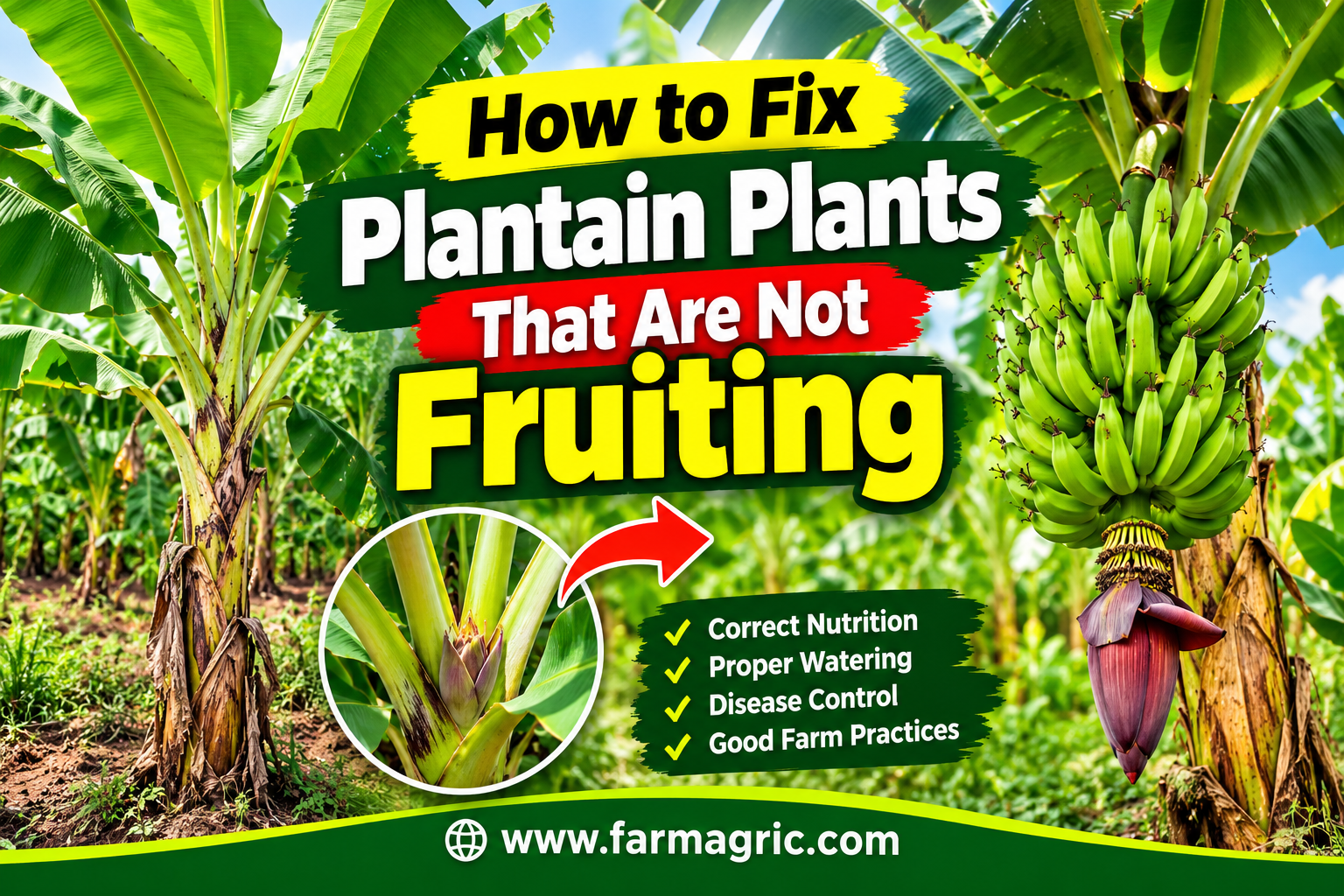
A mat crowded with numerous suckers of similar size and age, none of which show any sign of the thicker pseudostem typically associated with an approaching flowering stage, strongly suggests overcrowding is preventing any individual stem from accumulating the resources needed to transition toward fruiting. Pale or yellowing leaves combined with an otherwise mature-looking mat points toward a nutrient deficiency, particularly potassium, limiting the plant’s ability to support bunch development even as it continues producing vegetative growth. Visible wilting or leaf curling during a dry stretch, particularly in a mat that has reached what should be flowering age, signals that moisture stress may be interrupting or delaying the flowering transition at exactly the stage when the plant is most vulnerable to this kind of stress. Standing water or visibly compacted, hard soil around the base of a mat that is otherwise mature but not fruiting points toward a root restriction problem limiting the plant’s overall capacity regardless of what is happening above ground. And a mat where even the oldest, most established stem shows no sign of flowering well beyond the fifteen-month mark from planting or sucker emergence, despite reasonable management in other respects, deserves closer investigation into variety suitability or a more fundamental soil fertility issue rather than simply continuing to wait.
What I’d Do Differently If Starting Again Today
If I were starting over, I would commit to deliberate sucker thinning as a standard, ongoing practice from the very first season rather than letting every new sucker remain simply because removing healthy-looking growth felt wasteful, since that proud but unproductive mat taught me directly how much that reluctance was actually costing me in fruiting potential across the whole stand. I would pay far more specific attention to potassium in my fertilizer program rather than assuming a general feeding approach was automatically adequate for a crop with demands as particular as plantain’s turned out to be. I would prioritize water availability during the approach to flowering far more deliberately, understanding now how sensitive this specific window actually is compared to the plant’s overall tolerance for dry conditions at other stages. And I would check soil drainage and structure around my plantain mats earlier and more carefully, rather than assuming a crop with as substantial a root system as plantain’s would automatically handle whatever soil conditions I happened to plant it into without any real consequence to its eventual fruiting.
Frequently Asked Questions About Plantain Plants Not Fruiting
How many suckers should I leave on a plantain mat for good fruiting? Most recommendations suggest keeping around three to four stems per mat at staggered maturity stages, typically a mother plant, a follower sucker, and one or two younger suckers coming along behind, rather than allowing every emerging sucker to remain and compete for the same limited resources.
How long does it take for a plantain plant to start fruiting? Under generally good conditions, plantain typically takes somewhere between ten and fifteen months from planting or sucker emergence to flowering, so a mat that has not yet reached this age may simply need more time rather than any specific correction, while one well beyond this window without flowering likely has a correctable underlying issue.
Why does my plantain mat look healthy and green but never produces a bunch? This is most often caused by overcrowding from too many suckers competing for the same resources, preventing any individual stem from accumulating enough stored energy and nutrients to make the transition into flowering, even though the overall mat continues to look vigorous in its leaf growth.
Does potassium really matter that much for plantain fruiting specifically? Yes, plantain has a notably high demand for potassium during flowering and bunch development compared to many other common crops, and a fertilizer program that does not specifically account for this nutrient, even if nitrogen and general feeding seem adequate, can leave the plant without enough potassium to successfully support fruit development.
Can drought really stop a mature plantain plant from flowering? Yes, moisture stress occurring specifically as a mature sucker approaches its expected flowering stage can meaningfully delay or disrupt that transition, making this a more sensitive period for water availability than plantain’s generally resilient reputation might otherwise suggest to a farmer managing the crop.
If there is one thing I want you to remember from all this, it is that a plantain mat crowded with green, healthy-looking suckers is not necessarily a mat on its way to bearing fruit, so count your stems honestly, thin without hesitation, feed the potassium this crop specifically needs, and protect it through the dry stretches that matter most, because the proud, leafy stand that once fooled me into thinking patience alone would be enough taught me that a plantain mat left to manage itself very often settles into exactly the kind of crowded, competing pattern that keeps it from ever doing the one thing you actually planted it to do.