Rice Price in Nigeria Today: 50kg Bag, 25kg and Paddy Prices
Rice Price in Nigeria Today: 50kg Bag, 25kg and Paddy Prices
Last updated: 2 October 2026. Prices below come from reports covering September 2026 unless a different date is shown.
A 50kg bag of rice in Lagos costs roughly ₦51,000 to ₦55,000 as of late September 2026, depending on whether it is local or imported and whether the grain is long or short. That is well below the ₦70,000 that imported long-grain rice fetched in January. Prices outside Lagos can be higher, and the price a farmer gets for paddy is a very different figure from the price a shopper pays for milled rice.
Current Price
The Lagos State Ministry of Agriculture and Food Systems price tracker for September 2026 lists imported long-grain rice at ₦53,000 per 50kg and imported short-grain at ₦51,000 per 50kg, with 25kg bags at ₦26,500 and ₦25,500.
Legit.ng’s report on September prices put Nigerian-manufactured rice at ₦53,000 per 50kg, imported long-grain at ₦55,000 and imported short-grain at ₦51,000. The small gap between the ₦53,000 and ₦55,000 figures for imported long-grain is normal. It comes from the date the price was collected and the brand and market surveyed.
The direction of travel matters as much as the number. Imported long-grain rice fell about 21 percent between January and September 2026, while the August to September change was small, with local rice and short-grain unchanged and long-grain down ₦1,500. The market looks like it is levelling off after a long slide.
Price Table
Milled rice, Lagos, September 2026
| Product | Unit | Price | Location | Date/Period |
|---|---|---|---|---|
| Nigerian-manufactured rice | 50kg bag | ₦53,000 | Lagos | September 2026 |
| Imported long-grain rice | 50kg bag | ₦53,000 to ₦55,000 | Lagos | September 2026 |
| Imported short-grain rice | 50kg bag | ₦51,000 | Lagos | September 2026 |
| Nigerian-manufactured rice | 25kg bag | ₦26,500 | Lagos | September 2026 |
| Imported long-grain rice | 25kg bag | ₦26,500 to ₦27,500 | Lagos | September 2026 |
| Imported short-grain rice | 25kg bag | ₦25,500 | Lagos | September 2026 |
Small retail measures, September 2026 (per-kg figures are our own calculation from the reported prices)
| Product | Unit | Price | Approx. price per kg |
|---|---|---|---|
| Local rice | 1 paint (4.15kg) | ₦4,500 | ₦1,084 |
| Imported long-grain | 1 paint (4.15kg) | ₦4,600 | ₦1,108 |
| Imported short-grain | 1 paint (4.15kg) | ₦4,200 | ₦1,012 |
| Local rice | 1 derica (0.75kg) | ₦1,000 | ₦1,333 |
| Imported long-grain | 1 derica (0.75kg) | ₦1,300 | ₦1,733 |
| Imported short-grain | 1 derica (0.75kg) | ₦800 | ₦1,067 |
Paddy (farm gate and mill gate)
| Product | Unit | Price | Location | Date/Period |
|---|---|---|---|---|
| Paddy rice | per tonne | ₦350,800 | National average | April 2026 |
| Paddy rice (2025 peak, for comparison) | per tonne | ₦720,000 | National average | 2025 |
We could not find a verified paddy price dated later than April 2026, so treat the paddy figure as a recent reference point and not a current quote. Check with a mill or aggregator in your area before agreeing to a sale.
What Affects the Price?
Import policy. The 2026 fiscal measures cut the import duty on bulk rice to 47.5 percent from 70 percent. Dealers have linked the flood of cheaper imported grain to that cut, and it is one of the main reasons shelf prices fell.
Supply and smuggling. A policy brief from the Development Agenda for Western Nigeria Commission blames unchecked smuggling, higher energy costs and insecurity in farming areas, alongside the tariff cut, for pressure on paddy prices and on milling.
Exchange rate. Imported rice and the cost of moving goods both respond to the naira. Traders surveyed in May 2026 pointed to relative stability in the foreign exchange market as one reason prices had eased.
Transport and distribution. The further a bag travels from a mill or port, the more it costs. Fuel, road conditions and the number of middlemen all add to the final price.
Grain type, brand and milling quality. Long-grain parboiled, stone-free premium brands, Ofada rice and basmati sit in different price bands. A 50kg bag is not a single product.
Season. In most years, prices are firmest in the lean months before harvest and softer when new paddy reaches the market, which is generally from October onward. With the market already weak, this year’s harvest is worth watching.
Wholesale vs Retail Price
Buying by the bag is cheaper per kilogram than buying by the cup, and the gap is bigger than many people expect.
At the September 2026 prices above, a 50kg bag of local rice works out to about ₦1,060 per kg. A paint (4.15kg) is only slightly higher at about ₦1,084 per kg, but a derica (0.75kg) comes to about ₦1,333 per kg, roughly a quarter more. For imported long-grain, the derica works out to about ₦1,733 per kg against about ₦1,100 per kg by the bag.
Do not compare a bag price with a paint or derica price without converting to a common unit. A paint is about 4.15kg and a derica is about 0.75kg, so ₦4,500 and ₦1,000 are not the same kind of price.
Rice Price Differences Across Nigeria Today 50kg Bag, 25kg and Paddy Prices
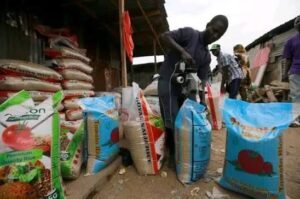
Price Differences Across Nigeria
There is no single national price. A Nairametrics market survey from the first week of May 2026 found a 50kg bag ranging from ₦53,000 to ₦82,000 depending on location, brand and transport costs.
| Location | Unit | Price range | Date/Period |
|---|---|---|---|
| Abuja | 50kg bag | ₦53,000 to ₦55,500 | May 2026 |
| Lagos | 50kg bag | ₦55,000 to ₦65,000 | May 2026 |
| Kaduna | 50kg bag | about ₦60,000 | May 2026 |
| Bauchi | 50kg bag | ₦60,000 to ₦61,500 | May 2026 |
Those are May figures. Lagos has since moved lower, as the September tracker shows. The same survey also noted that some North-East markets traded in the ₦80,000 to ₦90,000 range, because of supply disruptions and higher distribution costs. The South-South and South-East figures in that report mixed in 2025 data, so we have left them out until a clean 2026 reading is available.
Be careful with official average figures, too. The National Bureau of Statistics reported an average of ₦112,000 for a 50kg bag of local rice in March 2026, while a Vanguard market survey around the same time found about ₦60,000 in many markets. Different methods, markets and sampling produce very different headline numbers. For buying decisions, a recent price from your own market is more useful than a national average.
What Farmers Should Know
Paddy has fallen much harder than shelf prices. Paddy dropped 51 percent from its 2025 peak to about ₦350,800 per tonne by April 2026, leaving many farmers struggling to break even. Reports also suggest many growers cut back: fewer than 30 percent of Kebbi’s more than 500,000 farmers reportedly planted rice in the 2026 dry season.
Know your cost per tonne before you negotiate. Add seed, fertiliser, labour, harvesting, threshing, drying and transport. If the offer is below your cost, you can decide to store, sell part, or look for another buyer, but only if you know the number.
Mill capacity affects your options. The same policy brief says nearly 90 mills have shut down. Fewer mills means fewer buyers in some areas, so ask around early.
Quality earns a better price. Buyers pay for properly dried paddy (low moisture), clean grain free of stones and chaff, a uniform variety, and low broken-grain content. Dry on tarpaulin or concrete, not bare soil, and store off the ground.
Sell in groups where you can. Combining output through a cooperative or farmers’ association gives you volume, which gives you bargaining power and cheaper transport per tonne.
Watch the timing. Prices tend to be weakest right at harvest when everyone sells at once. If you can store safely and afford to wait, you may get more, but storage losses and borrowing costs can erase the gain.
What Buyers Should Know
Check the unit first. Confirm whether the quoted price is for 50kg, 25kg, a paint or a derica. Ask for the price per kg if you are unsure.
Local and imported rice are not interchangeable. Imported long-grain parboiled usually sits slightly above local rice and short-grain, but the gap is now only a few thousand naira per bag. Taste, cooking behaviour and stone content matter more than a small price difference.
Compare at least three sellers in the same market on the same day. Prices in the same market can differ by a few thousand naira per bag.
Inspect before you pay. Check the bag label and weight, the seal, grain uniformity, any smell of mould or damp, and whether there are stones or husks. Be careful with bags that look repackaged.
Beware of unrealistically low prices. If a price is far below what the Lagos tracker and trader surveys show, ask why. Short-weight bags, mixed grades and fake brand packaging are common tricks.
Buy in bulk if you can store it. Bag prices are cheaper per kilogram, but only if you have a dry, pest-free place to keep it.
Ask about delivery. A cheap ex-market price can disappear once transport is added, especially if you are far from Lagos, Abuja or the northern rice belt.
Where to Buy or Sell
For buyers: Large wholesale and distribution markets in cities such as Lagos (Mile 12 is a well-known hub), Abuja and Kaduna are the usual starting points. Authorised distributors of major brands and registered milling companies are better choices for large orders than unknown online sellers. Classified sites such as Jiji list many offers, but verify the seller and inspect goods before paying.
For farmers: Sell paddy to local mills, aggregators and processors in rice-growing states such as Kebbi, Kano, Niger and Benue. Cooperatives and farmer groups, including state chapters of the Rice Farmers Association of Nigeria (RIFAN), can help connect you with buyers, and the Rice Processors Association of Nigeria (RIPAN) represents millers who buy paddy. Commodity platforms and aggregators can also offer structured purchase and storage options, so ask what fees and grading standards apply.
For state-level price checks: The Lagos State Ministry of Agriculture and Food Systems publishes a monthly price tracker, and you can compare any quote against it.
Frequently Asked Questions
How much is a 50kg bag of rice in Nigeria today?
As of September 2026, a 50kg bag costs about ₦51,000 to ₦55,000 in Lagos depending on type. Prices elsewhere can be higher because of transport and supply conditions. Check a local market for the exact figure.
How much is a 25kg bag of rice?
In Lagos in September 2026, a 25kg bag was about ₦25,500 to ₦27,500, depending on whether it was local, imported long-grain or imported short-grain.
How much is a paint of rice?
A paint (about 4.15kg) was about ₦4,200 to ₦4,600 in September 2026, based on Legit.ng’s report. A derica (about 0.75kg) was about ₦800 to ₦1,300.
Is local rice cheaper than imported rice?
Slightly, in most cases. In September 2026, local 50kg rice was reported at ₦53,000 against ₦55,000 for imported long-grain, though imported short-grain was cheaper still at ₦51,000. The gap is small and varies by brand and market.
Why has the price of rice dropped in 2026?
Dealers and analysts point mainly to the cut in import duty, larger import volumes and a more stable exchange rate. Improved domestic supply has also played a part.
What is the price of paddy rice in Nigeria?
The most recent verified national figure we found is about ₦350,800 per tonne in April 2026, down from a 2025 peak of ₦720,000. Local prices vary by state, variety and quality.
Will rice prices go up again?
Nobody can say for certain. Lower paddy output, higher costs, or a weaker naira could push prices up, while heavy imports and a good harvest could keep them down. The September data suggest prices have levelled off for now.
Why do rice prices differ so much between states?
Distance from ports and milling areas, transport costs, security on supply routes and the number of middlemen all change the final price.
Prices are reported figures and market indications, not guarantees. Actual prices depend on location, season, quality, grade, quantity, supply, demand, transport and market conditions.