How to Stop Cabbage Heads From Splitting Before Harvest
How to Stop Cabbage Heads From Splitting Before Harvest
I once had a row of cabbages that were the best I had ever grown. Tight, heavy, blue-green heads, a week from cutting. Then three days of rain arrived after a dry spell, and on the fourth morning I walked out to find nearly half the heads burst open like overripe fruit. A week of waiting turned into a week of salvage. I cut what I could, sold it cheap, and promised myself I would never again let a ready crop sit and gamble with the weather.
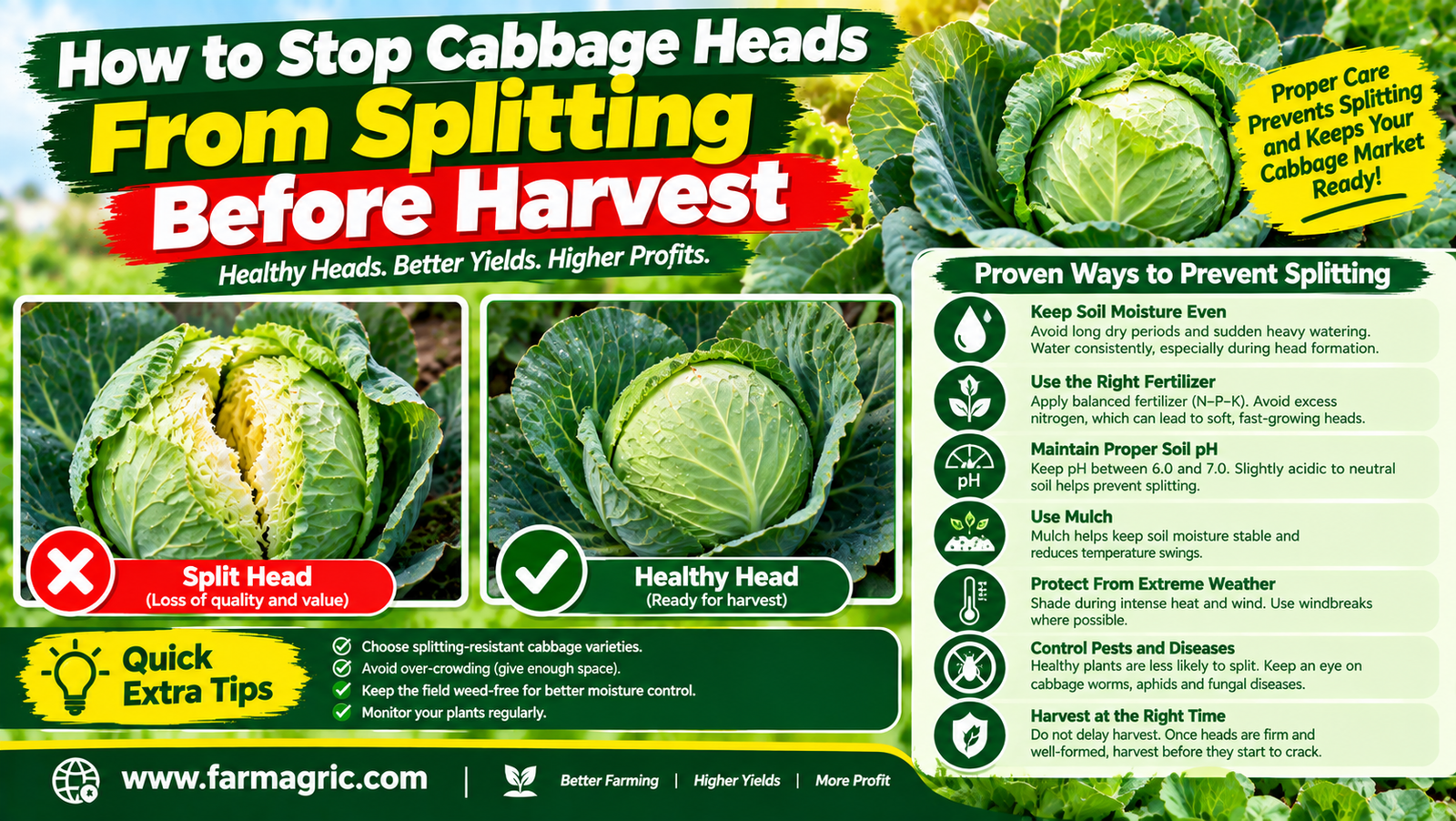
Here is the plain answer. Cabbage heads split when the plant takes up a rush of water after a dry period, or when the head is mature and keeps growing inside while the outer leaves can no longer stretch. The inside of the head swells faster than the wrapper leaves can expand, and the head cracks. You stop it by keeping soil moisture even, harvesting on time instead of leaving mature heads in the field, avoiding heavy late nitrogen, choosing split-resistant varieties, and, when a big rain is coming, twisting or cutting the roots to slow water uptake.
The short version of what I do is this. I pick a variety bred to hold its head, water steadily and mulch the rows, stop feeding nitrogen once the heads start to firm up, check the heads by squeezing them every few days as they mature, cut them promptly when firm, and give the plant a quarter turn to break some roots if a downpour is on the way. The rest of this article explains each step and the mistakes behind most splitting.
What Most Farmers Get Wrong
The first mistake is leaving mature heads standing. Farmers wait for a better price, a free day, or a bigger head. A cabbage that is ready and left in the field keeps pushing water into the head, and the longer it waits, the more likely it is to burst. A firm head is a finished head.
The second mistake is watering by mood. A dry spell followed by a heavy watering, or a drought broken by a big storm, is the classic setup for splitting. The plant drinks hard and the head swells too fast. Steady is better than generous.
The third mistake is feeding nitrogen late. Heavy nitrogen close to heading pushes fast, soft growth and a larger, looser head that is more likely to crack. Many farmers pile on a top dressing when they see the heads forming, thinking it will fatten them. It often splits them instead.
The fourth mistake is blaming disease. Split heads look alarming, and farmers reach for fungicide. Splitting itself is a physical problem, not an infection. Spraying does nothing, though rots can move into the cracks afterward, which is a separate issue.
The fifth mistake is planting the wrong variety. Some varieties, especially early, round types with very tight heads, split more readily. Others are bred to hold their heads in the field for weeks. Many farmers buy whatever seed is cheapest without asking about this.
The sixth mistake is ignoring the weather forecast. When a big rain is coming and the heads are ripe, you have a window to act. Most farmers just hope.
Why Cabbage Splits
A cabbage head is a tight bundle of leaves wrapped around a growing center. As long as the plant grows steadily, the outer leaves stretch to match the inside. When the plant takes up a lot of water quickly, the inner leaves swell faster than the outer leaves can give, and the pressure cracks the head, usually from the top down or from the center out.
That means the risk is highest in three situations: when heads are mature or nearly mature, when a sudden rain or heavy watering follows dry weather, and when the plant is overfed and growing fast. Anything that makes growth sudden raises the risk. Anything that keeps growth smooth lowers it.
Splitting is also worse in warm weather with fast growth, in rich soil, and in tightly packed, early-maturing varieties.
Choose the Right Variety
Variety is the first line of defense. Seed companies list split resistance or “field holding ability” in their descriptions, so ask for it when you buy. Varieties bred to stand in the field for a couple of weeks after maturity are a gift to any farmer who cannot harvest everything at once.
Pointed or flatter-headed types and those with a looser wrapper often handle heavy rain better than very round, extra-firm early types. Which varieties are available and suited to your area changes by country, so ask your extension office, local seed dealer, or the farmers who sell at your market what has held up in their fields. Buy certified seed, not unlabeled packets.
If you plant a lot of cabbage, stagger your plantings or use varieties with different maturity dates. That way not every head is ripe in the same week, and you are never forced to leave a field standing while you harvest another.
Water: Keep It Steady
This is the practice that makes the biggest difference. Cabbage wants regular, even moisture from transplanting to harvest, and the risk is greatest in the last two to three weeks before cutting.
Check the soil by pushing a finger a knuckle deep. If it is dry, water. If it is wet and sticky, wait. Water slowly and deeply rather than in quick, heavy floods, so the soil absorbs it evenly. Drip irrigation is excellent for cabbage, because it gives a steady trickle at the root without sudden surges.
Mulch the rows with straw, dry grass, or crop residue. Mulch keeps soil moisture even, so rain and watering do not swing the plant from thirsty to flooded. It also keeps roots cooler, which smooths growth.
In the final stretch before harvest, do not let the field go bone dry and then drench it. If the heads are nearly ready and you have the choice, ease off on watering slightly as maturity approaches, but never to the point of stress. Good drainage matters as well, so raised beds or ridges are a worthwhile investment where heavy rain is common.
Feeding: Do Not Overdo the Nitrogen
Cabbage is a hungry crop, but timing matters. Feed early, when the plant is building leaves and a good frame, using compost or manure worked into the soil before planting and a balanced fertilizer based on a soil test where possible. Apply nitrogen top dressings in the first weeks after transplanting, and finish them well before the heads begin to firm up.
Once the heads form, stop heavy nitrogen. Overfed plants grow too quickly, which is exactly what leads to splitting. Potassium and a balanced supply of other nutrients support firm, even growth, so a soil test is useful. Follow the label rates on any fertilizer and do not double up, because more is not better, and it can cost you the crop.
Harvest on Time
Check the heads every few days once they start to firm up. Squeeze gently with your hand. A head that is firm and solid, with little give, is ready. A soft or spongy head needs more time. Do not wait for the heads to become rock hard and oversized, since that is when splitting is most likely.
Cut with a sharp knife, leaving a few of the outer wrapper leaves on the head to protect it. Harvest in the cool of the morning, handle heads gently, and keep them shaded. If a heavy rain is forecast and your heads are firm, cut them before it arrives, even if you do not have a buyer lined up yet. A cut head keeps for days or weeks in a cool, shaded place, while a split head loses value immediately.
If you cannot harvest everything at once, cut the ripest heads first and leave the rest for later, and use the root-breaking trick below on those that must wait.
The Root-Breaking Trick
This is an old farmer’s habit that really works. When heads are mature and you cannot cut them right away, especially if heavy rain is coming, grip the head and give it a quarter turn or a firm twist in the ground. You should feel some of the roots snap. You can also lift the plant slightly to cut some roots with a spade pushed in a short distance from the stem.
By damaging part of the root system, you cut down the amount of water the plant can pull in, which slows head swelling. It buys you extra days in the field. Do not overdo it, because you want to reduce water uptake, not kill the plant. This is a delay tactic for mature heads only, not a substitute for good water management, and you should still harvest as soon as you can.
Spacing and Plant Health
Spacing affects head size and growth rate. Very wide spacing often gives larger, faster-growing heads that are more likely to split, while closer spacing slightly restrains head size. Follow the spacing recommended for your variety, which for many types is about 40 to 60 centimeters between plants and 60 to 75 centimeters between rows, adjusting for the variety’s size.
Keep the crop healthy. Control weeds, which compete for water and make soil moisture uneven. Scout for pests such as diamondback moth, aphids, and caterpillars, since damaged plants grow unevenly, and treat early with products approved for cabbage in your area, following the label and the waiting period before harvest.
What to Do With Split Heads
Do not throw them away immediately. If the split is fresh and clean, cut the head right away and use or sell it quickly, since it will not store well. Trim off any damaged or rotting leaves. Split heads are more likely to rot because moisture and bacteria get inside the crack, so harvest them early, keep them cool, and sell or eat them first. Do not store split heads with sound ones.
If rot is already setting in, remove the head and bury or compost it away from the field, so it does not spread disease to neighbors.
Step-by-Step Practical Plan
If I were planning your next crop, it would run like this.
Choose a variety with good field holding ability, and stagger the plantings so heads do not all mature at once.
Prepare well-drained, fertile soil with compost, and use raised beds if heavy rains are common.
Transplant at the recommended spacing, and mulch the rows.
Feed with nitrogen early, and stop heavy top dressing before the heads begin to firm.
Water steadily using the knuckle test, ideally with drip, and avoid the swing between dry and flooded.
Squeeze the heads every few days once they start to firm up.
Cut firm heads promptly, leaving a few wrapper leaves on.
If rain is coming and heads are mature, harvest what you can, and twist or root-prune the rest.
Sell or use split heads quickly, and keep them separate from sound ones.
Warning Signs to Watch For
Learn to read the field before it cracks. Heads that feel rock hard and look overfull are near the limit. A forecast of heavy rain after a dry spell is the biggest trigger. Small hairline cracks on the top of the head or a slight bulge in the center are early signs that the head is under pressure. Very fast, lush growth after heavy feeding is a risk. Heads that are mature but still in the field after a week or two are overdue.
If you see any of these, act that week, not next month.
What I Would Do Differently If Starting Again Today
If I were starting fresh, I would plant a split-resistant variety first and a fast early variety second, and I would stagger the plantings so I never had a whole field ripening in one week. I would put in drip and mulch before transplanting. I would stop feeding nitrogen earlier than I thought was safe. And I would check the weather forecast every day in the last two weeks before harvest, ready to cut or twist the heads before the storm instead of reading about the damage in the morning.
I would also stop waiting for the perfect price. A cabbage you sell at a fair price today is worth more than a cracked one you sell at a bad price next week.
FAQ
Why are my cabbage heads splitting?
Usually because the plant took up a lot of water suddenly, often after a dry spell followed by heavy rain or watering, or because the head is mature and still growing. Overfeeding with nitrogen and leaving mature heads in the field make it worse.
Can I still eat split cabbage?
Yes, if the head is fresh and the inside is clean. Trim off damaged outer leaves and use it soon, since split heads spoil faster. Discard heads with slimy, smelly, or moldy tissue.
How do I stop cabbage splitting after rain?
Harvest mature heads before the rain, and for heads you cannot cut in time, twist them a quarter turn or cut some roots with a spade to slow water uptake. Mulch and good drainage reduce the risk too.
Does too much fertilizer cause cabbage heads to split?
It can. Heavy nitrogen close to heading drives fast, soft growth that raises the risk of splitting. Apply nitrogen early and stop before the heads firm up.
Are some cabbage varieties less likely to split?
Yes. Many seed companies breed varieties with good field holding ability. Ask your seed dealer or extension office for the ones that perform well in your area.
The Advice Worth Bookmarking
A ripe cabbage is a promise with an expiry date. Water it steadily, feed it early, and cut it the moment it is firm.