How to Increase Cabbage Head Size
How to Increase Cabbage Head Size
Early in my farming life I had a neighbor whose cabbages were nearly twice the size of mine. Same variety, same week of transplanting, same soil on paper. I assumed he had a secret fertilizer. When I finally asked, he laughed and showed me his seedbed notes and his watering log. His secret was that he spent more time on the first four weeks than I spent on the whole season. His plants never stopped growing, not for a day, and mine had stalled twice without my noticing.
Here is the plain answer. Cabbage head size is decided by how big and healthy the plant’s outer leaves are before it starts to form a head. The head is built from the energy those leaves collect, so a large, strong frame of leaves gives a large head. To increase head size, you need a vigorous seedling, fertile and well-prepared soil, steady water, the right feeding at the right time, proper spacing, and protection from pests and heat stress. A plant that is stunted or stressed early will make a small head no matter what you do later.
The short version of what I do is this. I choose a variety that is bred for size, raise strong seedlings, work compost deep into the bed, plant at the right spacing, feed nitrogen heavily in the first weeks and then ease off, water steadily under mulch, control caterpillars and aphids early, and time the planting so that heading happens in cool weather. The rest of this article explains each step and the mistakes that keep heads small.
What Most Farmers Get Wrong
The first mistake is starting with weak seedlings. A seedling that is leggy, pale, root-bound, or stunted never fully catches up. Farmers transplant whatever is ready in the nursery because the date has arrived, and they pay for it at harvest.
The second mistake is feeding too late. Many farmers apply their main fertilizer when they see the head forming, thinking it will fatten the head. But by then the leaf frame is already set. Nitrogen has to go in early, while the plant is building leaves, and it does very little good once heading has begun. Late heavy feeding can also split the heads.
The third mistake is planting too close. Crowding is tempting because it puts more plants on the land, but crowded cabbages compete for light, water, and food, and each head ends up smaller. If you sell by weight or size, closer spacing can cost you more than it earns.
The fourth mistake is letting the plant stall. Dry spells, root damage, heavy weed pressure, or a week of caterpillars chewing the leaves all slow growth. A cabbage that loses ten days early in life can lose weeks of head development.
The fifth mistake is growing the wrong variety for the season. A variety suited to cool weather planted in the hottest months will form small, loose heads, or none at all. Heat is the enemy of head size.
The sixth mistake is poor soil. Cabbage is a heavy feeder and a thirsty crop. Planting it in thin, compacted, or acidic soil without preparation caps the size of the head before the plant even starts.
Choose the Right Variety
Variety sets the ceiling. Some are bred for large heads, some for early maturity and smaller, tighter heads, and some for good storage. If size is your goal, ask your seed dealer or extension office for varieties known for large, heavy heads in your area, and check that they suit your climate and season.
Remember that large-headed varieties usually take longer to mature. If your growing window is short or your weather turns hot early, an early variety with smaller heads may serve you better than a late variety that never finishes. Choose certified seed from a trusted source, and match the variety to your market. Many buyers want medium, firm heads that are easy to carry and cook, not giant ones.
Raise a Strong Seedling
The nursery is where big heads begin. Use a light, fertile, well-drained mix with fine compost, and sow thinly so seedlings are not crowded. Keep the nursery moist but not soggy, and give the seedlings plenty of light so they stay short and stocky instead of stretching.
I want a seedling with a thick stem, four to six true leaves, and a good root ball when I lift it, usually at four to six weeks. Harden the seedlings for about a week before transplanting by giving them more sun and a little less water. Transplant in the late afternoon or on a cloudy day, set them at the right depth, firm the soil around the roots, and water them in well. A seedling that never wilts or stalls after transplanting begins its growth with a head start.
Prepare the Soil Properly
Cabbage rewards deep, rich, well-drained soil. Loosen the ground to a good depth and mix in plenty of well-rotted compost or manure. Fresh manure can burn roots, so use only fully rotted material. Aim for a soil pH of roughly 6.0 to 7.0, since cabbage struggles in very acidic soil. A basic soil test tells you whether you need lime and how much, and it is the cheapest way to stop guessing about nutrients.
Make raised beds or ridges if your soil holds water, because wet roots slow growth and invite disease. Good drainage and organic matter together give you steady growth, and steady growth gives you size.
Spacing for Size
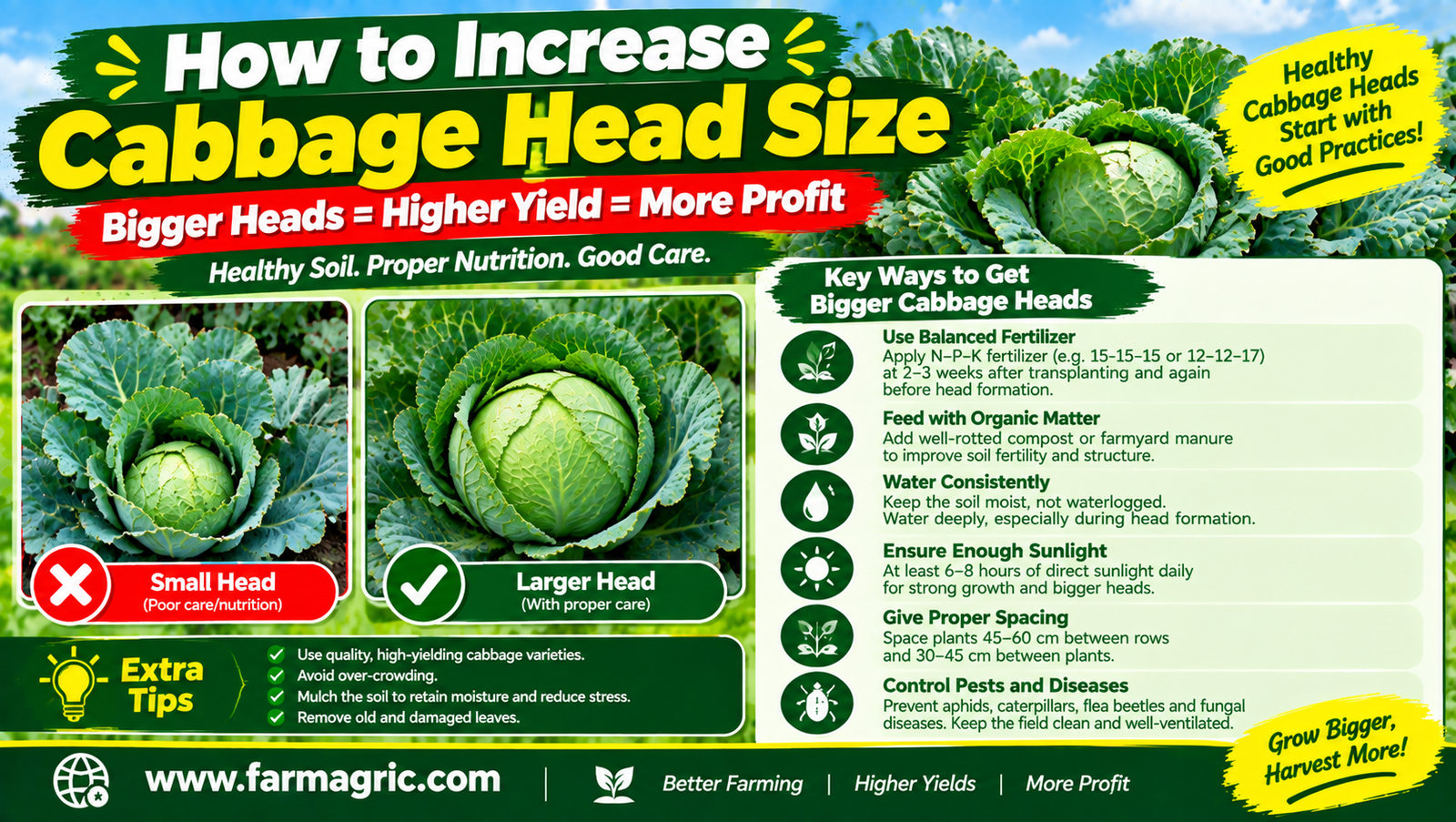
Spacing is one of the clearest levers you have. Closer plants make smaller heads and wider plants make larger ones, up to a point. For many medium to large varieties, a spacing of about 45 to 60 centimeters between plants and 60 to 75 centimeters between rows works well. Very large varieties need the wider end. Smaller early types can go tighter.
Follow the spacing suggested for your variety, and decide what size you want. If your market pays by the head, a slightly closer spacing gives more medium heads per hectare. If it pays by weight, wider spacing often gives more total weight per plant but fewer plants. Test two spacings on small plots and weigh the results, because your land will tell you more than any recommendation.
Feeding for Size
Think of feeding in stages. Before planting, work compost or manure into the soil and add a balanced fertilizer based on a soil test. In the first three to four weeks after transplanting, give the plant a good supply of nitrogen, because that is when it is building the large leaf frame that will feed the head. Split the nitrogen into two or three smaller top dressings instead of one heavy dose, and keep the fertilizer a few centimeters away from the stem.
As the plant begins to form a head, ease off on nitrogen and make sure potassium and other nutrients are in good supply. Heavy nitrogen at heading makes soft, loose heads and increases the risk of splitting and rot. Do not forget calcium and boron. Calcium shortage causes inner leaf burn, and boron shortage causes hollow stems and poor heads. A soil test or local advice will tell you if your soil needs them. Follow the label rates on every fertilizer, since more is not better and burns roots.
Water: Steady and Deep
A cabbage head is mostly water, so a plant short of water makes a small head. Cabbage wants regular, even moisture from transplanting to harvest, and the most sensitive time is during head formation. Check the soil by pushing a finger a knuckle deep. If it is dry, water, and if it is wet and sticky, wait.
Water slowly and deeply, so the moisture reaches the roots instead of running off. Drip irrigation is excellent for cabbage, giving steady water without wetting the leaves. Mulch the rows with straw, dry grass, or crop residue to keep the soil cool and moist, hold back weeds, and smooth out the swings that stress plants. Good mulching and steady watering also reduce the risk of splitting later.
Temperature and Planting Time
Cabbage is a cool-season crop and forms its best heads when temperatures are mild. Heat above about 25 to 30 degrees Celsius slows head formation, makes loose heads, and can cause the plant to bolt in some varieties. Plan your planting date so that the heading stage falls in the coolest weeks available to you. Count backward from your variety’s maturity date to find your window.
Where days are hot, use heat-tolerant varieties, plant at the start of the cool season, and use light shade netting or tall neighboring crops to take the edge off the midday sun. Mulch and morning watering also help keep the root zone cool.
Protect the Leaves
The outer leaves are the plant’s solar panels, and every leaf a pest eats is a bit of head you will never see. Walk the field at least twice a week, looking under the leaves and in the center of the plant. Diamondback moth caterpillars, cabbage loopers, aphids, and cutworms are the usual culprits. Early control is easier than late rescue, and soap sprays, neem extracts, or biological products work well on light infestations. For heavier outbreaks, use products approved for cabbage in your area, following the label and the days to wait before harvest, and rotate between different types so the pests do not become resistant.
Keep the field weeded, since weeds compete for water and hide pests. Rotate cabbage with cereals or legumes and avoid planting cabbage family crops in the same ground for at least two to three years, to reduce diseases like clubroot and black rot. Remove diseased plants and old crop residue.
Harvest at the Right Time
A head that is firm when you squeeze it is ready. Do not leave it too long hoping for extra size, because once the head is solid, extra weeks in the field mostly bring splitting and rot, not much extra weight. Cut with a sharp knife, leaving a few wrapper leaves to protect the head, and harvest in the cool of the morning.
Step-by-Step Practical Plan
If I were planning your next crop, it would run like this.
Choose a variety known for large heads that suits your climate and your season.
Raise stocky seedlings in a good nursery mix and harden them off for a week.
Prepare deep, fertile, well-drained soil with plenty of compost, and check pH.
Time the planting so heading falls in the coolest part of the season.
Transplant at the recommended spacing, in the late afternoon, and water well.
Feed nitrogen in two or three small doses over the first weeks, then ease off at heading and make sure potassium, calcium, and boron are adequate.
Water steadily using the knuckle test, mulch the rows, and use drip if you can.
Scout twice a week for caterpillars and aphids, and treat early.
Harvest when the heads are firm, and record spacing, feeding, and head weight so you can improve next season.
Warning Signs to Watch For
Seedlings that stay small and pale in the first weeks will make small heads. Leaves with large holes, or a shredded center, point to caterpillars that are costing you size. Purple or yellowing lower leaves can mean poor feeding or cold stress. Plants that wilt in the afternoon heat are short of water or stressed. Loose, open heads in hot weather suggest the variety or planting date is wrong. Weeds growing as tall as the cabbages mean competition is holding the plants back.
If you see any of these, act that week, not next month.
What I Would Do Differently If Starting Again Today
If I were starting fresh, I would spend my money and attention on the first four weeks. I would put in better seedlings, deeper soil preparation, and more compost before I spent a naira or dollar on rescue fertilizer later. I would plan the planting date backward from the cool season, and I would test two spacings every year on a small plot and weigh the heads, so I knew what my own land could do. I would also keep a notebook with transplant dates, feeding dates, and harvest weights, because patterns show up on paper that memory never catches.
And I would stop chasing the biggest head in the market. A firm, medium head that arrives on time and sells quickly pays better than a giant that cracks.
FAQ
Why are my cabbage heads small?
The usual causes are weak seedlings, crowded spacing, poor or thin soil, too little nitrogen early, uneven water, heat during heading, and pest damage to the leaves. Check each one, starting with the first four weeks.
What fertilizer makes cabbage heads bigger?
Nitrogen in the early weeks builds the leaf frame that feeds the head, and balanced nutrition with potassium supports firm heads. Use compost or manure under it all, and follow a soil test where possible. Heavy nitrogen at heading can cause loose heads and splitting.
How far apart should I plant cabbage for big heads?
Roughly 45 to 60 centimeters between plants and 60 to 75 centimeters between rows for most medium to large types. Wider spacing gives larger heads but fewer plants, so choose based on your market.
Does hot weather make cabbage heads smaller?
Yes. Heat slows head formation and can produce loose, small heads. Plant so heading falls in cool weather, use heat-tolerant varieties, and use mulch and shade where needed.
How long does it take cabbage to form a head?
It depends on the variety, usually around 60 to 100 days or more from transplanting. Early types are quicker with smaller heads, and late types take longer and grow bigger.
The Advice Worth Bookmarking
A cabbage head is only as big as the plant that carries it. Build the leaves first and the head will follow.