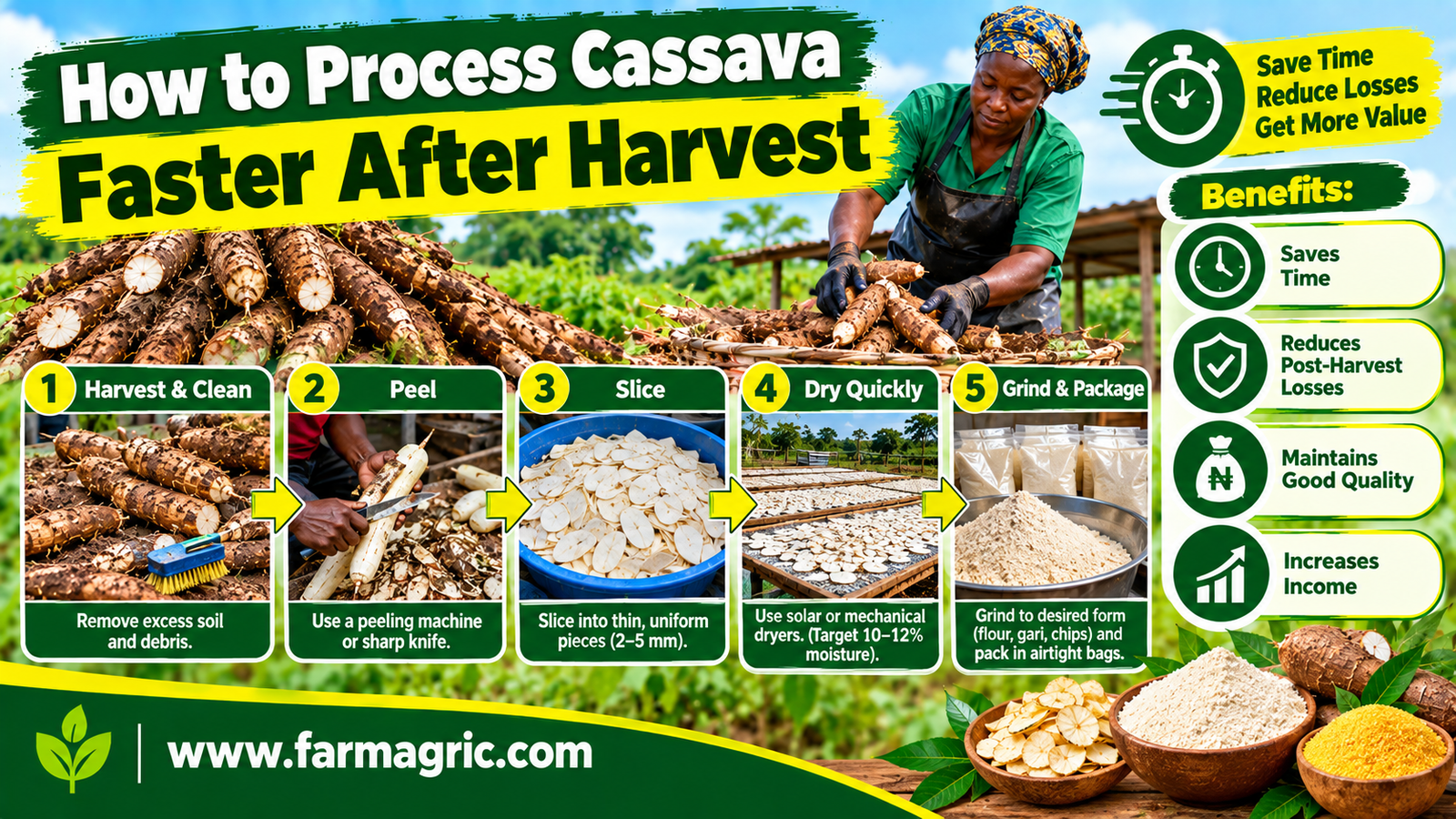
How to Process Cassava Faster After Harvest
How to Process Cassava Faster After Harvest: A Farmer’s Guide to Beating Spoilage Through Speed
I remember a season where I harvested more cassava in a single week than I had ever processed at one time before, encouraged by a good buyer offer for garri that I did not want to miss. I peeled and grated by hand the way I always had, working late into the evenings with my family, and by the time we finished processing everything, a noticeable portion of what we had dug early in that week had already started showing the dark streaking that meant quality loss, even though it never fully rotted. That was the week I finally understood that processing speed is not a convenience, it is the difference between turning a harvest into full value or watching part of it quietly lose value while it waits its turn. Since then I have restructured how I plan a harvest around exactly how fast I can actually move roots from the ground to a finished, stable product.
So let me answer you straight, because I know you have roots piling up faster than you can peel, grate, press, or dry them, and you are looking for ways to close that gap before quality slips away. You process cassava faster after harvest by matching the size of each harvest batch to your actual processing capacity rather than digging more than you can handle in a day, organizing your peeling, grating, and pressing steps into an efficient sequence with clear roles if you have helpers, using simple mechanical aids like a hand-cranked or motorized grater instead of relying purely on hand grating, pressing out excess moisture efficiently before drying or frying, and drying in thin, well-spread layers in full sun rather than thick piles that take far longer to dry through. Speed in cassava processing comes from two things working together, harvesting in batches your processing setup can genuinely keep up with, and tightening every individual step in the processing chain itself so that roots spend as little time as possible sitting between digging and reaching a stable, finished form.
Why Processing Speed Matters as Much as Storage Methods
Cassava roots begin deteriorating within hours of harvest, and while careful handling and simple storage methods like burial in moist soil can buy some extra days, that borrowed time eventually runs out regardless of how well the roots are kept. Processing, whether into garri, flour, chips, or another stable product, is what actually stops that clock rather than merely slowing it, since drying, fermenting, or otherwise transforming the root removes the moisture and living tissue conditions that drive the deterioration process in the first place. This means that the real solution to a harvest outpacing your ability to use it fresh is not finding a better way to store fresh roots for longer, since no fresh storage method extends the window indefinitely, but rather closing the gap between digging and processing so that fewer roots ever sit in that vulnerable fresh state for longer than necessary.
What Most Farmers Get Wrong
The first mistake, the one that cost me quality in that overambitious week, is harvesting based on market opportunity or field readiness alone, without honestly accounting for how many roots the household or the available labor can actually process within a day or two. A tempting buyer offer or a field that looks fully mature does not change the physical limit of how fast a person can peel and grate cassava by hand.
The second mistake is relying entirely on hand grating for volumes that genuinely call for mechanical help, treating a hand grater or a knife as adequate for any quantity simply because that is the traditional method, when a hand-cranked or motorized grater can process the same volume in a fraction of the time and labor.
The third mistake is processing without any real organization, especially when several people are helping, with everyone doing a bit of everything rather than working through clear stages. This creates bottlenecks where, for example, everyone is peeling while nothing is being grated yet, or grated cassava sits waiting for pressing while peeling continues, slowing the overall pace of the whole operation even when plenty of hands are available.
The fourth mistake is skipping or rushing the pressing step before drying or frying, leaving grated cassava wetter than it should be. Excess moisture at this stage means longer drying or frying time later, which slows the whole process down at exactly the stage where speed matters most for locking in quality.
The fifth mistake is drying cassava in thick piles or heaps rather than spreading it thin, assuming this saves space or effort, when in reality thick piles dry far more slowly, unevenly, and are more prone to mold developing in the still-damp center while the surface appears dry.
Step-by-Step Plan to Process Cassava Faster After Harvest
Start by matching your harvest size to your actual processing capacity before you ever pick up a hoe. Estimate honestly how many roots your household, your labor, and your equipment can realistically peel, grate, press, and dry or fry within a single day, and harvest close to that amount rather than digging everything the field offers simply because it looks ready or a buyer wants a large quantity at once.
Harvest in the morning where possible, giving yourself the maximum number of daylight hours to move through the full processing sequence before roots have to sit overnight in a fresh, vulnerable state. A harvest dug at midday or in the afternoon compresses your available processing time and often forces roots to wait until the next day, losing quality in the meantime.
Organize your peeling station for efficiency, whether that means a comfortable seating arrangement for multiple people working simultaneously, sharp, dedicated peeling knives kept in good condition, or a simple mechanical peeling aid where available. Peeling is often the slowest manual step in the whole chain, and even modest improvements here speed up everything that follows.
Move to grating as soon as roots are peeled rather than letting a large pile of peeled roots accumulate and wait. If you have access to a hand-cranked or motorized grater, use it, since these tools process cassava dramatically faster than hand grating with a traditional grater board or knife, and the time saved compounds significantly across a large harvest.
Assign clear roles if you have multiple people helping, rather than having everyone move fluidly between every task. One or two people peeling continuously while another one or two grate what has already been peeled, and another manages pressing, keeps every stage moving simultaneously rather than creating pauses where one step waits for the previous one to finish completely before starting.
Press grated cassava firmly and thoroughly to remove as much excess moisture as possible before the drying or frying stage. A proper press, whether a simple weighted board, a screw press, or another mechanical option, removes far more water in far less time than simply letting grated cassava sit or relying on gravity alone, and this step directly shortens how long the final drying or frying stage will take.
Sift or process pressed cassava into an even, consistent texture before drying or frying, since uneven particle size, with some pieces much larger or wetter than others, leads to inconsistent drying and forces you to either accept uneven quality or wait for the slowest, largest pieces to finish.
Dry cassava in thin, well-spread layers rather than thick piles, whether on a raised drying table, a clean mat, or another suitable surface exposed to full sun and good airflow. A thin layer dries evenly and considerably faster than a thick one, and turning the layer periodically through the day speeds this further by exposing all sides to sun and air.
Where you are frying rather than sun-drying, such as in garri production, keep the frying pan or pot at a consistent, appropriate temperature and avoid overloading it with more grated cassava than it can properly toast through in a reasonable time, since an overloaded pan slows the whole frying process and risks uneven results.
Prepare your drying or frying setup before the harvest and processing begins, not after, so that space, fuel, equipment, and helpers are all ready the moment the first batch of grated, pressed cassava is ready to move to that final stage, rather than losing time improvising this setup partway through a busy processing day.
Consider investing gradually in simple mechanical aids, a grater, a press, or later a small mill, if you process cassava regularly and at meaningful volume, since the time saved across repeated harvests over multiple seasons often justifies the cost of equipment that speeds up the slowest manual steps in the chain.
Plan your next harvest based on how the previous one went, adjusting the batch size upward or downward depending on whether your processing setup kept pace comfortably or fell behind, so that your harvest planning improves season by season based on real experience with your own actual capacity rather than guesswork.
Warning Signs Your Processing Speed Is Falling Behind Your Harvest
A visible backlog of unpeeled or peeled roots sitting for more than a few hours before moving to the next stage signals that your harvest volume has outpaced your processing capacity for that day, and this backlog is exactly where quality loss begins even if the roots have not yet shown obvious spoilage. Grated cassava sitting wet and unpressed for an extended period, rather than moving promptly toward pressing and drying, risks both quality decline and, in warm conditions, unwanted fermentation or spoilage before it ever reaches the drying stage. Thick, uneven piles on a drying surface that remain visibly damp in the center well into the day, while the surface looks dry, indicate a drying setup that is not keeping pace with the volume being processed. A pattern of dark streaking or off smells appearing specifically in the portion of a harvest that was processed last, compared to roots processed first, points directly to processing speed as the source of that particular quality loss, confirming that the gap between digging and finishing needs to close for future harvests. And helpers standing idle at one stage of the process while a bottleneck backs up at another stage suggests a labor organization problem rather than a genuine capacity limit, meaning better task assignment alone could meaningfully speed up the whole operation without any new equipment or extra hands.
What I’d Do Differently If Starting Again Today
If I were starting over, I would size every harvest to my actual processing capacity from the very first season, rather than letting a tempting buyer offer or an impressively full field tempt me into digging more than I could properly handle, since that one lesson from the overambitious week has shaped every harvest decision I have made since. I would invest in a hand-cranked grater far earlier than I did, understanding now how much time that single tool saves compared to hand grating, time that translates directly into less quality lost to delay. I would organize labor into clear, dedicated roles from the start of any processing day with helpers, rather than letting everyone drift between tasks informally, since I have seen firsthand how much faster a well-organized team moves through the same volume of roots compared to the same number of people working without clear assignments. And I would prepare my drying space and pressing setup completely before harvest day rather than scrambling to organize it once roots were already piling up, since losing even an hour to setup at the start of a busy processing day pushes the whole timeline back in a way that is very hard to make up later.
Frequently Asked Questions About Processing Cassava Faster
Why does cassava need to be processed so quickly after harvest? Fresh cassava roots begin an internal deterioration process within hours of being dug, showing discoloration within a day or two and often spoiling further within about a week even with careful handling, so processing into a stable product like garri, flour, or dried chips is what actually stops this decline rather than simply slowing it temporarily.
Is a mechanical grater really worth the cost for a small farm? For any farm processing more than a small, easily hand-managed quantity at a time, a hand-cranked or motorized grater typically saves enough labor time across repeated harvests to justify its cost, particularly since faster grating directly reduces how long roots sit in a vulnerable, deteriorating state before reaching a stable form.
How can I tell if I am harvesting more cassava than I can process in time? A visible backlog of roots waiting at any stage of processing for more than a few hours, combined with quality problems specifically appearing in the portion processed last, both signal that harvest volume has outpaced processing capacity, meaning smaller, more frequent harvest batches would likely produce better overall results.
Does pressing cassava before drying actually save time overall? Yes, thorough pressing removes a significant amount of excess moisture before drying or frying begins, which shortens the time needed at that final stage considerably, meaning the extra effort spent pressing properly is generally repaid by faster, more even drying or frying afterward.
What is the biggest single change that speeds up cassava processing? Matching harvest size to actual processing capacity is generally the most impactful single change, since even the most efficient processing setup cannot fully protect quality if the volume of roots coming in from the field consistently exceeds what that setup can move through within a day or two.
If there is one thing I want you to remember from all this, it is that cassava does not wait for you to catch up, so harvest only what you can genuinely process the same day, organize your steps so nothing sits idle between stages, and treat speed itself as one of the most valuable tools you have for protecting the quality of everything you have grown, because a harvest processed a day too slowly loses value quietly, long before it ever looks spoiled enough to notice.