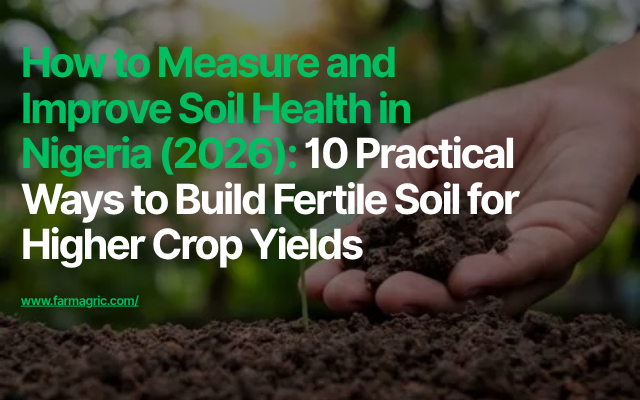
How to Measure and Improve Soil Health in Nigeria (2026): 10 Practical Ways to Build Fertile Soil for Higher Crop Yields

Healthy soil is the foundation of successful farming. No matter how much you invest in quality seeds, fertilizers, or irrigation, your crops will struggle if the soil lacks the nutrients and structure they need to grow. Unfortunately, declining soil fertility has become a major challenge for many farmers across Nigeria due to continuous cultivation, erosion, poor land management, and improper fertilizer use.
The good news is that healthy soil can be restored and maintained with the right farming practices. You do not need expensive equipment to identify common soil problems or improve your farmland. By learning how to measure soil health and applying practical soil management techniques, you can increase crop yields, reduce production costs, and build a more productive farm.
In this guide, you will discover how to measure and improve soil health in Nigeria using simple methods that work for both small-scale and commercial farmers.
Quick Facts About Soil Health
| Information | Details |
|---|---|
| Topic | Soil Health Management |
| Suitable For | Crop farmers, gardeners, and agribusiness investors |
| Main Goal | Improve soil fertility and increase crop yields |
| Best Time for Soil Testing | Before planting each season |
| Common Soil Types in Nigeria | Sandy, loamy, clay, and lateritic soils |
| Key Soil Health Indicators | Organic matter, soil structure, pH, drainage, biological activity |
What Is Soil Health?
Soil health refers to the condition of the soil and its ability to support healthy plant growth. Healthy soil supplies nutrients, stores water, supports beneficial organisms, and allows plant roots to grow freely.
Unlike poor soil, healthy soil remains productive over time and helps crops resist drought, diseases, and environmental stress. Farmers who invest in soil health often enjoy higher yields and lower production costs.
Why Soil Health Matters
Healthy soil benefits every stage of crop production. It improves seed germination, strengthens root development, and helps plants absorb nutrients more efficiently.
Good soil health also offers these advantages:
- Higher crop yields
- Better water retention
- Improved nutrient availability
- Stronger resistance to erosion
- Reduced fertilizer waste
- Increased farm profitability
- Long-term soil productivity
When soil health declines, farmers often spend more money on fertilizers while harvesting fewer crops.
Signs of Healthy Soil
Before planting, examine your farmland carefully. Healthy soil often shows these characteristics:
- Dark colour due to high organic matter
- Loose and crumbly structure
- Good drainage after rainfall
- Presence of earthworms and beneficial insects
- Healthy plant growth
- Minimal erosion
- Balanced moisture levels
These signs indicate that the soil can support healthy crop development.
Signs Your Soil Needs Improvement
Poor soil often displays warning signs that should not be ignored.
Watch for:
- Hard or compacted soil
- Standing water after rainfall
- Pale or yellow crop leaves
- Poor seed germination
- Low crop yields
- Soil erosion
- Few or no earthworms
- Cracked soil during dry periods
Identifying these problems early allows you to take corrective action before planting.
10 Practical Ways to Measure and Improve Soil Health
1. Test Your Soil Before Planting
A soil test is one of the most reliable ways to understand your soil’s condition.
Testing reveals:
- Soil pH
- Nutrient levels
- Organic matter content
- Fertility status
Many agricultural research institutes, universities, and private laboratories in Nigeria offer soil testing services. Testing your soil before planting helps you apply the right nutrients instead of guessing.
2. Observe Soil Colour and Texture
Healthy soil usually has a dark brown or black appearance because it contains more organic matter. Rub a small amount of moist soil between your fingers. Healthy soil should feel loose and slightly crumbly. Extremely sandy soils lose water quickly, while heavy clay soils may hold too much water and restrict root growth.
Simple field observations can reveal valuable information about soil quality.
3. Check Soil Drainage
Good drainage is essential for healthy crops. Dig a small hole and fill it with water. If the water drains within a reasonable time, your soil has good drainage. However, if water remains for several hours, drainage may be poor.
Poor drainage can encourage root diseases and reduce plant growth.
4. Look for Earthworms and Beneficial Organisms
Earthworms are natural indicators of healthy soil. They improve soil structure by creating channels that allow water and air to move freely through the soil. Other beneficial organisms such as beetles and microorganisms also contribute to nutrient recycling and soil fertility.
If you rarely see earthworms, your soil may need more organic matter.
5. Measure Soil pH
Soil pH determines how easily plants can absorb nutrients. Most crops perform well in slightly acidic to neutral soils. Simple soil pH testing kits are available through many agricultural suppliers. If the soil is too acidic or too alkaline, crops may struggle even when fertilizers are applied.
6. Add Organic Matter Regularly
Organic matter is one of the most effective ways to improve soil health.
Good sources include:
- Well-decomposed poultry manure
- Cow dung
- Compost
- Crop residues
- Green manure
Organic matter improves soil structure, increases moisture retention, and supports beneficial microorganisms. Many Nigerian farmers have successfully improved poor soils by applying organic manure consistently.
7. Practice Crop Rotation
Growing the same crop repeatedly can reduce soil nutrients and increase pest problems. Instead, rotate crops each season. For example, farmers can alternate maize with legumes such as cowpea or soybean. Legumes help improve soil fertility by adding nitrogen naturally.
Crop rotation also reduces disease pressure and improves long-term productivity.
8. Reduce Excessive Tillage
Frequent ploughing can damage soil structure and reduce beneficial organisms. Where practical, reduce unnecessary tillage and leave crop residues on the soil surface. Conservation farming practices help preserve soil moisture and improve long-term soil health.
9. Use Fertilizers Wisely
- Fertilizers support crop growth, but applying too much or using the wrong type can damage soil quality.
- Always apply fertilizers based on soil test results or recommendations from agricultural extension officers.
- Combining organic manure with inorganic fertilizers often produces better long-term results than relying on chemical fertilizers alone.
10. Prevent Soil Erosion
Erosion removes fertile topsoil and reduces farm productivity.
Protect your farmland by:
- Planting cover crops
- Using mulch
- Creating contour ridges on sloping land
- Planting grasses along field boundaries
- Avoiding unnecessary land clearing
Protecting topsoil helps preserve nutrients and improve future harvests.
Common Soil Health Challenges in Nigeria
Many Nigerian farmers face similar soil-related problems.
Some of the most common include:
| Challenge | Practical Solution |
|---|---|
| Soil erosion | Plant cover crops and reduce bare soil exposure |
| Low organic matter | Apply compost and animal manure regularly |
| Soil acidity | Test soil and apply lime where recommended |
| Nutrient depletion | Rotate crops and apply balanced fertilizers |
| Soil compaction | Reduce excessive tillage and avoid heavy machinery on wet fields |
Addressing these challenges early can significantly improve farm productivity.
Benefits of Improving Soil Health
Healthy soil offers long-term advantages for farmers.
These include:
- Higher crop yields
- Better fertilizer efficiency
- Improved drought tolerance
- Reduced soil erosion
- Lower production costs
- Stronger root development
- Increased farm profitability
Investing in soil health today creates better harvests for many years.
Expert Tips for Maintaining Healthy Soil
Experienced farmers recommend these practices:
- Test your soil before every planting season.
- Add compost whenever possible.
- Rotate crops regularly.
- Avoid burning crop residues.
- Keep the soil covered with mulch.
- Apply fertilizers responsibly.
- Monitor soil condition throughout the year.
Small improvements made consistently often produce the biggest results over time.
Frequently Asked Questions
What is soil health?
Soil health is the ability of soil to support healthy plant growth by providing nutrients, water, and a suitable environment for beneficial organisms.
How often should farmers test their soil?
It is best to test soil before each major planting season or at least every two to three years if the land is managed consistently.
What is the fastest way to improve soil health?
Adding organic matter such as compost or well-decomposed poultry manure is one of the quickest ways to improve soil structure and fertility.
Can poor soil reduce crop yields?
Yes. Poor soil limits nutrient availability, weakens root development, and reduces plant growth, leading to lower harvests.
Is soil testing necessary for small-scale farmers?
Yes. Even small-scale farmers benefit from soil testing because it helps them apply fertilizers more efficiently and avoid unnecessary expenses.
Conclusion
Healthy soil is one of the most valuable assets any farmer can have. It supports stronger crops, improves water retention, reduces fertilizer waste, and increases farm productivity. While many Nigerian farmers face challenges such as nutrient depletion, erosion, and declining soil fertility, these problems can be managed through proper soil care and sustainable farming practices.
By measuring your soil’s condition, adding organic matter, rotating crops, preventing erosion, and applying fertilizers wisely, you can build healthier soil that delivers better harvests year after year. Treat your soil as a long-term investment, and it will continue to reward you with stronger crops, higher yields, and greater profits.