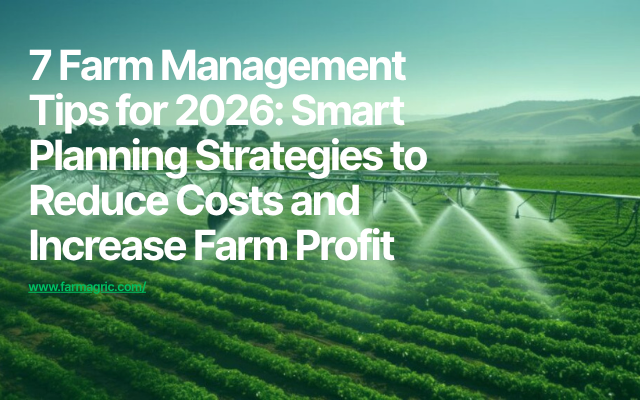
7 Farm Management Tips for 2026: Smart Planning Strategies to Reduce Costs and Increase Farm Profit

Farm management in 2026 requires more than just planting crops, raising livestock, or waiting for harvest time. Successful farmers now need proper planning, financial control, modern farming tools, and smart business decisions to remain profitable. With increasing production costs, changing weather conditions, unstable market prices, and growing competition, farmers who manage their operations professionally have a better chance of achieving long-term success.
Whether you operate a small farm or a large agricultural business, understanding effective farm management strategies can help you reduce losses, improve productivity, and increase your income. In this guide, you will discover seven practical farm management tips for 2026 that can help you control expenses, manage risks, improve efficiency, and build a more profitable farming business.
Quick Facts About Farm Management in 2026
| Information | Details |
|---|---|
| Topic | Farm Management Tips |
| Best For | Small-scale and commercial farmers |
| Main Goal | Increase productivity and profitability |
| Key Areas | Planning, finance, technology, marketing, risk management |
| Farming Types | Crop farming, livestock farming, mixed farming |
| Importance | Helps farmers make better business decisions |
What Is Farm Management?
Farm management is the process of planning, organizing, and controlling farm resources to achieve better production and financial results. It involves managing important resources such as land, labour, equipment, money, livestock, crops, and other farm operations. Unlike traditional farming methods that focus mainly on production, modern farm management treats farming as a business that requires careful planning and proper decision-making.
A well-managed farm does not only produce agricultural products. It also controls expenses, studies market opportunities, prepares for challenges, and creates sustainable income.
Why Is Farm Management Important in 2026?
The agricultural industry is changing rapidly. Farmers now face challenges such as rising fertilizer prices, expensive animal feed, labour shortages, climate-related problems, and unpredictable market conditions. Because of these challenges, farmers can no longer depend only on traditional methods. They need accurate information, better planning, and improved management practices.
Effective farm management helps farmers:
- Reduce unnecessary expenses
- Improve production efficiency
- Make better financial decisions
- Prepare for unexpected challenges
- Increase farm profitability
- Use resources more effectively
7 Farm Management Tips for 2026
1. Create a Detailed Farm Business Plan
A successful farm starts with a clear plan. Many farmers struggle because they begin production without understanding their costs, goals, or expected returns.
A farm business plan helps you determine what you want to achieve, how much money you need, and the best approach to reaching your targets.
Before starting a new farming season, consider the following:
- The type of crops or livestock you want to produce
- Required startup and operating costs
- Expected income and profit
- Target customers and markets
- Possible farming risks
For example, a poultry farmer should calculate expenses for chicks, feed, vaccines, housing, labour, and other requirements before increasing production.
A good plan helps farmers make informed decisions instead of reacting to problems after they occur.
2. Track and Control Farm Expenses
Managing expenses is one of the most important parts of profitable farming.
Many farmers focus on increasing production but ignore the small costs that gradually reduce their profits. In 2026, farmers should pay close attention to where their money goes.
Important expenses to monitor include:
- Seeds
- Fertilizers
- Animal feed
- Labour costs
- Farm equipment
- Transportation
- Repairs and maintenance
Controlling costs does not mean reducing quality. Instead, it means finding smarter ways to use available resources.
Farmers can reduce expenses by comparing suppliers, buying inputs at the right time, preventing waste, and maintaining equipment regularly.
3. Keep Accurate Farm Records
Record keeping is one of the easiest ways to improve farm performance. Without proper records, farmers often make decisions based on assumptions rather than actual results.
Important farm records include:
- Income records
- Production records
- Expense records
- Livestock health records
- Crop performance records
- Customer and sales records
These records allow farmers to identify profitable activities and areas that need improvement.
For example, a livestock farmer who tracks feed costs and animal growth can determine whether a feeding method is producing good results or causing unnecessary expenses.
4. Use Technology to Improve Farm Efficiency
Technology is becoming increasingly important in modern agriculture. Farmers in 2026 can use digital tools to improve production, monitor farm activities, and make better decisions.
Useful agricultural technologies include:
- Farm management applications
- Weather monitoring tools
- Digital marketplaces
- Smart irrigation systems
- Soil testing tools
- Online agricultural training platforms
Technology helps farmers save time, reduce waste, and access important information quickly. Even small-scale farmers can benefit from simple tools such as mobile record-keeping apps and online platforms that connect them with buyers.
5. Diversify Your Farm Income
Depending on only one source of income can expose farmers to serious financial risks. For example, a farmer who depends only on maize production may suffer major losses if poor weather affects harvest or market prices decline. Diversifying farm income creates more financial stability.
Farmers can diversify by:
- Combining crop and livestock production
- Processing agricultural products
- Selling directly to consumers
- Starting poultry or fish farming
- Producing packaged farm products
For instance, a cassava farmer can increase earnings by processing cassava into flour or other finished products instead of selling only raw cassava.
6. Develop a Strong Marketing Strategy
Producing agricultural products is only one part of running a successful farm. Farmers also need a strategy for selling their products at profitable prices. A strong marketing plan helps farmers understand customers, identify opportunities, and avoid poor selling decisions.
Farmers should:
- Study market demand
- Identify buyers before harvest
- Monitor market prices
- Build customer relationships
- Explore online selling channels
Many farmers lose income because they wait until harvest before searching for buyers. Planning your market early can help you achieve better returns.
7. Prepare for Farming Risks
Every farming business faces risks. These may come from weather changes, diseases, market fluctuations, or unexpected expenses. Successful farmers prepare for these challenges before they happen.
Ways to manage farm risks include:
- Creating emergency funds
- Maintaining proper farm hygiene
- Using quality seeds and breeds
- Preventing diseases
- Reviewing farm plans regularly
Risk management protects your investment and helps your farm continue operating during difficult periods.
Cost Management Strategies Farmers Should Adopt in 2026
Reducing unnecessary expenses is one of the fastest ways to improve farm profitability.
Farmers can manage costs by:
Buying Inputs Carefully
Purchase seeds, feed, fertilizers, and other materials from trusted suppliers at competitive prices.
Reducing Waste
Proper storage and efficient resource use can prevent unnecessary losses.
Maintaining Equipment
Regular maintenance helps farm machines work efficiently and reduces expensive repairs.
Improving Resource Management
Efficient use of land, water, labour, and energy can increase productivity.
Benefits of Proper Farm Management
Good farm management provides several advantages, including:
- Increased profitability
- Better financial control
- Higher productivity
- Reduced farming risks
- Improved resource utilization
- Easier farm expansion
- Better decision-making
Farmers who adopt professional management practices are more likely to build successful and sustainable agricultural businesses.
Common Farm Management Mistakes Farmers Should Avoid
Many farming challenges happen because of poor planning and weak management.
Common mistakes include:
- Farming without a budget
- Ignoring market research
- Failing to keep records
- Spending without tracking expenses
- Expanding too quickly
- Using outdated farming methods
Avoiding these mistakes can help farmers improve efficiency and achieve better results.
Expert Tips for Successful Farm Management in 2026
Farmers can improve their chances of success by following these tips:
- Review farm plans regularly
- Learn modern farming techniques
- Monitor market trends
- Invest in agricultural training
- Network with other farmers
- Focus on quality production
- Treat farming as a serious business
Small improvements in daily decisions can create significant improvements in farm performance over time.
Also Read: Solar Powered Poultry Equipment Price Guide for Nigerian Chicken Farmers 2026
Frequently Asked Questions About Farm Management
What is the importance of farm management?
Farm management helps farmers organize resources, reduce expenses, improve productivity, and make better business decisions.
How can farmers increase profit in 2026?
Farmers can increase profits by controlling costs, improving production methods, using technology, and developing better marketing strategies.
What records should farmers keep?
Farmers should keep records of expenses, income, production levels, livestock health, crop performance, and sales.
Is technology important in modern farming?
Yes. Technology helps farmers improve efficiency, monitor farm activities, access information, and make better decisions.
Can small farmers use farm management strategies?
Yes. Farm management practices are useful for both small-scale farmers and large agricultural businesses.
Conclusion
Farm management will play a major role in agricultural success in 2026. Farmers who focus on planning, cost control, technology, marketing, and risk management will have a stronger advantage in the modern agricultural industry.
Farming is no longer only about producing crops or raising animals. It is about making smart decisions that improve efficiency and create sustainable income. By applying these farm management tips, farmers can reduce challenges, increase productivity, and build a more profitable farming business.