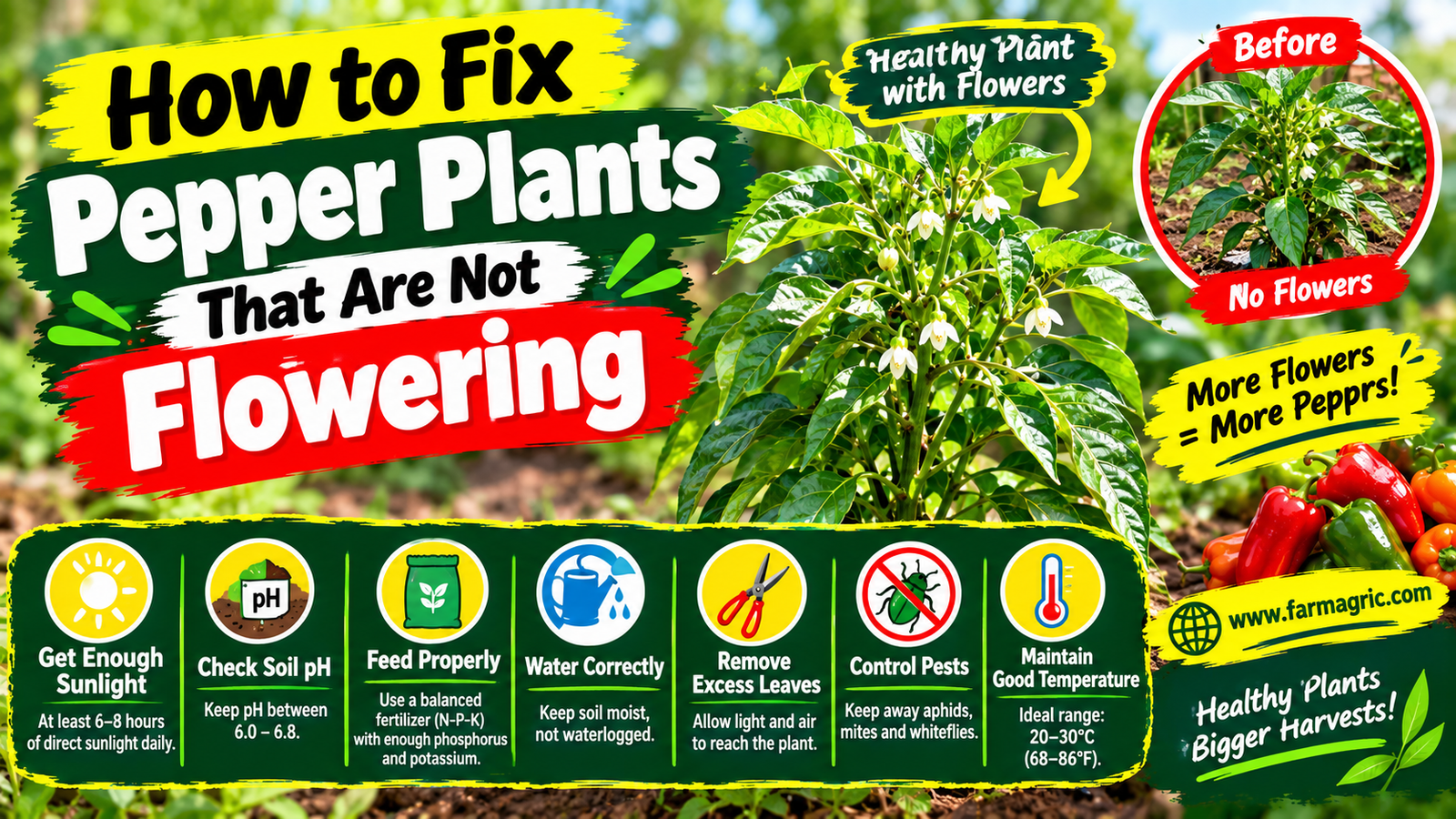
How to Fix Pepper Plants That Are Not Flowering
How to Fix Pepper Plants That Are Not Flowering
There is a particular kind of disappointment that comes from looking at a row of pepper plants that are tall, dark green and healthy-looking, and finding not a single flower on them. I have stood in that row more than once, week after week, expecting buds and finding only leaves. The first time it happened, I did what most people do. I added more fertilizer. The plants grew taller and greener, and still no flowers. It took me an embarrassing amount of time to learn that the fertilizer I was adding was exactly what was holding them back.
Here is the direct answer. Pepper plants that do not flower are almost always dealing with one of a handful of problems: too much nitrogen, too little sunlight, temperatures that are too hot or too cold, uneven watering, stressed or damaged roots, pests or disease, or simply that the plant is still too young. The fix depends on which one you have, so the first job is diagnosis. In most cases, easing off nitrogen, giving the plants full sun, steadying the water, protecting them from temperature extremes and being patient for a few weeks will bring the flowers back. If the plants are flowering but the flowers keep falling off, that is a related but slightly different problem, and I will cover it too.
Let us go through it properly, so you can find your own cause and fix it.
What most farmers get wrong
They assume more fertilizer will help. A plant that is not flowering looks like a plant that is not getting enough, so the instinct is to feed it. But a leafy, dark green, fast-growing pepper that refuses to flower is usually getting too much nitrogen, not too little. Nitrogen drives leaf and stem growth. Push it too far, and the plant stays in growing mode and delays or skips flowering.
They do not give it enough time. Peppers are not instant. Depending on the variety, climate and how the seedlings were raised, a plant may need several weeks after transplanting, and in some cases many weeks, before it begins flowering. A young, small plant that has not flowered yet may be perfectly normal. Check the days to maturity for your variety and compare honestly.
They ignore the weather. Peppers are sensitive to temperature. Very hot spells and very cool nights can both delay flowering or make flowers drop. Many growers blame their soil or seed when the real problem is a heatwave or a cold snap that happened two weeks earlier.
They plant in too much shade. Peppers are sun-loving plants. A spot that looks bright to you may only give them a few hours of real sun, especially near trees, walls or taller crops. A shaded pepper makes leaves and very little else.
They water in extremes. Long dry spells followed by heavy flooding stress the plant. A stressed plant often drops buds or simply refuses to set them.
They overlook the roots. Plants that are root-bound in a small container, planted in compacted or waterlogged soil, or damaged during transplanting cannot support flowering. What is wrong below ground shows up as problems above ground.
Not flowering versus flowering but dropping
It is worth separating two different problems, because the fixes overlap but are not identical. In the first, the plant simply does not produce flower buds. In the second, the plant produces buds or open flowers, but they fall off before any fruit forms. The first points more toward nitrogen balance, light, plant age and overall health. The second points more toward heat, cold, water stress, nutrition and pollination problems. If you are not sure which you have, look carefully at the base of the plant and the ground beneath it for fallen buds and petals. If you find them, you have a dropping problem, and the steps below about temperature, water and stress apply strongly.
Step-by-step: how to find the cause and fix it
Step 1: Check the age of the plant. Start with the simplest question. How long has the plant been in the ground, and how long does your variety normally take to flower? Check the seed packet or ask your supplier. If the plants are still young, small and healthy, the right move may be to wait, keep up good care, and not interfere. Plants that were transplanted late, or were stunted in the nursery by crowding or hunger, can also need extra time to catch up.
Step 2: Look at the color and shape of the plant. Deep, dark green, thick leaves, fast tall growth and lots of stems with no buds suggest too much nitrogen. Pale, yellowing, thin plants suggest the opposite problem, a plant short of nutrients or stressed by roots, water or disease. Plants that are bushy and compact and flowering normally in your area, but yours are not, point toward environment. Reading the plant gives you a first clue before you change anything.
Step 3: Cut back on nitrogen, and favor phosphorus and potassium. If you suspect too much nitrogen, stop applying nitrogen-heavy fertilizers, fresh poultry manure and similar rich inputs. Switch to a feed with more phosphorus and potassium, which support flowering and fruiting, following the instructions on the product. Well-rotted compost and balanced fertilizers are safer than heavy doses of any single nutrient. Wood ash is sometimes used as a potassium source, but it can raise soil pH and should be used sparingly. If you can, test your soil, or ask your local extension service to help, so you are adjusting based on facts and not guesses. Soil pH matters too, because peppers do best in slightly acidic to near-neutral soil, roughly pH 6.0 to 6.8, and outside that range, plants cannot take up nutrients properly even if they are present.
Step 4: Make sure the plants get enough sun. Peppers generally want at least six to eight hours of direct sunlight each day. If your plants are shaded by trees, buildings or tall neighboring crops, consider trimming the shade, moving container plants, or planting the next crop in a sunnier spot. For this season, you may only be able to improve it partially, but even removing a few hours of shade can make a difference.
Step 5: Manage temperature stress. Peppers do best in warm weather, but extremes cause trouble. Very high daytime temperatures, roughly above the low to mid 30s Celsius, and warm nights can cause buds and flowers to drop and delay fruit set. Cool nights, particularly below around 15 degrees Celsius, can slow growth and flowering. For heat, use shade cloth during the hottest part of the day, mulch the soil to keep roots cooler, water steadily, and avoid heavy feeding during a heatwave. For cold, use row covers or tunnels at night, plant at a time of year that suits your climate, and avoid transplanting too early. Often, plants start flowering again on their own once the weather settles, as long as they have stayed healthy.
Step 6: Water steadily and deeply. Aim for consistent moisture, neither bone dry nor soggy. Water deeply and less often rather than a little every day, so roots grow down. Mulch with straw, dry grass or similar material to keep moisture even and soil cooler. Make sure the soil drains well, because waterlogged roots cannot get oxygen, and a plant with suffering roots will not flower. Drip irrigation is ideal because it gives steady moisture without wetting the leaves.
Step 7: Check the roots and the soil. Gently look at the root zone. In containers, see whether roots are circling tightly or poking out of drainage holes, a sign the plant is root-bound and needs a larger pot, ideally around 15 to 20 liters for a full-size pepper. In the field, check for compacted soil, standing water, signs of root rot or damage from digging, hoeing or pests close to the plant. Loosen compacted soil carefully around the plants, improve drainage where water collects, and avoid deep cultivation close to the stems that cuts the roots.
Step 8: Check for pests and disease. Scout the plants carefully, including the undersides of leaves and the growing tips. Aphids, whiteflies, mites and thrips can damage buds and stress the plant. Viral diseases, such as leaf curl virus, can leave plants stunted, curled and unproductive, with few or no flowers. If a plant is infected with a virus, it will not recover, and you should remove it so it does not spread the problem to healthy plants. For other pests, use gentle controls first, such as a firm water spray, insecticidal soap, or neem following the label, and encourage natural predators.
Step 9: Avoid over-pruning and rough handling. Cutting away too many leaves or growing tips can set the plant back and delay flowering. Only remove dead, damaged or diseased growth, and any lower leaves that touch the soil. Handle plants gently, especially at transplanting, because transplant shock can pause growth and flowering for a few weeks.
Step 10: Think about pollination and wind. Peppers are mostly self-pollinating, but they benefit from some movement and from visiting insects. In very still, humid conditions, flowers may not set well. A gentle shake of the plants, or giving the flowers a light tap during warm mid-morning hours, can help pollen move. Avoid spraying strong chemicals during flowering, especially when bees and other pollinators are active.
Step 11: Give it two to three weeks and look again. After you have corrected the likely cause, be patient. Plants do not flower the next morning. Give them a couple of weeks of better conditions, then look at the new growth. You should see small buds forming at the branch junctions and growing tips. If you correct the problem and see no change after several weeks, go back through the steps and look for a second cause, since it is common for more than one factor to be involved.
Warning signs to watch for
If your plants are dark green, tall and lush with no buds, suspect too much nitrogen. If they are pale, yellowing and stunted, suspect poor nutrition, root trouble, disease or pests. If buds appear and then fall, suspect heat, cold, uneven watering or stress. If the plants are curled, twisted or distorted, suspect a virus or sucking pests. And if everything looks healthy but the plants are small and young, give them time.
What I would do differently if I were starting again today
I would stop fertilizing by habit and start fertilizing by observation. I would feed lightly at transplanting, then switch to a balanced feed with more phosphorus and potassium as the plants approached flowering, and I would never keep pushing nitrogen on a plant that was already leafy and strong. I would pick a sunny site, use mulch and steady watering from the start, and plant at a time of year that matched the weather my peppers like. I would also keep simple notes on planting dates, feeding and weather, because the cause of a flowering problem is almost always buried in the last few weeks of what happened to the plants.
Most of all, I would stop treating a plant without flowers as a plant in need of more input. More often, it is a plant asking for less pushing and better conditions.
FAQ
Why is my pepper plant healthy but not flowering?
The most common reason is too much nitrogen, which encourages leaves instead of flowers. Other common causes include too little sunlight, temperature extremes, uneven watering and simply being too young. Check each of these in turn.
How long does it take for pepper plants to flower?
It varies by variety, climate and how the plants were grown. Many pepper plants begin flowering several weeks after transplanting, and some varieties take longer. Check the days to maturity for your variety to know what is normal.
What fertilizer helps pepper plants flower?
A balanced feed with less nitrogen and more phosphorus and potassium supports flowering and fruiting. Avoid heavy nitrogen once plants are established. A soil test or advice from your local extension service will help you choose what your soil actually needs.
Why do my pepper flowers fall off?
Flower drop is usually caused by high or low temperatures, uneven watering, nutrient imbalance, stress, or poor pollination. Steady watering, mulch, shade during extreme heat and balanced feeding usually help.
Can too much heat stop peppers from flowering?
Yes. Very hot days and warm nights can cause buds and flowers to drop and delay fruit set. Shade cloth, mulch and steady watering can reduce the stress, and plants often resume flowering when temperatures ease.
Bookmark this
A pepper plant that will not flower is rarely asking for more food, it is asking for balance: less nitrogen, more sun, steady water and a little patience.