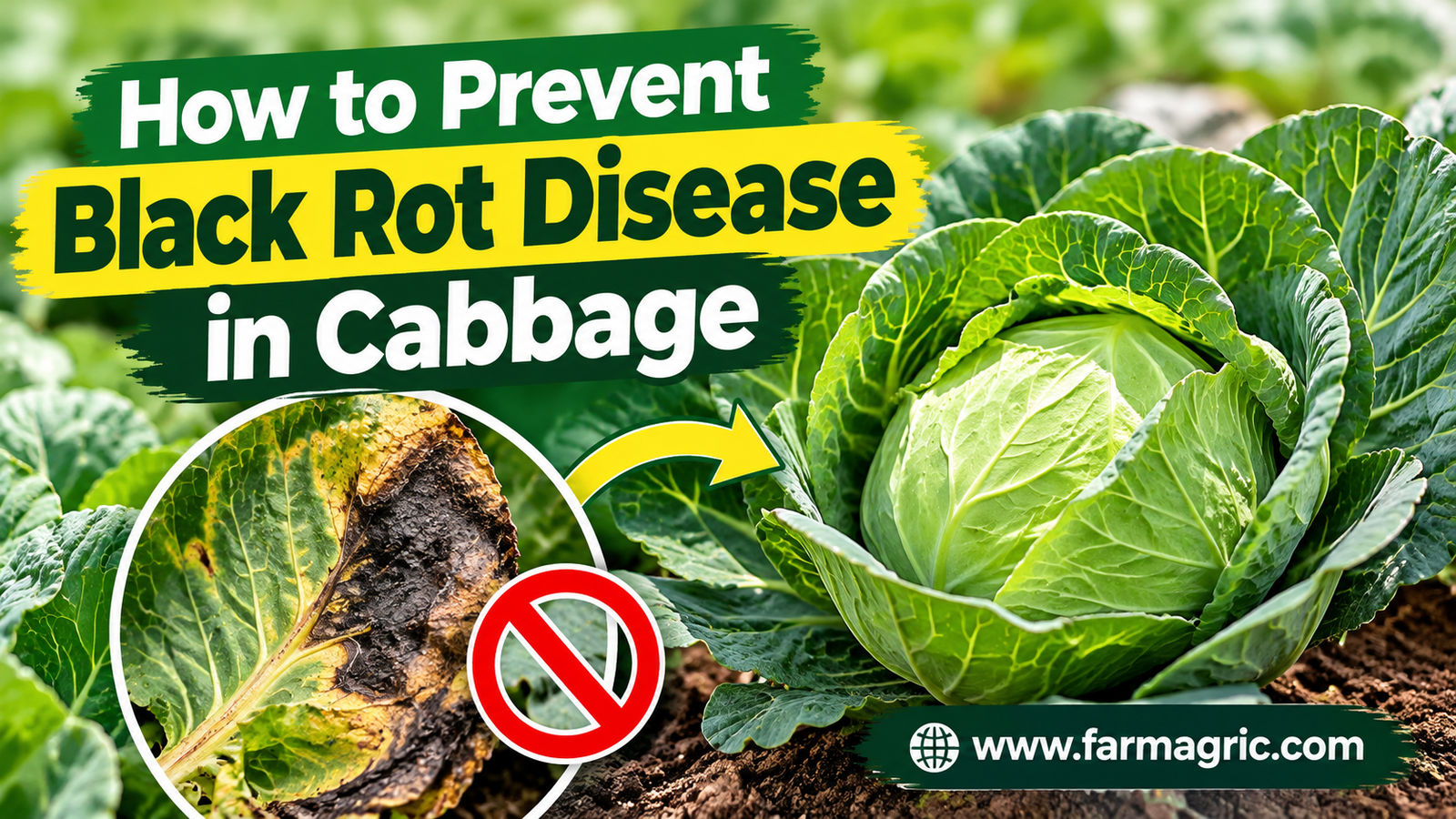
How to Prevent Black Rot Disease in Cabbage
How to Prevent Black Rot Disease in Cabbage
I once lost a third of a cabbage field to a disease I had never bothered to learn about. It began with a few plants whose outer leaves had yellow, V-shaped patches along the edges. I told myself it was just old leaves dying off. Then a warm, wet week arrived, the V-shaped patches spread inward, and when I cut open some heads the stems were black inside. That was black rot, and I learned that it is far easier to prevent than to fight, because once it gets into a field there is no spray that will clean it out.
Here is the plain answer. Black rot is a bacterial disease, so you cannot cure it with ordinary fungicides. It starts mostly from infected seed or transplants, then spreads through splashing water, wet leaves, tools, workers, and insects, and it survives on crop residue and on weeds in the cabbage family. You prevent it by using clean or hot-water-treated seed, raising healthy seedlings, rotating cabbage family crops for at least two to three years, keeping leaves dry, controlling insects and weeds, avoiding work in wet fields, and removing crop residue after harvest. Every one of those steps is about stopping the bacteria from getting in or moving around.
The short version of what I do is this. I buy certified disease-free seed, never save seed from a doubtful field, rotate with cereals, plant on well-drained beds with drip irrigation, give plants room for air to move, stay out of the rows when leaves are wet, control caterpillars and other insects that wound leaves, and pull out and bury any plant that shows the V-shaped yellow patches. The rest of this article explains how to recognize black rot, what most farmers get wrong, and how to put each step into practice.
What Most Farmers Get Wrong
The first mistake is using unclean seed or seedlings. Black rot often arrives on the seed itself, so a farmer who saves seed from last year’s crop or buys unlabeled seed can bring the disease in before the first leaf appears. Buying cheap seed is the most expensive saving I know.
The second mistake is spraying fungicide. Farmers see leaf yellowing and spots and reach for a fungicide, but black rot is caused by bacteria, so fungicides do nothing against it. Time and money are lost while the disease spreads.
The third mistake is planting cabbage family crops in the same ground again and again. Cabbage, kale, cauliflower, broccoli, rape, turnip, and mustard all carry black rot, and so do some weeds like shepherd’s purse and wild mustard. The bacteria survive in old residue and infected plants, so repeated planting keeps feeding them.
The fourth mistake is overhead watering and working in wet fields. Water splash carries the bacteria from leaf to leaf, and walking, cutting, or weeding through wet rows moves them on hands, tools, and clothes. A field that is clean in the morning can be infected by evening.
The fifth mistake is ignoring wounds. The bacteria enter through the small water pores at leaf edges and through any damage from insects, hail, wind, or tools. Caterpillar holes and rough handling give them an easy way in.
The sixth mistake is leaving the residue. After harvest, many farmers leave stumps and leaves in the field, and the bacteria survive in that trash for a long time, ready for the next crop.
The seventh mistake is dismissing the first signs. A few yellow V-shaped leaves look minor, but each one can release bacteria that spread through the whole field in the next rains.
Know What You Are Looking At
Black rot is caused by a bacterium that affects all cabbage family crops. The classic sign is a yellow, V-shaped patch that starts at the edge of a leaf, with the point of the V aiming toward the midrib. The tissue inside the V turns yellow, then brown, and dries out. The veins within the yellow area often turn black, which you can see if you hold the leaf up to the light.
As the disease moves into the stem, the plant may become stunted, lopsided, or drop its lower leaves. If you cut across the stem or the base of the head, you may see a black ring in the vascular tissue. Infected heads may rot in the field or in storage, and the rot often smells bad as secondary bacteria move in.
Seedlings can show the disease too. They may have yellowing or blackening at the leaf edges, or stunted growth. Because black rot can start in the nursery, check your seedlings closely before transplanting.
Other problems look similar, so check before you act. Soft rot is slimy and smelly, with wet, mushy tissue, and often follows black rot or injury. Fusarium yellows turns leaves yellow on one side of the plant, but without the V-shaped pattern and black veins. Nutrient shortage yellows leaves more evenly. Downy mildew gives yellow patches on top with gray fuzz underneath. If you are unsure, take fresh samples to your extension officer or a plant clinic.
Start With Clean Seed
Because the disease so often arrives on seed, this is the most important step. Buy certified, disease-free seed from a reputable dealer, and ask whether it was tested or treated. Do not use seed saved from a crop that had black rot, and be wary of seed from a neighbor’s field you have not seen.
Hot-water treatment can kill the bacteria on seed. A common recommendation is to soak seed in water held at about 50 degrees Celsius for 25 to 30 minutes, then cool it quickly in cold water and dry it. The temperature and time must be accurate, since water that is too hot kills the seed and water that is too cool does not kill the bacteria. Use a reliable thermometer, and confirm the exact procedure with your extension office or seed company before trying it. If your seed is already certified and treated, do not repeat the process.
Raise Clean Seedlings
The nursery can make or break a crop. Use fresh, clean soil or a sterile seedling mix in a spot where no cabbage family crops have grown recently. Do not reuse old trays or containers without washing them with a disinfectant, such as diluted bleach, followed by a rinse.
Water the seedlings from below or with a gentle, low-volume method, and avoid splashing the leaves. Give them good light and airflow, and do not crowd them. Inspect every tray before transplanting. Throw away any seedling with yellow leaf edges, black veins, or poor growth, and do not take chances with doubtful ones. A single infected seedling can start an outbreak in a clean field.
Rotation and Field Selection
Rotate cabbage family crops with non-hosts for at least two to three years. Good rotation crops include maize, sorghum, millet, beans, groundnut, and most root crops outside the cabbage family. Remember that kale, broccoli, cauliflower, turnip, rape, radish, and mustard count as cabbage family crops, so do not use them as a break.
Pick a well-drained field, and avoid low-lying plots that stay wet and humid. Do not plant next to a field with infected cabbage, especially if it lies upwind or uphill from your plot, since the bacteria move on wind-driven rain and runoff. Control weeds in the cabbage family around your field, such as wild mustard and shepherd’s purse, because they carry the bacteria between seasons.
Water and Field Management
Keep the leaves dry. Drip irrigation is by far the best choice, since it waters the soil and leaves the leaves alone. If you must water overhead, do it early in the morning so the leaves dry quickly, and avoid watering in the evening.
Plant on raised beds or ridges so water drains away, and mulch to reduce soil splash onto the lower leaves. Give plants room for air to move, following the recommended spacing for your variety, often about 45 to 60 centimeters between plants and 60 to 75 centimeters between rows. Crowded plants stay wet longer and spread the disease faster.
Avoid heavy nitrogen, which makes soft, lush leaves that are more susceptible. Keep the crop growing steadily with balanced feeding and regular water.
Do not work in the field when the plants are wet. Weeding, thinning, spraying, and harvesting through wet leaves spread the bacteria. If you have to work in a field with known disease, work in the healthy areas first and the infected areas last, and wash tools and boots after you finish.
Control Insects and Protect Leaves
Insect damage opens doors for the bacteria, and some insects carry them from plant to plant. Scout twice a week for diamondback moth, cabbage looper, aphids, flea beetles, and other pests, looking under the leaves and in the center of the plant. Treat early with a product approved for cabbage in your area, such as a biological or soap-based option for light infestations, following the label and the days to wait before harvest.
Handle plants gently during transplanting and cultivation, and avoid damaging the leaves and stems with hoes and tools. Fewer wounds mean fewer ways in.
Removing Infected Plants
When you spot the first V-shaped yellow patches or other signs, act at once. Remove the affected plants carefully, putting them in a bag or bucket before moving them so you do not shake bacteria onto healthy plants. Take them out of the field and bury them deeply or burn them. Do not compost infected material unless you are sure the compost reaches high temperatures, and do not feed it to animals and return the manure to the field.
Wash your hands, tools, and boots after handling infected plants. Disinfect knives and cutting tools with diluted bleach or a suitable disinfectant between plants if black rot is present.
If a large part of the field is already infected, pulling plants will not save the crop. Harvest the healthy heads quickly, keep them separate from affected ones, and focus on cleaning up the field and planning rotation for next season.
Chemical and Biological Options
Because black rot is bacterial, ordinary fungicides do not help. Copper-based products are sometimes used to slow the spread of bacterial diseases on foliage, but they do not cure infected plants and give only partial protection. Check with your extension office or a registered agro-dealer about what is approved and legal for cabbage in your country, and follow the label exactly, including the waiting period before harvest.
Think of any spray as a small addition to the main plan, not a replacement for clean seed, rotation, dry leaves, and good field hygiene. Where resistant or tolerant varieties exist, they are worth using. Some breeding companies list partial resistance to black rot, so ask your seed supplier.
After Harvest
Clear the field soon after harvest. Remove stumps, outer leaves, and any plant residue, and bury them deeply, burn them, or dispose of them well away from the next cabbage plot. Plowing the residue in so it breaks down faster also helps, because the bacteria survive much longer in intact plant tissue than in decayed material.
Do not leave cull piles at the edge of the field, and clean boxes, crates, tools, and equipment before using them again. Sort heads before storage and discard any with black rot or soft rot, since infected heads can spoil a whole store.
Step-by-Step Practical Plan
If I were planning your next crop, it would run like this.
Buy certified, disease-free seed from a trusted source, or hot-water treat doubtful seed using exact guidance from your extension office.
Raise seedlings in clean soil or a sterile mix, with clean trays, and discard any that look doubtful.
Choose a well-drained field with no cabbage family crops grown in it for the past two to three years.
Remove weeds from the cabbage family around the field.
Plant on raised beds at the recommended spacing, and use drip irrigation or water early in the day.
Keep nitrogen balanced and avoid lush, soft growth.
Scout twice a week for insects and for yellow V-shaped patches on the leaf edges.
Stay out of the field when it is wet, and clean tools between plants if disease appears.
Remove infected plants in a bag, bury or burn them, and wash hands and tools.
After harvest, clear residue and rotate to a non-host crop.
Warning Signs to Watch For
Learn to spot black rot early. Yellow V-shaped patches at the leaf edge are the classic sign. Black or darkened veins inside the yellow area confirm it. Stunted or lopsided plants with lower leaves yellowing and dropping suggest the disease is moving into the stem. A black ring in the cut stem or head base is another warning. Seedlings with yellow leaf edges or poor growth in the nursery may already be infected. A warm, humid spell with frequent rain will make the disease spread fast, so check the field more often then.
If you see any of these, act that week, not next month.
What I Would Do Differently If Starting Again Today
If I were starting fresh, I would never buy a packet of seed without asking about disease testing, and I would never plant a seedling I had not examined. I would keep a written map of every field and which crops grew there each year, so that cabbage family crops never returned within three years. I would put in drip irrigation before the first transplant, and I would make a rule that nobody walks through wet cabbage rows, including me. I would pull the first sick plant the day I found it, not the day it became a problem. I would also keep a notebook of rainfall and disease dates, because patterns show up on paper that memory never catches.
I would also stop reaching for fungicide whenever the leaves turned yellow. Learning what the disease actually was would have saved me years of wasted sprays.
FAQ
What causes black rot in cabbage?
A bacterium that infects all cabbage family crops. It spreads on infected seed and seedlings, through splashing water, insects, tools, and workers, and survives on crop residue and some weeds.
Can black rot be cured with fungicide?
No. It is a bacterial disease, so ordinary fungicides do not work. Prevention through clean seed, rotation, dry leaves, insect control, and field hygiene is the main defense, with copper products giving only limited help where approved.
How do I know if my cabbage has black rot?
Look for yellow V-shaped patches at the leaf edges, with the point of the V toward the midrib and blackened veins inside. A black ring in the cut stem or head base also points to it.
How long does black rot stay in the soil?
The bacteria survive mainly in infected plant residue and weeds, and can last for a year or more. They die out faster when the residue breaks down, which is why rotation and burying residue help.
Can I eat cabbage with black rot?
If only a few outer leaves are affected, you can trim them off and use the healthy inner head, as long as it is firm and does not smell bad. Discard heads with black rings, soft rot, or a bad smell.
The Advice Worth Bookmarking
Black rot arrives in the seed and spreads in the water. Buy clean, plant dry, rotate hard, and the disease never gets a first foothold.