How to Control Tomato Fruit Worm Naturally
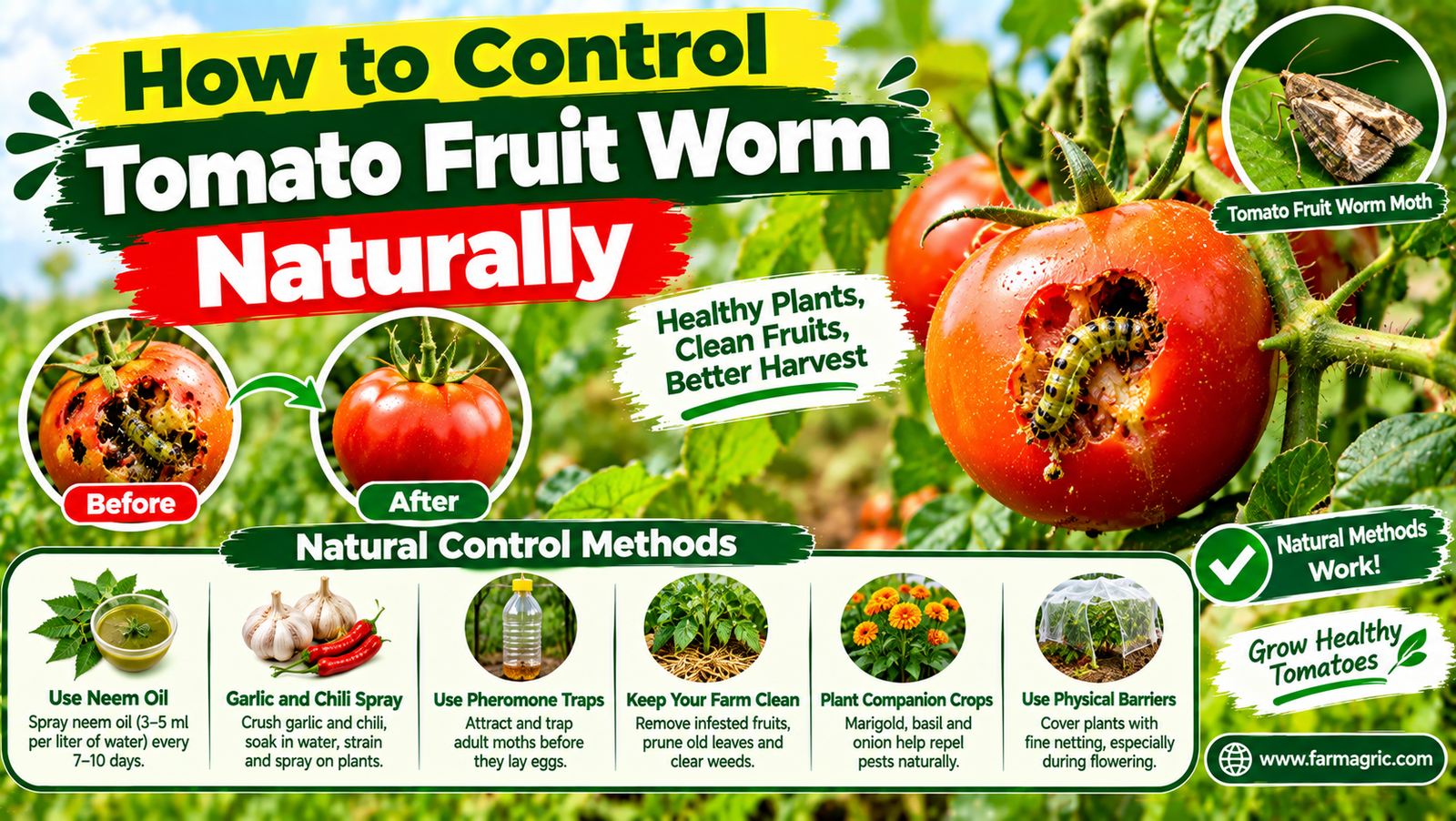
The adult moth lays individual eggs, usually on leaves near developing flower clusters or on the fruit itself once it begins to form, and the young caterpillar that hatches feeds briefly on the surface before boring into the nearest available fruit, where it then spends the majority of its damaging life protected from view and largely protected from any spray applied to the plant’s exterior. By the time a farmer notices the entry hole or the visible external damage, the caterpillar inside has usually already consumed a significant portion of that fruit’s interior and is well on its way toward completing its development. This life cycle is almost identical in structure to how fall armyworm operates in maize, hiding deep in the whorl where sprays cannot reach effectively, and it means that natural control methods focused on the egg and early larval stages, before boring begins, genuinely have an advantage over reactive spraying aimed at a caterpillar that has already found its hiding place.
If I were starting over, I would build a twice-weekly scouting habit specifically focused on eggs and young caterpillars from the very first season, rather than only noticing this pest once it had already announced itself through a hollowed, ruined fruit the way it did for me that first time. I would set up pheromone traps as a standard early-season practice rather than something I only adopted after years of dealing with heavier pressure than necessary, since the early warning they provide has consistently helped me scout more intensively at exactly the right moments in the seasons since I started using them. I would plant a small trap crop of sweet corn near my tomatoes as routine practice rather than an occasional experiment, given how clearly it has drawn egg-laying pressure away from my main crop in the seasons where I have used it consistently. And I would protect my natural predator populations far more deliberately from the beginning, understanding now how much free, ongoing control I was undermining in my earlier years of reaching for broad-spectrum options out of habit rather than genuine necessity.
Frequently Asked Questions About Natural Tomato Fruit Worm Control
Can I still eat tomatoes that had fruit worm damage if I cut away the affected part? Yes, cutting away the damaged portion, along with the tunnel the caterpillar created, leaves the remaining fruit generally safe to eat, though badly damaged fruit with significant internal decay following the initial worm damage is better discarded entirely.
Why don’t I ever see the caterpillar on my tomato plants before finding damaged fruit? Tomato fruit worm caterpillars bore into fruit shortly after hatching and spend nearly all of their feeding period hidden inside, which is exactly why scouting specifically for eggs and very young caterpillars before boring occurs is so much more effective than looking for the caterpillar itself once damage has become visible.
Does planting sweet corn near tomatoes really help reduce fruit worm damage? Yes, adult moths often prefer laying eggs on corn silk over tomato fruit when both are available, so a trap crop of sweet corn planted nearby can genuinely draw a meaningful portion of egg-laying activity away from the tomato planting itself.
Are pheromone traps effective against tomato fruit worm without any other control methods? Pheromone traps work best as one part of a broader approach, since they catch adult male moths and provide useful early warning of population pressure, but combining them with regular scouting, hand-picking of eggs and young caterpillars, and predator protection gives significantly better overall control than relying on traps alone.
Why shouldn’t I just use insecticide against tomato fruit worm since natural methods take more effort? Insecticide struggles to reach caterpillars already tunneled inside fruit, meaning much of its effect falls on the more vulnerable but also more beneficial insects like parasitic wasps that would otherwise provide free, ongoing control, so relying heavily on chemical treatment can undermine long-term management even when it offers some short-term reduction in visible adult moths or exposed young caterpillars.
If there is one thing I want you to remember from all this, it is that tomato fruit worm wins the moment it disappears inside a fruit, so beat it before that happens, at the egg you crush between your fingers, the young caterpillar you catch feeding out in the open, and the trap that pulls the adult moth away from your planting before she ever lays the eggs that would have become the next hole in the next fruit you were looking forward to picking.