How IoT Sensors Help Farmers Monitor Soil Conditions
A farmer can walk through a field and see whether crops look healthy, but important changes are often happening below the crop canopy before they become visible. Soil may be drying faster in one section than another, irrigation water may not be reaching the intended root zone, soil temperature may be affecting germination, or electrical conductivity may change as salts or dissolved nutrients accumulate.
Traditional field inspection, soil sampling and laboratory analysis remain important tools for understanding these conditions. The problem is that they do not always provide continuous information from the field. A soil sample collected today tells the farmer something about the sampled location and time. It does not continuously show what is happening in that soil tomorrow afternoon after irrigation, rainfall or a period of intense heat.
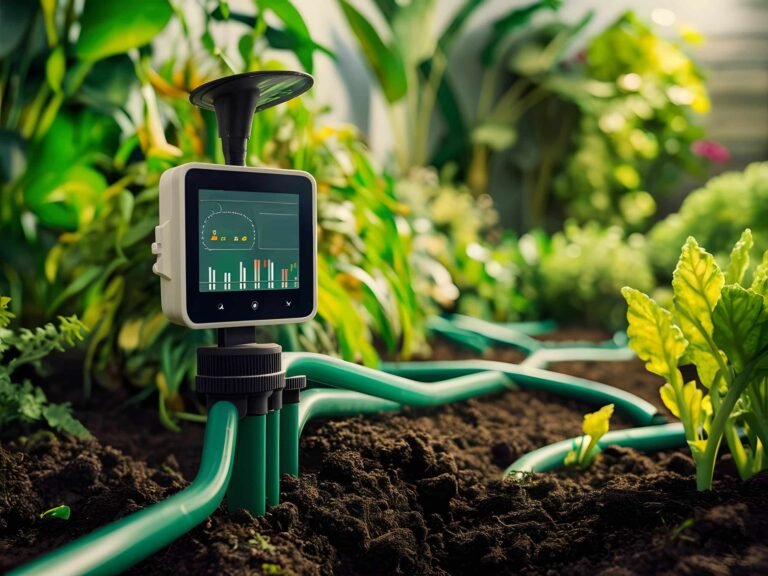
This is where Internet of Things, or IoT, soil monitoring systems can become useful. Sensors installed in the field can collect measurements such as soil moisture and temperature and, depending on the system, other properties such as electrical conductivity or pH. A connected device can transmit those readings to a local gateway, phone, computer or cloud platform, allowing farmers and farm managers to observe changes without physically visiting every monitoring point.
The important point is that IoT does not make the soil healthier by itself. Its value comes from turning conditions that are difficult to observe continuously into usable information for irrigation, crop management, fertigation, field scouting and farm decision-making.
What Are IoT Soil Sensors?
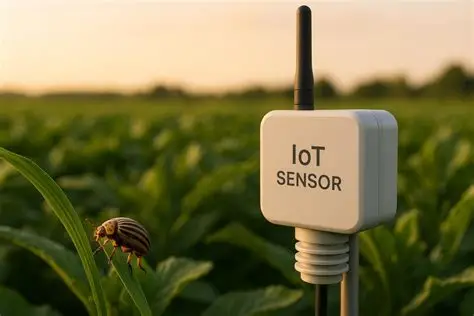
IoT soil sensors are field devices that measure selected soil or environmental conditions and connect those measurements to a communication or data system. The sensor produces a reading, a controller or data logger collects it, and a communication system can transmit the information to a dashboard, mobile application or other software.
A basic soil sensor might measure moisture at a particular depth. A more sophisticated monitoring station can combine several measurements, such as soil moisture at multiple depths, soil temperature, electrical conductivity, air temperature and humidity.
The “IoT” part refers mainly to the connection between the physical sensor and the wider information system. Instead of a farmer manually checking an instrument and writing down a reading, connected sensors can collect measurements at programmed intervals and make the information available remotely.
That distinction matters. A soil moisture probe can measure moisture without being connected to the internet. Adding a data logger, cellular modem, LoRaWAN network, Wi-Fi connection or another communication method can turn it into part of an IoT monitoring system.
What Soil Conditions Can IoT Sensors Monitor?
Not every sensor measures every soil property. Farmers should first decide what information is needed and then select sensors accordingly.
| Soil or environmental condition | What it tells the farmer | Common agricultural use |
|---|---|---|
| Soil moisture | Water status within the monitored soil volume | Irrigation scheduling and root-zone monitoring |
| Soil temperature | Thermal conditions around roots and seeds | Germination, planting and crop development decisions |
| Electrical conductivity | Electrical response influenced by dissolved salts and other soil conditions | Salinity assessment, fertigation monitoring and field variability |
| Soil pH | Acidity or alkalinity of the sampled soil | Soil fertility and amendment decisions |
| Nutrient indicators | Possible information about selected nutrients, depending on sensing method | Fertilizer and nutrient management |
| Soil water tension | How strongly water is held by soil | Irrigation scheduling |
| Air temperature and humidity | Conditions surrounding the crop rather than the soil itself | Crop and irrigation decision support |
Moisture and temperature are among the more established measurements used in field sensor systems. Sensors that attempt to estimate nutrients, pH or other chemical properties require more careful interpretation because measurement quality can depend heavily on soil type, calibration, temperature, salinity and the sensing technology itself.
For this reason, a farmer should not assume that a device advertised as a “soil health sensor” provides the same quality of information as a properly conducted laboratory soil analysis.
What Agricultural Problem Do IoT Soil Sensors Solve?
The central problem is lack of timely information.
A farmer may know that a field was irrigated for six hours, but that does not necessarily reveal how much water remains available in the root zone. Another field may receive the same irrigation duration but have different soil texture, drainage characteristics, crop growth or weather exposure.
The same problem occurs with fertilizer management. A farmer may know how much fertilizer was applied but may not know how soil moisture, salinity or other conditions are changing afterwards.
IoT sensors can provide a continuous stream of measurements from selected locations. This can help farmers move from decisions based only on calendars, visual inspection or fixed routines toward decisions supported by actual field observations.
However, sensor data is only useful when it leads to a better decision. A dashboard full of readings does not automatically improve farm management.
How Do IoT Soil Sensors Work?
An IoT soil monitoring system normally contains several connected components.
First, a sensor is placed in the soil at a selected depth. Depending on its design, it detects soil moisture, temperature, electrical properties or another parameter.
Second, a controller or data logger receives the measurement. The device may store readings locally before transmitting them.
Third, a communication system sends the information to another device or platform. Depending on the farm, this might involve cellular connectivity, Wi-Fi, LoRaWAN, radio communication or another wireless network.
Fourth, software displays the information. A farmer may see current readings, historical trends, threshold alerts or graphs on a smartphone, tablet or computer.
Finally, the farmer interprets the information and decides whether an action is necessary.
The complete process can therefore be simplified as:
Soil condition โ sensor measurement โ data logger/controller โ communication โ dashboard or alert โ farm decision
In an automated irrigation system, the final stage can also involve an actuator. For example, sensor information could be connected to irrigation controls that start or stop equipment according to predefined conditions. Automation should still include sensible thresholds, manual overrides and safeguards because a faulty sensor or communication failure can otherwise lead to an inappropriate irrigation decision.
How Soil Moisture Sensors Help With Irrigation
Soil moisture is one of the most practical applications of connected soil sensing.
Irrigation decisions are often based on a combination of crop growth stage, weather, soil type, irrigation capacity, recent rainfall and farmer experience. Soil moisture sensors add another source of information by showing how much water is present in the monitored part of the soil profile.
This can help answer questions such as:
Has the root zone dried significantly since the last irrigation?
Did irrigation actually increase soil moisture at the desired depth?
Is water moving deeper than the active root zone?
Is one management zone drying faster than another?
Did rainfall provide enough moisture to delay irrigation?
Is the soil remaining excessively wet?
Extension guidance from the University of Minnesota and Oregon State University emphasizes that sensor placement and interpretation are critical. Sensors should represent meaningful field conditions and, where appropriate, be installed at multiple depths within the crop root zone.
A sensor therefore should not simply be buried wherever it is convenient. If the sensor is placed in an unusually wet depression, beside an irrigation emitter, near a field edge or in an area that does not represent the management zone, its readings may lead to poor decisions.
Why Monitoring Multiple Soil Depths Matters
Water does not necessarily move uniformly through the soil profile.
Suppose a farmer irrigates a vegetable field and places a sensor close to the surface. The reading may show that the soil is wet immediately after irrigation. That does not necessarily mean the deeper root zone has received sufficient water.
Conversely, if a deeper sensor continues showing high moisture after repeated irrigation, the farmer may discover that water is moving below the active root zone rather than being used effectively by the crop.
Monitoring multiple depths can therefore reveal the movement of water through the root zone.
University extension guidance commonly recommends monitoring more than one depth and selecting locations that represent the crop, soil and management zone. The exact depth should depend on crop rooting characteristics, soil conditions and the purpose of the monitoring system.
How IoT Sensors Help Farmers Understand Soil Temperature
Soil temperature affects several agricultural processes, particularly during crop establishment.
Temperature measurements can help farmers understand conditions around germinating seeds and developing roots. They can also complement weather information when evaluating field conditions.
For example, two fields may have similar air temperatures but different soil temperatures because of soil moisture, residue, shading, soil colour, planting conditions or other factors.
A connected soil-temperature sensor can provide a time series rather than a single measurement. This allows the farmer to observe how the soil warms and cools over time.
Soil temperature should not be treated as an isolated decision variable. It is more useful when combined with crop requirements, weather information, soil moisture and the farmer’s knowledge of the production system.
Can IoT Sensors Measure Soil pH?
Some sensor systems are designed to measure or estimate soil pH, but this is an area where farmers should be particularly careful about accuracy and calibration.
Soil pH is traditionally determined through soil sampling and analytical procedures. In-field sensing can provide useful information, but the quality of the result depends on the sensor technology, soil characteristics, calibration and operating conditions.
Recent research into in-situ soil pH sensing continues to examine how calibration approaches affect measurement quality. This is one reason farmers should not automatically replace laboratory soil testing with a sensor simply because a device displays a pH value.
For a commercial farm, connected pH measurements may be useful as part of a broader monitoring strategy, but important fertilizer, liming or soil amendment decisions may still require representative soil sampling and appropriate laboratory analysis.
What About Soil Nutrient Sensors?
Some modern sensor platforms attempt to provide information about nutrients such as nitrogen, phosphorus and potassium.
This area is developing rapidly, but nutrient sensing is more complicated than measuring many physical variables. Nutrient availability depends on soil chemistry, moisture, temperature, texture, organic matter, microbial processes, crop uptake and other factors.
A sensor reading should therefore not automatically be interpreted as a complete fertilizer recommendation.
IoT research and commercial systems increasingly combine soil measurements with other field information, but recent reviews continue to identify calibration, accuracy, connectivity and scalability as important challenges.
For nutrient management, the sensible approach is to use sensor information alongside soil tests, crop observations, historical field records and agronomic recommendations rather than treating one sensor reading as the complete answer.
IoT Soil Monitoring Versus Traditional Soil Testing
IoT sensors and laboratory soil testing serve different purposes.
Traditional soil testing provides a detailed analytical snapshot from collected samples. IoT sensors can provide repeated measurements from fixed field locations.
One does not necessarily replace the other.
| Approach | Main strength | Main limitation |
|---|---|---|
| Laboratory soil testing | Detailed analysis of selected soil properties | Samples represent particular locations and collection times |
| Manual field observation | Low technology requirement and direct field context | Subjective and difficult to record continuously |
| Portable soil probe | Immediate field measurements | Coverage depends on operator and sampling strategy |
| Fixed soil sensor | Continuous monitoring at selected points | Represents only the monitored locations |
| IoT-connected sensor | Continuous measurements plus remote access and alerts | Requires additional communication, power and data infrastructure |
| Remote sensing | Wider spatial coverage | Often provides indirect or model-based information rather than direct soil measurements |
The strongest farm-management system may combine several of these methods.
How Farmers Can Use IoT Soil Data in Daily Farm Management
The usefulness of IoT soil sensors becomes clearer when the data is connected to a specific management decision.
A vegetable farmer using drip irrigation, for example, can monitor soil moisture at different depths in representative production zones. Instead of irrigating every zone for exactly the same duration, the farmer can examine moisture trends and account for differences in soil conditions.
A greenhouse operator can combine root-zone moisture information with temperature and environmental data to understand how quickly growing media or soil is drying.
A plantation manager can use strategically positioned sensors to monitor representative blocks where soil depth, terrain or water availability differ.
A farm manager can also use historical sensor records to investigate recurring problems. If one section repeatedly dries faster than another, the issue may relate to soil texture, irrigation distribution, drainage, root development or another field characteristic.
The technology is most useful when the farm team knows what action a particular measurement is supposed to support.
IoT Soil Sensors and Precision Agriculture
Precision agriculture is not simply the use of digital equipment. The important part is using information to manage field variability.
A farm can have one soil sensor and still be using technology, but it is not necessarily practicing sophisticated precision management.
Precision agriculture becomes more relevant when farmers use sensor readings to distinguish between management zones. For example, a field with sandy soil may require different irrigation management from an area with heavier soil. Similarly, a poorly drained area may need different management from an elevated section.
Oregon State University guidance recommends defining management zones using factors such as soil texture, soil depth, topography, irrigation characteristics and historical crop performance before deciding where sensors should be installed.
This principle is important because sensor placement is part of the agronomy, not merely an installation task.
What Equipment Is Needed for an IoT Soil Monitoring System?
A basic connected system may require several components.
| Component | Purpose |
|---|---|
| Soil sensor | Measures the selected soil condition |
| Controller or data logger | Receives and stores sensor readings |
| Communication device | Sends data from the field |
| Gateway, where required | Connects local sensor networks to wider communications |
| Power supply | Battery, solar, mains electricity or another suitable source |
| Software platform | Displays, stores and analyzes readings |
| Smartphone or computer | Allows farmers or managers to view information |
| Mounting and protection | Protects equipment from weather, machinery and animals |
The exact architecture varies. A small farm might use a single connected sensor with cellular communication, while a large commercial farm may use several monitoring zones connected through gateways and a centralized dashboard.
Does IoT Soil Monitoring Require Internet?
The physical sensor does not necessarily require internet access to measure soil conditions.
The internet or another communication network becomes important when the farmer wants remote access, cloud storage, online dashboards or alerts delivered over long distances.
A system can sometimes store data locally when connectivity is unavailable and transmit the information later. The specific capability depends on the hardware and software.
This is particularly important when evaluating technology for farms in areas where mobile coverage is inconsistent.
For farms in Nigeria and other parts of Africa, connectivity should be assessed at the actual field location rather than assumed from coverage in the nearest town. Power availability, SIM or network compatibility, battery performance, solar installation, technical support and replacement parts can all affect whether a connected system remains operational.
What About Solar-Powered IoT Soil Sensors?
Solar power can make remote monitoring more practical where grid electricity is unavailable or unreliable.
A solar-powered system normally combines a solar panel with a battery and power-management components. The system must be sized according to the sensor load, measurement frequency, communication requirements and local environmental conditions.
Solar power does not eliminate maintenance. Panels can become dirty, batteries can degrade, cables can be damaged and communication equipment can fail.
For agricultural equipment installed in remote fields, physical protection can be just as important as the sensor itself.
How Much Do IoT Soil Sensors Cost?
There is no single reliable price for an IoT soil monitoring system because the cost can vary considerably according to sensor type, number of monitoring locations, communication method, power system, software and installation requirements.
A farmer should consider the total cost rather than looking only at the sensor price.
Important cost components may include:
- Soil sensors
- Data loggers or controllers
- Gateways
- Communication hardware
- SIM or data charges
- Solar panels and batteries
- Installation
- Protective enclosures
- Software subscriptions
- Calibration or verification
- Maintenance
- Replacement sensors
- Technical support
- Training
- Integration with irrigation equipment
A low-cost sensor may become expensive to operate if it has poor durability, requires frequent replacement or produces data that farmers cannot interpret.
Conversely, a sophisticated system may be unnecessary for a small farm if a simple manual soil moisture tool can answer the management question at a much lower cost.
Is IoT Soil Monitoring Worth It for Small Farms?
Small farms can use sensor technology, but they do not necessarily need a large IoT installation.
A small vegetable farmer might start with one or two representative monitoring locations and a relatively simple soil moisture device. If irrigation is the main problem, there may be little reason to purchase sensors for numerous soil properties that will not affect an actual farm decision.
Another option is a service model. Instead of owning the complete technology, farmers can potentially access soil monitoring, irrigation advisory or precision agriculture services from agricultural technology providers or consultants.
The right question is not whether a small farm can use IoT. It is whether the information generated will solve a sufficiently important problem to justify the cost and complexity.
Which Farms Can Benefit Most?
IoT soil monitoring can be useful in several production systems, particularly where soil conditions directly influence frequent management decisions.
| Farm or production system | Potential application |
|---|---|
| Vegetable farms | Irrigation scheduling and root-zone monitoring |
| Greenhouses | Soil or growing-media moisture and temperature monitoring |
| Orchards | Monitoring moisture at different root-zone depths |
| Row crops | Irrigation scheduling and management-zone monitoring |
| Plantations | Monitoring representative areas with different soil or terrain conditions |
| Irrigated commercial farms | Continuous monitoring across irrigation zones |
| Nurseries | Moisture and temperature monitoring in growing media |
| Research farms | Detailed measurement of soil and crop responses |
| Smallholder farms | Targeted monitoring where irrigation or soil variability is a major problem |
The suitability depends more on the management problem than on the crop name alone.
Can IoT Sensors Improve Fertilizer Management?
They can contribute information, but the role depends heavily on the sensor.
Soil moisture data can help farmers understand whether water is available for nutrient uptake and whether irrigation may be moving nutrients beyond the root zone.
Electrical conductivity measurements can sometimes help monitor changes associated with salts and dissolved substances, particularly in irrigated or fertigated systems. Research has examined IoT-based monitoring of soil moisture and electrical conductivity under fertigation conditions.
However, electrical conductivity is not a direct measurement of every nutrient available to the crop.
Similarly, a sensor that claims to estimate nitrogen should not automatically be treated as a replacement for agronomic assessment or laboratory analysis.
The most reliable approach is to combine sensor information with soil testing, fertilizer records, crop observations, irrigation records and professional agronomic interpretation where necessary.
How IoT Sensors Can Help Detect Irrigation Problems
Sensor data can reveal patterns that deserve investigation.
Suppose an irrigation event is applied but the deeper soil sensor shows little change. That could indicate a problem with water distribution, sensor placement, irrigation duration, soil conditions or another factor.
If soil moisture remains unusually high for an extended period, it may indicate excessive irrigation or poor drainage.
If two comparable management zones respond very differently to the same irrigation event, the farmer may need to inspect the irrigation system, soil variability or sensor installation.
The sensor does not automatically identify the cause. It provides evidence that something deserves attention.
This distinction is important because a connected sensor cannot compensate for a poorly designed irrigation system, blocked emitters, damaged pipes, incorrect irrigation pressure or an agronomically inappropriate schedule.
Can IoT Sensors Be Used With Automated Irrigation?
Yes. Soil sensors can form part of an automated irrigation system when they are connected to suitable control equipment.
A basic automated arrangement might monitor soil moisture and send information to a controller. When a defined threshold is reached, the controller can operate an irrigation valve or pump according to programmed rules.
More advanced systems can combine soil moisture with weather information, crop stage, irrigation history and other inputs.
Automation should be introduced carefully. The system needs sensible thresholds and fail-safe arrangements. Farmers should also be able to override automatic operation when field conditions require it.
A sensor error should not be allowed to cause uncontrolled irrigation.
The Role of Weather Data
Soil monitoring becomes more useful when it is combined with weather information.
Rainfall can explain sudden increases in soil moisture. High temperatures, wind and solar radiation can help explain faster drying. Weather information can therefore provide context for interpreting sensor trends.
A connected farm platform may combine soil moisture, weather station data, crop information and irrigation records into one decision-support system.
The goal is not to collect the maximum amount of data. The goal is to collect enough reliable information to make better decisions.
Can AI Be Used With IoT Soil Sensors?
Artificial intelligence and machine learning can be used to analyze sensor data, identify patterns and support predictions, but AI should not be treated as a substitute for good field data.
For example, a software platform might analyze historical soil moisture, weather and crop information to estimate how quickly a monitored area is likely to dry.
AI-based systems can also be used for anomaly detection, forecasting and decision support. Recent research reviews describe increasing integration between IoT, machine learning, remote sensing and soil monitoring.
The quality of the output still depends on the quality and representativeness of the underlying data. A poorly positioned sensor can produce a very sophisticated analysis of the wrong part of the field.
Human oversight remains important, particularly when decisions affect irrigation, fertilizer application or crop protection.
Main Benefits of IoT Soil Monitoring
The main benefit is better visibility into changing field conditions.
Instead of relying entirely on occasional observations, farmers can develop a record of how soil conditions change over time. This can support irrigation scheduling, field scouting and identification of unusual conditions.
Connected systems can also reduce the need for staff to physically visit every monitoring location simply to collect a reading. Alerts can draw attention to conditions that require investigation.
For larger farms, this can become particularly useful when fields are geographically dispersed.
Research and agricultural extension guidance support the use of soil moisture information as one tool for improving irrigation management, while also emphasizing appropriate placement, interpretation and maintenance.
The potential benefits therefore include better information, more timely decisions, improved monitoring of field variability and more systematic farm records. They should not be interpreted as guaranteed water savings or yield increases.
Limitations of IoT Soil Sensors
IoT soil monitoring has important limitations.
The first is representativeness. A sensor measures the location where it is installed. A single sensor cannot automatically represent an entire farm.
The second is installation quality. Poor contact between the sensor and surrounding soil, incorrect depth or inappropriate placement can affect readings.
The third is calibration. Different sensor technologies respond differently to soil texture, salinity, temperature and other conditions. Recent research continues to identify sensor accuracy and calibration as significant issues in agricultural soil sensing.
Connectivity is another challenge. A sensor may work correctly but fail to deliver data remotely because of network or power problems.
There is also a human challenge. Farmers and farm managers need to understand what a reading means before acting on it. A graph showing moisture at 28 percent is not automatically meaningful without knowing the sensor’s measurement method, soil characteristics, crop requirements and relevant management thresholds.
Finally, connected equipment adds another layer of maintenance. Batteries, solar systems, sensors, communication devices and software all require attention.
Common Mistakes Farmers Should Avoid
One common mistake is buying sensors before defining the management problem.
If irrigation scheduling is the problem, soil moisture monitoring may be appropriate. If the real problem is poor irrigation uniformity, however, the farm may also need flow and pressure measurements.
Another mistake is installing one sensor and assuming it represents an entire heterogeneous field.
Farmers should also avoid treating every sensor reading as a laboratory-quality measurement. The accuracy and usefulness of the result depend on the sensing technology and conditions under which it operates.
A further mistake is collecting large amounts of data without deciding what action the data should trigger.
The objective should always be management improvement, not data accumulation.
How to Choose an IoT Soil Monitoring System
Before purchasing a system, start by identifying the decision the technology is supposed to improve.
| Question | Why it matters |
|---|---|
| What soil condition needs to be monitored? | Prevents paying for unnecessary measurements |
| At what depth should measurements be taken? | Determines the appropriate sensor configuration |
| How variable is the field? | Determines how many monitoring locations may be needed |
| How often is data required? | Influences power, storage and communication requirements |
| Is remote access necessary? | Determines whether a connected system is justified |
| Is cellular coverage available? | Affects communication choices |
| Is reliable electricity available? | Determines power-system requirements |
| Can the sensor be calibrated or verified? | Helps assess measurement reliability |
| Can data be exported? | Reduces dependence on one software platform |
| What happens during connectivity failure? | Shows whether local data storage is available |
| What maintenance is required? | Helps calculate total operating cost |
| Is local technical support available? | Important when equipment fails |
| Can the system expand later? | Helps avoid replacing equipment as the farm grows |
Farmers should also ask the supplier exactly what is being measured rather than accepting broad terms such as “soil health” or “smart soil data.”
How to Start Using IoT Sensors on a Farm
The most practical approach is to start with the farm problem.
Define the management problem
Decide whether the main issue is irrigation scheduling, soil temperature, salinity monitoring, fertigation management, field variability or another specific problem.
Map the field and identify management zones
Consider soil texture, topography, crop type, irrigation layout, drainage and historical field performance. Sensors should be installed where their readings will represent meaningful conditions.
Choose the minimum useful measurements
Do not automatically buy a multi-parameter sensor. If soil moisture is the only measurement needed for an irrigation decision, start there.
Select suitable sensor locations and depths
Install sensors within representative parts of the crop root zone. Multiple depths may be appropriate when the objective is to understand how water is moving through the soil profile.
Establish a baseline
Observe readings over time and relate them to irrigation, rainfall, crop growth and field observations. This helps the farm team understand what normal conditions look like.
Connect the monitoring system
Add cellular, LoRaWAN, Wi-Fi, radio or another communication method if remote monitoring provides enough value to justify the additional cost.
Create practical thresholds and alerts
An alert should correspond to a decision. For example, a soil moisture alert may prompt a field inspection or irrigation review.
Compare sensor information with field observations
Walk the field. Check plants, irrigation equipment, soil conditions and weather. Sensor data should complement farm knowledge rather than replace it.
Review performance before expanding
If the system provides useful information and leads to better decisions, expand it to additional management zones. If it does not change farm decisions, adding more sensors may simply increase costs and maintenance.
Hypothetical Example: A Commercial Vegetable Farm
Consider a hypothetical commercial vegetable farm divided into several irrigation blocks.
The farm manager notices that irrigation duration is based largely on a fixed schedule. Some blocks have heavier soil, while others contain lighter soil. Crop growth also varies across the farm.
Instead of installing sensors everywhere, the manager establishes representative management zones. Soil moisture sensors are installed at selected depths in each zone, while a weather station provides local weather information.
The sensor readings show that one lighter-soil zone is drying faster than a heavier-soil zone. The farm manager uses this information alongside crop observations and irrigation records to adjust management.
Later, one irrigation block shows an unusual moisture response after an irrigation event. Rather than immediately assuming that the crop needs more water, the manager checks the irrigation system for pressure, flow and distribution problems.
The important lesson is that the sensors do not make the decisions themselves. They provide information that helps the farm manager investigate conditions and make better-informed decisions.
Hypothetical Example: A Small Tomato Farm
A hypothetical small tomato farmer using drip irrigation may not need a complex cloud platform with dozens of sensors.
A simpler arrangement could include a soil moisture sensor or portable probe, a basic irrigation record and rainfall observations.
The farmer could monitor soil moisture at representative points and compare the readings with crop development and irrigation history.
If the system helps the farmer avoid unnecessary irrigation or identify when the root zone is becoming too dry, it may provide useful value without requiring a large technology investment.
This is why farm size alone should not determine technology adoption. The value of the information and the cost of obtaining it are more important.
Is IoT Soil Monitoring Right for Every Farm?
No.
A farm with reliable rainfall, little irrigation and low soil variability may have limited need for continuous connected soil monitoring.
A small farm may find manual monitoring or periodic soil testing more economical.
A commercial irrigated farm with expensive water, multiple management zones and variable soil conditions may have a stronger reason to invest in continuous monitoring.
The decision should be based on the cost of the agricultural problem being managed, the quality of information required and the practical ability of the farm team to use that information.
What Farmers Should Ask an IoT Sensor Supplier
Before purchasing, farmers should ask:
- What exactly does the sensor measure?
- Does it measure the property directly or estimate it?
- What soil types has it been tested under?
- What calibration procedure is required?
- At what depths can it operate?
- How often does it record data?
- How long does the power supply normally support the system under the intended operating conditions?
- What communication networks are supported?
- What happens if the network fails?
- Is data stored locally?
- Can the farm export its data?
- Is there a recurring software or connectivity charge?
- Who owns the collected data?
- What maintenance is required?
- How often should the sensors be checked?
- Are replacement parts available locally?
- Is technical support available in the farmer’s region?
- Can the system integrate with irrigation controllers?
- What happens when a sensor fails?
- Can the system be expanded later?
These questions help the farmer evaluate the entire system rather than simply comparing sensor prices.
The Future of IoT Soil Monitoring in Agriculture
IoT soil monitoring is moving toward systems that combine several data sources rather than relying on one sensor.
Connected soil measurements can increasingly be combined with weather stations, satellite imagery, crop observations, irrigation records and farm-management software. Machine learning can then be used in some systems to identify patterns or support predictions.
Recent research continues to explore sensor fusion, edge computing, machine learning and connected soil-monitoring systems. At the same time, researchers continue to identify challenges involving sensor calibration, connectivity, data quality, interoperability and cost.
This suggests that the practical direction of the technology is not simply “more sensors.” The more useful development is better integration of reliable measurements into farm decisions.
For farmers, that means the future value of IoT soil monitoring will depend not only on sensor hardware but also on agronomic interpretation, data quality, connectivity, affordability and local technical support.
Frequently Asked Questions
What are IoT soil sensors?
IoT soil sensors are field sensors that measure soil or environmental conditions and connect their readings to a data system. Depending on the device, they may monitor soil moisture, temperature, electrical conductivity, pH or other parameters.
What is the main use of IoT soil sensors in farming?
One of the most practical uses is monitoring soil moisture to support irrigation decisions. Farmers can also use connected measurements to observe soil temperature, electrical conductivity and other conditions where suitable sensors are available.
Can IoT sensors tell farmers when to irrigate?
They can provide information that supports irrigation scheduling, particularly when soil moisture is monitored at representative locations and depths. The farmer still needs to consider crop requirements, soil conditions, rainfall, irrigation-system performance and other factors.
Do IoT soil sensors need internet?
The sensor itself can measure soil conditions without internet access. Internet or another communication network is generally needed for remote dashboards, cloud storage or alerts, although some systems can store data locally until connectivity becomes available.
Are IoT soil sensors suitable for small farms?
They can be, particularly when irrigation or another soil-management problem has a significant effect on production. Small farms may prefer a simpler sensor or monitoring service instead of installing a large connected network.
Can soil sensors replace laboratory soil testing?
Generally, they should not automatically be treated as replacements. Continuous field sensors and laboratory soil analysis provide different types of information. Important fertilizer and soil amendment decisions may still require representative laboratory testing.
How accurate are IoT soil sensors?
Accuracy varies according to sensor technology, soil properties, installation, calibration, temperature, salinity and other operating conditions. Farmers should evaluate the measurement method and verification procedure rather than assuming that every digital sensor provides laboratory-level accuracy.
Are IoT soil sensors worth the cost?
They can be worthwhile when better soil information leads to valuable management improvements. The decision depends on farm size, crop, irrigation system, soil variability, sensor cost, connectivity, maintenance and the importance of the problem being addressed.