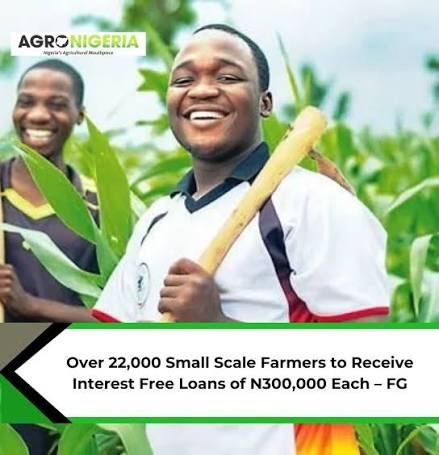
Government Agricultural Loans in Nigeria: Programs, Eligibility and How to Apply
Government-backed agricultural finance in Nigeria can provide farmers and agribusinesses with access to credit, guarantees, subsidized inputs and other forms of financial support. However, not every government agricultural programme is a direct cash loan, and not every programme advertised online is currently open for applications.
Nigeria’s agricultural finance system involves institutions such as the National Agricultural Development Fund (NADF), Central Bank of Nigeria (CBN), Bank of Agriculture (BOA) and participating financial institutions. Some programmes provide loans directly through approved channels, while others reduce lending risks, subsidize inputs or connect farmers with commercial partners.
As of October 2026, the financing landscape is also changing, with NADF developing new approaches involving blended finance and non-interest financing. Farmers therefore need to understand what type of support a programme actually provides before applying.
What Are Government Agricultural Loans?
Government agricultural loans are credit facilities supported, funded, guaranteed or facilitated by government institutions for agricultural activities.
They can support:
- Crop production
- Livestock farming
- Poultry
- Fisheries
- Irrigation
- Farm machinery
- Agricultural inputs
- Processing
- Storage
- Transportation
- Agribusiness working capital
- Agricultural value chains
Government involvement can take different forms.
A programme may provide funding directly, lend through a participating bank, guarantee part of a bank’s agricultural loan, provide subsidized inputs or combine public funding with private-sector finance.
This distinction matters because a farmer searching for a “government loan” may actually be applying through a bank or another approved financial institution.
How Government Agricultural Financing Works in Nigeria
Government agricultural finance generally operates through several channels.
Direct agricultural development financing
Institutions established to support agricultural development can create financing facilities for farmers and agribusinesses.
The National Agricultural Development Fund was established under the National Agricultural Development Fund (Establishment) Act 2022. Its mandate includes facilitating access to agricultural finance and supporting development across Nigeria’s agricultural sector.
Credit guarantees
Government-backed guarantee schemes can encourage banks to lend to agriculture by reducing part of the lender’s risk.
The Agricultural Credit Guarantee Scheme Fund (ACGSF), managed by the CBN, was established to encourage banks to extend credit to the agricultural sector. The CBN states that the scheme can guarantee up to 75% of the loan value in default, subject to the scheme’s rules.
A guarantee does not mean the farmer receives free money or is released from the obligation to repay the loan.
On-lending
Government or development institutions can provide capital to financial institutions or partners that then lend to qualifying agricultural businesses.
This structure allows agricultural finance to reach farmers through established financial channels rather than requiring every farmer to borrow directly from a government agency.
Subsidized agricultural support
Some government programmes provide inputs or other support instead of loans.
For example, NADF’s AgGrow programme is described by the Fund as providing a 50% subsidy on selected agricultural inputs for participating smallholder farmers. This is different from borrowing money and should not be described as a government loan.
National Agricultural Development Fund (NADF)
NADF is one of the major institutions to watch when researching current agricultural financing in Nigeria.
The Fund says its mandate includes facilitating access to finance for farmers through tailored financial products and loan guarantee programmes.
Its current programmes include different forms of agricultural support rather than a single nationwide loan product.
NADP-1 Lending Programme
NADF launched its National Agricultural Development Programme (NADP-1) on-lending facility in June 2025.
According to NADF, the pilot was valued at โฆ1.5 billion and initially targeted 1,500 farmers across 1,500 hectares in Kaduna State for maize production. The Fund said the model was designed for expansion to 10,000 farmers across priority crops.
Because this is an on-lending programme, farmers should verify the current application and beneficiary arrangements directly with NADF or the authorized delivery partners rather than assuming that an old announcement means applications remain open.
NADF and Blended Agricultural Finance
Government agricultural finance is increasingly moving beyond traditional subsidized loans.
In February 2026, NADF announced a blended finance programme designed to bring together public development finance institutions, commercial lenders, insurers and climate finance experts. The objective is to reduce agricultural lending risks and expand access to finance for farmers and agribusinesses.
In June 2026, NADF also announced a blended-finance initiative aimed at attracting private-sector investment into Nigerian agriculture.
For farmers, this means future financing opportunities may come through partnerships between government institutions, banks, investors, insurers and agricultural businesses rather than through a single government office.
Agricultural Credit Guarantee Scheme Fund
The Agricultural Credit Guarantee Scheme Fund is another important part of Nigeria’s agricultural finance system.
The scheme exists to encourage financial institutions to provide agricultural credit by sharing part of the lending risk.
The CBN describes ACGSF as a mechanism for guaranteeing loans granted by banks for agricultural purposes.
The scheme can therefore make agricultural borrowing possible through participating financial institutions, but farmers should not assume that they apply for an ACGSF guarantee in the same way they would apply for a normal bank loan.
The actual credit facility is subject to the requirements of the participating lender and the applicable scheme guidelines.
Bank of Agriculture and Government-Linked Agricultural Finance
The Bank of Agriculture is a specialized agricultural development finance institution serving Nigeria’s farming and agribusiness sector.
Its current programme activity includes financing and partnerships involving farmers, agricultural businesses and value chains.
For example, BOA reported in 2026 that it had partnered with WACOT to support Jigawa farmers with agricultural inputs and single-digit loans. It has also announced agricultural financing partnerships involving livestock and other farming activities.
However, applicants should distinguish between an active financing programme and an old announcement.
In February 2026, BOA specifically warned Nigerians that online reports claiming applications were open for certain agricultural loans and the Renewed Hope National Agricultural Mechanization Program were inaccurate. The bank stated that applications for RHNAMP and related programmes had already closed at that time and advised Nigerians to rely on official BOA channels.
This is a useful warning for anyone searching for agricultural loans online.
Government Agricultural Loans Are Not the Same as Grants
One of the biggest sources of confusion in agricultural finance is the difference between loans and grants.
A loan
A loan normally has to be repaid according to agreed terms.
A grant
A grant generally does not require repayment if the recipient meets the conditions attached to it.
A subsidy
A subsidy reduces the cost of a product, input or service.
A guarantee
A guarantee protects or supports a lender against part of the risk of lending.
An investment
Investment involves capital being provided in exchange for an ownership interest, returns or another agreed financial arrangement.
A farmer should identify which category a programme belongs to before applying.
Who Can Qualify for Government Agricultural Loans?
Eligibility depends on the particular programme.
Potential beneficiaries can include:
- Smallholder farmers
- Commercial farmers
- Farmer cooperatives
- Agricultural SMEs
- Agribusinesses
- Processors
- Input suppliers
- Commodity aggregators
- Youth agricultural entrepreneurs
- Women-led agricultural enterprises
- Livestock businesses
- Fisheries businesses
Some programmes focus on particular crops, geographic areas, agricultural value chains or categories of beneficiaries.
Therefore, being a farmer does not automatically mean that an applicant qualifies for every government agricultural loan.
Common Requirements for Agricultural Loan Applications
The exact requirements depend on the programme and lending institution, but applicants may be asked to provide:
- Valid identification
- Bank account information
- Bank Verification Number where applicable
- Business registration documents where applicable
- Farm or business address
- Evidence of farming activity
- Land documentation or evidence of access to farmland where required
- Business plan
- Production plan
- Cash-flow projections
- Details of existing loans
- Cooperative information
- Equipment quotations
- Evidence of market access
- Relevant tax or business documents where applicable
A government-supported loan can still involve normal credit assessment.
How to Apply for a Government Agricultural Loan
1. Identify the official programme
Start with the institution responsible for the programme.
Do not rely solely on Facebook posts, WhatsApp messages, blogs or messages from individuals claiming to be government agents.
2. Confirm that the programme is active
Agricultural financing programmes can have specific application periods.
An article published months or years ago does not prove that applications are currently open.
3. Check who is eligible
Read the official requirements carefully.
Some programmes are intended for specific crops, states, farmer groups, agricultural businesses or value chains.
4. Determine whether it is actually a loan
Check whether the support is a loan, grant, subsidy, guarantee, input programme or another form of assistance.
5. Prepare your farm or business records
Organize information about production, costs, sales, assets, customers and expected cash flow.
6. Apply through the authorized channel
If the programme is delivered through a participating bank or other financial institution, follow the designated application process.
7. Review the financing terms
Before accepting a loan, check the interest or financing cost, repayment period, grace period, fees, collateral and consequences of default.
What Makes a Government Agricultural Loan Different From a Normal Bank Loan?
The main difference is usually the role of government or a public institution in the financing structure.
A conventional bank loan is primarily a commercial lending decision made by the bank.
A government-supported agricultural facility may include:
- Public funding
- Credit guarantees
- Concessionary capital
- Interest support
- Risk-sharing
- Input subsidies
- Technical assistance
- Government-backed partnerships
However, government involvement does not automatically mean that every facility will have zero interest, no collateral or no repayment obligation.
Can Farmers Get Government Loans Without Collateral?
It depends on the financing programme.
Some agricultural facilities may use guarantees, group structures, value-chain arrangements or other risk-sharing mechanisms.
Others may still require collateral.
The ACGSF, for example, is designed to reduce lending risk for financial institutions, but that does not mean every agricultural loan backed by the scheme is automatically collateral-free. The applicable lender and scheme conditions determine the actual requirements.
Farmers should therefore be cautious when advertisements promise “100% collateral-free government loans” without identifying the official programme and its terms.
Government Loans for Young Farmers
Youth-focused agricultural finance can form part of wider agricultural development programmes.
Support may include:
- Agricultural loans
- Business training
- Starter equipment
- Input support
- Technical assistance
- Market connections
- Guarantees
NADF’s current programme portfolio also includes agricultural skills development for young people. Its AgSkills programme in Ekiti State is designed to train and equip youths for employment and entrepreneurship, showing that government agricultural support can extend beyond lending.
Young applicants should therefore search across both financing and agricultural enterprise-development opportunities.
Government Support for Women Farmers
Women farmers and women-led agricultural businesses can also be included in agricultural financing initiatives.
The CBN highlighted financial inclusion for underserved groups, including women and youth, when discussing the revitalization of ACGSF in 2025.
However, eligibility depends on the specific programme. Women should verify whether a financing opportunity is specifically reserved for women or simply includes women among eligible applicants.
Government Agricultural Finance for Smallholder Farmers
Smallholder farmers often require financing that matches agricultural production cycles.
A suitable facility may need to consider:
- Planting period
- Input purchases
- Labour costs
- Harvest timing
- Storage
- Market prices
- Repayment timing
NADF’s NADP-1 model demonstrates how public agricultural finance can combine lending with input access and market linkages rather than treating the loan as a standalone financial product.
Common Mistakes Farmers Make
Applying for a programme that has already closed
Older agricultural-loan articles can continue circulating online even after the official application window ends.
Assuming every government programme is free
A government-backed facility can still be a repayable loan.
Paying unofficial agents
Applicants should be suspicious of anyone requesting money to “guarantee” government loan approval.
Ignoring repayment terms
A low-cost loan can still become difficult to manage if repayment dates do not match farm income.
Using borrowed money for unrelated expenses
Agricultural financing should generally be used for the purpose approved by the lender.
Failing to keep records
Poor financial records can make future borrowing more difficult.
How to Verify a Government Agricultural Loan
Before providing documents or paying any fee, verify:
- The name of the programme.
- The government institution responsible.
- The official website.
- Whether applications are currently open.
- Who is eligible.
- Whether the financing is a loan, grant or subsidy.
- The approved application channel.
- The participating bank or financial institution, if applicable.
- The official contact information.
- The published terms and conditions.
BOA’s 2026 warning about false online claims demonstrates why this verification step matters. The bank specifically advised the public to rely on its official channels for information about its agricultural programmes.
What Farmers Should Ask Before Accepting a Government Loan
Before signing any agreement, ask:
- How much will I receive?
- How much must I repay?
- What is the financing cost?
- When does repayment begin?
- How often are repayments made?
- Is there a grace period?
- Is collateral required?
- Are there additional charges?
- What happens if production is affected by weather?
- Can repayment terms change?
- Who is the actual lender?
- What institution guarantees or supports the facility?
Getting clear answers before accepting the money can prevent problems later.
Current Direction of Government Agricultural Finance in Nigeria
Nigeria’s agricultural finance system is increasingly moving toward broader financing structures rather than relying exclusively on conventional government lending.
NADF is currently working on a non-interest finance framework intended to widen agricultural financing options for farmers, agribusinesses and other participants in the agricultural value chain. The Fund said in September 2026 that the framework was undergoing validation.
The Fund is also developing blended-finance approaches intended to combine public and private capital and reduce risks that discourage financial institutions from lending to agriculture.
This suggests that future agricultural financing opportunities may increasingly involve partnerships between government institutions, banks, investors, insurers, processors and farmer organizations.
Frequently Asked Questions
What are the main government agricultural loan options in Nigeria?
Government agricultural finance can involve NADF lending programmes, BOA financing, CBN-supported credit guarantees and other government-backed agricultural facilities. Availability and application conditions vary by programme and date.
Is ACGSF a direct government loan?
No. ACGSF is primarily a credit guarantee mechanism designed to encourage banks to lend to agriculture. The farmer normally obtains the actual credit facility through a participating financial institution subject to applicable requirements.
Does NADF give farmers grants and loans?
NADF operates different forms of agricultural support, including lending, input support, guarantees, research funding and other programmes. Applicants should check the specific programme because not every NADF initiative is a loan.
Can a farmer apply for every government agricultural programme?
No. Eligibility can depend on the applicant’s location, agricultural activity, crop, business structure, age category, farmer organization or other programme conditions.
Are government agricultural loans interest-free?
Not necessarily. Financing costs depend on the specific facility and its structure. Applicants should never assume that a government-backed loan is automatically interest-free.
How can farmers avoid fake agricultural loan websites?
Farmers should verify the programme through the responsible government institution and use only its published application channels. They should be particularly cautious about unofficial agents demanding advance payments or promising guaranteed approval.
Before You Apply
Government agricultural finance can provide useful opportunities, but the safest approach is to verify the exact programme before taking any action.
As of October 2026, Nigeria’s agricultural finance landscape includes established mechanisms such as ACGSF alongside newer NADF initiatives involving on-lending, blended finance and proposed non-interest financing.
The most important question is not simply, “Where can I get a government loan?” It is, “Which verified financing structure matches my farm or agribusiness, and can I realistically repay it?”
Farmers should confirm the current status, eligibility requirements, application channel and financial terms directly with the responsible institution before submitting personal information or making any payment.