How to Reduce Cannibalism Among Catfish
I stocked two thousand fingerlings in one tank and, six weeks later, harvested fewer than twelve hundred. I had not seen a single dead fish floating, and the water tests were fine. The missing ones had simply vanished. Then one evening I watched a fish no bigger than my hand swallow another fish almost half its own length, tail first, and I finally understood where my money had gone.
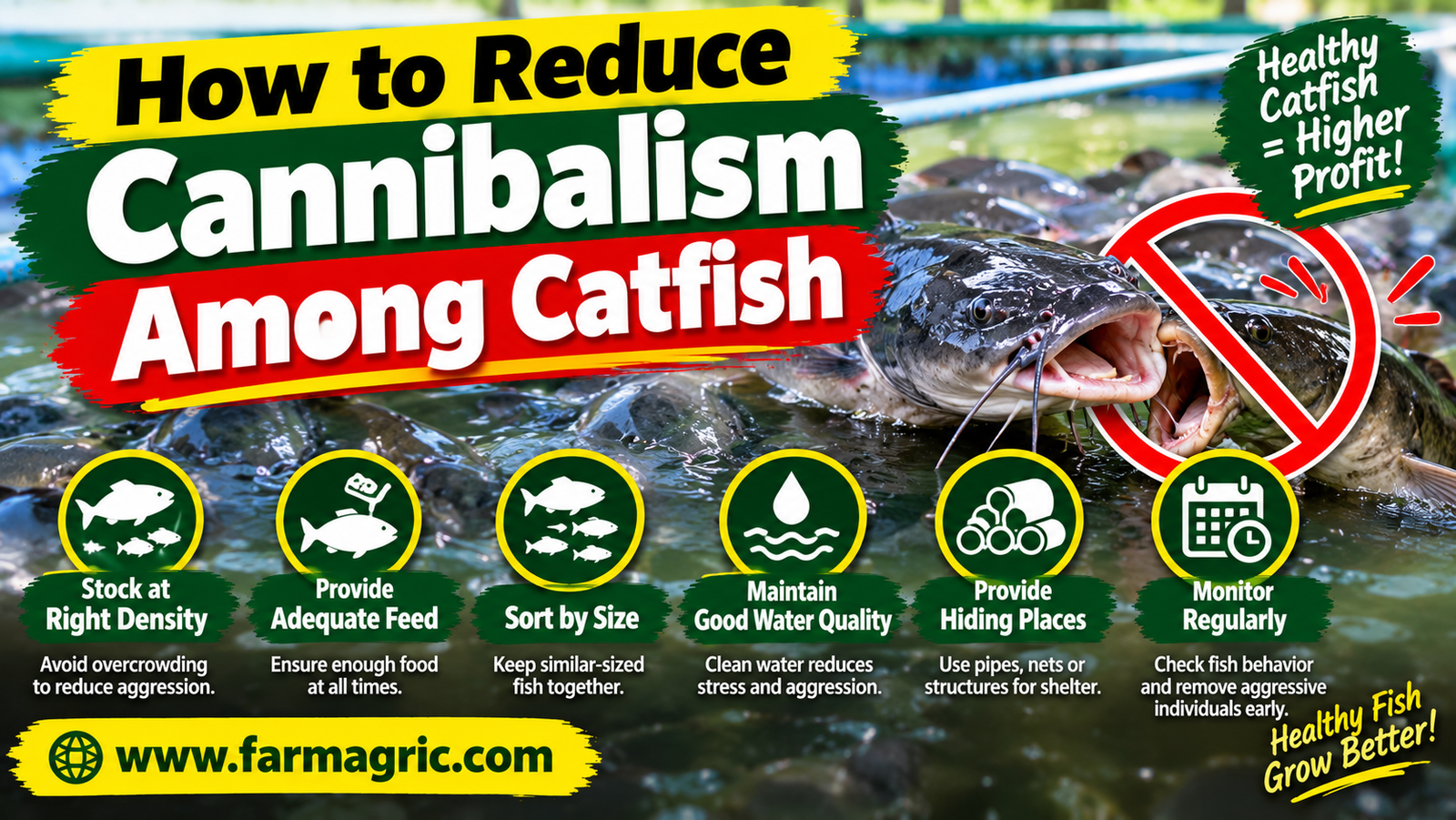
Here is the direct answer. Catfish eat their smaller brothers and sisters because they are natural predators, and the biggest losses come when sizes in the pond are uneven, when feed is short, and when fish are crowded or stressed. You reduce cannibalism by getting five things right: stock fish of uniform size, grade them often so no big fish can eat small ones, feed enough of the right feed at the right times and spread it widely, keep stocking density and water quality in check, and give the small fish places to hide. Do those, and the losses drop sharply. Skip grading, and nothing else will save you.
Let me explain why it happens and what I do about it.
What most farmers get wrong
The first mistake is thinking the missing fish died of disease. When numbers fall and you find few bodies, cannibalism is the first suspect. The fish are not dying in the water, they are being eaten.
The second mistake is stocking mixed sizes. Many farmers buy whatever fingerlings are cheapest, often a batch with tiny and large fish together. Within days, the big ones start eating the small ones. This is the single biggest cause of cannibalism I have seen.
The third mistake is never grading. Catfish grow at very different rates even from the same batch. A few fast growers, often called shooters, pull ahead and become predators. If you leave them in with the rest, they eat their way up the food chain.
The fourth mistake is underfeeding, or feeding in one spot. Hungry fish eat what is available, and in a crowded tank, that includes neighbours. When all the feed goes to one corner, the big fish take it, and the small ones starve or become targets.
The fifth mistake is overstocking. Crowding raises stress, lowers oxygen, and makes fish bump into each other constantly, which triggers attacks.
The sixth mistake is ignoring the early weeks. Cannibalism is worst in the first weeks of life, in the fry and fingerling stages, and again after any event that creates a size gap.
Why catfish eat each other
Catfish are opportunistic carnivores. In the wild they eat insects, small fish, and whatever else fits in their mouths. In a farm pond or tank, that instinct does not switch off. If a smaller fish is within reach and is small enough to swallow, a catfish will try.
Several conditions make it more likely. Size differences are the main trigger. Cannibals can usually swallow prey up to roughly half their own body length, sometimes more. When the gap in size is large enough, the larger fish starts attacking. Hunger raises the risk, especially if feed is delivered too late, in too little quantity, or in a form the small fish cannot eat. High density increases encounters between fish. Poor water quality and low oxygen stress fish and make weaker fish easy targets. Bright, open tanks with no cover leave small fish nowhere to hide. Dim light or night feeding can also increase attacks, since catfish are active in low light.
It is also worth saying that cannibalism is not just about the big fish eating the small. Fish also bite fins, tails, and eyes of others, leaving damaged and stressed victims that later die from infection. Even if no one is swallowed, the damage adds up.
Reducing cannibalism: the routine that works
Start with uniform fingerlings. Buy from a reputable hatchery that grades its fish and can supply a batch of similar size. Inspect them on arrival. If there is a wide size spread, grade them before stocking, and keep the sizes separate. A uniform start does more than any other single step.
Grade early and often. Grading means sorting fish by size so each group grows together. In the early weeks, I grade frequently, often every one to two weeks for small fingerlings, and then less often as they grow, depending on how fast the size gap opens up. Use a proper grading box or sieve with the right bar spacing, or sort carefully by hand. Place each size class in its own tank or pond section. Fish that were stunted by competition often catch up when moved to a group of similar size. Handle fish gently, keep them in water, and grade in the cool of the day, since rough handling causes stress and injury. Ask your fisheries officer about the grading equipment and schedule that suit your system.
Remove the shooters. When you grade, you will see fast-growing fish well above the rest. Take them out and keep them with similar-sized fish, or grow them separately. A few fast fish left among slow ones can eat dozens of smaller siblings.
Feed enough, and feed often. Fingerlings need frequent small meals through the day, since their stomachs are small and their appetites are strong. Give feed that matches their mouth size and nutritional needs, with higher protein for the smallest fish, following the feed company’s guidance. Increase the ration as they grow, and adjust after each sampling. Hungry fish become predators, so never run short.
Spread the feed. Scatter feed over the surface of the pond or around the tank instead of dumping it in one place. That lets more fish get a share and lowers fights. Feed at several points if needed. Watch the feeding to make sure the smaller fish are getting something.
Feed at the right time. Regular feeding times help fish settle into a rhythm. Avoid long gaps between meals for fingerlings. Do not feed in a way that creates a frenzy at one corner.
Control stocking density. Stock at a density your system can truly support. Overcrowded tanks and ponds see more fighting and more cannibalism. Start with fewer fish and increase only once you can manage the water and feeding well. Your fisheries officer can advise a safe stocking range for your system.
Keep water quality high. Stressed fish fight more and recover less. Keep oxygen high, ammonia and nitrite low, and temperatures stable. Test regularly and aerate where needed. Clean water also means fewer sick fish, which are easy prey.
Provide cover. Hiding places let small fish escape from bigger ones. In tanks, you can add pipes, tiles, bricks, plastic mesh, or other safe, clean structures. In ponds, submerged branches, bundles of brush, or floating plants can help, provided they do not foul the water or trap fish. Use materials that are clean, non-toxic, and easy to remove for cleaning. Avoid anything that could injure the fish or harbour disease.
Adjust light. Catfish are more active in dim light. Overly bright light can stress them, and complete darkness can increase attacks. Shade parts of the tank or pond, and avoid sudden changes in light. Local advisors can suggest what works for your set-up.
Handle fish carefully. Rough handling, long air exposure, and crowding in buckets stress fish and cause injuries that attract attackers. Be gentle at every step.
Sample regularly. Weigh a sample of your fish every one to two weeks in the early stages, and note the size range. A widening gap between smallest and largest fish is your early warning that cannibalism is about to rise. Act before the gap becomes large.
Watch the nursery stage closely. Fry and early fingerlings are at the highest risk. If you run a nursery, grade often, feed correctly, and keep densities modest. If you buy fingerlings, ask the hatchery how they managed this stage.
Special notes for tanks and tarpaulin ponds
In small, intensive systems, cannibalism is easier to see and easier to control. Grade more often, since the fish are in close quarters. Keep the water well aerated and clean, because waste builds up fast. Use covers and hides, and check often for fin damage and missing fish. Separate size groups into different tanks as soon as you see growth differences.
Warning signs to watch for
I keep an eye out for falling fish numbers without many dead bodies, fish with bite marks, missing fins, or damaged tails, fish with swollen bellies from eating a large meal, a few very large fish alongside many small ones, fish crowding near the surface at feeding with some being chased, and a widening spread of sizes in your sample. Any of these means grade soon and review your feeding.
What I would do differently if I started today
I would pay a little more for graded, uniform fingerlings from a hatchery I trusted.
I would build a simple grading routine into my calendar from the first week.
I would feed small fish more often than I thought was necessary.
I would add hides to my tanks before stocking.
I would pull out the shooters and keep them separate.
And I would count my fish at every grading, not only at harvest.
Frequently asked questions
Why do my catfish eat each other?
Catfish are natural predators, and they eat smaller fish when size differences are large, feed is short, or the fish are crowded and stressed. Grading, good feeding, and sensible stocking reduce it.
How often should I grade catfish?
In the early fingerling stage, often every week or two, and less often as the fish grow. The right schedule depends on how quickly the sizes spread, so sample regularly and adjust.
Does cannibalism happen in adult catfish?
It is most severe in fry and fingerlings, but larger fish can still eat smaller ones if the size gap is big enough. Grading and good feeding help at every stage.
Can I stop cannibalism by feeding more?
Feeding enough helps a lot, since hungry fish turn predator. But feeding alone will not fix a pond with big size differences, so grade as well.
Do hiding places really help?
Yes. Cover gives small fish a place to escape and reduces stress and encounters. Use clean, safe materials and keep them easy to clean.
The advice worth bookmarking
Catfish do not become cannibals by accident, they become cannibals when you let the sizes drift apart and the feed run short, so grade early, feed well, and never leave a big fish alone with small ones.