How to Increase Weight Gain in Growing Pigs
How to Increase Weight Gain in Growing Pigs
I once raised two pens of weaners side by side, same breed, same age, same feed bags from the same shop. At twenty weeks one pen averaged nearly 15 kilograms heavier than the other. I was convinced I had been sold bad stock for the second pen. Then I spent a full day sitting beside it. The drinker was dripping instead of flowing, the pigs at the back never reached the feeder because the biggest ones guarded it, the pen faced the afternoon sun with no shade, and the floor stayed wet. Nothing was wrong with the pigs. Everything was wrong with the pen. I fixed those four things and the next batch caught up almost completely.
Here is the plain answer. A growing pig gains weight in proportion to how much good feed it eats and how well its body turns that feed into meat, and both depend on five things: the right genetics and a healthy start, a balanced ration with enough energy and protein for each stage, unlimited clean water, a comfortable and uncrowded pen, and good health with worms and disease under control. When gain is slow, the cause is almost always one of these. Fix feed, water, space, temperature, and health in that order, and change one thing at a time so you can see what worked.
The short version of what I do is this. I buy healthy weaners from a farm I trust, move them gradually onto stage-specific feeds, keep clean water flowing at every pen, give each pig enough feeder and floor space, keep the pen cool and dry, deworm and vaccinate on schedule, sort pigs by size, and weigh a sample every two weeks. The rest of this article explains each step and the mistakes that cost farmers kilograms.
What Most Farmers Get Wrong
The first mistake is buying cheap, unhealthy weaners. Pigs that were sick, underweight, or poorly weaned at the start often never catch up. A few thousand saved at purchase is lost many times over in extra feed days.
The second mistake is feeding one ration from weaning to market. A young pig needs far more protein and more digestible ingredients than a finishing pig. Feeding a cheap finisher ration to small pigs starves them of amino acids, and feeding an expensive starter ration to big pigs wastes money.
The third mistake is poor water. A pig drinks roughly two to three times as much water as feed it eats. Dirty, blocked, or too few drinkers cut feed intake immediately, and less feed means less gain.
The fourth mistake is overcrowding. Too many pigs per pen means competition at the feeder, fighting, stress, dirty floors, and uneven growth. The bullies grow and the small ones fall behind.
The fifth mistake is ignoring heat and dampness. Pigs cannot sweat. In hot weather they eat less, and in cold, damp, drafty pens they burn their feed to stay warm instead of growing.
The sixth mistake is skipping deworming and health routines. Worms and mange can quietly steal a quarter of a pig’s growth while the animal looks only slightly rough.
The seventh mistake is feeding poor or moldy feed. Damp, musty grain carries mycotoxins that reduce appetite, damage the liver, and slow growth.
The eighth mistake is never weighing. Farmers guess weight by eye, and a pig that looks fine may be weeks behind. Without numbers you cannot find the problem early.
Start With Good Pigs and a Good Start
Genetics set the ceiling. Improved breeds and crosses, such as Large White, Landrace, Duroc, and their crosses, usually gain faster and convert feed better than unimproved local pigs, though local breeds can be hardier where feed and management are limited. Choose what suits your feed supply, climate, and market, and buy from a breeder who can show you the health and performance of the parent stock.
Weaning is the most dangerous stage. Wean at a healthy weight, often around 4 weeks and 7 to 8 kilograms or more, and keep weaners warm, dry, and free of drafts. Offer a highly digestible starter feed before weaning so the shift is smooth. Pigs that lose weight or get diarrhea in the first week after weaning often lag for the rest of their lives.
Quarantine new pigs for a couple of weeks, and do not mix them with the existing herd until you are sure they are healthy.
Feed: Match the Ration to the Stage
Feed is about 70 percent of the cost of raising a pig, so it is where gain is won or lost. Pigs need energy, protein with the right amino acids (especially lysine), minerals, and vitamins, in proportions that change as they grow.
As a rough guide, which you should confirm with your feed supplier or an animal nutritionist, protein content runs around 20 to 22 percent for weaners, 18 percent for growers, around 16 percent for finishers, with lower levels for heavy finishers. Energy needs to stay high enough that the pig eats for growth, not just survival. Move from one ration to the next over several days, not overnight, to avoid digestive upsets.
Feed enough. Underfed pigs simply grow slowly, so unless you are controlling fat in a late finishing stage, let them eat what they will clean up. Feed at regular times, twice or three times a day for pigs fed by hand, or use self-feeders that deliver feed steadily. Provide enough feeder space so that all pigs can eat at once. A common guide is about 10 to 15 centimeters of trough space per pig for growers, depending on pig size, or follow the feeder manufacturer’s guide.
If you mix your own feed, use a balanced formula, weigh the ingredients, and include a vitamin and mineral premix. Grain and kitchen waste alone will not supply enough protein or lysine. Common protein sources include soybean meal, groundnut cake, and fishmeal, used in correct proportions. Avoid raw or undercooked kitchen waste and anything that could carry disease, and follow your local rules on feeding food waste to pigs, since in many places it is restricted or banned because of the risk of spreading serious diseases such as African swine fever.
Grind grain to a medium particle size. Too coarse wastes feed, and too fine causes dust and stomach ulcers. Store feed dry, off the floor, and use it within a few weeks. Throw away any with mold or a musty smell.
Water: Clean and Unlimited
Water is the most overlooked nutrient. A growing pig may drink anywhere from 2 to 10 liters a day depending on size and heat, and a lactating or hot pig more. Provide clean water at all times, with at least one drinker for every 10 to 15 pigs, placed where pigs can reach them easily.
Check every drinker daily. Nipple drinkers clog, and a pig that cannot drink will not eat. Set nipples at the right height, roughly at shoulder height of the pigs, and adjust as they grow. Wash troughs, keep tanks covered and shaded, and flush the pipes if they are fouled. In hot weather, extra drinkers and cool water improve intake.
Space, Housing, and Comfort
Give each pig enough room. A common guide for growers and finishers is about 0.5 to 0.8 square meters per pig, rising to roughly 1 square meter for heavy finishers, with slightly different figures for different systems. Check the recommendation for your housing type. Do not stock more than the pen can handle.
Keep the floor dry. Wet, dirty floors lead to disease, leg injuries, and cold stress. Provide slope and drainage, remove manure daily, and provide dry bedding in cool weather.
Temperature matters. Young weaners need warmth, roughly 26 to 30 degrees Celsius for newly weaned pigs, reducing gradually as they grow. Growers and finishers do best at roughly 18 to 24 degrees, and heat above about 28 degrees cuts appetite and gain sharply. In hot climates, use shade, a high ventilated roof, wide eaves, fans, wallows or sprinklers, and make sure the pen has good cross ventilation. In cool weather, block drafts but keep air moving to remove ammonia.
Sort pigs by size and keep groups stable. Mixing pigs repeatedly causes fighting and stress that sets growth back for days. Where mixing is necessary, do it when pigs are small and in a clean pen, ideally with extra space and some distractions such as a chain or toy.
Health: Worms, Parasites, and Disease
A sick or parasitized pig converts feed poorly. Follow a routine health plan written with your vet.
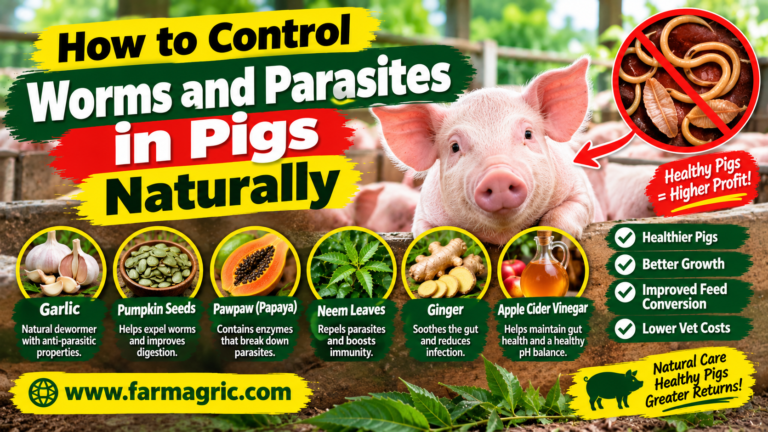
Deworm at the intervals your vet recommends, commonly at weaning and again during the growing period, using a product approved for pigs. Roundworms and other internal parasites reduce growth and feed conversion, often without obvious signs. Check for mange mites, which cause itching and scratching, and treat as advised. Control lice and flies.
Vaccinate against the diseases common in your area, such as swine fever in places where it is vaccinated for, erysipelas, and others as your vet advises. Have a biosecurity routine: limit visitors, provide boots and a footbath, keep wild pigs, rodents, and birds away, clean and disinfect pens between batches, and use all-in, all-out management where you can.
Watch your pigs every day. Look for pigs that are dull, off feed, coughing, limping, scouring, or thin. Remove sick pigs to a hospital pen so they can be treated and do not infect others. Call your vet if several pigs are affected or if there are sudden deaths. Any suspicion of a notifiable disease such as African swine fever must be reported to the veterinary authorities immediately.
Reduce Stress
Stress slows growth. Keep a calm routine, with feeding and cleaning at the same times each day. Handle pigs quietly and avoid rough movement. Avoid sudden changes in feed, mixing of groups, or transport at the hottest time. Provide enrichment, such as a hanging chain or rubbing post, to reduce tail biting and boredom.
Monitor: Weigh and Record
Weigh a sample of pigs every two weeks, ideally the same pigs, using a scale or a weigh band. Calculate the average daily gain and compare it with the target for your breed and system. Many commercial crosses gain roughly 600 to 900 grams a day through the growing and finishing stages under good management, while local or unimproved pigs gain less. Your records will show your own baseline.
Keep a simple record of feed use, weights, deaths, treatments, and the weather. Divide the feed eaten by the weight gained to find your feed conversion ratio. A rising number is an early warning that something is wrong, long before the pigs look poor.
Step-by-Step Practical Plan
If I were planning your next batch, it would run like this.
Choose a breed or cross that suits your feed and climate, and buy healthy weaners from a trusted source.
Quarantine new pigs, and keep them warm, dry, and draft free after weaning.
Feed a high-quality starter, then move gradually to grower and finisher rations as the pigs grow.
Provide clean water at all times, check every drinker daily, and keep the nipples at the right height.
Stock at the recommended space per pig, with enough feeder space for all pigs to eat.
Keep pens dry, ventilated, and shaded, and manage heat with fans, sprinklers, or a wallow.
Sort pigs by size and avoid repeated mixing.
Deworm, treat mites, and vaccinate on your vet’s schedule, and run basic biosecurity.
Weigh a sample of pigs every two weeks and keep records of feed, weight, and health.
Sell at the weight and age that suit your market and your feed cost.
Warning Signs to Watch For
Learn to read the pen. Pigs that stop eating or hang back from the feeder are sick or stressed. Wide differences in size within a pen mean competition, poor sorting, or disease. A rough, staring coat and a pot belly with a thin body suggest worms. Scratching and rubbing point to mange. Pigs panting and piling up away from each other are too hot. Pigs huddled together and shivering are too cold or in a draft. Loose droppings or coughing signal digestive or respiratory disease. Poor gain with plenty of feed eaten means a bad feed formula, worms, or disease.
If you see any of these, act that week, not next month.
What I Would Do Differently If Starting Again Today
If I were starting fresh, I would spend my first money on the pen, not the pigs. I would put in proper drinkers, shade, a drained floor, and a feeder with enough space before the first weaner arrived. I would buy a scale, even a cheap one, and weigh every two weeks from the start. I would never feed one ration all the way through, and I would never mix a pig that did not need to be mixed. I would deworm on schedule without waiting to see signs, and I would keep a notebook of every batch, because the patterns that show up in a notebook never show up in memory.
I would also stop chasing growth boosters and secret additives. Almost every slow batch I ever raised traced back to water, heat, space, worms, or feed quality, and none of that comes in a bottle.
FAQ
Why are my pigs not gaining weight?
The common causes are poor or unbalanced feed, too little feed or water, overcrowding, heat or cold stress, worms and mange, disease, and poor weaners to begin with. Check feed, water, space, temperature, and health in turn, and look at your weight records to see when growth slowed.
What should I feed pigs to grow faster?
A balanced ration that matches the pig’s stage, with enough energy and protein, particularly lysine, plus vitamins and minerals. Weaners need around 20 percent protein or more, growers about 18, finishers about 16. Confirm exact levels with a feed supplier or nutritionist.
How much weight should a growing pig gain per day?
Improved commercial crosses under good management often gain roughly 600 to 900 grams per day through growing and finishing. Local breeds gain less. Weigh your own pigs regularly to find your baseline.
How much water does a pig need?
Roughly two to three times as much water as feed by weight, so several liters a day for growers, and more in hot weather. Clean water must be available at all times.
Do I need to deworm growing pigs?
Yes, usually at weaning and again during growth, as your vet advises, using products approved for pigs. Worms steal growth silently, so a regular routine pays for itself.
The Advice Worth Bookmarking
A pig turns feed into weight only when it is comfortable, healthy, and never thirsty. Fix the pen before you change the feed.