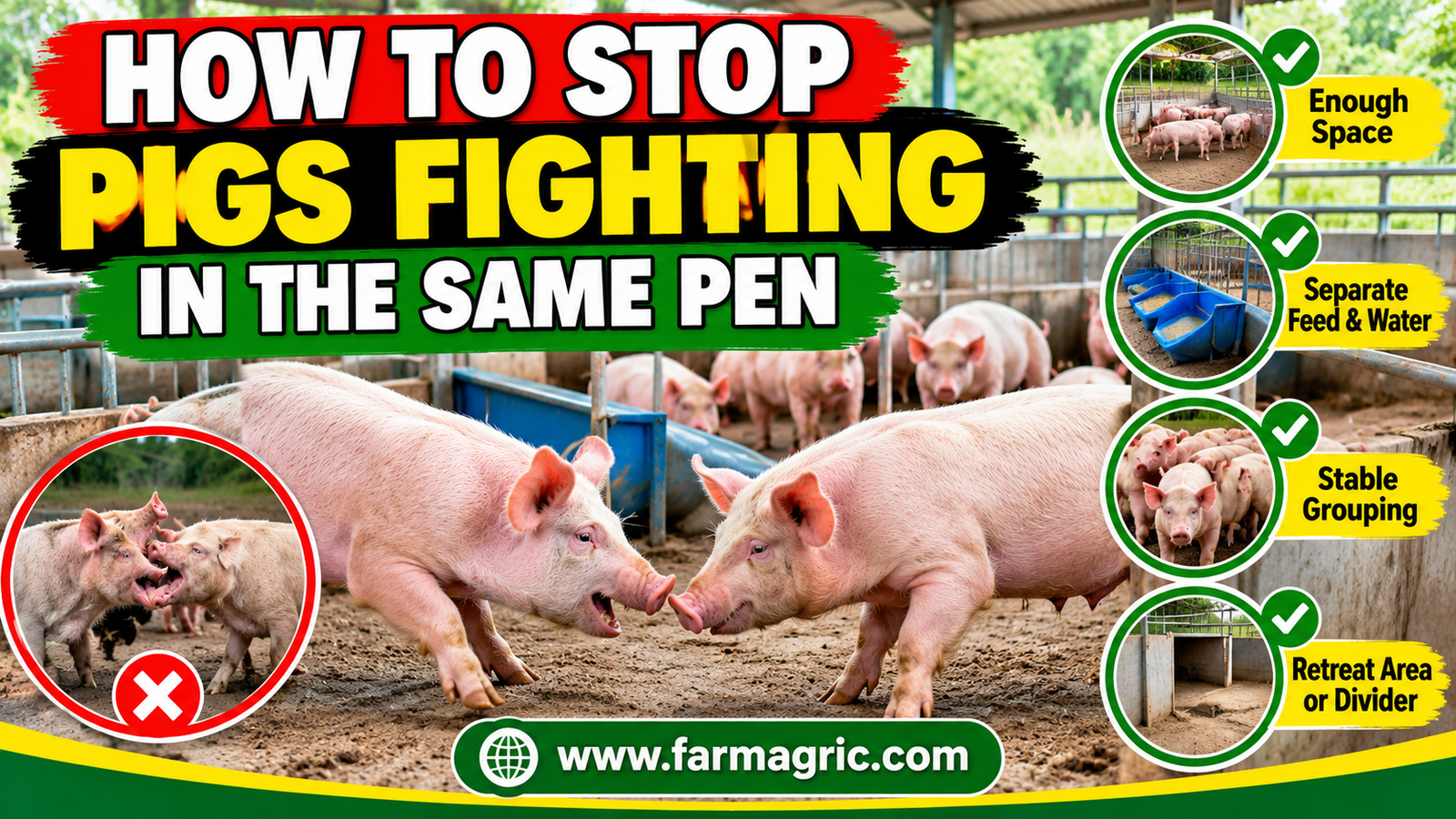
How to Stop Pigs From Fighting in the Same Pen
How to Stop Pigs From Fighting in the Same Pen: What 30 Years of Bitten Ears and Torn Flanks Taught Me
I once walked into a grower pen at dawn and found a barrow with half an ear torn off, a deep gash along his flank, and flies already working at the wound. Three pigs had cornered him against the gate and kept at him all night. I had mixed two litters that afternoon because I was short on space and in a hurry. That one decision cost me a pig that never grew right again, a week of treating wounds, and a lesson I have never forgotten. Fighting does not start because pigs are wicked. It starts because of what we do to them.
Here is the direct answer. Pigs fight to sort out who is boss whenever strangers are mixed, and they also fight when they are crowded, hungry, hot, bored, or competing for feed and water. You stop it by avoiding unnecessary mixing, mixing pigs the right way when you must, giving enough space and feeder room, keeping the pen cool and the animals busy, grouping pigs of similar size and age, and separating injured or bullied animals quickly. Most fighting settles within a day or two once the pecking order is set, but fighting that goes on beyond that points to a management problem you must fix.
If you get the setup right, you will see a few shoving matches and then a calm pen. If you get it wrong, you will see wounds, stunted pigs, infected injuries, and money lost.
Why Pigs Fight
Pigs are social animals, and they live by a pecking order. When pigs that do not know each other are put together, they fight, usually in the first hours, until each one knows its place. The fights can be fierce, with biting at the ears, face, neck, and flanks, and shoulder pushing. Once the order is settled, the pen goes quiet.
That is the natural fighting, and you cannot remove it entirely, but you can reduce it. The harmful fighting is the kind that carries on because the pigs are under pressure from crowding, heat, hunger, boredom, or constant disturbance. Under those conditions, they take it out on each other, and weak or small pigs become targets.
What Most Farmers Get Wrong
The first mistake is mixing pigs carelessly. Dropping strangers together late in the day, with no preparation, and walking away is the quickest way to get serious injuries.
The second mistake is crowding. When pigs have too little room, they cannot get away from a bully, and tempers rise. Every extra pig you squeeze in makes the whole pen worse.
The third mistake is too few feeders and drinkers, or placing them badly. If pigs have to queue for feed, the strong ones push the weak ones away, and the weak ones are bitten when they try to eat. I have seen small pigs go hungry in a pen where the feed was plentiful, because they could not get past the bullies.
The fourth mistake is mixing pigs of very different sizes and ages. A big pig put with smaller ones will dominate and bully them. Even a modest size gap can lead to trouble.
The fifth mistake is leaving pigs with nothing to do. A bare, empty pen leads to boredom, and bored pigs chew ears, tails, and each other.
The sixth mistake is heat. Hot pigs are irritable, they crowd near the cool spots, and they fight over them. Many outbreaks of fighting I have seen happened during hot spells.
The seventh mistake is ignoring hunger and poor feed. Underfed or badly fed pigs are restless and aggressive, and a diet short on something they need can lead to ear and tail biting.
The eighth mistake is leaving an injured pig in the pen. Pigs are quick to attack a wounded pen mate, and a bleeding pig can become the target of the whole group.
The ninth mistake is keeping a known bully in the pen. One aggressive pig can ruin the peace of the entire group, and farmers sometimes hope it will sort itself out.
The Step-by-Step Fix That Works
Step one: avoid mixing when you can. The best way to reduce fighting is to keep pigs in their litter groups as long as possible and move them together as a group. Every time you mix strangers, you create a fight. Plan your pens so that you mix as rarely as possible.
Step two: if you must mix, prepare the pen first. I put pigs together in a pen that is new to all of them, because a pig that owns the territory fights harder to defend it. A clean, unfamiliar pen gives no one the home advantage. I mix in the morning, so I can watch them through the day, not in the evening when I am about to leave. I give them extra space for the first few days if I can.
Step three: give them something to distract them. When mixing, I scatter a little feed on the floor, hang chains or hard rubber items, or give straw or other safe material to root through. Busy pigs spend less time fighting. Wet the pen floor lightly if the weather is hot, which also cools them.
Step four: match the group. I try to put together pigs of similar size, age, and weight. I move small or weak pigs to a pen of their own so they can eat in peace, and I sort out the largest ones as they outgrow the group. I avoid adding one or two strangers to an established pen, because the newcomers are bullied. If I have to add pigs, I add several at once, so they have some support and are less likely to be singled out.
Step five: give enough room. I follow the space recommendations for the weight of the pigs and the climate, and I give a bit more than the minimum if I can. Pigs need enough room to lie down together, to move away from a threat, and to dung in one area away from where they sleep. I will not give numbers here, since they depend on weight and system, so ask your vet or extension officer for the right figures for your pigs.
Step six: make feeding fair. I make sure there is enough feeder space so that all pigs can eat at the same time, or I use feeders with partitions so that each pig is protected while it eats. I place drinkers where bullies cannot guard them, and I check the water flow every day. I feed at regular times, and I never run short.
Step seven: keep them cool and comfortable. I provide shade, good airflow, clean drinking water, and wallows or sprinklers in hot weather. A comfortable pig has less reason to fight. I keep the pens dry, because wet, cold floors also make pigs irritable.
Step eight: keep them busy. In bare pens, I add rooting material, hanging objects, or other safe things to chew. Replace them when they are worn or dirty. Anything you give should be safe, with no sharp edges, no splinters, and nothing small enough to swallow.
Step nine: feed a proper diet. Check that the ration meets the needs of the pigs at each stage, including protein, minerals, and salt. Poor feed leads to restless, aggressive pigs. Ask your feed supplier or vet whether the diet fits your pigs.
Step ten: watch the pen closely for the first two days after mixing. I check the group several times in the first hours and again at night and first thing the next morning. Short fights, shoving, and a bit of squealing are normal. If a fight goes on for a long time, if a pig is bleeding, if one is being chased constantly, or if a pig is hiding in the corner and refusing to eat, I step in.
Step eleven: break up serious fights safely. Never put your hands between fighting pigs, because you can get badly bitten. I use a solid board or a gate panel to push between them, or I make a loud noise, or I splash water, to distract them. Remove the injured pig to a separate pen. Do not use anything that would injure the animals.
Step twelve: treat wounds quickly. I clean the wounds with a mild antiseptic that my vet approves, keep flies away, and watch for infection. Deep wounds, swelling, pus, or a pig that has gone off its feed need a vet. Do not leave injured pigs with the group until they have healed.
Step thirteen: deal with persistent bullies. If one pig keeps harassing the others after you have fixed the pen, I move that pig out, either to a different group of larger or similar pigs, or to a pen of its own. If a pig remains a problem after that, I sell or cull it. One bully can cost you the growth of an entire pen.
Step fourteen: keep records. I note when I mix pigs, how many fights I see, and what injuries happen. Over time, you will see which changes help, and which pens or situations are problem spots.
Warning Signs to Watch For
Notice these early, before they become injuries.
Pigs that chase each other constantly or fight for more than a short time need attention. Fresh bites on ears, faces, necks, and flanks tell you a fight has happened. A pig that stays alone in a corner, avoids the feeder, or squeals when others approach is being bullied. Small, thin pigs in a pen of larger ones are often missing out on feed. Bleeding ears or tails, or any sign of blood in the pen, can cause the others to attack. Pigs panting and crowding to one cool spot suggest heat stress, which leads to fights. Sudden bursts of fighting in a pen that was calm may mean something has changed, such as a new pig, a feed problem, heat, or a shortage of water.
Also watch for chewed tails and ears without fighting. That is a separate vice that comes from stress, boredom, or diet, and it needs the same kind of fixing.
What I Would Do Differently If I Were Starting Today
I would design the pens before I bought the pigs, with enough space, enough feeder room, and a way to separate or isolate an injured pig quickly. I would keep litters together as long as possible and never mix on impulse. I would set aside one or two spare pens as hospital and quiet pens, so I never had to leave a wounded pig with the group. I would put chains and rooting material in every pen from the start. I would watch the pens every morning and evening, not just glance at them. And I would not hesitate to remove a bully the first time, because it never gets better by waiting.
Frequently Asked Questions
Why do pigs fight when you mix them?
Pigs establish a pecking order. When strangers meet, they fight until each knows its rank, and then the pen settles. Preparing the pen, giving enough room, and matching sizes keeps this fighting short and mild.
How long does fighting last after mixing pigs?
Most of the serious fighting settles within a day or two, although some pushing and sparring can continue for a short while. If it continues beyond a couple of days, or the wounds are getting worse, something in the setup needs fixing.
Should I separate pigs that are fighting?
Separate pigs that are injured, being chased relentlessly, or fighting without stopping. Normal short fights during mixing are part of settling the order, and you do not need to break up every one.
Can I stop pigs fighting by giving them toys?
Toys, chains, and rooting material help by keeping pigs busy, and busy pigs fight less, but they do not replace proper space, feed, cool conditions, and good grouping.
Why are my pigs biting each other’s ears and tails?
This usually comes from boredom, crowding, heat, draughts, or a diet that is lacking something. Fix the pen conditions, give the pigs something to chew, check the feed, and remove any pig that has been bitten so that it can heal.
One Thing to Remember
Pigs fight over space, feed, and rank, and you control all three. Give them room, give them work, and never mix strangers in a hurry.