How to Improve Feed Conversion in Pigs
How to Improve Feed Conversion in Pigs
The first year I kept pigs for profit, I did what most beginners do. I looked at the feed bill, looked at the sale price, and wondered where the money had gone. My pigs were growing, my neighbours’ pigs were growing, and yet when we compared notes, he was getting a finished pig for roughly a quarter less feed than I was. We bought the same feed from the same shop. The difference was not the bag. It was everything that happened between the bag and the pig.
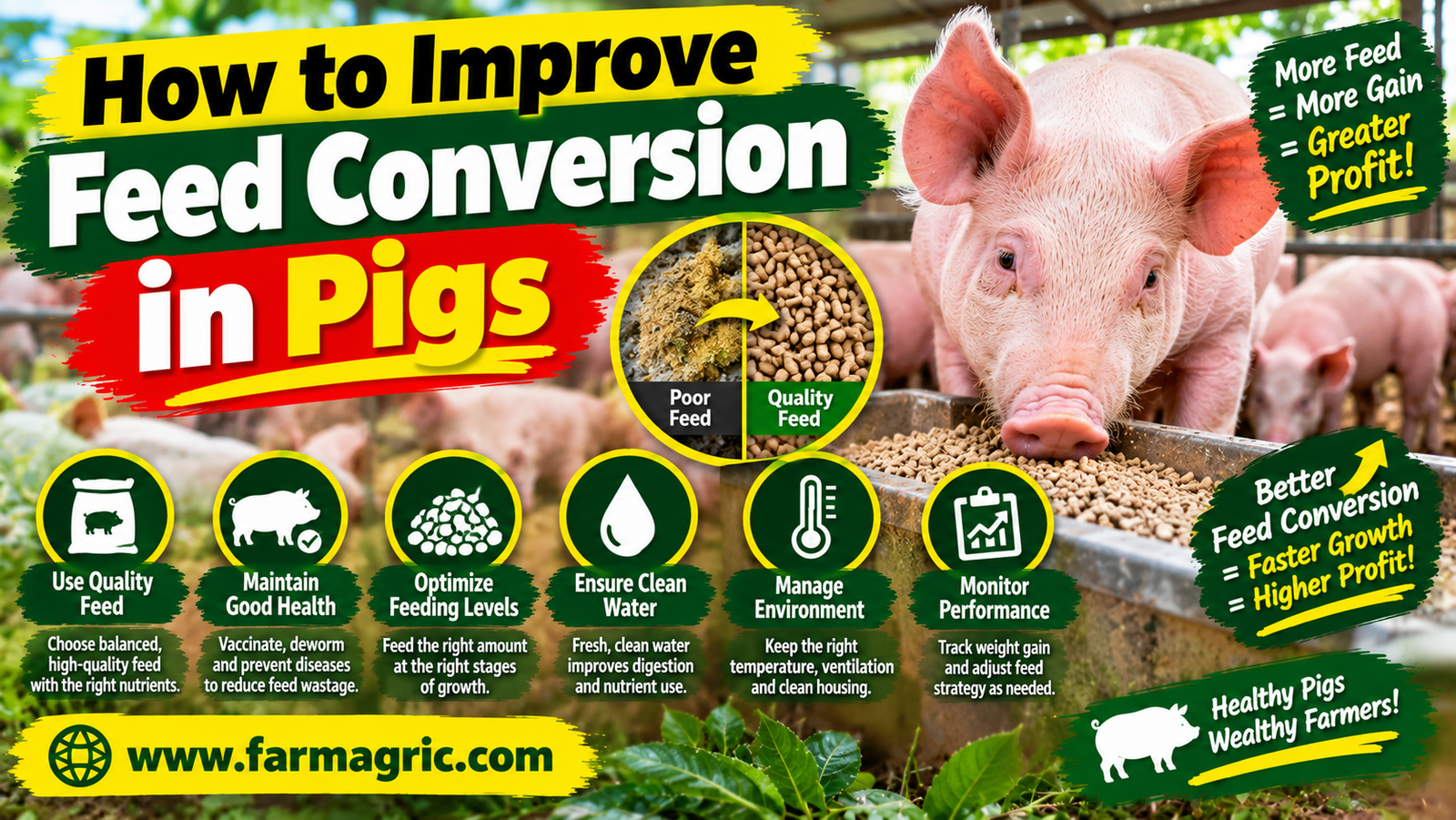
Here is the direct answer. Feed conversion ratio, or FCR, is how many kilograms of feed a pig eats to gain one kilogram of body weight, and the lower the number, the better you are doing. You improve it by cutting waste, matching the diet to the pig’s age and stage, keeping pigs healthy and comfortable, controlling worms and disease, giving clean water at all times, avoiding overcrowding and heat stress, choosing good genetics, and weighing regularly so you know where you stand. Most of the gain comes from fixing leaks you did not know you had, rather than from buying a more expensive feed.
Let me walk you through where feed goes missing, and how I stopped losing it.
What most farmers get wrong
The first mistake is not measuring. Many farmers cannot say how much feed went into a batch or how much weight it put on. Without those two numbers, you cannot know your FCR, and you cannot tell whether a change you made helped.
The second mistake is blaming the feed. Farmers switch brands, add supplements, and chase miracle products, when the real loss is spilled feed, sick pigs, a hot pen, or old pigs eating a young pig’s ration.
The third mistake is feeding one ration to every age. A piglet, a grower, a finisher, and a lactating sow have very different needs. Feeding a finisher the cheap, low-protein ration all through the growing stage wastes feed, and feeding a rich starter ration to big pigs wastes money.
The fourth mistake is ignoring waste. Feed thrown on the floor, trampled in mud, eaten by rats and birds, or spoiled by damp is feed you paid for and never converted into pork.
The fifth mistake is keeping sick or wormy pigs. A pig carrying a heavy worm burden or a chronic illness eats feed and turns less of it into growth.
The sixth mistake is ignoring comfort. A pig that is too hot, too cold, crowded, or stressed uses feed energy just to cope.
The seventh mistake is keeping poor performers. Some pigs are simply bad converters. They eat plenty and grow slowly, and no management will change that. Keeping them for breeding spreads the problem.
Understanding feed conversion
Imagine a pig that eats 300 kilograms of feed over its life and gains 100 kilograms. Its FCR is 3 to 1, or simply 3. A pig that eats 250 kilograms to gain the same 100 kilograms has an FCR of 2.5. Over a batch of fifty pigs, that difference is a huge pile of feed.
FCR changes with age. Young piglets convert feed very efficiently, because they are building lean tissue. As pigs get older and heavier, more feed goes to maintenance and fat, so the ratio climbs. That is why overfeeding finished pigs for too long is such an expensive habit. The last weeks before sale are often the most costly.
Typical figures vary a great deal by breed, system, feed, and climate, so rather than copy a target from another farm, measure your own and aim to improve it batch by batch. Your livestock officer or feed company can tell you what good performance looks like for your type of pig and system.
How to measure it
You need three numbers: the weight of the pigs when you put them in, the weight when you take them out, and the total feed used. Weigh the pigs on a proper scale if you can, or use a weigh band or chest girth tape to estimate weight. Keep a record of every bag or measured scoop of feed fed to the group. At the end, subtract the starting weight from the finishing weight to get the total gain, then divide the total feed by the total gain.
Do this for each batch and each ration stage. Write it down. Over several batches, you will see what changes help and what hurts. If you can weigh a sample every two weeks, you can catch problems early, before a whole batch is wasted.
Where feed goes missing, and how to stop it
Feed wastage. This is often the biggest leak and the easiest to fix. Use properly designed feeders with a lip or divider that stops pigs from throwing feed out, and adjust the height to the pigs’ size. Do not overfill troughs. Provide enough trough space so every pig can eat without fighting, since fighting and crowding spill feed. Avoid feeding on bare, muddy floors. Keep feeders clean and dry, and remove old, stale, or mouldy feed. Pelleted feed or properly ground meal tends to waste less than very dusty, powdery feed, and wet feeding systems can reduce dust, though they need careful management to avoid spoilage. Ask your livestock officer what suits your set-up.
Pests and spoilage. Rats, mice, birds, and insects eat and contaminate large amounts of feed. Store feed in sealed bins or on pallets in a dry, clean room, away from walls and the floor. Control rodents with traps and good housekeeping, and clear spilled feed immediately. Damp feed grows mould, which is wasteful and can sicken pigs. Buy feed in quantities you can use before it goes stale, and use the oldest stock first.
Wrong ration for the stage. Match the feed to the pig’s age, weight, and purpose. Young piglets need highly digestible, nutrient-rich feed. Growers need enough protein for muscle growth. Finishers need less protein, and overfeeding them wastes money and adds fat. Sows need different rations in pregnancy and in lactation. Ask a livestock officer or nutritionist to help you set up a feeding programme, and follow your feed supplier’s guidance. Change from one ration to the next gradually over a few days, to avoid digestive upset.
Feed quality and processing. Poor-quality ingredients, mouldy grain, old feed, and badly mixed home-made rations lower digestibility and growth. If you mix your own feed, use a balanced formula from a qualified nutritionist, mix thoroughly, and store properly. Grinding grain to the right fineness helps digestion, since overly coarse particles pass through undigested, while very fine powder can irritate the gut and cause ulcers. Ask for advice on the best particle size for your pigs. Be cautious with cheap by-products and unusual ingredients, which can vary widely in quality and may contain toxins.
Overfeeding and feed timing. Giving pigs far more than they can use produces fat and wastes feed. Feeding too late into the finishing period, when growth has slowed and the pig is mostly adding fat, drives FCR up. Work out the best sale weight for your market, and sell when additional gain no longer pays for the feed. Where you feed by hand, give regular, measured meals, rather than a random scoop. Some farmers use restricted feeding for finishing pigs, to control fat, but it requires care and proper trough space.
Water. Pigs need plenty of clean water, and when water is short, feed intake and growth fall. Provide drinkers that deliver enough flow for the pigs’ size, check them daily, and keep them clean. Leaking drinkers waste water and make pens wet. Clean, cool water in hot weather is just as important as feed.
Disease and parasites. Sick pigs convert feed poorly, and chronic low-level illness can quietly raise your FCR. Follow a vaccination and health programme set up with your vet. Control worms through clean pens, dung tests, and approved treatments as advised. Treat mange and lice promptly. Isolate sick pigs and call a vet early. A pig that coughs, scours, or stands apart from the group is costing you feed every day.
Housing and temperature. Pigs have a comfort zone, and outside it they spend feed energy staying warm or cooling down. Cold, draughty, wet pens force pigs to burn feed for heat. Hot weather cuts appetite and slows growth. Provide dry, draught-free housing in cool weather, and shade, ventilation, and wallows or cooling systems in hot weather, according to local advice. Do not overcrowd. Crowded pens raise stress, fighting, and disease, and lower growth. Ask your livestock officer for the space per pig recommended for your system.
Group management. Keep pigs in groups of similar size and age. Mixed sizes mean larger pigs push smaller pigs off the feeder, so some overeat and some are underfed. Sort pigs by size, and consider feeding groups separately. Avoid unnecessary mixing and moving, which causes fighting and stress.
Genetics. Some pigs are born better converters than others. Breed from sows and boars with a good record of fast, efficient growth, strong health, and good litters. If you buy breeding stock, ask for performance records, and visit the farm. Cull animals that consistently produce slow-growing, poor-converting offspring. Genetics set the limit, and management lets you reach it.
Handling and stress. Rough handling, loud noise, sudden changes in routine, and long transport raise stress and lower feed efficiency. Keep routines steady and handle pigs calmly.
Feed additives and products. Many products claim to improve feed conversion. Some have evidence behind them in the right circumstances, while others are mostly marketing. Be cautious, check what is legal and approved in your country, and never use growth promoters or drugs unless a vet or livestock officer has advised you. First fix the basics. Wastage, water, health, and comfort usually give far bigger returns than any additive.
Warning signs of poor feed conversion
I look for pigs that eat well but grow slowly, large differences in size within a pen, feed wasted on the floor, rats around the store, pigs that look rough, thin, or pot-bellied, diarrhoea or coughing, hot or crowded pens, pigs gaining weight more slowly than the last batch for the same feed, and an FCR that creeps up from one batch to the next. A rising FCR is an early warning that something is wrong, and it often shows up before the pigs look sick.
What I would do differently if I started today
I would buy a scale and a feed record book in the first week.
I would work out my FCR for every batch and stage.
I would fix wastage first, before spending a cent on additives.
I would sort pigs by size and keep groups even.
I would invest in good drinkers and clean water.
I would make health and worm control routine.
And I would keep and breed only from pigs with good records.
Frequently asked questions
What is a good feed conversion ratio for pigs?
It varies with breed, age, feed, and system, and it rises as pigs get heavier. Rather than aim for a number from somewhere else, measure your own and try to improve it each batch, with advice from your livestock officer.
Why is my pigs’ feed conversion so poor?
Common causes are wasted feed, the wrong ration for the age, worms and disease, heat or cold stress, crowding, poor water, and poor genetics. Check each in turn.
Does expensive feed always give better conversion?
Not necessarily. A well-balanced feed matched to the pig’s stage is what matters. Wastage, health, and housing often cost more than feed price differences.
Should I restrict feed to improve conversion?
Restriction can help control fat in finishing pigs, but it needs proper trough space and care, and it can cause fighting and poor growth if done badly. Ask your livestock officer before trying it.
When should I sell pigs to get the best return?
When extra weight no longer pays for the feed needed to produce it, and when your market wants that size. Weighing and recording feed use helps you decide.
The advice worth bookmarking
Feed does not make pork on its own, pigs do, so spend your effort on the leaks, the water, the health, and the comfort, and measure every batch, because the number on the notebook page is the one that pays the bills.