How to Know If a Cow Is Pregnant Without a Vet
How to Know If a Cow Is Pregnant Without a Vet
For two seasons I fed a cow that was not pregnant and never would be. I was so sure she was in calf. Her belly looked round, she had stopped coming into heat, and I had told half the village to expect a calf by the rains. Then the rains came and went, and she stood in the paddock as empty as a bucket. She had eaten a year of my feed for nothing.
Here is the direct answer. Without a vet, the most reliable signs are: your cow does not return to heat about 18 to 24 days after breeding, and still has not by the second and third cycles (this is the best early clue you have); her belly and flank enlarge, mostly on the right side, from around five to six months; her udder fills in the last two months; and later, you may see or feel the calf moving. No home method is as accurate as a proper test, and the signs can mislead you. So use these signs as clues, and book a vet or trained technician for a confirmed test when it matters.
Let me walk you through what to watch for, month by month, and where each sign can fool you.
What most farmers get wrong
The first mistake is trusting the belly alone. A big belly can be a full rumen, a heavy feed of grass, bloat, fat, or a sick cow with fluid in her abdomen. I have been fooled by all of these.
The second mistake is trusting a missed heat as proof. A cow that does not show heat may be pregnant, but she may also be silent, underfed, sick, or simply not noticed. Some cows have weak heat signs, and some cows that are pregnant still show a heat now and then.
The third mistake is not recording the breeding date. If you do not know when the cow was served, every sign is harder to read, and you cannot work out when she should calve. A simple notebook is the cheapest pregnancy test you will ever own.
The fourth mistake is waiting too long to find out. An empty cow costs you feed, time, and a whole breeding season. Knowing early lets you rebreed, treat a fertility problem, or sell her.
The fifth mistake is poking and prodding to check for the calf. Pressing hard on the belly or trying to feel inside a cow without training can hurt her and even cause an abortion. Be gentle, and leave internal checks to trained people.
The best clue: no return to heat
A cow that cycles normally comes into heat about every 21 days, give or take a few days. Heat lasts only about half a day to a day, so you need to watch carefully, morning and evening, away from the busiest part of the day. The signs of heat are a cow that stands still to be mounted by others, mounts other cows, is restless, bellows more than usual, has a swollen, moist vulva, a clear stringy discharge, and may produce less milk.
If you serve or breed a cow and she does not show heat again about three weeks later, she may be pregnant. Mark the date and watch her again at around six weeks. If she still does not show heat after two or three cycles, the odds that she is pregnant are good, but not certain.
Remember the traps. Some pregnant cows show a mild heat, a sign called false heat. Some open cows fail to show heat because of poor feed, disease, a retained corpus luteum, a cyst, or an infection of the womb. And heifers that are not yet cycling properly confuse the picture. So treat a missed heat as a strong hint, not a verdict.
Early pregnancy: two to four months
At this stage there is little to see from the outside. The cow often looks and behaves as she did before. A few farmers notice a calmer temperament and a sleeker coat, but those are weak signs.
Watch her appetite and condition. A pregnant cow often does well and puts on a little weight, but a sick cow can too. Do not read much into it.
The one thing you can do at this stage without a vet is keep watching for heat and keep good records. Resist the urge to press on her belly. At this stage the calf is tiny and there is nothing to feel.
Mid pregnancy: four to six months
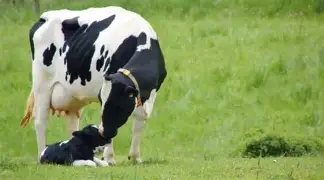
Now the body begins to change. You may notice her flanks filling out, particularly on the right side, as the calf grows and pushes the rumen. By around five to six months, many cows show a noticeable roundness low on the right side of the belly. Heifers often show earlier and more clearly than older cows.
The udder begins to develop. In heifers, the udder may start to grow and fill from around the fifth or sixth month. In older cows, it may stay small until closer to calving. Do not rely on this alone, because some open heifers develop small udders from hormonal changes.
Her weight may creep up, her coat may look glossy, and her movements may become a little slower and more careful.
You may also feel the calf’s movement. Stand quietly beside her, resting your hand lightly on the lower right flank, after she has had a drink of cold water, which sometimes makes the calf kick. Some people feel a gentle bump or flutter from around the sixth or seventh month. Do not poke. Wait and feel. Absence of movement does not mean she is empty.
Late pregnancy: seven months to calving
By now the signs are much clearer. The belly hangs lower and wider, and the abdomen looks heavy and barrel-shaped when seen from behind. The calf’s movements become visible as the flank ripples or bumps, especially when the cow is resting.
The udder fills steadily over the last two months and becomes firm and tight. The vulva starts to swell and soften in the last few weeks. In the final days, the ligaments beside the tail head sink and relax, mucus may appear, and the udder becomes tight and shiny. These are the signs that calving is close, and you can read more about them in my calving signs guide.
At this stage, a pregnant cow also needs more attention, better feed, and a clean place to calve. If you were wrong about the pregnancy, you will probably know by now.
Other methods people ask about
Many farmers ask about home tricks. Let me be honest about the ones I know.
Rectal palpation. This is the classic method where a trained person feels the womb through the rectum wall. In skilled hands, it can detect pregnancy from around six to eight weeks, and it is widely used. But it requires training and experience, and done badly it can injure the cow or cause abortion. I recommend leaving it to a vet or an experienced animal health technician.
Ultrasound scanning. Scanning can detect pregnancy earlier, sometimes around four to five weeks, and can show the calf’s heartbeat and age. It needs equipment and a trained operator, and it is increasingly available in many regions.
Blood and milk tests. There are laboratory tests, and some on-farm kits, that detect pregnancy-associated substances in blood or milk. They can be accurate when done correctly. Ask your vet or animal health officer what is available in your area, what it costs, and how early it works.
Folk tests. I hear about all sorts of folk tests, from the milk-in-water test to checking urine with various substances to watching how the cow’s tail hangs. I do not recommend relying on any of them. I have never seen reliable evidence that they work, and you could end up making bad decisions based on false results. If a test is not from a trained professional or a proper test kit, treat the result as a guess.
Why a confirmed test is worth paying for
Confirming pregnancy early, around two months after breeding, saves money. You find out which cows are empty while there is still time to rebreed them, check them for problems, or cull them. You can feed pregnant cows according to their stage, and plan your calving season. For a herd of any size, the cost of testing is usually much less than the cost of feeding empty cows for months.
If a vet or technician can come once or twice a year to test a batch of cows, you get the best value. Ask neighbours if they want to share the visit.
Warning signs to watch for
During pregnancy, I keep an eye out for any bloody or foul-smelling discharge, a sudden drop in belly size, a cow that is off her feed or running a fever, a cow that holds her tail out or strains without calving, swollen or painful udder out of season, and a sudden milk drop. These can mean abortion, infection, or other problems, and you should call a vet. Some diseases that cause abortion in cattle can also affect people, so use gloves when handling aborted calves and afterbirth, wash well afterwards, and ask the vet how to deal with the material safely.
What I would do differently if I started today
I would write down every service date and the bull or semen used, from the first cow.
I would watch for heat properly, twice a day, for a few weeks after breeding.
I would pay for a pregnancy test at around two to three months for every cow, rather than guess for six months.
I would never trust a big belly alone.
And I would sell empty cows quickly, instead of hoping for them.
Frequently asked questions
How early can I tell if a cow is pregnant without a vet?
The earliest hint is a missed heat around 21 days after breeding. It is not reliable on its own, but combined with good records it is a useful first clue. Body changes you can see usually come much later.
When does a pregnant cow start showing?
Many cows show some belly change on the right side from about five to six months, and heifers often show earlier. Individual cows vary, and a full rumen can fool you.
Can a cow be pregnant and still come into heat?
Yes, sometimes. A few pregnant cows show mild heat signs, especially early on. That is why a confirmed test is better than judging by behaviour alone.
How long is a cow pregnant?
About 280 days on average, which is a little over nine months. Individual cows can calve a week or two early or late.
Are there home tests for cow pregnancy?
Folk tests are not reliable. If you want to test without a vet, ask your animal health officer about proper on-farm milk or blood test kits, where they are available.
The advice worth bookmarking
A round belly proves nothing and a missed heat only whispers, so write down your breeding dates, watch the signs, and pay for a real test before you feed an empty cow for another season.