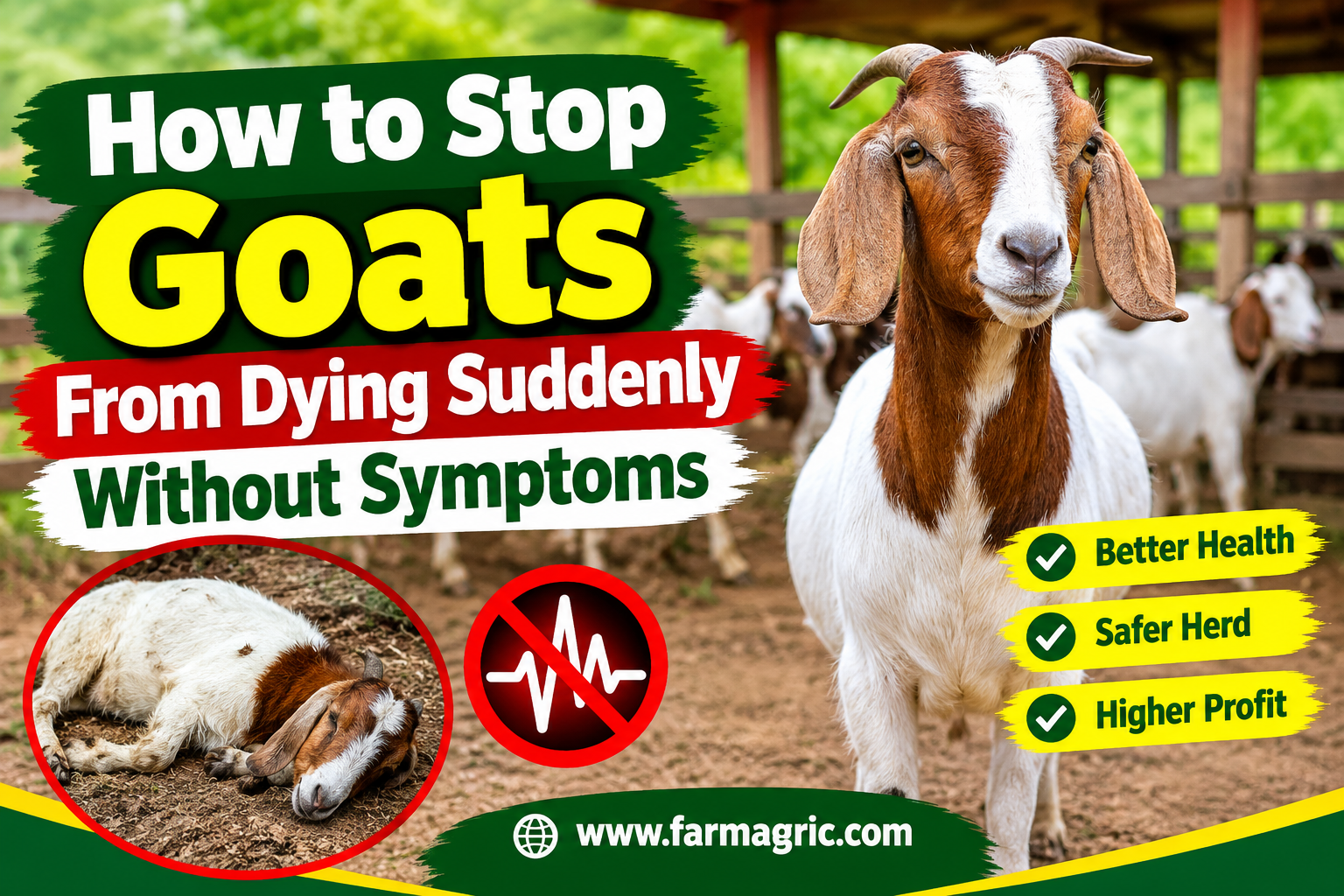
How to Stop Goats From Dying Suddenly Without Symptoms
Goats are prey animals, and like most prey species, they have a strong evolved instinct to mask pain, weakness, and illness for as long as they physically can, since showing visible weakness in the wild marks an animal as an easy target for predators. This means a goat can be seriously unwell internally while still grazing, standing, and moving in a way that looks essentially normal to a farmer doing a routine check, right up until the point where its body can no longer compensate and it collapses, sometimes within hours of the first moment a trained eye might have caught something subtly wrong. Several of the specific conditions responsible for sudden death in goats also genuinely do progress extremely fast once they begin, enterotoxemia in particular can kill a goat within hours of the toxin buildup starting, which compounds this masking behavior with conditions that leave very little real window for intervention even for a farmer who is watching closely, making prevention through management considerably more valuable than trying to catch and treat these problems after they have already started.
A goat that is noticeably less interested in feed than usual, or that hangs back from the group at feeding time rather than competing normally, is often one of the earliest available signs that something is wrong, even in an animal that otherwise still appears to be moving and grazing in a generally normal way. A slightly distended or firm abdomen, particularly following any recent access to rich feed or lush pasture, deserves prompt, close attention, since this can indicate the early stages of bloat or enterotoxemia before the condition has progressed to a point where intervention becomes considerably more difficult. Teeth grinding, a behavior goats sometimes display in response to pain, combined with reluctance to move or an arched, tense posture, signals discomfort that is easy to miss during a brief, casual check but that is genuinely worth pausing to investigate more closely. A goat that separates itself from the herd and shows little interest in normal social behavior, particularly if this is unusual for that specific animal’s normal temperament, is a meaningful sign worth taking seriously rather than dismissing as simple individual variation. And any pattern of multiple goats showing similar subtle signs within the same day or two indicates that whatever is affecting the herd is likely a shared exposure, whether dietary, toxic, or related to a specific grazing area, calling for prompt investigation into recent feed and grazing changes rather than treating each case as unrelated.
What I’d Do Differently If Starting Again Today
If I were starting over, I would examine any dead animal closely and promptly rather than simply burying the loss and moving on the way distress nearly had me doing that first confusing morning, since I now understand how much useful information was actually available if I had only known to look for it. I would maintain a strict, consistent CDT vaccination schedule for my entire herd from the very beginning, rather than treating vaccination as something to get around to eventually, given how large a share of sudden goat death enterotoxemia specifically accounts for. I would control feed transitions far more carefully, introducing any new grain, concentrate, or notably lush pasture gradually over several days rather than allowing the kind of abrupt access that I now understand is exactly the trigger this particular killer is waiting for. I would learn to identify the toxic plants specific to my own grazing areas properly, rather than trusting goats’ general reputation for eating almost anything as some kind of built-in safety guarantee it was never actually meant to be. And I would watch far more closely for the subtle early signs, the goat hanging back at feeding time, the slightly tense posture, the animal standing just a little apart from the group, since I now understand how much earlier those quiet signals were likely present than the sudden, dramatic collapse that first taught me this lesson the hard way.
Frequently Asked Questions About Sudden Goat Deaths
What is the most common cause of goats dying suddenly with no symptoms? Enterotoxemia, often called overeating disease, is among the most common causes of sudden goat death, typically triggered by a sudden shift to rich, high-carbohydrate feed such as grain or very lush pasture, and it can kill a goat within hours of the underlying toxin buildup beginning, which is why consistent CDT vaccination and careful, gradual feed transitions are such important preventive measures.
Can internal parasites really cause a goat to die suddenly even if it looks healthy? Yes, a heavy, chronic internal parasite burden can weaken overall body condition and particularly heart and circulatory function well before any dramatic external symptom becomes obvious, meaning a goat managing to look reasonably normal day to day can still be considerably more vulnerable to sudden collapse than its outward appearance suggests, making a regular, appropriate deworming program an important part of prevention.
How quickly can bloat or enterotoxemia kill a goat? Both conditions can progress extremely rapidly, sometimes causing death within just a few hours of onset, which is part of why these specific causes so often present to a farmer as a seemingly sudden, unexplained death despite the underlying problem having developed over a considerably shorter but still real window beforehand.
Why do goats often show no clear warning signs before dying even when something has clearly been wrong internally? Goats are prey animals with a strong instinct to mask pain, weakness, and illness for as long as they physically can, since visible weakness would mark them as an easy target for predators in a natural setting, meaning a goat can be seriously unwell while still appearing to graze and move normally right up until its body can no longer compensate for whatever underlying problem has been building.
What should I do immediately after finding a goat dead with no explanation? Examine the dead animal closely for signs such as abdominal bloating, discharge, or unusual gum coloring, check the rest of the herd for any other animals showing subtle signs of illness, review recent changes in feed or grazing, confirm your herd’s vaccination status, and consult a local veterinary or livestock extension officer promptly to help identify the actual cause and the appropriate next steps.
If there is one thing I want you to remember from all this, it is that a goat found dead with no warning almost certainly was not actually fine the moment before, it was simply still managing to hide whatever had already begun, so vaccinate consistently, control feed transitions carefully, learn the toxic plants on your own land, and watch closely for the quiet signs rather than waiting for the dramatic ones, because the doe I found that still, silent morning had very likely been trying, in the only way her instincts allowed, to keep her trouble hidden from me for longer than either of us had time left to spare.