How to Stop Pigs From Losing Appetite in Hot Weather
How to Stop Pigs From Losing Appetite in Hot Weather
The hottest March I ever farmed through, my finishers stopped eating at midday. I would walk out with the bucket, tip the feed into the trough, and watch fifty pigs lie in a heap in the shade, panting and ignoring it. By evening the feed was warm, dusty, and half-covered in flies. I thought they were sick. I called a vet, spent money on a tonic, and the only thing that changed was my bank balance. What fixed it, once I understood, cost almost nothing.
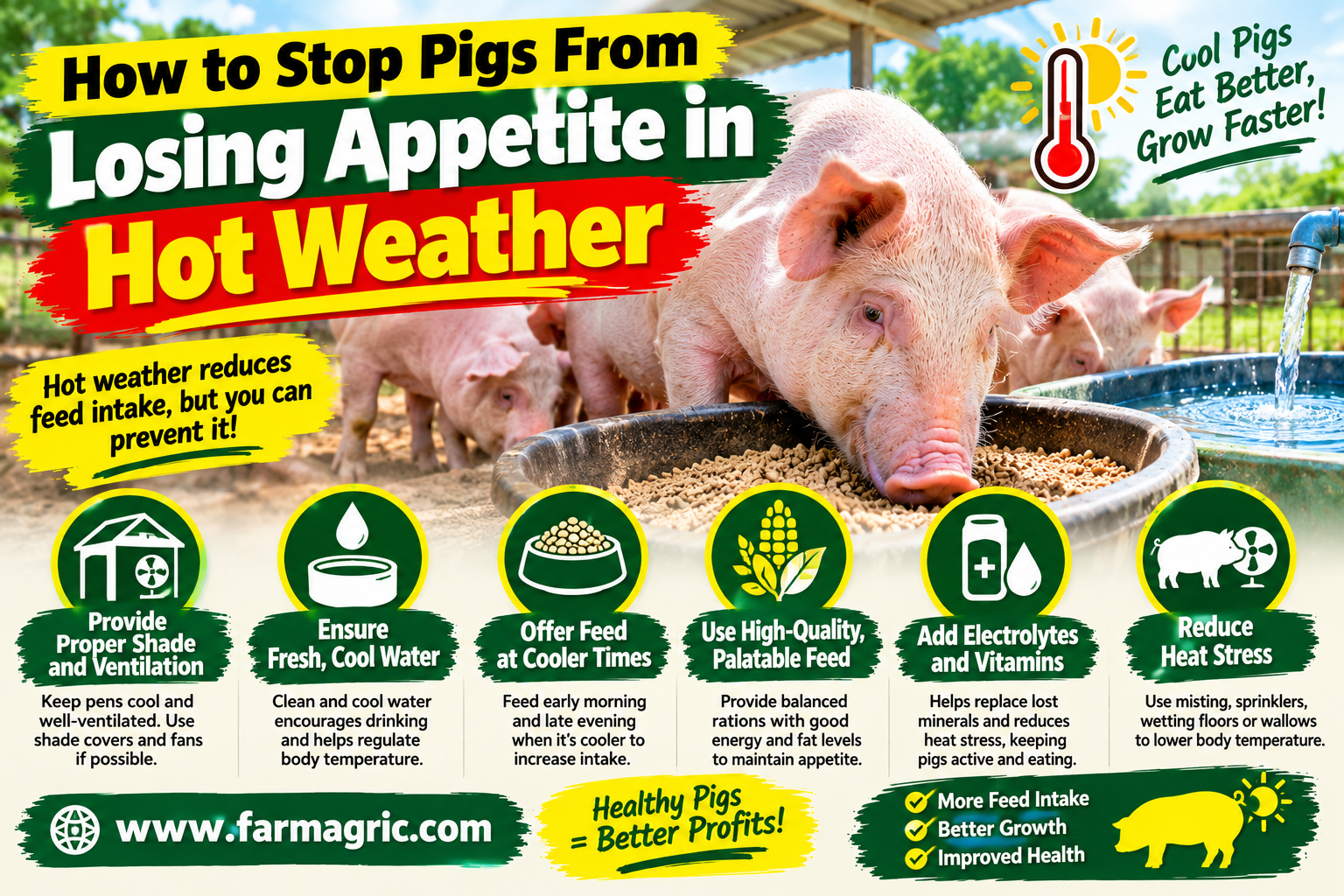
Here is the direct answer. Pigs lose appetite in hot weather because they cannot sweat, so eating, which creates body heat, becomes something they avoid. You stop it by cooling the pig and the pen, feeding at the cooler times of day, giving plenty of cool clean water, adjusting the feed so it is easier to digest and richer in nutrients per mouthful, and watching for real illness underneath. Cool pigs eat. Hot pigs do not, and no tonic or feed change will fix a pig that is still too hot. Start with the temperature of the animal, not the contents of the bag.
Let me walk you through why it happens and what I do about it.
What most farmers get wrong
The first mistake is blaming the feed. When pigs refuse feed in a heat wave, farmers switch brands, add flavourings, or stop using a feed that was working perfectly. The pigs were not rejecting the feed. They were rejecting the heat.
The second mistake is feeding at midday. The hottest hours are the worst possible time to put feed in front of pigs. They will not eat, the feed spoils, and flies gather.
The third mistake is skimping on water. In hot weather, pigs drink far more than usual, and a pig short of water eats less. A drinker that trickles, a dirty trough, or a bowl that sits in the sun and warms up can all cut intake.
The fourth mistake is crowding pigs in a hot pen. Pigs give off heat, and the more of them packed into a space, the hotter it gets. Overcrowding in hot weather is a recipe for stress, panting, and refusal to eat.
The fifth mistake is ignoring the signs of heat stress until a pig collapses. Pigs are one of the most heat-sensitive farm animals, and heat stress can lead to poor growth, reduced fertility in sows and boars, abortions, and even death.
The sixth mistake is assuming it is only heat. Disease, worms, and other problems can also kill appetite, and a hot season can hide them.
Why pigs struggle in the heat
A pig is poorly equipped for hot weather. It has few working sweat glands, a thick layer of fat under the skin, and little ability to lose heat except by panting, wallowing, and lying on cool surfaces. Digesting feed produces heat inside the body, so when the air temperature rises, pigs eat less to reduce the heat they produce. It is a sensible survival response, but it costs you growth, feed efficiency, and profit.
The effect is bigger in heavy pigs, so finishers and sows suffer more than piglets, and lactating sows are especially vulnerable because milk production already creates a lot of heat. A sow that stops eating in hot weather loses condition, produces less milk, and has smaller, weaker piglets.
High humidity makes it worse. When the air is wet, panting does not cool the pig effectively, so the pig overheats faster. Hot, still, humid days are the most dangerous. Direct sun on a tin roof, poor ventilation, and bare concrete that soaks up heat all raise the temperature in the pen.
Recognising heat stress early
Learn the signs, because early action is cheap and late action is not. Early signs are faster breathing, pigs lying stretched out on their sides away from each other (rather than huddled), seeking out water or shade, and a drop in feed intake. Further along, you may see open-mouth panting, drooling, red or blotchy skin, restlessness, weakness, trembling, and muscle stiffness. A pig that collapses, breathes very hard, and feels extremely hot to the touch is in danger of dying, and you must cool it right away and call a vet.
Check breathing rate when the pigs are resting. A resting pig that breathes quickly, with flanks heaving, is too hot. Ask your livestock officer what rates are normal and what rates signal stress for your pigs.
Cooling the pig and the pen
This is where most of the gain comes from.
Provide shade. Pigs sunburn easily and overheat in direct sun. Use roofing, trees, shade cloth, or other cover, and make sure the shade is large enough for every pig to lie in at the same time. Choose roofing materials that reflect heat, such as light-coloured or well-insulated roofs, and consider an air gap or insulation under metal roofing to reduce radiant heat. Whitewashing the roof or walls with a light colour can help.
Improve ventilation. Good airflow carries heat away. Open up side walls, use high, well-ventilated roofs, remove obstacles that block the wind, and use fans where you have power, taking care that air moves over the pigs without creating cold draughts for piglets. Hot, stuffy pens are the worst. Ask your livestock officer how to improve airflow in your type of housing.
Give them a way to cool down. Pigs cool by wetting their skin. A wallow, which is a shallow muddy or watery area, lets pigs cover themselves and cool by evaporation. Keep wallows clean, since a dirty, stagnant wallow can spread disease and parasites. If you do not have space for a wallow, use sprinklers or misters that wet the pigs’ skin, ideally with a gentle spray, not a flood, so the water evaporates and cools them. Sprinkling the pen floor and the pigs, in the hottest part of the day, helps. Do not wet pigs in humid, still air without ventilation, since the water cannot evaporate and the pen becomes steamy, and avoid spraying very young piglets to keep them from chilling.
Cool the floor. Concrete floors can be cool in the shade but hot in the sun. Wet the floor to provide a cool resting surface, and provide a bare, damp area where pigs can lie. Reduce bedding in hot weather, since it holds heat.
Reduce crowding. Give pigs more space in hot weather, if you can. Move pigs out of a crowded pen or sell some earlier. Ask your livestock officer for the space allowance that suits your climate and system.
Reduce handling and movement. Avoid moving, loading, or handling pigs in the heat of the day. Move them in the cool of early morning or evening, take it slowly, and keep them wet and shaded. Stress during transport in hot weather can kill pigs.
Look after sows and boars. Lactating sows need extra cooling, as they are particularly prone to heat stress. Give them cooling systems such as drip coolers or wetted floors, and the coolest part of the pen. Boars exposed to heat may become temporarily less fertile for weeks afterwards, so keep them cool, and avoid breeding them straight after a heat wave if you can.
Feeding for hot weather
When the heat lowers appetite, you adjust feeding to help the pigs eat enough.
Feed at the cool times. Shift feeding to the early morning, late afternoon, and evening, when pigs are most willing to eat. If you feed twice a day, make the morning meal early and the evening meal late. If you can, add a third small meal in the evening or night. Some farmers give a larger share of the daily ration in the evening, when pigs are cooler and hungrier.
Feed smaller, more frequent meals. Several small feeds are easier on pigs than one large meal, which produces a lot of heat during digestion.
Keep feed fresh and cool. Hot feed spoils quickly, loses nutrients, grows mould, and attracts flies. Do not leave feed in the sun. Remove leftover feed and clean the trough before each meal. Store feed in a cool, dry place in sealed containers. Never feed mouldy or stale feed, since it can make pigs ill and reduce appetite further.
Make feed more nutrient-dense. If pigs eat less feed in hot weather, each mouthful needs to carry more nutrients to keep growth going. Ask your livestock officer or nutritionist about adjusting the ration, for example by increasing the energy and protein concentration, or adding fat to the diet, since fat produces less heat during digestion than some other energy sources. Ask about vitamins, minerals, and electrolytes that help in heat, and do not change the ration drastically without advice. Do not add expensive additives without evidence that they help.
Consider the form of the feed. Some pigs eat wet or moistened feed better in the heat, while others eat pellets well. Very dusty, dry meal can be unpalatable and cause coughing. Wet feeding can raise intake, but it spoils quickly in heat, so it needs great care. Ask your livestock officer what suits your system.
Provide enough trough space. Make sure every pig can eat without being pushed aside, particularly in crowded and hot conditions.
Keep up the fibre balance. Fibre produces more heat during digestion, so very high-fibre diets can increase heat load in hot weather. Ask your livestock officer for a balanced approach.
Water: the most important feed
A pig in hot weather may drink far more than usual, and water is critical for cooling the body and for digestion. Provide plenty of clean, cool water at all times. Make sure that drinkers deliver enough flow for the pigs to drink quickly, since a slow trickle in the heat is not enough. Check drinkers daily to ensure that they are working and not blocked. Provide enough drinkers for the number of pigs. Keep water tanks and pipes shaded and, if possible, buried or insulated so the water does not heat up. Clean troughs and tanks regularly, since dirty or algae-ridden water reduces drinking.
Some farmers use electrolytes in the water during heat waves, but ask your vet before adding anything, and do not use it as a substitute for clean, cool water.
Check for other causes
If pigs are off feed even when they are cool, look for other causes. Disease, worms, mange, digestive upset, mouldy feed, a sudden diet change, and overcrowding can also reduce appetite. Take temperatures, check dung, look at skin and breathing, and call a vet if pigs are sick, have fever, coughing, diarrhoea, or other signs. Hot weather can make some diseases worse, so do not assume heat is the only problem.
Warning signs to watch for
I keep an eye out for fast breathing at rest, pigs lying apart and stretched out, open-mouth panting, red or blotchy skin, drooling, reduced feed intake, reduced milk in sows, restlessness, weakness, stumbling, pigs crowded around water, and sudden deaths on hot days. If I see any of these, I move to cooling first, and call a vet if a pig is collapsing or very distressed.
What I would do differently if I started today
I would build shade and ventilation into the pens from the start, and not wait for a heat wave.
I would install a simple sprinkler or drip cooling system before I needed it.
I would shift feeding times to the cool hours as soon as the weather turned hot.
I would put in better drinkers and insulate the water supply.
I would keep stocking rates a little lower in hot months.
I would keep a thermometer in the pen and write down temperature and feed intake.
And I would learn to recognise early heat stress, since by the time a pig collapses, it is almost too late.
Frequently asked questions
Why do pigs stop eating in hot weather?
Pigs cannot sweat well, and digesting feed produces body heat, so they eat less to stay cool. It is a natural response to heat stress.
What is the best time to feed pigs in hot weather?
The cooler parts of the day, such as early morning, late afternoon, and evening. Avoid feeding at midday.
How can I cool pigs without electricity?
Provide shade, good natural ventilation, a clean wallow or wetted floor, and plenty of cool water. Feed at cool times and reduce crowding.
Is it safe to spray pigs with water?
Yes, in moderation, if there is good ventilation so that the water can evaporate. Avoid spraying in still, humid conditions, and avoid wetting very young piglets.
When should I call a vet?
If pigs collapse, breathe very hard, have a very high temperature, are weak or trembling, stop eating even when cool, or if more than one pig is badly affected.
The advice worth bookmarking
A hot pig will not eat, no matter what you put in front of it, so cool the pig first, shift the meals to the cool of the day, keep the water cold and plentiful, and only then ask what is wrong with the feed.