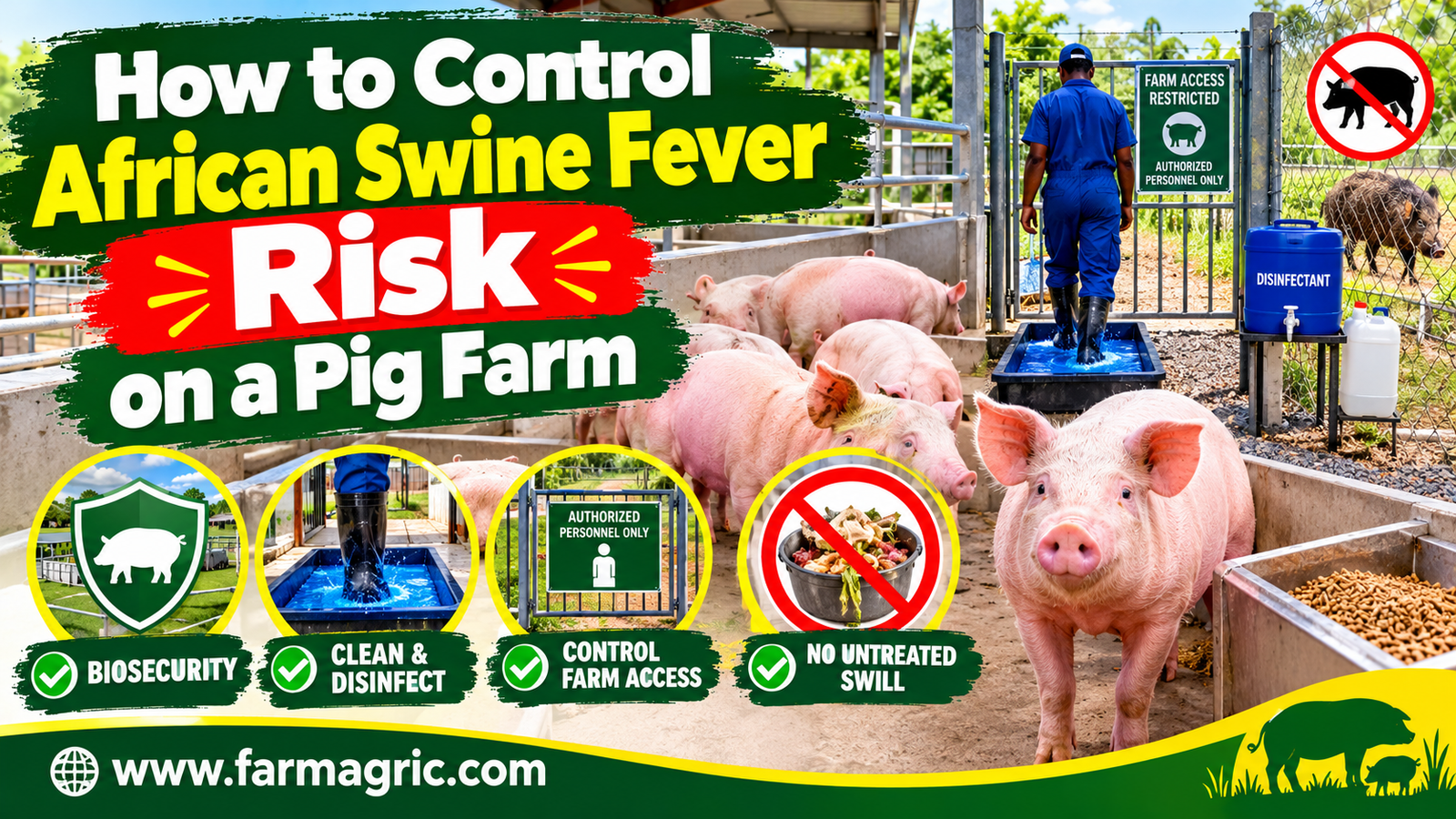
How to Control African Swine Fever Risk on a Pig Farm
How to Control African Swine Fever Risk on a Pig Farm: What 30 Years of Guarding Pigs Taught Me
I have never had African swine fever on my farm, and I want to tell you that it is not luck. I know farmers who did everything else right and lost every pig they owned in under two weeks. One of them was a friend who ran a clean, well-fed herd of about two hundred pigs. A relative visited from a town where the disease was already moving, with the same boots he had worn at a market, and walked straight into the pens to admire the new litters. Eleven days later my friend was burying pigs in a pit. He told me afterwards that the worst part was knowing it was one pair of boots.
Here is the direct answer. There is no cure for African swine fever, and in most countries there is no approved vaccine you can buy and use, so your only real protection is biosecurity: keeping the virus out. You do that by controlling who and what enters your farm, never feeding swill or kitchen waste, buying pigs only from trusted sources and isolating every new animal, keeping wild pigs, pets, rodents, and stray animals away from your stock, disinfecting vehicles, boots, and equipment, and reporting any suspicious illness or sudden death to the authorities immediately instead of hiding it or rushing to sell.
If you are strict about these things every day, not just during an outbreak, your risk drops enormously. The virus is not magic. It travels on people, vehicles, feed, meat, and animals, and every one of those routes can be closed.
What You Are Up Against
African swine fever is caused by a very tough virus that affects only pigs, wild and domestic. It does not infect people, so it is not a danger to your health, but it is a danger to your income, your neighbours, and the whole pig industry in your area. The more severe strains can kill nearly every infected pig, and they often do it quickly.
What makes it so hard to fight is how long the virus survives. It can live for weeks or months in pork products, including cured and frozen meat, in blood, in soil, and on clothing, boots, and vehicles, especially in cool, damp conditions. A single bit of infected meat in a bin of kitchen scraps can start an outbreak. In some regions, soft ticks that live in old pig housing can also carry the virus, and wild pigs can pass it along when they come into contact with domestic ones.
Infected pigs spread it through their blood, saliva, urine, dung, and body fluids. The time between infection and the first signs is usually several days to about two weeks, so a pig that looks perfectly healthy when you buy it can already be carrying the virus.
What Most Farmers Get Wrong
The first mistake is thinking the disease only comes from other pigs. Many outbreaks begin with people, vehicles, or feed. A visitor, a feed truck, a trader, or a worker who bought pork at a market can bring the virus without a single pig being moved.
The second mistake is feeding swill. Kitchen waste, food scraps, and leftovers from restaurants or hotels are among the most dangerous things you can give a pig, because they may contain pork products carrying the virus. In many places it is also against the law. I know the savings are tempting, but one contaminated bucket can cost you the whole farm.
The third mistake is buying pigs on impulse. A cheap lot of weaners from an unknown trader or a market, put straight into the pens with your own stock, is the most common way disease walks in the front gate.
The fourth mistake is having no fence and no entry rules. A farm where anyone can wander in, neighbours’ dogs roam freely, and visitors walk through the pens in their own shoes has no defence at all.
The fifth mistake is trusting your eyes. Many farmers say a pig looked fine and then died the next morning. By the time the signs show, the virus has already been spreading through the herd.
The sixth mistake is hiding sickness. A farmer who sees several pigs die suddenly and quietly sells the rest to recover some money spreads the disease to every farm those pigs go to. It is one of the cruellest things that can happen to a pig community, and it is also how outbreaks grow from one farm into a whole region.
The seventh mistake is a half-hearted approach. Some farmers keep a footbath at the gate, never change the disinfectant, and think they are protected. A dirty footbath does nothing. Biosecurity only works if it is done every single day.
The Step-by-Step Plan That Works
Step one: decide where the farm boundary is and protect it. I have a proper fence around my pig area, strong enough to keep out wandering dogs, stray pigs, and other livestock. There is one entrance for people and vehicles, with a gate that stays closed and locked. At the gate I have a sign telling visitors not to enter without permission. A fence will not stop the virus by itself, but it makes everything else possible, because it gives you one place to control.
Step two: set up an entry point for people. At the gate, I keep a clean area where anyone who needs to enter changes into farm boots and farm overalls that stay on the farm. Their own shoes and clothes stay outside. I provide a handwashing station with soap, and a footbath with a disinfectant approved by my vet, which I change regularly because dirt and rain make it useless within a day or so. I also keep a visitor book, so I know exactly who came and when. If there is an outbreak anywhere nearby, I stop visitors altogether.
Step three: limit who goes in. Only people who need to be there go near the pigs. Friends, relatives, curious neighbours, and traders stay outside the gate. Workers who keep pigs elsewhere or who handle pork at home are a serious risk, so I ask my workers not to keep pigs at home and not to bring any pork or pork products onto the farm. Anyone who has been to a pig market, a slaughter place, or another pig farm in the last few days stays away from my pens until they have washed, changed clothes, and waited the period my vet recommends.
Step four: control vehicles. Delivery trucks, feed vehicles, and trader pickups should not drive into the pig area. I have a loading and unloading point at the edge of the farm, outside the pens, so that vehicles never get near the animals. Any vehicle that has to come close is washed and disinfected first, wheels and underside included, and the driver does not leave the cab or enter the pens. Pig trucks that have visited other farms or markets are the highest risk of all, and I never let them near my stock.
Step five: never feed swill. Pigs on my farm eat commercial feed or feed I have mixed myself from clean, known ingredients. No kitchen scraps, no market leftovers, no restaurant waste. I store feed in a closed, clean, dry place where rodents, birds, and wild animals cannot reach it. I also keep feed bags off the floor and never reuse bags that came from another pig farm. Anything that has been in contact with pork or pig products stays away from my animals.
Step six: buy carefully and isolate every newcomer. Whenever possible, I buy replacement stock from a single, known source whose herd I have seen and whose health record I trust. I do not buy from markets or middlemen. Every new pig goes into a separate quarantine pen well away from the main herd, with its own boots, tools, and feeding equipment, and I care for the quarantine pigs last, after the main herd. I keep them apart for at least thirty days, or longer if my vet recommends it, and I watch them closely for fever, loss of appetite, or odd behaviour. Skipping quarantine is gambling with the whole farm.
Step seven: keep other animals out. Dogs, cats, rats, birds, and wild pigs can carry the virus on their feet, fur, or bodies, or by moving contaminated material around. I keep my own dogs and cats out of the pig pens. I control rodents with baits placed safely out of reach of the pigs and other animals, and I keep the farm free of food waste. If wild pigs or bushpigs live in your area, the fence needs to be strong enough to stop them entirely, and nothing like feed or dead animals should be left where they can reach it.
Step eight: keep the farm clean and use all-in, all-out when you can. I move groups of pigs through the pens together and then clean and rest each pen before new animals arrive. I scrub out dung and bedding, wash everything with detergent, let it dry, and then apply a disinfectant my vet recommends, because dirt makes many disinfectants fail. I do not give you a product or a concentration here. Disinfectants differ in what they can kill and how they must be used, so ask your vet which products work against this virus and follow the label exactly. Then I leave the pen empty and dry for as long as I can afford.
Step nine: manage dead pigs and waste safely. A dead pig carries a lot of virus. I never sell a dead pig, never give one away, and never leave one for dogs or scavengers. I do not butcher an animal that died of sickness. If I need to dispose of a carcass, I wear gloves, avoid spilling blood, and bury it deep or burn it, according to what the local animal health officer tells me, away from water sources. Then I wash and disinfect everything that touched it.
Step ten: watch the herd every day. I walk the pens at least twice a day and look closely at every pig: is it eating, is it standing, does it have a fever, how is its breathing, how does its skin look. I keep a daily notebook with feed intake, deaths, and any unusual signs. Because the virus spreads fast, a change noted early can save the herd.
Step eleven: know who to call and call fast. I keep the phone numbers of my vet and the local animal health or veterinary office written on the wall of the farm office. In most countries African swine fever is a notifiable disease, which means you are legally required to report suspected cases. If I see signs that fit, I do not move any pigs, I do not let anyone in or out, and I call straight away. Acting fast protects my neighbours as much as myself. I would rather make ten false alarms than hide one real outbreak.
Step twelve: join your neighbours. Biosecurity works best in a community. I talk to the pig farmers around me about what we are all doing, share news of outbreaks early, and agree not to buy from any farm with unexplained deaths. My fence is only as safe as the farm next door.
Warning Signs to Watch For
Recognise these signs and act at once, without waiting to see if they get better.
A sudden high fever is often the first sign. You may notice pigs huddling together, lying around, or shivering, and refusing to eat. Skin on the ears, belly, legs, and rump may turn red, purple, or blotchy. Some pigs vomit, have diarrhoea that may contain blood, or have trouble breathing, and some are unsteady on their feet. Sows may abort. In severe outbreaks, several pigs die suddenly within a few days, often with little warning, and sometimes the first thing you find is a dead pig that looked healthy the day before.
Many other diseases, such as classical swine fever and some bacterial infections, can look similar. You cannot tell by eye, so only a laboratory test can confirm which one it is. That is why you report first and wait for the experts to decide.
What I Would Do Differently If I Were Starting Today
I would build the fence and the entry point before I bought the first pig, not after the first scare. I would never allow a vehicle onto the pig area, whatever the delivery cost me. I would write simple, short biosecurity rules, put them on the wall, and make every worker and visitor read them. I would build a proper quarantine pen from day one instead of improvising one when stock arrived. I would train my workers well and explain why the rules exist, because people follow rules they understand. I would set aside a small emergency fund so that I never felt pushed to sell sick animals to make ends meet. And I would make friends with my local vet before I needed one.
Frequently Asked Questions
Is there a cure or vaccine for African swine fever?
There is no cure. A small number of vaccines have been approved in a few countries, but they are limited and not available to most farmers, so most places rely on strict biosecurity and quick reporting. Ask your vet or veterinary authority about the current situation in your country.
Can people catch African swine fever from pigs?
No. The virus affects only pigs. But people can carry it on their clothing, boots, hands, and vehicles, and in pork products, which is why human movement is such an important risk.
How long does the virus survive in the environment?
It can survive for a long time, in some cases weeks or months, in pork products, blood, soil, and contaminated materials, especially in cool conditions. This is why cleaning and disinfecting thoroughly, and keeping pork products away from the farm, are so important.
What should I do if I suspect African swine fever on my farm?
Stop all movement of pigs, people, vehicles, and equipment on and off the farm. Do not sell or slaughter any pigs, and do not dispose of carcasses yourself unless instructed. Call your vet and the local animal health authority immediately. Let them confirm the disease and guide you on the next steps.
Can I use a footbath instead of full biosecurity?
No. A footbath only helps if it is kept clean, refreshed often, and used together with boot changes, fences, vehicle control, and the other steps. On its own it gives a false sense of safety.
One Thing to Remember
You cannot treat African swine fever, so you must never let it in. The gate, the boots, and the bucket decide your farm’s fate, so guard all three every day.