How to Control Poor Water Quality in Fish Ponds
How to Control Poor Water Quality in Fish Ponds
A pond can look perfectly fine and still be killing your fish slowly. Mine did. The water was a pleasant green, the fish came up to feed, and I thought I was doing well. Then growth stalled, a few fish developed red patches, and one Tuesday morning I lost a tenth of the pond. When I finally tested the water, the ammonia reading was so high that I wondered how anything had survived that long.
Here is the direct answer. Poor water quality in a fish pond almost always comes from too much waste for the pond to handle. That waste comes from overfeeding, overstocking, rotting organic matter, and too little oxygen and water movement. You control it by feeding only what the fish eat, stocking at a sensible density, keeping oxygen up with aeration or water exchange, managing algae, cleaning the pond bottom between crops, and testing your water regularly so you catch problems before the fish show them. The test kit is your early warning. By the time fish are dying, the damage has already been done.
Let me walk you through the main water quality problems, how to spot each one, and what I do about it.
What most farmers get wrong
The first mistake is judging water by colour and smell alone. Green water can be healthy or dangerously overloaded. Clear water can be clean or sterile. Only tests tell you what is actually happening.
The second mistake is reacting with chemicals. Farmers see cloudy or smelly water and pour in lime, salt, disinfectants, or medicines without knowing the cause. Wrong treatments can shock the fish, kill the helpful bacteria and algae, and make the problem worse.
The third mistake is fixing the symptom and ignoring the source. You can change half the water, but if you keep overfeeding and overstocking, the pond will foul again in a week.
The fourth mistake is skipping pond preparation. Starting a new crop in a pond with thick black mud, old waste, and leftover organic matter means the water starts out loaded with problems.
The fifth mistake is not watching the weather. Heat, heavy rain, and cloudy spells all change water quality quickly. A pond that was fine on Monday can be in trouble by Thursday.
The key water quality factors and what to do about each
Dissolved oxygen. Fish need oxygen as much as we do. It enters the water from the air and from algae and plants during daylight, and it is used up by fish, algae at night, bacteria, and rotting matter. Oxygen is lowest just before dawn. Warm water holds less oxygen, so hot weather makes things worse, as do crowded fish and heavy feeding.
Low oxygen shows as fish gasping at the surface, crowding near the inlet, reduced feeding, and in severe cases sudden deaths. To raise oxygen, use paddlewheel aerators, air pumps and diffusers, or simply splash water into the pond. Exchange part of the water with clean, well-oxygenated water, add it gently, and stop feeding until the fish recover. Prevent the problem by not overfeeding, not overstocking, and avoiding thick algae blooms. Check the pond at dawn.
Ammonia and nitrite. Fish release ammonia through their gills and waste, and rotting feed adds more. Ammonia is toxic, especially at higher pH and temperature. In a healthy pond, bacteria convert ammonia into nitrite and then into less harmful nitrate, but that process can lag behind in an overloaded system. Nitrite is also toxic and interferes with the blood’s ability to carry oxygen.
High ammonia or nitrite shows as fish gasping even when oxygen is fine, red or inflamed gills, lethargy, poor appetite, and sudden losses. To reduce it, stop or cut feeding, exchange part of the water gradually, remove dead fish and uneaten feed, and improve aeration. Avoid heavy stocking and heavy feeding. In tanks and recirculating systems, a properly working biofilter is essential. Ask your fisheries officer about safe levels and any approved products to help, and do not guess with chemicals.
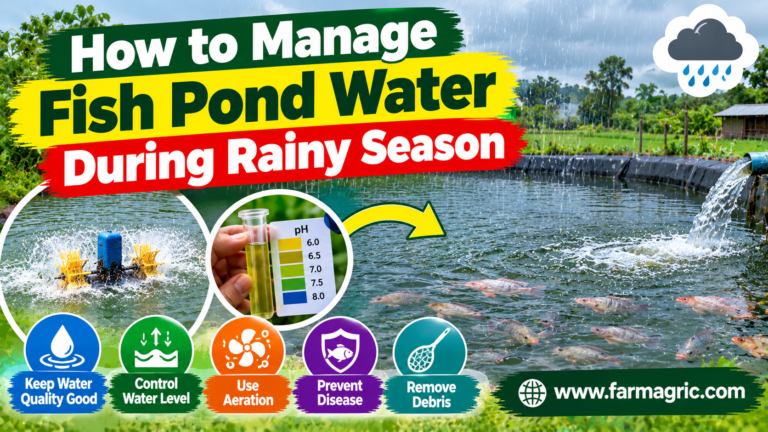
pH. pH measures how acidic or alkaline the water is. Most pond fish do best within a moderate range, and sudden swings stress them. In ponds full of algae, pH often rises sharply in the afternoon, as algae use up carbon dioxide, then falls at night. Very high pH makes ammonia more toxic. Very low pH, often found in acid soils or after heavy rain, can harm fish and reduce productivity.
Test pH in the morning and afternoon, to see how much it swings. If it is unstable, the cause is often a lack of buffering, which comes from low alkalinity. Ask your fisheries officer whether liming or other treatment is right for your pond and how much to use, because over-liming or applying lime at the wrong time can shock fish. Do not make big changes quickly.
Alkalinity and hardness. These describe how well your water resists pH changes. Soft, low-alkalinity water swings in pH easily. Many farmers in areas with acid soils find that liming the pond bottom before filling improves this. Your extension officer can advise on testing and the right materials.
Temperature. Fish are cold-blooded, and their appetite, growth, and oxygen needs all depend on water temperature. Very hot water holds less oxygen and speeds up the fouling process. Very cold water slows growth and weakens the fish. Deeper ponds buffer temperature better than shallow ones, and shade and some water exchange can help in a heat wave. Avoid sudden temperature changes, especially when adding water or moving fish.
Algae and plankton. A moderate green bloom of healthy algae is useful, because it produces oxygen and shades the pond. A very thick bloom can crash and use up all the oxygen overnight. Too little algae can also leave the pond unproductive and let weeds grow in clear water. The colour and clarity of the water give you a clue. A light to medium green or brown colour, where you can see your hand about 30 to 40 centimetres below the surface, is generally a good sign. Simple clarity tests with a plain disc on a rope help you track it.
If the bloom is too thick, reduce feeding and fertiliser, exchange some water, and increase aeration. Do not treat algae with chemicals unless a fisheries officer advises, because killing a thick bloom all at once can cause an oxygen crash.
Turbidity and mud. Muddy water, caused by suspended soil particles, blocks light and can clog fish gills. It usually comes from erosion, rain runoff, bottom-feeding fish stirring up the mud, or poorly built pond banks. Plant grass on banks, divert runoff away from the pond, and stock suitable species. Some muddy ponds respond to organic matter such as well-rotted manure, or approved materials, but ask local advisors before using anything.
Hydrogen sulphide and bottom problems. When organic matter piles up on the pond bottom in the absence of oxygen, harmful gases like hydrogen sulphide, which smells like rotten eggs, can form. These are highly toxic to fish. If you smell this or see black, foul-smelling mud, you have a bottom problem. Between crops, drain the pond, let it dry in the sun, remove excess black mud, and till or turn the soil. During production, avoid overfeeding, and consider aeration to keep the bottom from going stale.
Toxic substances. Pesticides, herbicides, fuel, detergents, and industrial or household waste can poison a pond. Know where your water comes from and what happens upstream. Keep farm chemicals, mixing areas, and drainage away from the pond. If you suspect poisoning, stop the inflow, contact your fisheries or environment officer, and do not sell or eat the fish.
The routine that keeps my water in order
A good routine prevents most of the trouble.
Prepare the pond properly. Before every crop, drain, dry, and clean the pond. Remove excess mud and debris, repair banks, fix inlets and outlets, and consider liming if your soil is acidic, following the advice of your local officer. Fill slowly through a fine screen to keep out wild fish and debris, and let the water settle before stocking.
Stock at a sensible density. Overcrowding is the root of most water quality problems. Follow the recommended stocking rate for your system, and start low if you are new.
Feed carefully. Feed only what your fish will eat, remove or cut back on leftovers, use good-quality feed, and reduce feeding in hot, cloudy, or still weather. Most water problems I have fixed started with the feed bucket.
Aerate and circulate. Even simple aeration can transform a pond. Run aerators especially at night and in the early morning, and in warm weather. If you have no aerators, plan water exchange and splashing for emergencies.
Exchange water wisely. Replace part of the water when quality drops, but do so gradually, and match the temperature and quality of new water to the pond. Large, sudden exchanges can shock the fish. Make sure the new water is clean, free from chemicals, and well oxygenated.
Remove waste. Take out dead fish promptly, clear uneaten feed, and remove floating scum and debris. Keep the pond edges clear of rotting vegetation.
Control weeds sensibly. Some aquatic plants help, but too many can use up oxygen at night and trap waste. Remove excess weeds by hand, and avoid herbicides unless advised, as dying plants rot and rob the water of oxygen.
Manage the surroundings. Plant grass on banks to hold the soil, keep livestock away from the pond edge, and avoid placing latrines, manure heaps, or chemical stores upstream.
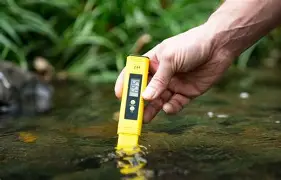
Test regularly. I test oxygen, pH, ammonia, and temperature at least weekly, and more often in hot weather, after heavy rain, or when I see signs of stress. I take readings at the same times each day, usually early morning and mid-afternoon, and I write them down. Over time, the pattern tells me more than any single number. Ask your fisheries officer for safe ranges for your species.
Warning signs to watch for
I watch for fish gasping at the surface or crowding at the inlet, reduced feeding, red or inflamed gills, fish rubbing against objects, a sudden change in water colour (very dark, milky, or brown), a foul smell, foam or heavy scum, sudden clearing after a thick bloom, floating dead fish, and slow growth. Any of these means test the water and cut the feed until you know what you are dealing with.
What I would do differently if I started today
I would buy a test kit and thermometer before I bought the fish.
I would plan for aeration from the start, instead of treating it as an emergency tool.
I would stock fewer fish and feed less than I thought I could.
I would clean and dry my ponds properly between crops, every time.
I would keep a notebook, and I would read it before every new crop.
And I would visit the pond at dawn, regularly.
Frequently asked questions
How do I know if my pond water is bad?
Signs include gasping fish, loss of appetite, a bad smell, unusual colour, scum, and slow growth. The only reliable way to know is to test for oxygen, pH, ammonia, and temperature.
Can I use salt or lime to fix bad water?
Sometimes, in the right situation and amount, but not as a general cure. Using the wrong treatment can stress or kill fish. Ask your fisheries officer before adding anything.
How often should I change the water in my fish pond?
It depends on your system, stocking density, and water source. In many earthen ponds, partial exchange is done when quality drops, while intensive tank systems need more regular exchange. Change water gradually and match temperature and quality.
Why does my pond water turn green or brown?
Mostly due to algae or plankton. A light green or brown colour is generally healthy, but a very thick bloom can crash and cause oxygen shortage. Manage feeding and fertilisation to keep it in balance.
What causes a rotten egg smell in a fish pond?
This is usually hydrogen sulphide from rotting organic matter on an oxygen-poor bottom. It is toxic to fish. Reduce feeding, improve aeration, and clean the pond bottom between crops.
The advice worth bookmarking
Good water is not something you add to a pond, it is something you stop spoiling, so feed less, stock sensibly, test often, and trust the test kit over your eyes.