How to Know the Right Feeding Schedule for Fish Ponds
How to Know the Right Feeding Schedule for Fish Ponds
For my first year of fish farming, I fed by the clock and by my mood. If I was in a hurry, the fish got a rushed scoop. If I felt generous, they got double. I fed at noon in the blazing heat because that was when I had time, and I wondered why my feed bills kept climbing while my fish stayed small. One evening a farmer who had been raising fish for twenty years stood at the edge of my pond, watched me throw feed, and said quietly, “You are feeding yourself, not the fish.”
Here is the direct answer. The right feeding schedule for a fish pond is not a fixed timetable copied from someone else. It is a routine built from four things: the size and species of your fish, the temperature and condition of your water, the type of feed you use, and how the fish actually respond at the pond edge. As a starting point, young fish eat small amounts several times a day, bigger fish eat less often, you feed in the cooler parts of the day, and you stop when the fish stop eating eagerly. You then adjust every week as the fish grow and the weather changes.
Let me show you how I build a schedule, and how I check that it is working.
What most farmers get wrong
The first mistake is feeding at the farmer’s convenience. Fish do not care about your timetable. They eat well when the water is comfortable and oxygen is good, usually in the morning and the late afternoon, and poorly in the heat of the day.
The second mistake is feeding by guess. Farmers throw feed until their hand gets tired, or until the bag looks empty. That leads to overfeeding in some weeks and underfeeding in others.
The third mistake is never changing the schedule. A fish that weighs five grams does not eat the way a fish that weighs five hundred grams does. A schedule that was right at stocking becomes wrong a month later.
The fourth mistake is ignoring the weather. On hot, cloudy, or still days, oxygen can drop, and fish eat less. Feeding the same amount on those days just rots in the water.
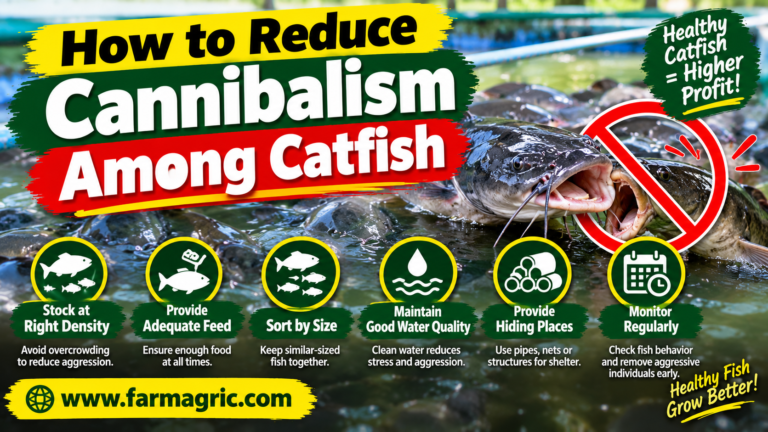
The fifth mistake is feeding the same amount to all sizes. Mixed sizes in one pond means the big fish eat most, and the small fish fall behind. Sorting fish by size and feeding each group separately fixes this.
The principle: feed what they eat, when they eat
A good feeding schedule has three parts: how much, how often, and when. All three depend on the fish and the pond.
How much. Most feeding charts give a daily ration as a percentage of the total body weight of the fish in the pond, called the biomass. Small fish need a higher percentage of their body weight each day, because they are growing fast. As they get bigger, the percentage falls, though the total amount of feed rises because there is more fish mass. Your feed supplier will usually give a chart for their product, and your fisheries officer can confirm the right rates for your species and system. I will not quote exact percentages here, because they differ by species, temperature, feed type, and system, and a wrong number costs you money or fish.
To use a chart, you need to know the average weight of your fish and roughly how many are alive. That means sampling. Every two weeks or so, catch a small number of fish at random, weigh them, and work out the average weight. Multiply by the estimated number of fish to get the total biomass, then use the chart to calculate the daily ration. This is the single most useful habit for scheduling.
How often. Small fingerlings have small stomachs and fast metabolisms, so they do better on several small meals through the day. As fish grow, you can reduce this to fewer meals. Splitting the daily ration into more meals also reduces waste, because the fish eat more completely and the water stays cleaner. Many farmers feed small fish three or more times a day, medium fish two or three times, and large fish once or twice, but follow the guidance for your species and feed.
When. Fish are cold-blooded, so their appetite follows water temperature. Feed when the water is within the comfortable range for your species, usually in the morning after the water has warmed a little and in the late afternoon before it gets dark. Avoid feeding at midday when the water is hottest and oxygen is lowest, and avoid feeding late at night when oxygen is also falling. Avoid feeding at dawn if oxygen is low, because fish are stressed and gasping. If the fish are crowded at the surface or at the inlet, do not feed. Fix the water first.
Reading the fish: the best schedule tool
No chart beats watching your fish. Go to the pond at the feeding time and observe.
If the fish rush the feed and finish it within about fifteen to thirty minutes, the ration is probably about right, or you could give a little more. If feed is still floating or lying around after that, you gave too much, so cut back at the next meal. If the fish are barely interested, ask why. Is the water too hot, too cold, or low in oxygen? Are the fish sick? Is the feed old or spoiled?
Floating pellets make this easy, because you can see exactly how much is eaten. With sinking feed, you can use a feeding tray, a small mesh tray lowered into the water to check how much feed is left after the fish have eaten. Some farmers watch the fish at the surface to judge appetite.
Change the amount in small steps. If fish are eating everything eagerly for several days, increase the ration slightly. If feed is being left, reduce it. Avoid big jumps.
Adjusting the schedule through the season
Temperature. In cooler weather, fish eat less, and in very hot weather, they also eat less. In the cool season, reduce the amount and frequency of feeding. In hot spells, shift feeding to the cooler hours and cut the ration if the fish are not eating well. Keep a thermometer in the pond and write down the temperature.
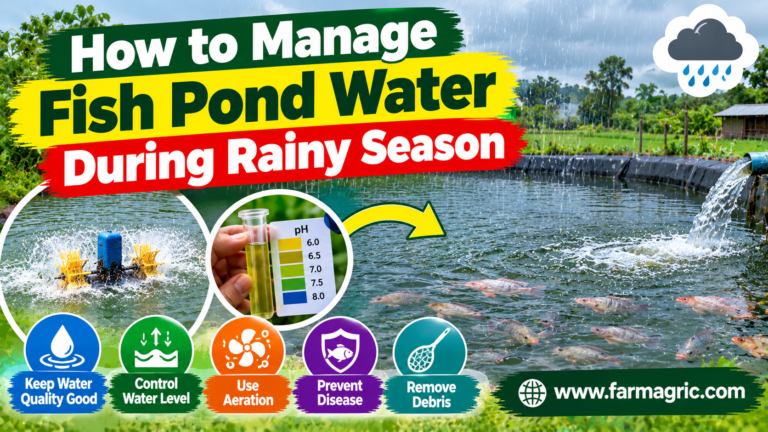
Weather. After heavy rain, during several cloudy days, or in still, humid weather, oxygen can fall and water quality can change. Cut back or skip feeding until conditions settle, and watch the fish for signs of stress. It is better to underfeed for a day than to cause a die-off by overfeeding.
Growth stage. As fish grow, increase the pellet size, reduce the number of meals, and recalculate the ration after each sampling.
Stocking density and water exchange. In heavily stocked ponds, you must be more careful with feeding, as the water can foul quickly. With good aeration and water exchange, you can feed more heavily than without.
Natural food. In fertilised ponds, fish also eat natural food like plankton, so the right amount of supplementary feed may be lower. In intensive systems with no natural food, the fish depend entirely on the feed you provide.
Matching schedule to feed type
Different feeds behave differently. Floating pellets stay on the surface for a while, so fish feed in the daylight, and you can monitor intake. Sinking pellets reach the bottom, and fish that feed there may need different timing and checks. Powdered or crumble feeds for tiny fish disperse quickly and must be given in small, frequent portions. Home-made feeds can work if properly formulated and stored, but they often foul the water faster, break up easily, and may not meet the fish’s nutritional needs. If you use them, get advice on the formulation, and feed carefully.
Always store feed in a cool, dry place, and use fresh feed. Check the date on the bag. Stale, damp, or mouldy feed harms fish and wastes money.
Sample structure, to adapt, not copy
To give you an idea of how a daily routine might look, picture a pond of young, growing fish. In the early morning, you check the water and the fish. If all looks normal, you give the first meal when the water has warmed slightly. You watch the feeding, note how quickly the fish finish, and remove any leftovers or reduce the next meal. You give a second, similar-sized meal in the late afternoon. For very small fish, you may add one or two extra small meals in between. As the fish mature, you drop to two meals, and eventually to one or two for large fish, depending on the species. Every two weeks or so, you sample the fish, update your ration, and write it all down.
This is only a pattern. Your fisheries officer or a successful local farmer can help you turn it into a precise plan for your species and your pond.
Warning signs your schedule is wrong
I watch for uneaten feed floating or lying around after the meal, cloudy or foul-smelling water, fish with poor appetite, slow growth or uneven sizes at sampling, high mortality after feeding, a thick green or dark scum, gasping fish in the morning, and a rising feed conversion ratio. If you see any of these, reduce the ration and check the water.
What I would do differently if I started today
I would sample my fish every two weeks, without fail, and recalculate the ration each time.
I would feed at the same times every day, in the cooler hours, and never at midday.
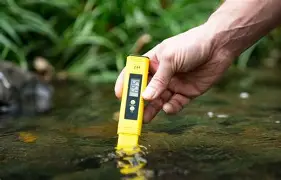
I would buy a thermometer and a basic water test kit.
I would keep a notebook with the date, feed given, fish behaviour, and water readings.
And I would never feed a pond I had not looked at first.
Frequently asked questions
How many times a day should I feed fish in a pond?
It depends on the size and species. Small fish usually need more frequent, smaller meals, while larger fish need fewer. Start with the advice for your species, then adjust based on how the fish eat.
What is the best time of day to feed pond fish?
Generally the cooler parts of the day, in the morning and late afternoon, when the water is comfortable and oxygen is adequate. Avoid the hottest hours and the middle of the night.
How much feed should I give my fish?
Use the feed company’s chart based on the average weight of the fish and the total biomass in the pond, and adjust to what the fish actually eat within about fifteen to thirty minutes. Your fisheries officer can confirm the numbers for your species.
Should I feed fish every day?
In most farm systems, yes, but reduce or skip feeding when the water is bad, the weather is extreme, or the fish are off their feed.
What happens if I overfeed my fish?
Uneaten feed rots, uses up oxygen, and releases ammonia. That stresses the fish, slows growth, and can cause a sudden die-off. It also wastes money.
The advice worth bookmarking
The fish write the feeding schedule, you only copy it down, so watch how they eat, feed in the cool of the day, stop when the interest stops, and let the scale and the water test correct you every two weeks.