
Why Every Commercial Farmer Needs Digital Farm Records
A farmer may know how many hectares were planted, approximately how much fertilizer was purchased and roughly how much was spent on labour. But commercial agriculture involves hundreds or thousands of individual decisions and transactions throughout a production cycle.
Without organized records, important information is easily lost. A commercial farm needs to know how much each crop costs to produce, which fields are performing well, how much labour is being used, where inputs are going, how much machinery is costing, how much produce has been harvested, which customers owe money and whether the business is generating enough cash to continue operating. Digital farm records provide a structured way to capture and organize this information.
They can range from simple spreadsheets to specialized farm management software that connects field operations, production, inventory, labour, machinery and financial information. Digital records do not automatically make a farm profitable. They do something more fundamental: they give the farmer better information from which to make decisions.
For a commercial operation, that information can be the difference between managing by assumption and managing by evidence.
What Are Digital Farm Records?
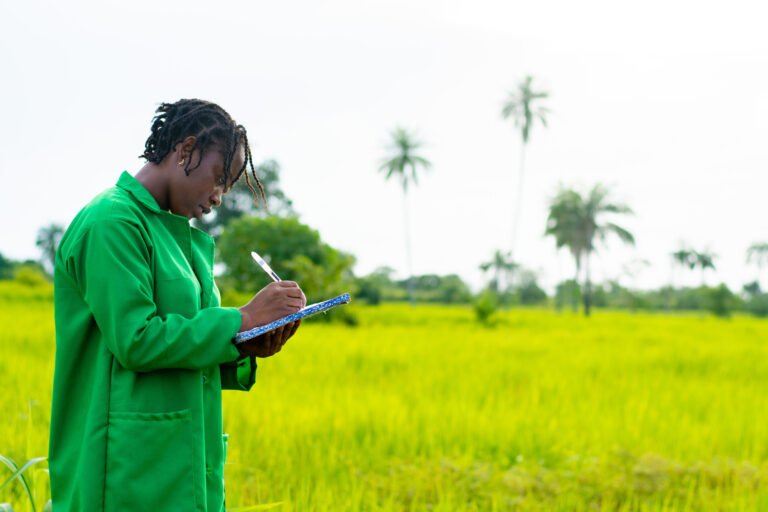
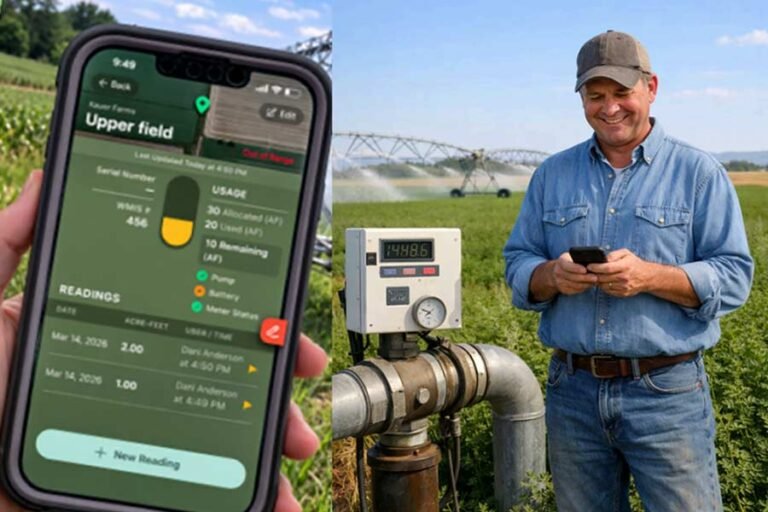
Digital farm records are electronic records of a farm’s activities, resources, production, financial transactions and business performance. Instead of keeping information only in notebooks, paper receipts or memory, the farmer stores it digitally in a structured system.
Depending on the farm and technology being used, digital records can include:
- field information
- farm maps
- crop plans
- planting dates
- seed quantities
- fertilizer applications
- crop protection activities
- irrigation
- labour
- machinery
- fuel
- maintenance
- inventory
- harvest
- yield
- sales
- expenses
- cash flow
- assets
- debts
- customers
- suppliers
A small commercial farm may manage these records with spreadsheets.
A larger operation may use integrated farm management software that connects different departments and production units.
The technology matters, but the quality and consistency of the information matter even more.
Why Commercial Farms Need More Than Paper Records
Paper records can work for simple operations.
However, commercial farms generate large amounts of information.
A farm operating several hundred hectares may have multiple fields, crops, supervisors, machinery operators, labour teams, input suppliers, buyers and production cycles.
Trying to manage all of this through disconnected notebooks creates several problems.
Information can be lost.
Records can be duplicated.
Calculations can contain errors.
Managers may not know the current cost of production.
Farm owners may receive reports weeks after important decisions have already been made.
Digital records can reduce some of these problems by centralizing information and making it easier to retrieve and analyze.
Digital Records Help Farmers Know the True Cost of Production
One of the most important reasons to maintain digital farm records is to understand what production actually costs.
Farmers often know the price at which they sell a crop.
The more difficult question is:
How much did it cost to produce that crop?
The answer may involve:
- land preparation
- seed
- fertilizer
- crop protection
- labour
- machinery
- fuel
- irrigation
- transportation
- harvesting
- storage
- processing
- repairs
- administration
- other operating costs
If these costs are not properly recorded, the farmer may mistake revenue for profit.
Digital records allow expenses to be assigned to specific crops, fields or production enterprises.
A farmer can then calculate:
Cost per hectare = Total production cost ÷ Hectares cultivated
The farmer can also calculate:
Cost per kilogram = Total production cost ÷ Quantity produced
These calculations become much more useful when they are based on actual farm records rather than estimates.
Digital Records Help Compare Different Fields
Commercial farms rarely perform uniformly.
One field may produce more than another.
One field may require more fertilizer.
Another may have higher labour requirements.
Some fields may experience drainage problems, erosion, pest pressure or poor soil fertility.
If all production costs and harvest results are recorded at field level, the farmer can compare performance.
For example:
| Field | Area | Production | Total Cost | Yield per Hectare | Cost per Hectare |
|---|---|---|---|---|---|
| Field A | 20 ha | X tonnes | ₦X | X t/ha | ₦X |
| Field B | 20 ha | X tonnes | ₦X | X t/ha | ₦X |
| Field C | 20 ha | X tonnes | ₦X | X t/ha | ₦X |
The actual figures will vary from farm to farm.
The important point is that digital records allow the farmer to identify differences that may otherwise remain hidden.
Digital Records Improve Crop Production Tracking
A commercial farmer needs to know what has happened in every field.
Digital records can track:
- crop
- variety
- field
- planting date
- seed rate
- fertilizer application
- pesticide application
- irrigation
- cultivation
- weeding
- scouting
- harvesting
This creates a production history.
If a crop performs poorly, the manager can review what happened during the production cycle.
If it performs exceptionally well, the same information can help identify practices worth repeating.
This turns the farm into a learning system.
Digital Records Make Farm History More Valuable
A farm’s history is an important management asset.
After several production seasons, digital records can reveal patterns.
The farmer may discover that:
- a particular field consistently performs better
- a certain planting period produces stronger results
- one crop variety performs better under local conditions
- fertilizer costs are increasing
- labour requirements are changing
- a particular buyer consistently pays late
- machinery repair costs are increasing
- post-harvest losses are higher in certain seasons
Without historical records, these patterns are easy to miss.
With digital records, the farmer can compare seasons instead of relying on memory.
Digital Records Improve Inventory Management
Commercial farms often hold significant quantities of agricultural inputs.
These can include:
- seed
- fertilizer
- pesticides
- herbicides
- animal feed
- veterinary products
- packaging materials
- spare parts
- fuel
- irrigation supplies
Poor inventory management can lead to shortages, over-purchasing, expired products and unexplained losses.
Digital inventory records can track:
Opening stock + Purchases – Usage = Closing stock
For example, if a farm purchases 1,000 bags of fertilizer and records the amount issued to different fields, management can compare expected inventory with actual stock.
This helps identify discrepancies earlier.
Digital Records Help Track Where Inputs Are Used
Knowing how much fertilizer or crop protection product was purchased is not enough.
A commercial farm should also know where those inputs were used.
Digital records can connect an input to:
- farm
- field
- crop
- date
- application rate
- operator
- production cycle
This creates field-level input history.
The information can then support cost calculations and production analysis.
It can also help management determine whether inputs are being applied according to the farm’s production plan.
Digital Records Make Labour Costs More Visible
Labour can be one of the largest operating expenses on a commercial farm.
However, labour costs are often difficult to track when workers are paid using different arrangements.
A farm may have:
- permanent employees
- seasonal workers
- contractors
- casual labour
- supervisors
- machinery operators
- piece-rate workers
Digital records can capture worker attendance, tasks, hours, wages and field assignments.
This allows management to calculate labour costs by field, crop or activity.
For example, instead of simply knowing that the farm spent ₦X million on labour, management can determine how much labour was used for land preparation, planting, weeding, harvesting and other activities.
Digital Records Improve Machinery Management
Machinery is another major source of farm costs.
Commercial farms may operate:
- tractors
- planters
- harvesters
- sprayers
- irrigation pumps
- trucks
- generators
- processing equipment
Digital records can track machine usage, operating hours, fuel consumption, repairs and maintenance.
A simple machinery record can contain:
| Machine | Hours Used | Fuel | Maintenance | Repairs | Assigned Activity |
|---|---|---|---|---|---|
| Tractor A | X hours | X litres | ₦X | ₦X | Land preparation |
| Tractor B | X hours | X litres | ₦X | ₦X | Planting |
| Harvester A | X hours | X litres | ₦X | ₦X | Harvesting |
This helps management understand the cost of owning and operating machinery.
It can also help identify machines that are becoming expensive to maintain.
Digital Records Can Improve Fuel Management
Fuel losses can become significant on large farms.
Digital records allow fuel purchases and usage to be tracked.
Management can compare:
- fuel purchased
- fuel issued
- machine hours
- distance travelled
- field activities
- expected fuel consumption
Large discrepancies can then be investigated.
Fuel records should not be treated only as accounting information.
They can also reveal operational inefficiencies.
Digital Records Help Farmers Manage Cash Flow
A profitable farm can still experience a cash shortage.
Agriculture is seasonal.
Money may be spent months before a crop generates revenue.
Digital cash flow records can show when money is expected to enter and leave the farm.
A basic calculation is:
Opening cash + Cash received – Cash paid = Closing cash
A more detailed cash flow forecast can show expected:
- input purchases
- wages
- machinery expenses
- loan payments
- transport costs
- sales receipts
- customer payments
- other cash movements
This can help management identify periods when additional working capital may be required.
Digital Records Help Farmers Manage Farm Expenses
A commercial farm can have thousands of individual transactions.
Digital expense records can categorize these transactions.
Common categories include:
- seed
- fertilizer
- chemicals
- labour
- fuel
- repairs
- machinery
- irrigation
- transportation
- storage
- packaging
- administration
- professional services
- finance costs
Once expenses are categorized and assigned to the relevant production units, managers can determine where money is being spent.
This is much more useful than simply knowing the farm’s total annual expenses.
Digital Records Help Farmers Calculate Profitability
Revenue is only one part of farm performance.
A farmer needs to understand the relationship between revenue and cost.
For a particular enterprise, a simplified calculation might be:
Gross margin = Revenue – Direct production costs
The exact accounting approach can differ depending on the farm’s accounting system and purpose.
Digital records make it possible to calculate profitability by:
- crop
- field
- livestock enterprise
- farm location
- production cycle
- customer
- product
This helps management identify which parts of the operation are contributing financially.
Digital Records Improve Sales Management
Commercial farmers may sell to multiple buyers.
Each buyer may have different:
- prices
- quantities
- payment terms
- delivery requirements
- quality specifications
Digital sales records can capture the details of each transaction.
A useful sales record can include:
- buyer
- product
- quantity
- selling price
- date
- invoice
- payment status
- delivery information
This helps farmers track outstanding payments and understand which customers generate the largest share of revenue.
Digital Records Help Manage Receivables
Selling produce does not necessarily mean receiving payment immediately.
A buyer may purchase produce today and pay weeks later.
Digital records can distinguish between:
Sales revenue
and
Cash actually received
This is important for cash-flow management.
A farm that has many unpaid invoices may appear profitable while experiencing a serious shortage of operating cash.
Digital receivables records make these outstanding amounts visible.
Digital Records Can Help Farmers Prepare for Agricultural Finance
Financial institutions need information when assessing agricultural businesses.
Digital records can help farmers organize information about:
- production
- sales
- expenses
- assets
- cash flow
- existing debts
- farm size
- historical performance
A farmer can use this information to prepare a financing request based on actual farm data.
Digital records do not guarantee loan approval and do not automatically replace collateral, bank statements or other lender requirements.
Their value is that they can make the agricultural business easier to document and understand.
Digital Records Can Support Better Farm Budgets
A farm budget should be based on realistic assumptions.
Historical digital records provide a starting point.
Suppose a farmer has three years of records showing the cost of cultivating a particular crop.
The farmer can examine:
- average seed costs
- fertilizer costs
- labour
- machinery
- fuel
- irrigation
- harvest expenses
- average yields
- historical selling prices
The next budget can then incorporate current market conditions rather than being based entirely on memory.
Historical records are not guarantees of future performance, but they provide useful evidence for planning.
Digital Records Help Farmers Compare Planned and Actual Costs
Commercial farm management involves planning.
Before the season begins, management may create a production budget.
During the season, actual spending can then be compared against the budget.
For example:
| Cost Category | Planned | Actual | Difference |
|---|---|---|---|
| Seed | ₦X | ₦X | ₦X |
| Fertilizer | ₦X | ₦X | ₦X |
| Labour | ₦X | ₦X | ₦X |
| Fuel | ₦X | ₦X | ₦X |
| Machinery | ₦X | ₦X | ₦X |
| Crop protection | ₦X | ₦X | ₦X |
This allows management to identify cost overruns while the production cycle is still underway.
That is more useful than discovering after harvest that the farm spent substantially more than planned.
Digital Records Can Improve Decision-Making
The central benefit of farm data is not the data itself.
It is the decision that the data helps the farmer make.
A commercial farmer can use digital records to answer questions such as:
- Should this crop be planted again?
- Which field needs attention?
- Why did production costs increase?
- Which buyer provides acceptable payment terms?
- How much fertilizer was used?
- Is machinery utilization efficient?
- How much working capital is needed?
- Which enterprise generates stronger margins?
- Where are labour costs highest?
- How much inventory is available?
- Which equipment requires maintenance?
Without reliable records, these questions often produce estimates.
With good records, they can be investigated using actual farm information.
Digital Records Can Support Precision Agriculture
Digital farm records become even more powerful when connected to precision agriculture.
A farm can combine records with:
- GPS mapping
- satellite imagery
- drones
- soil sensors
- weather stations
- irrigation sensors
- variable-rate equipment
- remote sensing
For example, a farmer can associate soil test results with specific fields and compare them with fertilizer applications and yields.
Similarly, satellite imagery can identify changes in crop condition while the farm management system provides information about what operations were performed in that field.
The result is a more detailed understanding of the relationship between field conditions, management decisions and production outcomes.
Digital Records Can Support Farm Traceability
Traceability is increasingly important in formal agricultural supply chains.
A commercial farm may need to demonstrate:
- where a crop was produced
- what inputs were used
- when activities occurred
- when the crop was harvested
- where it was stored
- who purchased it
Digital records can help create this history.
A basic traceability chain might look like:
Field → Crop → Inputs → Farm activities → Harvest → Storage → Sale
This can become particularly valuable for farms supplying processors, supermarkets or other buyers with documentation requirements.
Digital Records Help With Compliance
Commercial farms may have obligations relating to:
- worker safety
- chemical application
- environmental management
- food safety
- livestock health
- pesticide records
- waste management
- certification
- customer requirements
The exact requirements depend on the country, crop, livestock enterprise, market and certification system.
Digital records make it easier to retrieve documentation when needed.
They also reduce dependence on a single employee’s memory.
Digital Records Help Preserve Institutional Knowledge
Commercial farms often depend heavily on experienced managers and supervisors.
When an experienced employee leaves, important operational knowledge can leave with them.
Digital records help preserve some of that knowledge.
The farm can maintain histories of:
- field operations
- crop performance
- machinery maintenance
- input applications
- supplier relationships
- production problems
- harvest results
This creates organizational memory.
New managers can review previous seasons rather than starting from zero.
Digital Records Improve Management Across Multiple Farm Locations
A farmer operating several farms or production sites can face a major information problem.
A manager may need to know what is happening across locations without physically visiting every farm every day.
Cloud-based farm management systems can allow authorized users to view records from multiple locations.
Management can compare:
- production
- costs
- labour
- inventory
- machinery
- sales
- field performance
across farms.
This can improve oversight, provided the underlying data is entered accurately.
Digital Records Improve Communication Between Farm Teams
A commercial farm often has several departments.
There may be:
- farm managers
- field supervisors
- agronomists
- machinery operators
- accountants
- procurement staff
- storekeepers
- sales teams
If each department keeps separate records, information can become fragmented.
An integrated system can create a shared information environment.
For example, the farm manager can see production activities while the finance team can see associated costs.
The storekeeper can monitor inventory while procurement can see what needs to be replenished.
The result is better coordination.
Digital Records Can Help Detect Problems Earlier
Data can help identify unusual changes.
For example:
- fertilizer consumption suddenly increases
- fuel use rises without corresponding machinery activity
- labour costs increase sharply
- inventory decreases faster than expected
- yields decline in a particular field
- sales payments become slower
- machinery repair costs increase
These patterns can trigger investigation.
Digital systems can also provide alerts when configured appropriately.
However, an alert does not automatically mean something is wrong.
It identifies something that deserves attention.
Digital Records Make Farm Auditing Easier
Internal farm audits become easier when transactions are documented consistently.
Management can trace:
Purchase → Inventory → Field application → Production cost
or:
Harvest → Storage → Sale → Payment
This creates an audit trail.
For larger farms, this can be important for financial control.
It can also help identify errors, unauthorized transactions or unexplained differences.
Digital Records Can Reduce Dependence on Memory
Farmers have enormous practical knowledge.
However, memory becomes less reliable as the complexity of a farm increases.
A commercial operation can have hundreds of decisions and transactions every week.
No manager can accurately remember every:
- fertilizer application
- fuel purchase
- labour payment
- machinery repair
- sales transaction
- input movement
- field activity
Digital records move important information from memory into a system that can be reviewed later.
The farmer’s experience remains important.
The records provide evidence to support that experience.
Digital Records Are Especially Important as a Farm Grows
A farm may begin with a simple notebook.
That can work when there are only a few transactions.
As the farm grows, the number of fields, workers, machines, suppliers, customers and transactions also grows.
The record-keeping system must grow with it.
This does not necessarily mean buying expensive software immediately.
A farm can move gradually:
Notebook → Spreadsheet → Structured digital records → Farm management software → Integrated farm data system
The right stage depends on the size and complexity of the operation.
What Digital Records Should a Commercial Farm Keep?
A commercial farm should consider maintaining records in several major categories.
| Record | Key information |
|---|---|
| Farm register | Farms, fields, hectares, locations |
| Crop register | Crops, varieties, planting dates |
| Production | Activities, inputs, harvest and yield |
| Inventory | Purchases, usage, stock balance |
| Labour | Workers, attendance, tasks, wages |
| Machinery | Hours, fuel, maintenance and repairs |
| Expenses | Supplier, category, amount and date |
| Sales | Buyer, quantity, price and payment |
| Cash flow | Cash received and cash paid |
| Assets | Equipment, buildings and livestock |
| Debt | Loans, balances and repayment schedules |
| Customers | Buyer details and transaction history |
| Suppliers | Supplier details and purchasing history |
The system does not need to be complicated.
It needs to capture the information necessary to manage the farm.
How to Start Building Digital Farm Records
Farmers should start with the most important information rather than attempting to digitize everything at once.
Start With the Farm Structure
Create records for each farm, field, enterprise and production unit.
Record Every Expense
Capture expenses when they occur.
Do not wait until the end of the season.
Record Production Activities
Document planting, fertilizer application, crop protection, irrigation, harvesting and other major activities.
Track Labour
Record who worked, what they did and how much they were paid.
Track Machinery
Record machine usage, fuel, maintenance and repairs.
Record Every Sale
Capture buyer, quantity, price, date and payment status.
Reconcile Records
Compare farm records with receipts, invoices, stock counts and bank transactions.
Review the Data Regularly
A record that is never reviewed has limited management value.
Farm managers should establish weekly or monthly review routines.
What If the Farm Has Poor Internet Connectivity?
A commercial farm should not automatically reject digital systems because internet access is unreliable.
Many modern applications support offline data entry and later synchronization.
For farms in areas with weak connectivity, important considerations include:
- offline functionality
- mobile compatibility
- battery consumption
- data synchronization
- backup
- local technical support
- ease of use
A system that works only when connected to fast internet may be unsuitable for some agricultural environments.
What If Farm Workers Are Not Comfortable With Technology?
Technology adoption is a management issue, not simply a software issue.
Farm workers need:
- training
- clear procedures
- simple data-entry screens
- defined responsibilities
- supervision
- feedback
The farm should determine who records what.
For example, a storekeeper may record inventory movements while field supervisors record activities and the finance team records payments.
This division of responsibility reduces confusion.
How Much Does Digital Farm Record Keeping Cost?
There is no single cost.
A farmer can maintain digital records with a basic spreadsheet at little or no software cost.
Specialized farm management platforms can involve:
- subscription fees
- implementation costs
- training
- hardware
- GPS devices
- sensors
- integration fees
- technical support
The cost should be evaluated against the farm’s actual needs.
A small farm may not need an expensive enterprise system.
A large commercial operation may eventually find that basic spreadsheets become difficult to manage.
The right question is not simply:
“How much does the software cost?”
It is:
“What management problem will this system solve, and what value will the farm receive from solving it?”
The Biggest Challenge Is Often Data Quality
Digital technology does not automatically create accurate information.
If workers enter incorrect data, the system can produce incorrect reports.
For example, if fertilizer is recorded as 50 bags when only 40 were actually purchased, every report based on that information may be wrong.
Commercial farms should therefore establish:
- standard data-entry procedures
- responsible staff
- approval processes
- regular stock checks
- transaction verification
- data review
- backups
The principle is simple:
Bad data produces bad decisions, even when the software is excellent.
Common Mistakes Commercial Farmers Should Avoid
Recording Only Financial Transactions
Production data is equally important.
Waiting Until the End of the Season
Records should be created continuously.
Using Different Names for the Same Field
Standardized field names prevent confusion.
Mixing Farm and Personal Expenses
This makes farm profitability harder to determine.
Giving Everyone Full System Access
User permissions should match responsibilities.
Failing to Back Up Data
A technical failure should not destroy years of farm history.
Buying Software Before Identifying the Problem
Technology should solve a farm-management problem.
It should not be purchased simply because it has many features.
Ignoring Staff Training
Workers need to understand why accurate data matters.
Failing to Review Reports
Collecting information without using it wastes much of the potential value.
How Digital Farm Records Support Better Farm Decisions
The ultimate purpose of record keeping is decision-making.
A farmer can use historical records to decide whether to:
- expand a crop
- reduce a crop
- change varieties
- invest in irrigation
- purchase machinery
- rent machinery
- employ additional workers
- change suppliers
- negotiate with buyers
- improve storage
- invest in precision agriculture
- seek financing
The technology does not make the decision.
It provides information that allows the farmer to make a more informed decision.
Digital Records Should Become Part of the Farm’s Operating System
The most successful approach is to make record keeping part of normal farm operations.
A field activity should create a record.
A purchase should create a record.
A harvest should create a record.
A sale should create a record.
A machinery repair should create a record.
A labour payment should create a record.
Over time, these individual records become a detailed history of the farm.
That history becomes increasingly valuable because it allows management to compare what was planned with what actually happened.
The Future of Digital Farm Records
Digital farm records are increasingly becoming the foundation upon which other agricultural technologies operate.
Artificial intelligence requires data.
Precision agriculture requires data.
Farm analytics require data.
Digital marketplaces require data.
Traceability requires data.
Agricultural finance can benefit from reliable farm information.
Weather-based decision systems can become more useful when farm activities are recorded.
Even advanced technologies such as autonomous machinery and computer vision ultimately need structured information about the farm environment and production system.
This means digital record keeping is not separate from modern agriculture.
It is one of its foundations.
Final Takeaway
Every commercial farm does not necessarily need the same software, sensors or digital platform.
But every commercial farm needs reliable information.
Digital farm records help farmers move beyond estimates and memory by documenting what happens across the operation.
They can help track production, calculate costs, manage labour, monitor inventory, control machinery expenses, manage cash flow, document sales, prepare for financing and compare performance across fields and seasons.
The most important step is not buying the most advanced farm management software.
It is creating a consistent system for capturing accurate information and using that information to make better decisions.
Start with the farm’s most important activities.
Record them consistently.
Review the information regularly.
Then add more advanced technology as the farm’s needs grow.
For a commercial farmer, digital records are not simply paperwork moved onto a computer. They are the information infrastructure that allows the farm to understand its own performance.
Frequently Asked Questions
Why are digital farm records important for commercial farmers?
They give commercial farmers a structured way to track production, costs, labour, inventory, machinery, sales and cash flow. This makes it easier to understand farm performance and make decisions using actual records.
What should a commercial farmer record digitally?
Important records include farm and field information, crop production, inputs, labour, machinery, fuel, inventory, expenses, sales, cash flow, assets, customers, suppliers and existing debt.
Can digital farm records help increase farm profitability?
They do not automatically increase profitability, but they can help farmers identify unnecessary costs, compare field performance, understand production margins and make better-informed operational decisions.
Do I need farm management software to keep digital farm records?
No. A spreadsheet can work for many smaller operations. Specialized farm management software becomes more useful as the number of fields, workers, transactions and production activities increases.
Can digital records help with agricultural loans?
They can help farmers document production, expenses, sales, assets and cash flow when preparing financing applications. However, digital records do not guarantee loan approval or automatically replace collateral and other lender requirements.
How often should commercial farmers update digital records?
Important transactions and farm activities should ideally be recorded as they happen or as soon as practical. Management reports can then be reviewed weekly, monthly and at the end of each production cycle.
Can digital farm records work without reliable internet?
Yes, depending on the technology. Farmers operating in areas with poor connectivity should consider systems that support offline data entry and synchronization when an internet connection becomes available.
What is the biggest problem with digital farm records?
Poor data quality is one of the biggest problems. If workers enter incomplete or incorrect information, the resulting reports may also be inaccurate. Staff training, clear procedures and regular verification are therefore important.
Can digital records support precision agriculture?
Yes. Digital farm records can provide the foundation for connecting field information with GPS, satellite imagery, drones, sensors, weather data and other precision-agriculture technologies.
Should small commercial farms use digital records?
Yes. The system does not need to be sophisticated. A small commercial farm can begin with a spreadsheet or simple mobile application and gradually adopt more advanced tools as the business becomes more complex.